Read the IBU Label Right: Lab Facts and Taproom Tasting Tips
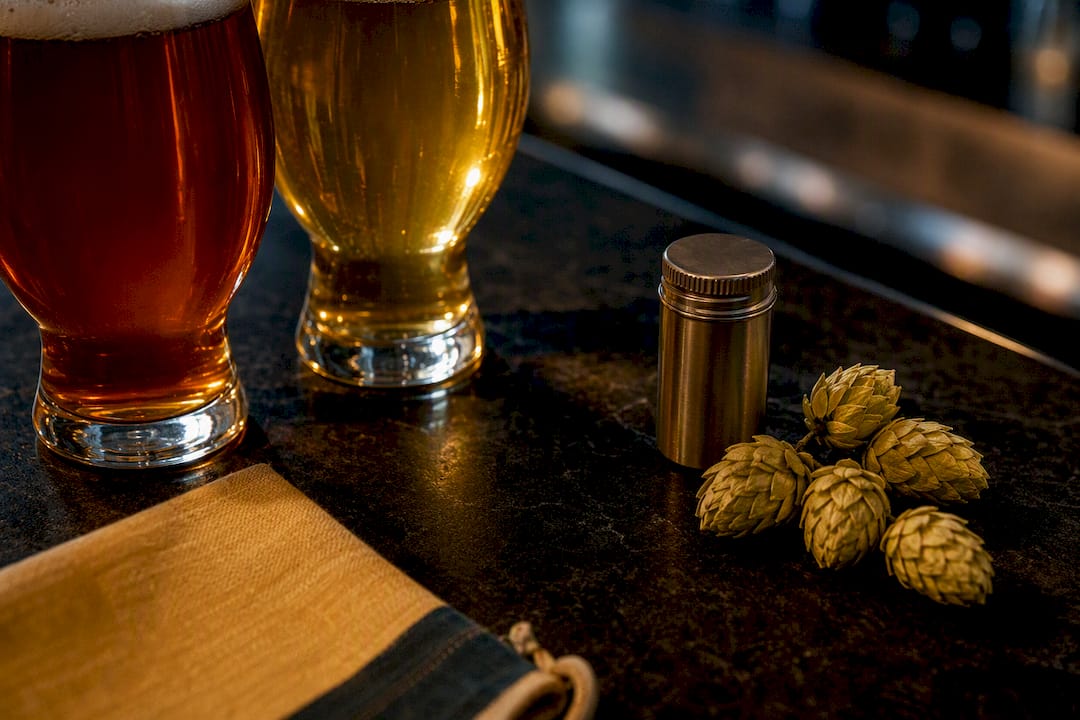
IBU stands for International Bitterness Units, a laboratory measure of hop-derived bitter compounds dissolved in beer. The number comes from a chemical test, not a taste panel, so it estimates bitterness rather than guaranteeing how bitter a beer will actually taste. Malt, alcohol, and hop chemistry all bend that perception, sometimes sharply, which is why two beers sharing an IBU figure can taste worlds apart.
TL;DR:
- Beers with similar IBU numbers can taste vastly different due to malt, alcohol, pH, and hop compound variations affecting perceived bitterness.
- The IBU test measures hop-derived bitter compounds chemically, but it cannot distinguish true bitterness from other compounds like humulinones and polyphenols.
- Most drinkers find it hard to differentiate beers above 60 to 70 IBU, as the palate saturates and perception becomes less reliable.
- High IBU values are most relevant for hop-forward styles like IPAs, but they have limited predictive power for the actual taste experience.
- Pairing IBU with style, ABV, and hop variety provides a more accurate expectation of beer flavor than relying on IBU alone.
Table of Contents
- What IBU measures and why the unit exists
- How brewers actually measure IBU
- What common IBU numbers mean in practice
- Why two beers with the same IBU can taste different
- How to use IBU when choosing a beer
- Reading the taproom menu with IBU in mind
- Numbers point the way, tasting decides
- Try the difference yourself at Lost And Found Taproom
- Sources
- FAQ
What IBU measures and why the unit exists
One IBU roughly equals one milligram per litre of iso-alpha acid dissolved in the beer, at least in simpler, traditionally hopped styles. Iso-alpha acids come from hops during the boil, when heat converts alpha acids into the bittering compounds that give beer its characteristic edge. Brewers needed a shared number because “bitter” is subjective. Two tasters can disagree wildly on how sharp a beer feels, but a lab result stays consistent, batch after batch.
That need for consistency is exactly why brewing bodies standardised the method decades ago. Europe uses a closely related scale called EBU, or European Bitterness Units, developed alongside IBU by national brewing institutes working from a shared analytical approach. In most beers the two numbers land close enough to be treated as roughly interchangeable, though they are not identical calculations. The Institute of Brewing’s 1968 work on estimating bitterness describes the modified Brenner extraction method that underpins this standardisation, giving brewers across different countries a comparable figure.
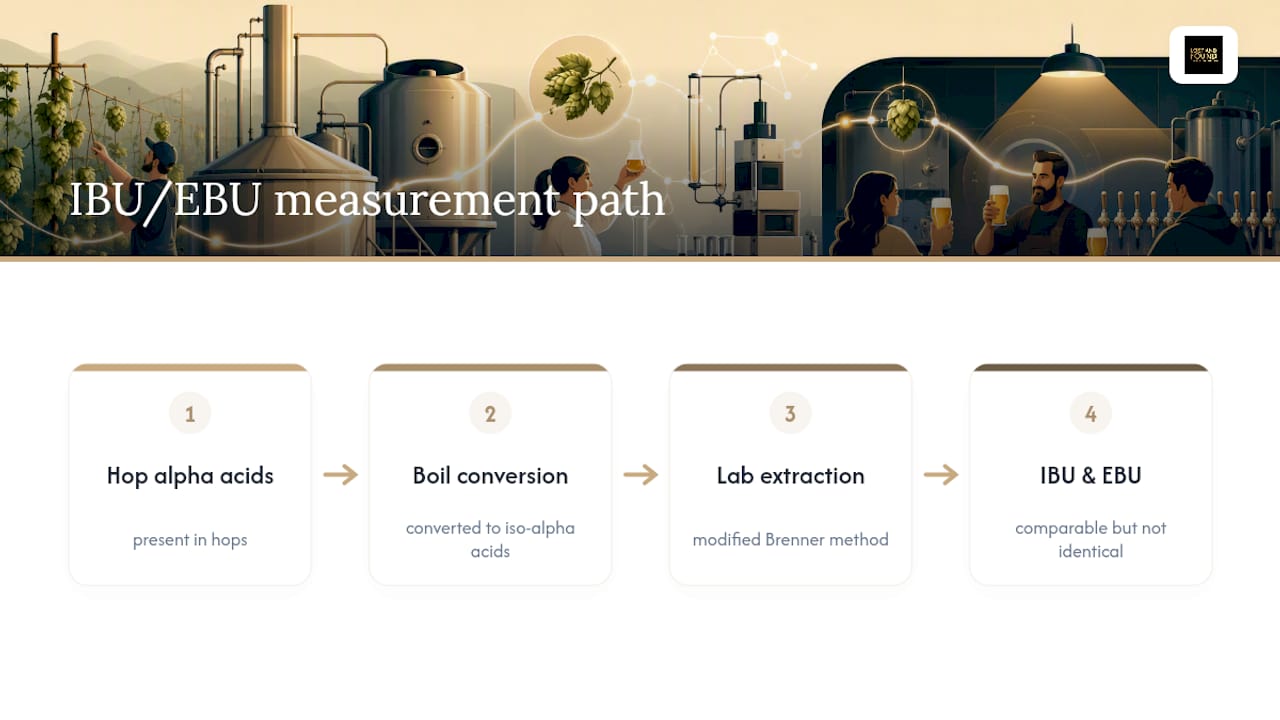
A few quick facts worth knowing before diving deeper:
Commercial beers cover a wide range of bitterness levels, from very low in some fruit beers and milk stouts to quite high in aggressively hopped double IPAs. Most drinkers find it difficult to perceive bitterness differences beyond a certain upper level, as the palate tends to saturate. Although the bitterness scale does not have a fixed maximum, brewers seldom exceed very high values because further increasing hops yields diminishing flavour returns.
How brewers actually measure IBU
The standard test, formalised by the American Society of Brewing Chemists as Beer 23 in its Master Method series, follows a fixed sequence:
- A beer sample is acidified, then shaken with isooctane, a solvent that pulls hop-derived bittering compounds out of the liquid.
- The isooctane layer, now carrying the extracted compounds, is separated from the beer.
- A spectrophotometer measures how much ultraviolet light the extract absorbs at 275 nanometres, the wavelength iso-alpha acids absorb strongly.
- That absorbance reading is multiplied by a fixed factor to produce the bitterness unit value, reported as BU or IBU.
The catch sits in step three. Isooctane does not selectively extract only iso-alpha acids. Any compound that dissolves in the solvent and absorbs light at 275 nanometres gets counted, whether it is a true bittering acid or not. Oxidised hop compounds, humulinones, and certain polyphenols all register on the same scale, which is one reason the number can drift from what a drinker actually tastes.
Statistic callout: The ASBC’s own method documentation reports that BU measurements are highly repeatable within a single lab and reasonably reproducible between accredited labs, which is exactly why breweries rely on it for quality control even knowing its chemical blind spots. Fast, consistent, and cheap to run, it just is not built to separate one bitter-tasting molecule from another.
What common IBU numbers mean in practice
Style is a far better predictor of what you will taste than the number alone, but the ranges still help set expectations before your first sip.
- Light lagers and pilsners: 5–15 IBU. Barely perceptible bitterness, built for easy drinking.
- Wheat beers and fruit beers: 8–20 IBU. Often masked further by sweetness or fruit character.
- English bitters and pale ales: 20–40 IBU. A gentle hop presence that balances malt without dominating it, a range our lager styles guide covers in more depth.
- American pale ales: 30–50 IBU. Noticeably hoppier, with citrus or pine notes common.
- IPAs: 40–70 IBU. The style built around hop character, though ranges vary hugely by substyle, as our IPA styles guide explains.
- Double or imperial IPAs: 65–100+ IBU. Deliberately aggressive, though often softened by higher malt and alcohol.
- Stouts and porters: 20–50 IBU. Roasted malt bitterness competes with hop bitterness, muddying the number’s usefulness.
Notice how much overlap sits between categories. A 45 IBU pale ale and a 45 IBU stout will taste nothing alike, because the malt backbone changes everything. And remember that taste threshold: past roughly 60 to 70 IBU, most drinkers struggle to rank beers by bitterness with any real confidence, according to Sierra Nevada’s explainer on the scale. The number tells you a beer’s rough hop-bittering intensity. It does not tell you how that bitterness will feel on your tongue.
Why two beers with the same IBU can taste different
Bitterness perception is not a single-input equation. Malt sweetness rounds off sharp edges, alcohol changes mouthfeel and can amplify warmth that reads as intensity, and pH shifts how sharp or smooth bitter compounds feel on the palate. Polyphenols, tannin-like compounds from hops and malt, add their own drying sensation that gets conflated with bitterness even though it is chemically separate.
Modern hop-forward brewing complicates the picture further. Dry-hopping, the practice of adding hops after the boil rather than during it, introduces humulinones and other oxidised hop compounds that register on the IBU test without delivering the same sharp bitterness as boil-derived iso-alpha acids. A study on nonvolatile chemistry in highly hopped beers analysed 120 commercial beers and found that BU predicts sensory bitterness with a nonlinear response, meaning the relationship weakens as IBU climbs.
The researchers behind that Oregon State study proposed combining isohumulones, humulinones, and ethanol concentrations rather than leaning on a single BU figure, arguing that no single number captures how hopped beers actually taste on the palate.
Further peer-reviewed work, including analysis published through PMC, backs the same conclusion: bitterness perception depends on a cluster of chemical and sensory factors working together, not one isolated compound.
Pro Tip: Pour two beers with similar IBU numbers but different styles side by side, one pale and one dry-hopped hazy. Taste them blind if you can. The gap between what the label promises and what your palate reports is the whole lesson in one glass.
How to use IBU when choosing a beer
Treat IBU as a compass heading, not a destination. It points you in a rough direction; it does not describe the exact route.
- Use IBU directionally: a beer at 65 IBU is very likely hoppier than one at 15, but do not assume 65 versus 70 will feel meaningfully different.
- Always pair the number with ABV and style. A high-alcohol, malt-forward double IPA can feel less sharp than a lower-alcohol session IPA with a similar IBU.
- Reach for tasting flights when you want fine distinctions. A side-by-side pour reveals differences that a spec sheet never will.
- High IBU matters most when you specifically want hop dryness or resinous, bitter character up front.
- It matters far less with malt-forward styles like stouts, porters, or Scotch ales, where roasted or caramel notes dominate the flavour regardless of the number.
Pro Tip: When two beers carry near-identical IBU labels, check the hop variety and brewing method before assuming they will taste alike. A citra-hopped pale ale and a noble-hop lager can share a number and share almost nothing else.
Reading the taproom menu with IBU in mind
At Lost And Found Taproom, our rotating beer menu lists IBU alongside ABV and style notes for exactly this reason: the number means more in context than alone. Cross-reference a high IBU figure with the style and staff tasting notes before assuming a beer will hit hard.
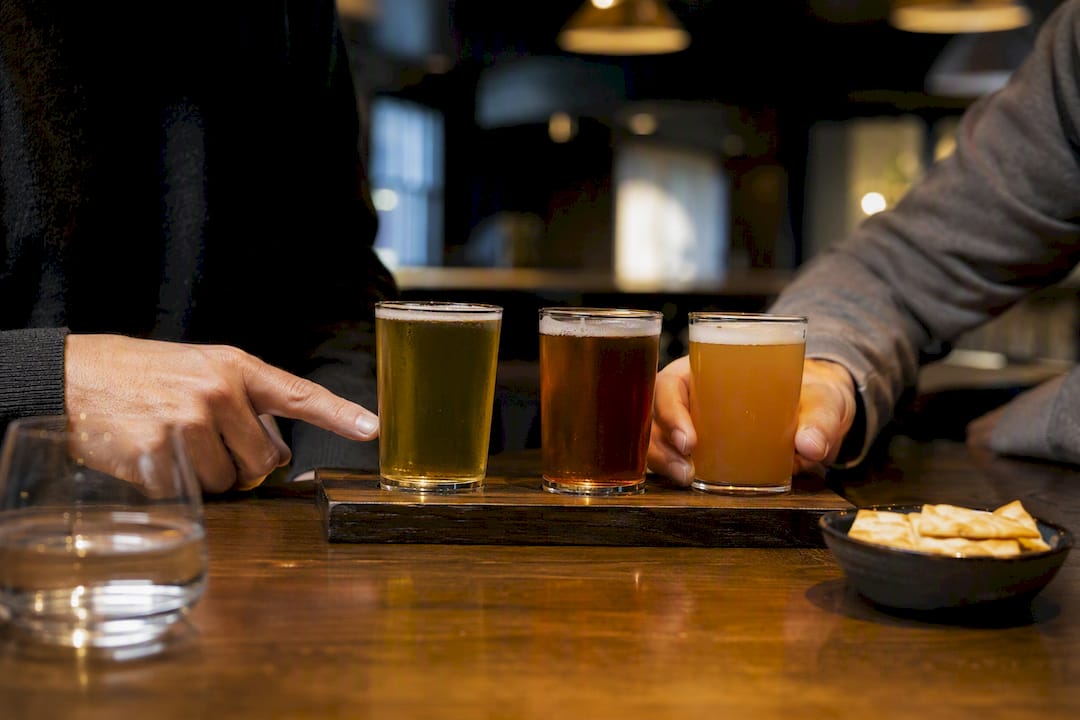
The most reliable way to test any of this yourself is to ask for a tasting flight or a taster pour. Comparing three or four beers with different IBU numbers side by side, in the same sitting, teaches you more about your own palate than any chart. Our staff are always happy to talk through what is pouring and why a particular beer sits where it does on the bitterness scale, drawing on our guide to tasting beer properly.
Numbers point the way, tasting decides
IBU is genuinely useful, and dismissing it as meaningless would be as lazy as treating it as gospel. Trust the number to point you in the right direction: toward hoppier or maltier territory, toward a style that fits your mood. Do not trust it to promise exactly how a beer will taste in your mouth, because the chemistry behind bitterness perception is far messier than one lab reading can capture.
That is precisely why Lost And Found Taproom puts tasting context, not just numbers, on the menu, and why we would rather hand you a small pour than a spec sheet. A number gets you curious. A glass gets you an answer.
— Author
Try the difference yourself at Lost And Found Taproom
Reading about IBU only gets you so far. This taproom is a place to test what these numbers mean, without committing to a full pint on a guess. A rotating selection from independent breweries across Brighton and the wider UK means the beer on tap changes often enough that comparison tasting stays genuinely interesting rather than repetitive.

Check our beer menu online before you visit to see current pours, ABV, and IBU listed together, or come in and ask for a tasting flight so you can line up a few side by side. Planning something bigger? Our venue is also available for event hire, with staff on hand to talk your guests through what is pouring. Pop into our Fiveways taproom this week and put a few IBU numbers to the actual taste test.
Sources
- Beer 23. Master the Method — ASBC
- Evaluation of nonvolatile chemistry affecting sensory bitterness intensity of highly hopped beers — Oregon State
- IBU Beer Scale: What Does It Mean? — Sierra Nevada
- PMC article discussing brewing chemistry and sensory attributes — PMC9286407
FAQ
What does an IBU mean?
An IBU is a lab-measured estimate of hop-derived bitter compounds in beer, expressed as roughly one milligram of iso-alpha acid per litre in traditionally hopped styles.
Is 70 IBU bitter?
Yes, 70 IBU sits at the high end of the scale, typically found in IPAs and double IPAs, though malt sweetness and alcohol can soften how sharp that bitterness actually feels.
What does IBU stand for in business or elsewhere?
Outside brewing, IBU can stand for other terms entirely depending on context, such as organisation names or abbreviations in unrelated industries; in beer and drinks writing, it always refers to International Bitterness Units.
What does IBU mean in text or casual conversation?
In beer chat, online reviews, or taproom menus, IBU simply refers to the bitterness score printed alongside a beer’s name and ABV, shorthand for how hop-forward that beer is expected to taste.
Why can two beers with the same IBU taste different?
Malt character, alcohol strength, pH, and hop compounds like humulinones all shift perceived bitterness independently of the measured IBU figure, so identical numbers rarely mean identical taste.