What does DDH mean on a beer label?
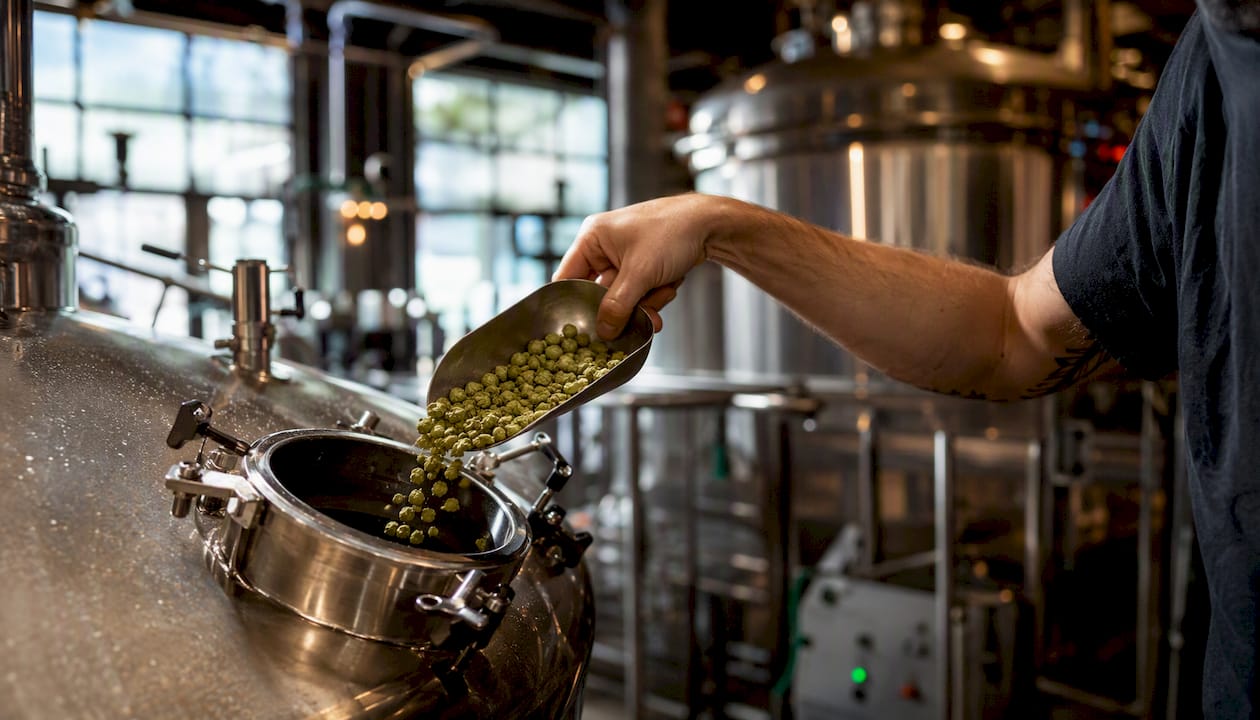
DDH stands for double dry hopped, a hop-forward technique brewers use to pack extra aroma and flavour into a beer without loading it with bitterness. If you spot the letters on a can or a taproom chalkboard, expect a beer with a bigger hop punch than its standard sibling, usually juicy, fruity, or resinous depending on the hop variety, and rarely much harsher on the tongue.
The tricky part is that “double” doesn’t have one fixed meaning across the industry. Brewers use the term in three overlapping ways:
- Two separate dry-hop charges added at different points after the boil, rather than one.
- Roughly double the hop mass compared with a standard dry hop, added in a single charge.
- A combination of both, or simply a marketing shorthand for “we went heavy on the hops this time.”
None of these is wrong. All of them chase the same result: a beer where the hop aroma leaps out of the glass before you’ve even taken a sip.
Key Takeaways
DDH means double dry hopped, a cold-side technique that intensifies hop aroma and flavour with little added bitterness, though “double” itself has no fixed industry definition.
| Point | Details |
|---|---|
| Core definition | DDH means double dry hopped, a hop-forward technique boosting aroma without much extra bitterness. |
| Three interpretations of “double” | Brewers mean two charges, roughly double the hop mass, or a mix of both. |
| Sensory payoff | Expect stronger tropical, citrus, or resinous aroma depending on the hop varieties used. |
| Real trade-offs | More beer loss, hop creep risk, and a shorter freshness window come with every DDH batch. |
| Where to taste it fresh | Lost And Found Taproom rotates independent UK brews, including DDH releases, listed on its online beer menu. |
Table of Contents
- What does “double” actually mean in DDH beer?
- Why dry hopping matters more than boiling hops
- How brewers actually double dry hop a beer
- What DDH actually tastes and smells like
- The trade-offs behind every DDH pour
- How to read a DDH label and judge what’s in the glass
- Where to actually try a well-made DDH beer
- The equipment and techniques behind a DDH batch
- Why hop variety changes everything about a DDH beer
- How to store and serve a DDH beer at its best
- Why this taproom curates DDH releases the way it does
- Try a DDH pour at Lost And Found
- Frequently asked questions about DDH beer
- Sources
What does “double” actually mean in DDH beer?
There’s no regulator standing over breweries insisting on a single definition, and VinePair’s rundown of the term confirms that brewers genuinely diverge on this point. Some treat “double” literally as a quantity instruction. Others treat it as a process instruction. A few treat it as pure marketing.
Interpretation A: two dry-hop additions. The brewer dry hops once, typically during or just after fermentation, then dry hops again later during conditioning or cold storage. Two distinct events, two windows for hop oils to dissolve into the beer, and often two different hop blends used across the pair.
Interpretation B: double the mass. Here the brewer does a single dry-hop addition, but at roughly twice the rate they’d normally use for that beer. If a standard IPA gets a typical amount of hops per barrel, the DDH version might get roughly twice that amount in one go, added at one point in the process.
Interpretation C: a blend of the two, or neither precisely. Some breweries stagger multiple smaller additions and still call it DDH because the cumulative mass or the layered timing achieves the same aromatic goal. Others, frankly, just use the label because it sells. Beer Connoisseur notes that DDH has become as much a marketing signal as a precise brewing instruction, and Craft Beer Joe puts it plainly: for most drinkers, DDH just means “more hops,” and that loose reading is often close enough.
Pro Tip: If you want a genuine sense of what’s in the glass, don’t just look for “DDH” on the label. Check whether the brewery lists the hop varieties and the dry-hop rate. A can that says “DDH: Citra & Mosaic, 4g/L” tells you far more than one that just says “DDH IPA.”
What this means practically: two beers both labelled DDH can taste noticeably different in intensity and character, because one brewery’s “double” might be another’s “standard heavy dry hop.” Treat the label as a promise of extra aroma, not a precise, comparable metric.
Why dry hopping matters more than boiling hops
To understand DDH, it helps to know the difference between hopping on the hot side and hopping on the cold side, because they do completely different jobs.
Hops added during the boil undergo isomerisation, a chemical change caused by heat that converts hop acids into bittering compounds. That’s where an IPA’s backbone bitterness comes from. But boiling also drives off most of the delicate aromatic oils in the hop, which is why a beer hopped only in the kettle tends to taste bitter but smell fairly plain.
Dry hopping skips the heat entirely. Hops are added after the boil, either during active fermentation or later during conditioning, when the beer is cool. Without heat, the volatile aromatic oils stay intact and dissolve into the beer, while almost no additional bitterness is created. Wine Enthusiast’s explainer on the term confirms this is precisely why dry hopping became the backbone of aroma-driven styles.
| Hopping method | When added | Main effect | Bitterness contribution |
|---|---|---|---|
| Boil / kettle hopping | During the boil (hot side) | Isomerises hop acids | High |
| Standard dry hopping | Post-boil, fermentation or conditioning (cold side) | Extracts aromatic oils | Minimal |
| Double dry hopping (DDH) | Two charges or doubled mass, cold side | Intensifies aroma and flavour | Slightly higher, still modest |
This cold-side technique sits at the heart of New England and hazy IPAs, styles built around soft bitterness and an aroma that hits you before the beer touches your lips.
How brewers actually double dry hop a beer
Doubling the dry hop isn’t one fixed recipe. Breweries pick from a handful of methods depending on the beer, the hops available, and how much beer loss they’re willing to tolerate.
- First charge during active fermentation. Adding hops while yeast is still working helps distribute the hop oils through the tank, as fermentation activity and rising CO2 keep things moving. BarthHaas’s technical notes on DDH point out this timing can aid dispersal but also risks a phenomenon called hop creep, where enzymes in the hops restart fermentation and dry the beer out further.
- Second charge during conditioning or cold storage. Once fermentation has calmed down, a later addition sits in a quieter environment. Less yeast interaction means the oils tend to survive longer, which is why many brewers save their most delicate, aromatic hop varieties for this stage.
- Single doubled charge. Some brewers skip the two-stage approach and simply add twice the usual hop weight in one go, usually during conditioning, to keep things operationally simpler.
- Staged micro-additions. A smaller number of breweries add hops in three or more smaller doses spread across fermentation and conditioning. BarthHaas’s own findings suggest that staged additions can produce a more complex, layered aroma while using less total hop mass than one enormous single dose.
Hop form matters here too. Pellet hops are the industry standard: consistent, easy to dose, and efficient at extraction. Whole cone hops give a more traditional character but soak up more beer, increasing loss. Cryo hop products, which concentrate the lupulin (the resinous part of the hop that carries most of the aroma oils) while stripping out plant matter, let brewers pack in intensity without the extra vegetal bulk.
| Method | Typical timing | Complexity for brewer | Beer loss risk |
|---|---|---|---|
| Two charges (fermentation + conditioning) | Staggered | Moderate to high | Higher |
| Single doubled mass | One point, usually conditioning | Low | Moderate |
| Staged micro-additions | Multiple small doses | High | Variable, often lower per addition |
Pro Tip: Ask a brewer which hop form they used if you get the chance. Whole cone hops usually mean a smaller batch and a more traditional, slightly grassier edge; cryo or pellet hops usually mean a cleaner, more concentrated tropical punch.
None of these choices are free. Every additional dry-hop stage means more hop matter soaking up beer (beer loss), a higher chance of hop creep diluting the intended flavour balance, more oxygen exposure risk each time a tank is opened, and yeast that often can’t be safely reused afterwards, according to BarthHaas’s brewing notes.
What DDH actually tastes and smells like
Forget the brewing jargon for a moment. What should you expect in the glass?
DDH beers tend to hit you with aroma before flavour, often before you’ve even picked the glass up. The specific character depends entirely on which hop varieties were used:
- Citra and Mosaic typically bring tropical fruit, mango, and passionfruit notes.
- Citra, Simcoe, and Amarillo blends often lean into citrus, orange peel, and grapefruit.
- Nelson Sauvin and Galaxy frequently deliver stone fruit and white wine grape character.
- Chinook and Columbus tend toward pine, resin, and a more dank, herbal edge.
Because DDH is a cold-side technique, it rarely adds much bitterness, which is why it pairs so naturally with hazy, New England style IPAs that prioritise a soft, almost creamy mouthfeel over a sharp finish. The haze itself comes mostly from protein and yeast in suspension, not the hops, but the hop-forward aroma and the soft body tend to arrive together in the same recipes.
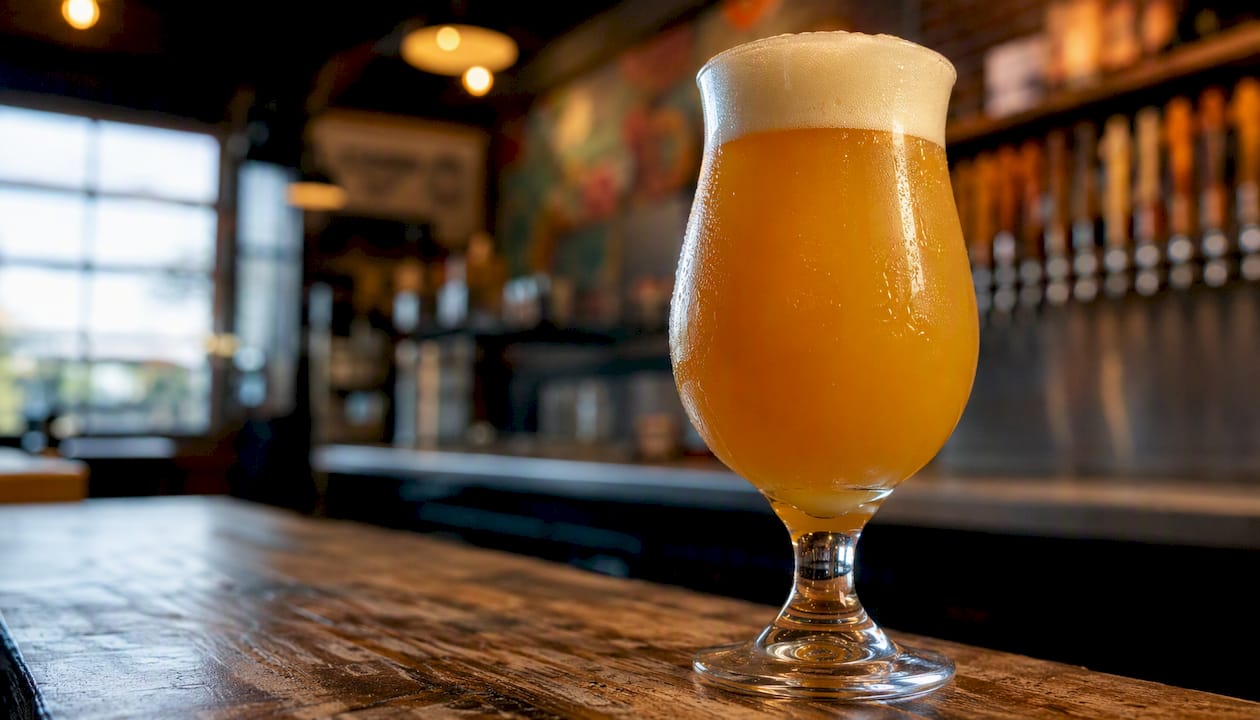
When you’re tasting one, look for a few signals: an aroma that’s noticeably more intense than a standard IPA of the same style, hop flavour that lingers on the palate rather than fading fast, and bitterness that feels restrained given how much hop character is present. A well-made DDH beer should smell louder than it tastes bitter.
| Sensory cue | What it suggests |
|---|---|
| Big aroma before first sip | Fresh, well-timed dry hop |
| Juicy or tropical notes | Citra, Mosaic, or similar modern varieties |
| Soft, rounded bitterness | Cold-side hopping dominates over boil hopping |
| Haze with fruity aroma | Likely a hazy/NEIPA-style DDH beer |
| Faded or grassy aroma | Beer may be past its freshness window |
The trade-offs behind every DDH pour
DDH beers cost more to make, and that cost eventually lands somewhere: on the price tag, the shelf life, or occasionally the consistency between batches.
On the upside, the benefits are real: a noticeably stronger, more expressive hop aroma, a beer that stands out on a crowded tap list, and a genuine point of difference breweries can market honestly, since consumers do reliably associate the term with a bigger hop hit, as Craft Beer Joe’s consumer-facing breakdown confirms.
The downsides are less visible to the drinker but very real for the brewery:
- Beer loss. Every gram of hop matter, whether pellet or whole cone, soaks up beer that never makes it into a can.
- Hop creep. Enzymes naturally present in hops can restart fermentation once added, sometimes drying the beer out or producing off-flavours if not managed carefully.
- Oxidation risk. Every time a fermenter or brite tank is opened for another dry-hop addition, there’s a fresh chance for oxygen to sneak in, and oxidation is the single fastest way a hop-forward beer loses its aroma.
- Shorter freshness window. The more delicate and intense the aroma, the faster it fades. A DDH IPA is not a beer to let sit at the back of a fridge for months.
Staged, well-timed dry-hop additions can produce a more complex and intense aroma while using less total hop mass than one oversized single dose, though excessive additions bring diminishing returns and greater beer loss.
That’s the core tension in the technique, and it’s worth remembering the next time a DDH can costs a pound or two more than its standard equivalent: someone paid for that hop bill, that lost beer, and the yeast that couldn’t be reused for the next batch.
Practically, that means brewers price DDH releases higher, package them as smaller, more frequent batches rather than year-round staples, and expect careful drinkers to notice the difference between a fresh pour and a tired one. It’s worth reading up on what genuinely marks out an independent craft beer from a bigger brand imitation, since DDH labelling is exactly the kind of detail that separates a considered small-batch release from a formulaic one.
How to read a DDH label and judge what’s in the glass
The word “DDH” alone doesn’t tell you much on its own. What surrounds it on the label or the tap badge tells you far more.
Look for the beer style named alongside DDH (hazy IPA, West Coast IPA, pale ale), since that context shapes what aroma profile to expect. Check for named hop varieties like Citra, Mosaic, or Nelson Sauvin, because the variety tells you more about flavour than the DDH label ever will. Look for a canning or packaging date, or a “dry hopped on” date, since freshness matters enormously for aroma-driven beers. Note the ABV and separate it mentally from the DDH claim. As Renegade Brewery points out, DDH describes a hopping technique, not strength, so a beer can be a Double IPA and DDH simultaneously, or neither, or just one.
A quick tasting checklist when you’ve got a DDH pint in front of you:
- Aroma intensity: does it smell noticeably stronger than a standard IPA before you drink?
- Hop character clarity: can you pick out specific notes (citrus, tropical, pine) rather than a vague hoppy blur?
- Bitterness level: does the bitterness feel proportionate, or has it been overwhelmed by aroma with no backbone at all?
- Mouthfeel: soft and rounded (common in hazy styles) or crisp and dry (more common in West Coast leaning DDH beers)?
- Freshness signals: a recent pack date, cold storage in the fridge or on tap, and minimal time since the keg was tapped.
Pro Tip: Serve DDH beers slightly warmer than an ice-cold lager, somewhere around 7 to 10°C. Too cold and you mute the aroma compounds that make the whole style worth drinking.
Storage matters just as much as serving temperature. Keep cans and bottles refrigerated rather than at room temperature, since warmth accelerates the breakdown of hop oils. Drink DDH beers sooner rather than later. Where a standard pale ale might hold its character for months, a hop-forward DDH beer is often at its best within a few weeks of packaging. Pour into a proper glass rather than straight from the can, since a wider glass mouth lets more aroma reach your nose before the first sip.
Where to actually try a well-made DDH beer
Specialist taprooms with fast stock turnover are your best bet, since a beer that’s been sitting in a distributor’s warehouse for three months has usually lost much of what made it exciting. Bottle shops that clearly rotate stock and keep cold storage are next best. Rotating-cask or rotating-tap venues that change their line-up frequently tend to prioritise freshness over shelf stability, which matters enormously for this style.
When you’re at the bar, a few questions get you a better pour and a better conversation:
- Ask when the beer was dry hopped or packaged, not just when it arrived at the venue.
- Ask which hop varieties went into it, since that tells you more than the DDH label alone.
- Ask whether it’s the same base recipe as a non-DDH version on the same list, which lets you taste the difference the technique makes directly.
A well-managed beer fridge or tap list should have visible rotation. If you’re browsing what to drink on a visit to Fiveways, the same logic applies: fresher, faster-moving stock beats a static list every time, especially for hop-forward styles like this one.
The equipment and techniques behind a DDH batch
Most DDH production happens in fairly ordinary brewery kit. What differs is process discipline, not exotic machinery. Conical fermenters with a dedicated dry-hop port let brewers add hops without fully opening the vessel, cutting oxidation risk at exactly the moment it’s highest. Some breweries use hop cannons or venturi systems to push pellet hops into a tank under pressure, again minimising the time the tank sits open to air. Brite tanks used for the second dry-hop stage let brewers add hops after fermentation has settled, reducing the yeast interaction that drives hop creep.
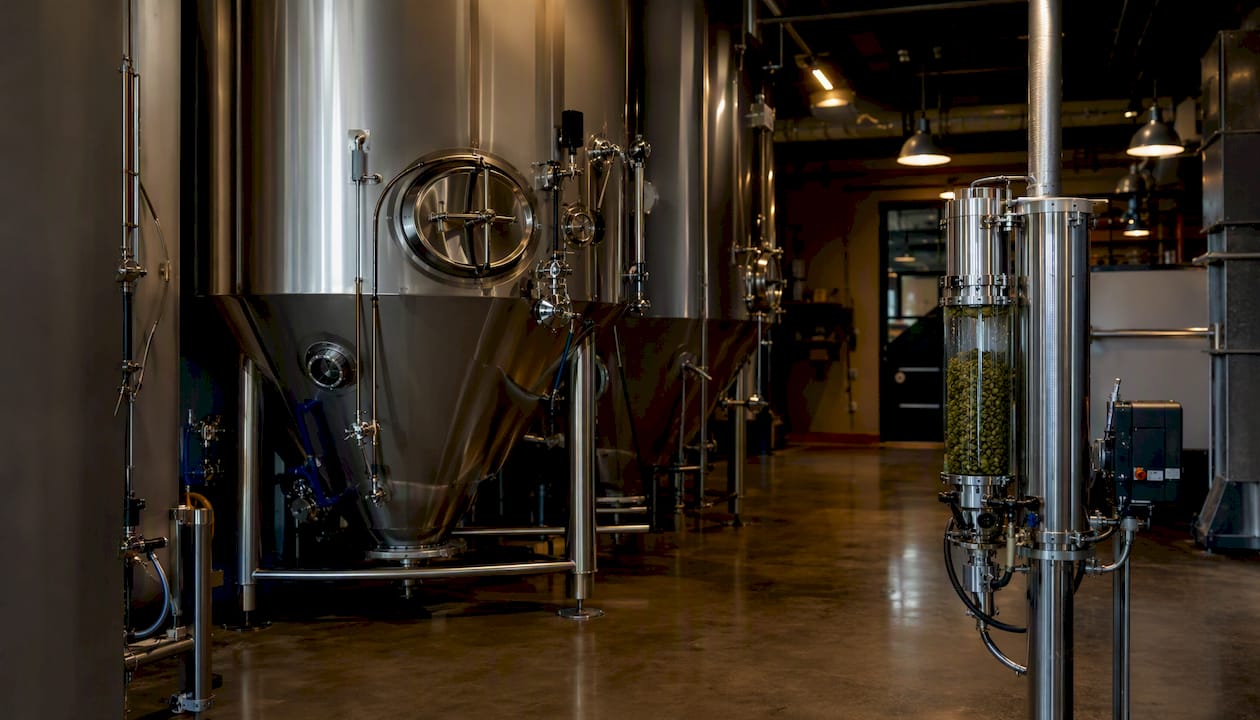
Smaller and home-scale operations often rely on simpler methods, hop bags or muslin sacks lowered into a fermenter, but the underlying goal is identical to what larger breweries chase with pressurised dosing kit: get the hops in contact with the beer with as little oxygen exposure as possible.
Why hop variety changes everything about a DDH beer
The DDH technique is a delivery method. The hop variety is what actually determines the flavour you get delivered. Two DDH IPAs using the same doubling method but different hops can taste like entirely different beers.
Modern, high-oil varieties like Citra, Mosaic, Idaho 7, and Sabro tend to reward the DDH treatment most dramatically, because their aromatic oil content is high enough that doubling the dry-hop rate produces a genuinely noticeable jump in intensity. Older, more traditional English and noble varieties, lower in these aromatic oils, sometimes show diminishing returns from doubling, which is part of why DDH has become so strongly associated with modern American and New World hop varieties rather than classic English bitters.
How to store and serve a DDH beer at its best
Cold, dark, and quick is the rule for anything hop-forward. Store cans and bottles in a fridge rather than a cupboard, since light and warmth both degrade hop aromatics over time, and light exposure specifically causes the skunking reaction in clear or green glass. Drink within a few weeks of the packaging date rather than letting a can sit for months. Pour into a tulip or wide-mouthed glass to concentrate and direct the aroma toward your nose. Serve around 7 to 10°C, cold enough to keep the beer refreshing but not so cold that it mutes the aromatic oils you paid extra for.
Why this taproom curates DDH releases the way it does
Every time a DDH beer lands on the bar at Lost And Found, someone on the team has already asked the brewery when it was dry hopped and how fresh the batch is. That’s not box-ticking. A DDH beer that’s spent two months in a warehouse before reaching Fiveways has usually lost the exact thing that made it worth stocking in the first place.
The rotating selection here favours independent breweries across the UK precisely because smaller producers tend to move stock faster and brew in tighter batches, which suits a hop-forward, fast-fading style far better than a beer built to sit on a shelf for a year… Full details of what’s currently pouring, DDH or otherwise, sit on the beer menu online, alongside the food menu for anyone planning a longer visit…
Try a DDH pour at Lost And Found
If everything above has you curious what a genuinely fresh, well-timed DDH beer actually tastes like, the simplest way to find out is to come and taste one. Lost And Found Taproom’s rotating line-up regularly features double dry hopped IPAs from independent UK breweries, chosen because the stock turns over quickly rather than sitting around losing its aroma.
The current line-up, including whatever DDH beers are pouring this week, is always listed on the beer menu, alongside the food menu for anyone making an evening of it. Everything on tap can be enjoyed in the taproom or taken home in bottles, so there’s no pressure to finish a flight in one sitting… Pop in to Fiveways, ask a member of staff what’s freshest on the DDH front, and taste the difference a proper dry-hop schedule makes.
Frequently asked questions about DDH beer
What does DDH stand for on a beer can? DDH stands for double dry hopped. It tells you the brewer used an intensified dry-hopping process, either two separate hop additions or a doubled quantity, to boost aroma and flavour after the boil.
Is DDH the same as a Double IPA (DIPA)? No. DDH refers to the hopping technique and aroma intensity, while DIPA refers to strength, typically a higher ABV and more malt body. A beer can be both, either, or neither, since Renegade Brewery confirms the two terms describe entirely different things.
Does DDH make a beer more bitter? Not significantly. Dry hopping happens on the cold side after the boil, so it extracts aromatic oils rather than the bittering compounds created by isomerisation during boiling. Expect more aroma and flavour, not more bite.
How long do DDH beers stay fresh? Considerably less time than a standard pale ale or lager. The intense aromatic oils that make DDH beers exciting also degrade fastest, so drinking within a few weeks of the packaging date, and storing cold the whole time, preserves far more of the character.
Why do some DDH beers taste stronger than others? Because there’s no fixed standard for “double.” One brewery’s two-stage dry hop might use a completely different total hop quantity than another’s single doubled charge, and the specific hop varieties used matter just as much as the method.
Sources
The clearest technical breakdown of the process comes from BarthHaas’s explainer on double dry hopping, a hop merchant with direct access to brewing trials on staged additions and yeast interaction. For the consumer-facing side of the debate, VinePair’s DDH explainer and Craft Beer Joe’s breakdown both cover why the term means slightly different things depending on who you ask. Wine Enthusiast and Beer Connoisseur offer accessible, general-interest explanations connecting DDH to the rise of hazy IPA styles, while Renegade Brewery’s piece on DDH versus DIPA is worth a read if you’ve ever mixed the two terms up.
- What is double dry hopping (DDH) | BarthHaas
- WTF is DDH? It Depends on Whom You Ask. | VinePair
- What is Double Dry Hopped in Beer? | Wine Enthusiast
- What Is DDH Beer? - The Beer Connoisseur®
- What Is A DDH Beer? The Confusing & Hoppy Term - Craft Beer Joe
Recommended
- Are Hazy IPAs Dead? Why Brighton is Rediscovering the Joy of Proper Independent Lager - Lost And Found Craft Beer Taproom Brighton
- Hand Brew Co in Brighton: Why Their Beers (Like ‘Toad Licker’) Are a Must-Try at Lost and Found Taproom - Lost And Found Craft Beer Taproom Brighton
- Our Beer Menu | Explore Our Ever-Changing Beer Lineup - Lost And Found Craft Beer Taproom Brighton
- Brighton Beers vs Big Brand: 5 Signs Your “Craft” Beer Isn’t Actually Independent (What to Look For Instead) - Lost And Found Craft Beer Taproom Brighton