The complete lager styles guide: every type explained
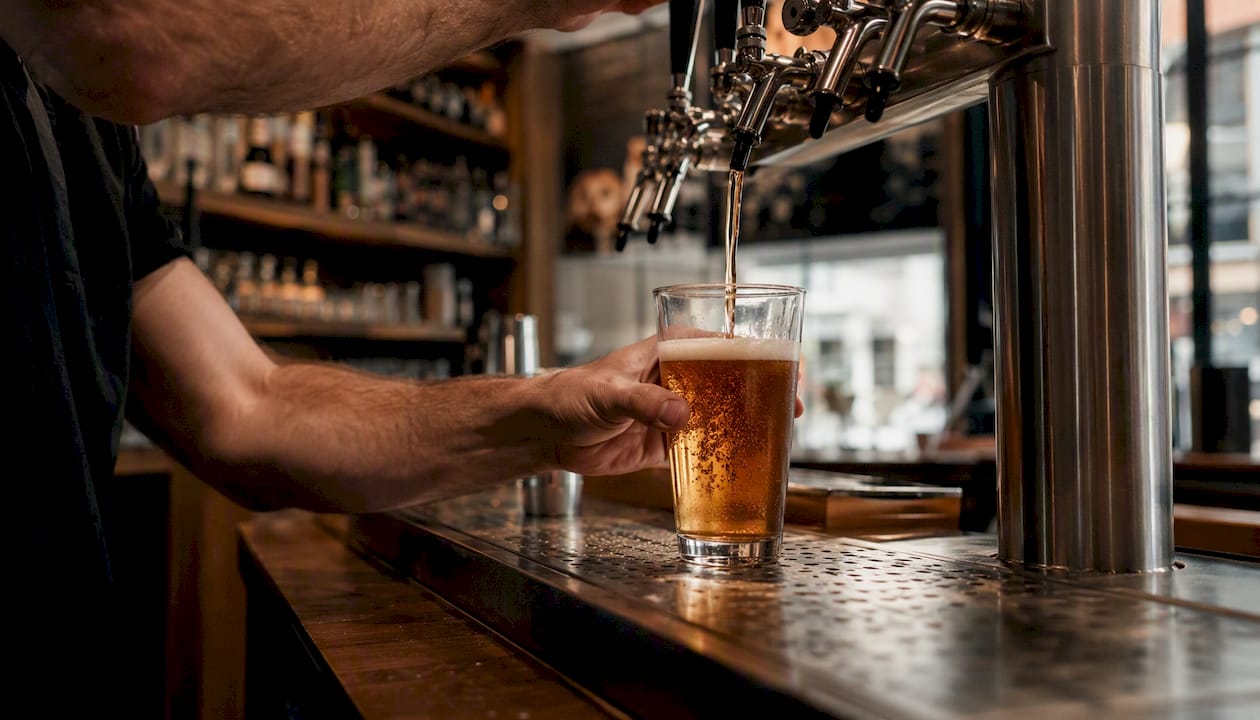
A lager is a beer fermented with cold-tolerant, bottom-fermenting yeast (Saccharomyces pastorianus) and then matured through extended cold conditioning, a process known as lagering. That method, not colour or strength, is what defines the category. The BJCP style guidelines and the Brewers Association both classify lagers by this process. At Lost And Found Taproom in Brighton, we use the same framework when curating our rotating tap list.
Three hallmarks define every true lager, regardless of shade or origin:
- Clean fermentation character: cold temperatures suppress the fruity esters and spicy phenols that ale yeast produces, letting malt and hops speak clearly
- Crisp, dry finish: extended lagering scrubs residual yeast-derived flavours and clarifies the beer naturally
- Broad colour range: from pale straw (Czech pilsner) to near-black (Schwarzbier, Baltic porter) — lager is a method, not a shade
Key takeaways
Lager is defined by cold fermentation and extended cold conditioning, not by colour — the category spans everything from pale pilsner to near-black Baltic porter.
| Point | Details |
|---|---|
| Lager is a method, not a colour | Cold fermentation with Saccharomyces pastorianus and lagering define the category; styles range from straw to black |
| The diacetyl rest is non-negotiable | Raising temperature to ~14°C near the end of fermentation lets yeast reabsorb buttery off-flavours; skipping it ruins otherwise good lager |
| Czech vs German pilsner | Czech pilsner is softer and rounder (Saaz-forward, soft water); German pilsner is drier and crisper (harder water, more bitter snap) |
| Helles vs pilsner | Helles is malt-forward with low bitterness (16–22 IBU); pilsner leads with hop character and higher bitterness (25–45 IBU) |
| Lost And Found Taproom | Rotating lager selection from independent UK breweries and quality imports; browse the current tap list online before visiting |
Table of Contents
- What actually makes a lager different from an ale?
- Your lager styles guide: the complete style catalogue
- How malts, hops, yeast, and water shape each style
- How lagers are brewed: the process from mash to glass
- How to taste a lager and identify its style
- Practical tips for homebrewers attempting lagers
- Serving lagers: temperature, glassware, and food pairings
- UK-available lagers: what to look for and where to find them
- Why lagers deserve more respect than they get
- Taste the styles at Lost And Found Taproom
- Sources
What actually makes a lager different from an ale?
The short answer is yeast behaviour at low temperatures. Lager yeast settles to the bottom of the fermenter and works best between roughly 9–14°C during primary fermentation, compared with the 18–22°C that most ale strains prefer. At those cooler temperatures, yeast metabolism slows, producing far fewer esters and phenols. As Firestone Walker explains, that reduced ester and phenol production is precisely what gives lagers their characteristic crispness, allowing malt and hop nuances to show through without fruity or spicy interference.
After primary fermentation, the beer moves into cold conditioning (lagering) near 0–4°C for anywhere from a few weeks to several months. This stage clarifies the beer, softens any remaining harsh notes, and lets the yeast reabsorb certain off-flavours before packaging.
The diacetyl rest is the step most people overlook. Near the end of primary fermentation, brewers raise the temperature briefly to around 14°C. That short warm period lets the yeast reabsorb diacetyl, a compound that produces a slick, buttery sensation. Skip it, and even an otherwise well-made lager can taste like movie-theatre popcorn. Lallemand’s lagering methods digest identifies the diacetyl rest and higher pitching rates as two of the most critical variables in professional lager quality.
A concise process timeline looks like this:
- Primary fermentation: 9–14°C, typically 1–2 weeks
- Diacetyl rest: raise to ~14°C for 24–48 hours near terminal gravity
- Cold conditioning (lagering): 0–4°C for 4–12 weeks depending on style
- Packaging: filter or fine, then carbonate to style
Pro Tip: When tasting a lager, warm a small sip in your mouth for a few seconds. If you detect a slick, buttery coating on the palate, that is diacetyl — a process fault in most styles, though a very faint hint is acceptable in some Czech pilsners.
Your lager styles guide: the complete style catalogue
The VinePair global lager styles guide maps the category well, and the American Homebrewers Association notes that some hybrid styles blur the ale/lager line entirely. Below is the full catalogue, organised from pale to dark, then stronger specialities and modern variants.
Pale and light lagers
Czech pilsner is the original. Pilsner Urquell, brewed in Plzeň since 1842, set the template: pale golden colour (3–4 SRM), pronounced Saaz hop spiciness, a soft rounded malt body from Bohemian floor-malted barley, and a lingering bitterness (35–45 IBU). The soft, low-mineral water of Bohemia is inseparable from the style’s character. Serve at 7–9°C in a tall, tapered pilsner glass or a dimpled mug.
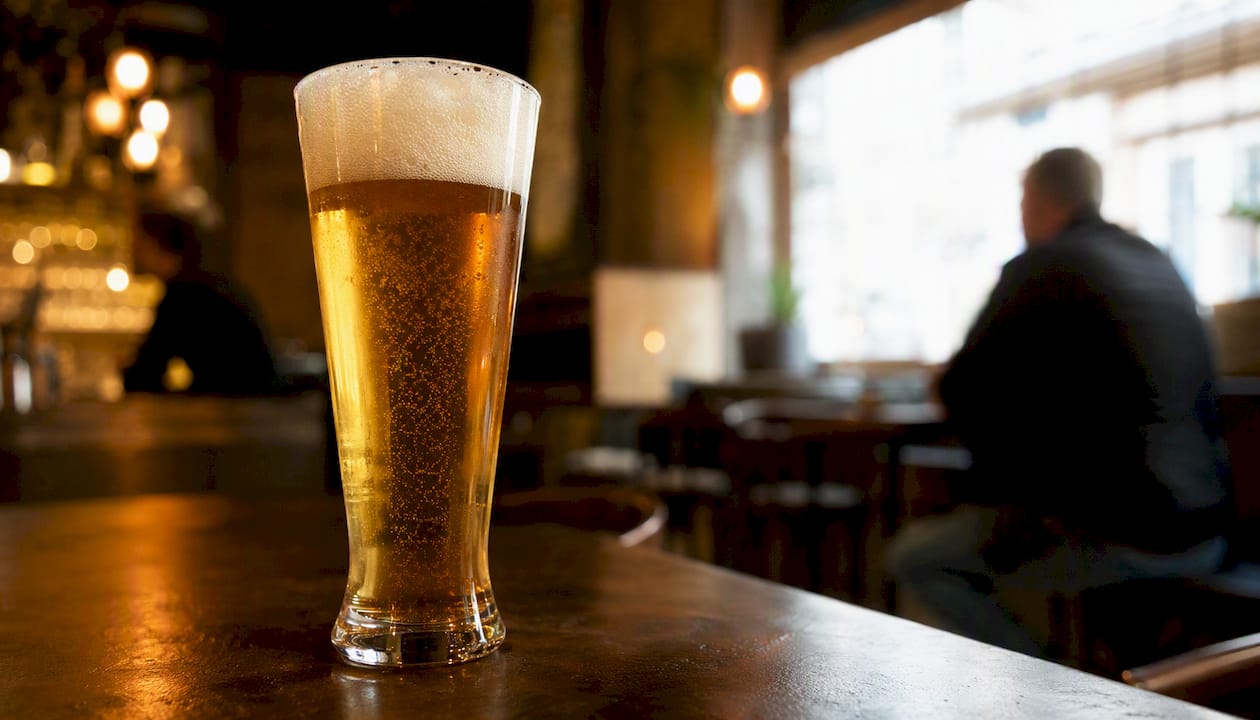
German pilsner shares the pale colour but reads differently in the glass. Bitburger Premium Pils is the textbook example: drier, crisper, and more assertively bitter (25–45 IBU) than its Czech cousin, with a lighter body and a more pronounced hop snap. German water tends to be harder, which accentuates bitterness. Same glassware as Czech pilsner, slightly cooler at 6–8°C.
Munich helles was Bavaria’s answer to the pilsner craze of the late 19th century. Weihenstephaner Original Helles is the benchmark: pale gold (3–5 SRM), soft malt sweetness, gentle noble hop character, and a clean, easy finish. The helles vs pilsner distinction is essentially malt-forward versus hop-forward at similar strengths. A Masskrug (one-litre Bavarian stein) is traditional; a standard pint glass works fine. Serve at 7–9°C.
Dortmunder/export sits between helles and pilsner in character: slightly fuller-bodied than a German pils, drier than a helles, with a balanced malt-hop profile. Harder Dortmund water gives it a mineral edge. Less common in UK retail, but worth seeking out.
Amber and red lagers
Vienna lager is the style that inspired Märzen. Amber-copper in colour (9–15 SRM), it carries toasty Vienna malt character, a clean malt sweetness, and restrained hop bitterness (18–30 IBU). Originally from Austria, it survived largely through Mexican brewing traditions (think Modelo Negra) before a craft revival. A tall, clear glass shows the colour well.
Märzen/Oktoberfest is the beer of Munich’s festival season. Traditionally brewed in March (März) and lagered through summer for September release. A Masskrug or a handled glass stein is the correct vessel.
Dark lagers
Dunkel is Munich’s original dark lager, predating pale styles by centuries. It is not roasty in the way a stout is — the malt sweetness stays clean and rounded. Serve at 9–11°C in a handled mug.
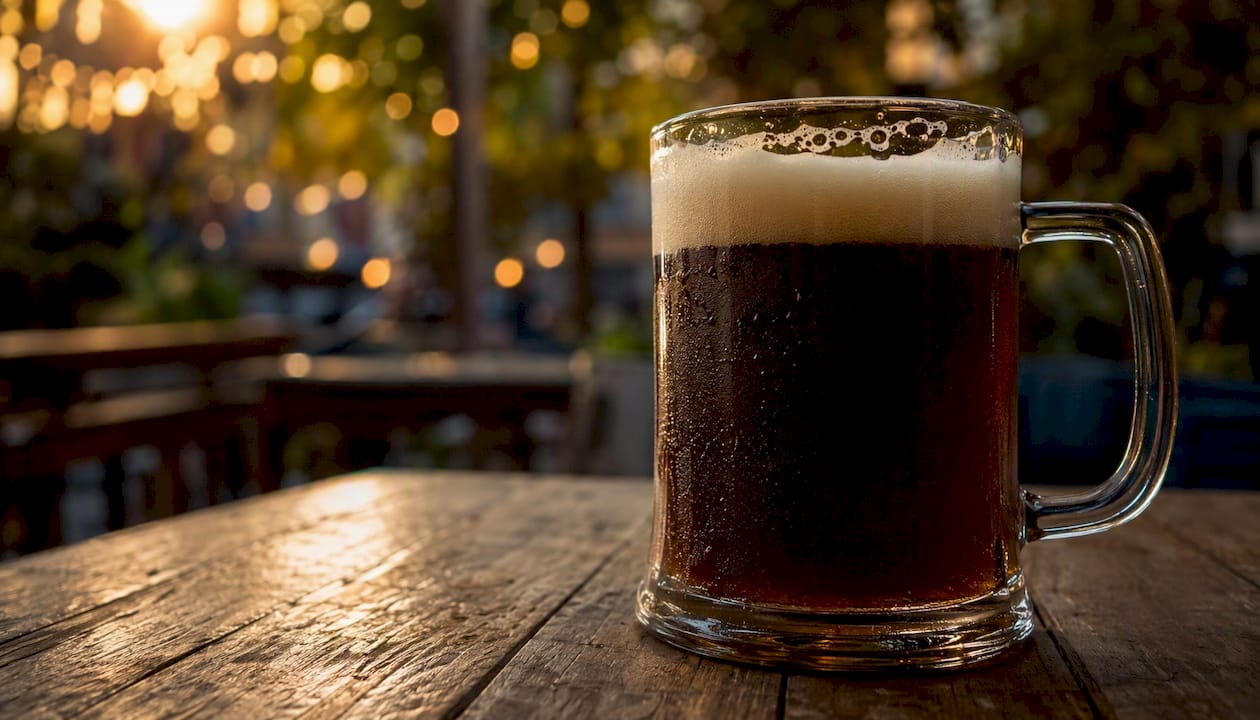
Schwarzbier (black beer) goes darker still (25–30 SRM) but remains surprisingly light-bodied and dry. Think of it as the lager world’s answer to a dry stout, but cleaner and less bitter. A Willi Becher or tulip glass works well.
Stronger and speciality lagers
The strength is there, but the pale colour surprises drinkers expecting a dark bock.
Doppelbock doubles down on malt intensity. Monastic brewers developed the style as “liquid bread” for Lenten fasting. A snifter or tulip glass concentrates the aroma. Serve at 10–12°C.
Deep amber to dark brown, intensely malty, with a warming alcohol presence. Rare in UK retail but occasionally available from specialist importers.
Baltic porter occupies a fascinating position: brewed with lager yeast but with the colour and roasted character of a porter. It emerged in the Baltic states and Poland as a cold-climate adaptation of British porter, fermented with lager yeast for the region’s cold winters.
Hoppy and modern variants
India Pale Lager (IPL) applies IPA-level hop loading to a lager base. Modern lager yeast strains, including novel types like LalBrew NovaLager, make this combination increasingly practical for brewers. Several UK craft breweries now produce year-round IPLs.
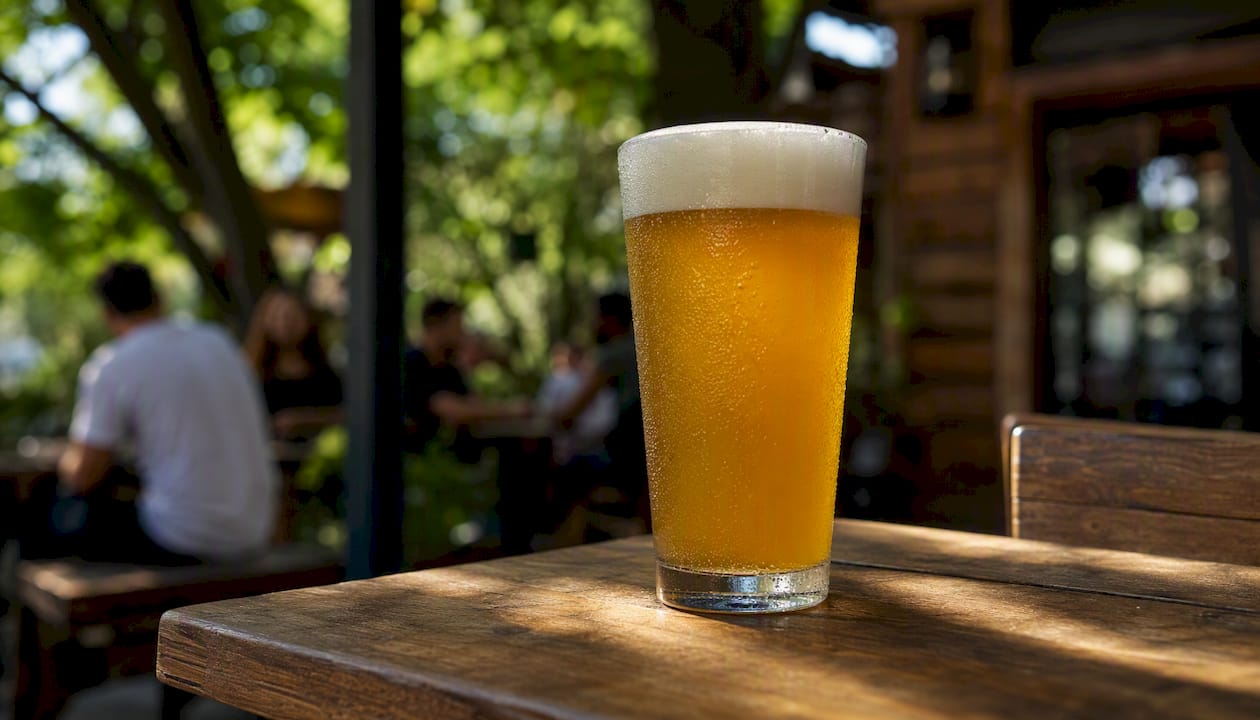
Kellerbier is an unfiltered, naturally conditioned lager served young, often directly from the tank. Hazy gold to amber, yeasty, with a fresh hop character and lower carbonation. A Krug or handled mug is traditional. Expect it on draught rather than in bottles.
Hybrid styles: where ale meets lager
Kölsch uses ale yeast but ferments cold and conditions even colder, producing a clean, pale, delicately fruity beer that reads almost like a helles. Altbier does the same with a darker, more bitter profile. As the American Homebrewers Association notes, these hybrids demonstrate that the ale/lager divide is a practical label, not an absolute rule. California common (steam beer) flips the script: lager yeast fermented at ale temperatures, producing a malty, moderately bitter amber beer with a distinctive woody hop character.
Pro Tip: When comparing helles vs pilsner side by side, pour both at the same temperature and smell before tasting. The helles will show soft, bready malt; the pilsner will lead with spicy, herbal Saaz. That aroma difference tells you more about the style distinction than any description.
How malts, hops, yeast, and water shape each style
Lager’s clean fermentation profile means ingredients have nowhere to hide. As Firestone Walker observes, small changes in base malt or water profile produce large, perceptible differences in the finished beer — a fact that explains why German and Czech pilsners taste so distinct despite sharing the same broad style category.
Base malts set the foundation. Pilsner malt produces a pale, light-bodied beer with a delicate grainy sweetness. Vienna malt adds a toasty, biscuity layer and a deeper amber colour. Munich malt (available in light and dark versions) pushes further into bread crust, toffee, and chocolate territory without requiring roasted barley. Dunkel and Märzen rely heavily on Munich malt; helles and Czech pilsner use predominantly pilsner malt with little or no speciality addition.
Hops in traditional lagers are almost exclusively noble varieties: Saaz (Czech pilsner’s signature spicy, herbal character), Hallertau Mittelfrüh (soft, floral, Bavarian), Spalt (earthy, slightly spicy), and Tettnang (delicate, herbal). IPLs break from tradition entirely, using American or New Zealand varieties for tropical, citrus, or stone-fruit aromas layered over a clean lager base.
Yeast strain selection matters more in lagers than in most ale styles, precisely because there is so little else to mask strain character. The majority of commercial lager strains belong to the Frohberg group and produce a clean, neutral profile. Novel strains like LalBrew NovaLager are engineered for faster fermentation and even cleaner output, making them popular for modern IPL and cold IPA production.
Water chemistry is where the Czech pilsner vs German pilsner distinction becomes tangible. Plzeň’s water is exceptionally soft, with very low mineral content, which softens bitterness and rounds the malt. German brewing centres like Munich and Dortmund have harder water with higher carbonate and sulphate levels, accentuating hop bite and producing a drier finish. Homebrewers who want to replicate a Czech pilsner should strip their water back to near-distilled levels and build up only with calcium chloride.
Ingredient signatures by style group:
- Czech and German pilsner: Saaz or Hallertau hops, pilsner malt, soft to moderately hard water, neutral lager yeast
- Helles and Märzen: Hallertau hops, pilsner and Munich malt blend, Bavarian lager yeast, medium-soft water
- Dunkel and Schwarzbier: Munich dark malt, Hallertau or Spalt hops, debittered roasted barley (Schwarzbier only), soft water
- Bock family: High proportion of Munich malt, minimal hopping, extended lagering, strong lager yeast strains
- Baltic porter: Pale and dark Munich malt, roasted barley, moderate hopping, lager yeast pitched at cold temperatures
- IPL: Pilsner malt base, American/NZ hops, modern neutral lager yeast or NovaLager-type strains
That single substitution is the clearest demonstration of how ingredient-sensitive lagers are.*
How lagers are brewed: the process from mash to glass
Lager brewing demands more patience and process discipline than most ale styles. The timeline below is a practical overview; the Lallemand lagering methods digest goes deeper on each stage.
- Mash: typically a single infusion at 64–67°C for standard lagers; decoction mashing (boiling a portion of the mash) is traditional for Czech pilsner and Märzen, adding melanoidin complexity
- Boil: 60–90 minutes; vigorous boil is important for clarity and driving off DMS (dimethyl sulphide), a cooked-corn off-flavour common in lagers
- Cool: chill wort rapidly to 9–12°C before pitching — slower chilling risks contamination and DMS retention
- Pitch yeast: at a higher rate than ale yeast; Lallemand recommends roughly 1.0–1.5 million cells per ml per degree Plato for lager yeast, compared with lower rates for most ales
- Primary fermentation: 9–14°C for 1–2 weeks; monitor gravity daily as fermentation slows
- Diacetyl rest: raise to ~14°C for 24–48 hours when the beer is within a few gravity points of terminal
- Cold conditioning (lagering): drop to 0–4°C and hold for 4–12 weeks depending on style; longer for bocks and doppelbocks
- Packaging: filter or fine with isinglass or Irish moss, then carbonate to style (lagers are typically carbonated at 2.4–2.6 volumes CO₂)
Lagers expose every flaw in your process. Poor sanitation, underpitching, insufficient boil vigour, or sloppy temperature control all show up with nowhere to hide — because there are no fruity esters or roasted malts to mask them. That is not a reason to avoid brewing lagers; it is the reason brewing a good one is genuinely satisfying.
For homebrewers, the essential equipment list:
- Temperature-controlled fermentation chamber (a chest freezer with an Inkbird or similar controller works well)
- Accurate thermometer (digital probe, not dial)
- Closed fermentation vessel with airlock or spunding valve
- Yeast starter kit or dry lager yeast (e.g. LalBrew Diamond or Saflager W-34/70)
- Finings (Irish moss in the boil, gelatine or isinglass at cold-conditioning stage)
- Patience: budget at least 8 weeks from brew day to first pour
How to taste a lager and identify its style
Tasting lagers systematically is more rewarding than it sounds. Because the fermentation character is deliberately neutral, you are reading malt, hops, and water rather than yeast. Our step-by-step beer tasting guide covers the full method; here is the lager-specific checklist.
Visual: Pour into a clean, appropriate glass. Note colour (straw, gold, amber, brown, black) and clarity (bright, hazy, or opaque). Lagers should generally be bright unless they are Kellerbier or an unfiltered craft variant. Head retention and bubble streams tell you about carbonation and protein content.
Aroma: Swirl gently. In pale lagers, look for: grainy or bready malt (helles), spicy/herbal Saaz (Czech pilsner), or floral Hallertau (Bavarian styles). In dark lagers: chocolate, bread crust, or roasted notes (Dunkel, Schwarzbier). Any butter or butterscotch is diacetyl — a fault. Cooked corn or creamed sweetcorn is DMS — another fault.
Palate: Take a full sip and let it coat the tongue. Note sweetness (malt body), bitterness (hop presence), and carbonation level. Czech pilsner has a soft, rounded bitterness; German pilsner snaps drier. Helles is malt-forward with minimal bitterness. Doppelbock is rich and warming. Baltic porter has roasted depth without the heavy body of a British stout.
Finish: How long does the bitterness linger? Does the malt sweetness fade cleanly? A good lager finishes crisp and dry, with no cloying residual sweetness and no harsh astringency.
Tasting checklist:
- Colour: straw / gold / amber / brown / black?
- Clarity: bright / hazy / opaque?
- Aroma: malt type (grainy, bready, toasty, roasted) and hop type (spicy, floral, herbal, tropical)?
- Any off-aromas: butter (diacetyl), cooked corn (DMS), cardboard (oxidation), phenolic (chlorophenol)?
- Palate: malt sweetness level and hop bitterness level (low / medium / high)?
- Body: light / medium / full?
- Finish: dry / sweet / bitter / clean?
- Style guess: which category does it fit?
Common faults and how they differ from stylistic traits:
- Diacetyl (butter): always a fault in German and Czech lagers; a very faint hint is tolerated in some traditional Czech pilsners
- DMS (cooked corn/vegetables): process fault from insufficient boil vigour or slow chilling
- Oxidation (cardboard, sherry): packaging or serving fault; stale beer
- Phenolic (medicinal, plastic): wild yeast contamination or chlorinated water reacting with malt compounds
Pro Tip: At a taproom, ask for a small taster of the lager before committing to a full pour. Smell it first, then taste. If the first impression is butter or cooked vegetables, send it back — those are process faults, not style characteristics.
Practical tips for homebrewers attempting lagers
Lagers are not harder to brew than ales in terms of recipe complexity. They are harder to brew well because the process demands consistency. These are the points that matter most.
Yeast handling:
- Use dry lager yeast (Saflager W-34/70 or LalBrew Diamond) for reliability; rehydrate per packet instructions at 25–30°C, then cool to within 5°C of wort temperature before pitching
- For liquid strains, build a starter 24–48 hours ahead and cold-crash it before pitching
- Pitch at a higher rate than you would for an ale; underpitching is the single most common cause of sluggish lager fermentation and off-flavours, as Lallemand confirms
Temperature control:
- Ferment at 10–12°C for the first week; do not rush this stage
- Raise to 14°C for the diacetyl rest when gravity is within 2–3 points of your target final gravity
- Drop slowly (1–2°C per day) to 0–2°C for lagering; crashing too fast can stress yeast and cause haze
- Hold at 0–2°C for a minimum of 4 weeks for a standard pilsner or helles; 8–12 weeks for bocks
Shortcuts that work:
- Fermenting with Saflager W-34/70 at 14–16°C (the “warm lager” method) produces a cleaner result than many homebrewers expect, though it lacks the depth of true cold fermentation
- Gelatine fining at cold-conditioning temperature clears a lager faster than waiting for natural clarification
Shortcuts to avoid:
- Do not skip the diacetyl rest, even if your gravity looks stable
- Do not rush lagering to under 2 weeks; the beer will taste green and harsh
- Do not use ale yeast and call it a lager — the ester profile will be immediately obvious
Gravity and attenuation targets:
- Standard pilsner or helles: original gravity 1.044–1.052, final gravity 1.006–1.012, attenuation 75–80%
- Märzen: original gravity 1.054–1.060, final gravity 1.010–1.014
- Doppelbock: original gravity 1.072–1.112, final gravity 1.016–1.024
Pro Tip: Check gravity with a refractometer or hydrometer two days in a row before starting the diacetyl rest. If the reading has not moved, fermentation is stalling — not finishing. Rouse the yeast gently by swirling the fermenter before raising temperature.
Serving lagers: temperature, glassware, and food pairings
Temperature is the variable most drinkers underestimate. Serving a Czech pilsner at 4°C (straight from a standard fridge) suppresses the very Saaz hop aroma that makes it worth drinking. The beer glassware guide at Lost And Found Taproom covers vessel choices in detail; here are the lager-specific essentials.
Serving temperatures by style group:
- Light lagers (helles, Dortmunder, Kellerbier): 7–9°C
- Czech and German pilsner: 7–9°C (Czech pilsner benefits from the slightly warmer end)
- Vienna lager and Märzen: 8–10°C
- Dunkel and Schwarzbier: 9–11°C
- Bock, doppelbock, and Baltic porter: 10–13°C (warmer temperatures open up the malt complexity)
Glassware:
- Tall pilsner glass or Willi Becher: Czech and German pilsner, helles, Schwarzbier
- Masskrug (one-litre stein) or handled mug: Märzen, Dunkel, Kellerbier
- Snifter or tulip: doppelbock, eisbock, Baltic porter
- Pint glass: IPL, California common, Kölsch
Food pairings:
Pale lagers (pilsner, helles):
- Grilled white fish, chicken schnitzel, fresh salads, mild soft cheeses
- The carbonation and bitterness cut through light fried foods cleanly
Amber and dark lagers (Märzen, Dunkel, Schwarzbier):
- Roast pork, bratwurst, smoked meats, aged Cheddar, mushroom dishes
- The toasty malt complements caramelised and roasted flavours in food
Strong lagers (doppelbock, Baltic porter):
- Dark chocolate desserts, blue cheese, slow-braised beef, venison
- The malt richness stands up to bold, fatty, or intensely flavoured dishes
For spicy food, a cold pilsner or helles works better than most ales — the carbonation and clean bitterness cool the palate without adding competing flavour. Our beer with spicy food guide has more on this.
Taproom serving note: Kellerbier and unfiltered lagers should be poured gently down the side of the glass to preserve the natural haze and avoid over-agitating the yeast sediment. A cellar-temperature pour (around 10°C) is closer to how these beers were traditionally served.
UK-available lagers: what to look for and where to find them
Finding authentic examples of each style in the UK is easier than it was a decade ago. CAMRA’s style notes on lager and pilsner are a useful reference for what to expect in British pubs and bottle shops. Here is a style-by-style map of what to seek out.
- Czech pilsner: Pilsner Urquell is the non-negotiable starting point, widely available in supermarkets, specialist bottle shops, and on draught at Czech-focused pubs. It is the clearest expression of the style in the UK market
- German pilsner: Bitburger Premium Pils is the most accessible import; look for it in larger supermarkets and German-style beer shops
- Munich helles: Weihenstephaner Original Helles is the benchmark import; Camden Hells is the most prominent UK-brewed helles, widely available in supermarkets and independent bottle shops across England
- Märzen/Oktoberfest: Paulaner Oktoberfest Märzen appears seasonally (August through October) in specialist retailers and some supermarkets
- Dunkel: Ayinger Altbairisch Dunkel is available through specialist importers and German beer shops; less common in mainstream retail
- Schwarzbier: Köstritzer Schwarzbier is the most accessible UK option, stocked by Waitrose and specialist bottle shops
- Doppelbock: Paulaner Salvator is the easiest to find; available in German delis, specialist beer shops, and some Waitrose branches
- Baltic porter: Żywiec Porter is available in Polish delis and specialist bottle shops across the UK, particularly in cities with larger Polish communities
- Modern UK craft lagers: Meantime London Lager is a clean, accessible UK-brewed pilsner-style lager available nationally; Camden Hells is the most visible UK helles-style. Both are good entry points for readers new to craft lager
- IPL: Several UK craft breweries produce seasonal or year-round IPLs; check independent bottle shops and taproom tap lists for current options
For readers in Brighton, Lost And Found Taproom’s rotating beer menu regularly features independent lagers from UK breweries alongside carefully selected imports. The tap list changes frequently, so it is worth checking the menu online before visiting. Our piece on independent lager vs corporate pilsner covers why the independent end of the market is where the most interesting lager drinking is happening right now.
For a broader view of regional lager scenes, the Northern Michigan breweries guide offers an interesting international comparison of how craft lager culture has developed in a very different market.
Seasonal availability matters for several styles. Märzen is an autumn beer; Maibock appears in spring. If you want to try them at their freshest, ask your local bottle shop or taproom to flag when the new-season stock arrives.
Why lagers deserve more respect than they get
Most beer conversations in the UK still treat lager as the default, uninspiring option — the thing you drink when you cannot think of anything better. That framing gets it exactly backwards.
Lager is the most technically demanding beer category to brew well. There is no fruity ester character to add interest, no roasted malt complexity to cover a processing fault, no dry-hop aroma to distract from a mediocre base. Every flaw in water chemistry, yeast health, or temperature management is immediately apparent in the finished glass. A truly clean, well-lagered Czech pilsner or a properly conditioned doppelbock represents a higher degree of brewing precision than most ales require.
The problem is that the mass-market versions of lager, brewed at scale with adjuncts and minimal conditioning time, have set a floor so low that the ceiling becomes invisible. Köstritzer Schwarzbier and Pilsner Urquell are made by large commercial breweries, yet both are genuinely excellent beers that reward attention. Paulaner Salvator has been brewed to essentially the same recipe since the 17th century and still holds up against anything the modern craft movement produces.
What I find most interesting at the taproom is watching someone who considers themselves an ale drinker try a well-sourced Czech pilsner at the right temperature for the first time. The reaction is almost always the same: surprise that something so apparently simple can be so satisfying. That is the lager paradox. The less the yeast does, the more the brewer has to.
Taste the styles at Lost And Found Taproom
Lost And Found Taproom in Brighton’s Fiveways is one of the few places in East Sussex where you can work through a genuine range of lager styles in a single visit, rather than settling for whatever is on the standard pub tap. The rotating selection pulls from independent UK breweries and quality imports, with the tap list updated regularly and available to browse on the beer menu before you arrive.
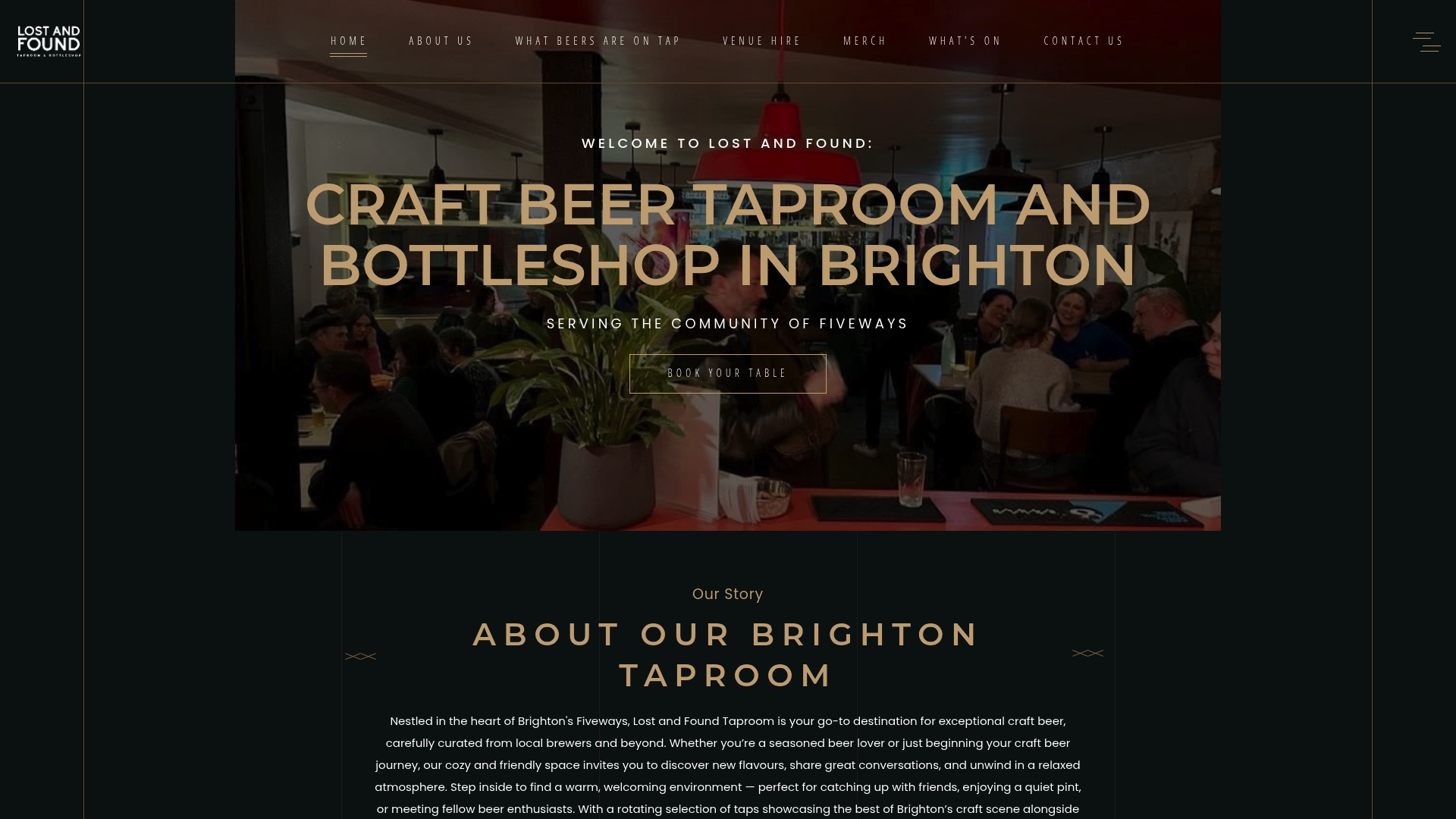
If you want to taste a Czech pilsner alongside a Munich helles, compare a Schwarzbier with a Baltic porter, or try a modern IPL from a UK craft brewery, the menu gives you the context to make that call before you walk through the door. For groups, the venue hire option lets you book the space for a lager tasting evening with a minimum bar spend. Check the current tap list online and plan your next visit around the styles that caught your attention in this guide.
Sources
The sources below are worth bookmarking if you want to go deeper on any aspect of lager styles, brewing technique, or UK availability.
- Lagering methods digest - Lallemand
- Ale v Lager: what’s the difference? - American Homebrewers Association
- Beer style guidelines - Beer Judge Certification Program (BJCP)
- Global lager styles guide - VinePair
- Lager, Pilsner - Beer Styles - Learn & Discover - CAMRA
Recommended
- Why Everyone Is Talking About Proper Craft Lager (And You Should Too for Your Next Brighton Craft Beer Fix) - Lost And Found Craft Beer Taproom Brighton
- Independent Lager Vs Corporate Pilsner: Which Is Better For Your Brighton Craft Beer Summer? - Lost And Found Craft Beer Taproom Brighton
- Beer serving temperature: the UK style-by-style guide