Barrel aged beer: a homebrewer’s guide to flavour and process
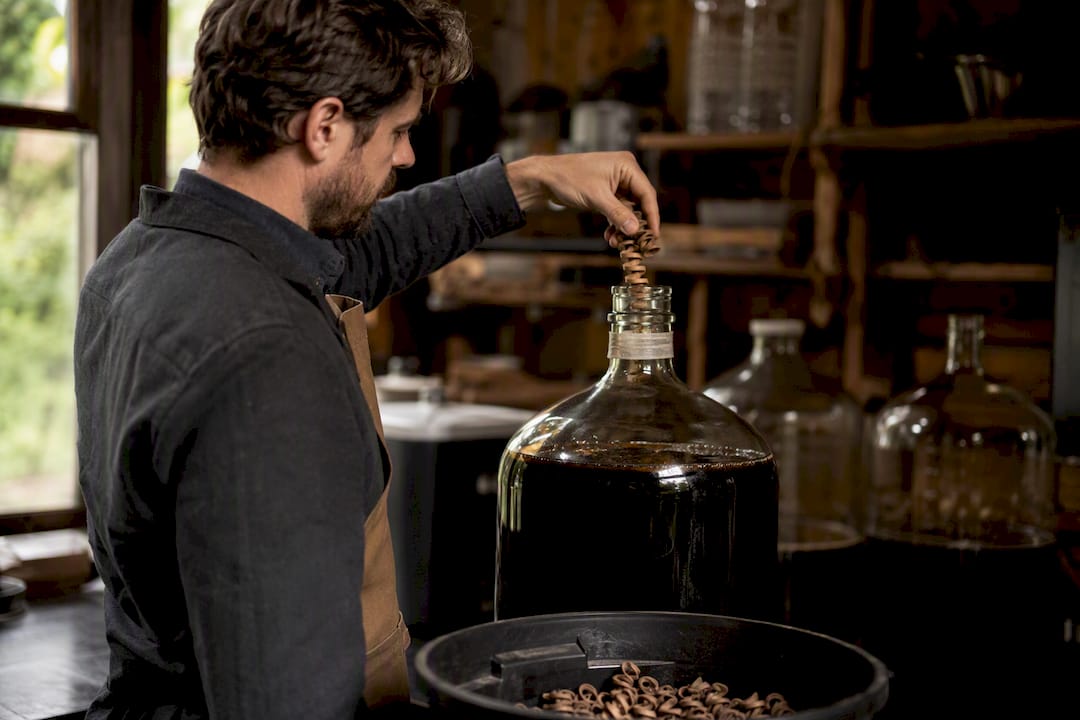
Barrel aged beer is beer matured inside a wooden vessel so the timber, and whatever the barrel held before, work their way into the liquid. The wood and previous contents typically add vanilla, coconut, tannin or leftover spirit character, depending on what the barrel used to hold. Not every style takes to this well.
The best candidates are high-gravity, full-bodied beers built to survive months or years of oxygen exposure:
- Imperial stout — roast and chocolate notes fold neatly around bourbon vanilla
- Barleywine — caramel and dried fruit gain depth from oak tannin
- Sour and wild ales — thrive in used wine barrels thanks to resident microflora
The single rule that separates a great barrel-aged beer from a ruined one: design the base to withstand slow oxidation, not just to taste good on brew day.
Key Takeaways
The most reliable path to a great barrel-aged beer is building a high-gravity, dextrin-rich base designed to survive oxidation, then matching it to the right barrel and tasting often enough to catch problems before they ruin the batch.
| Point | Details |
|---|---|
| Match style to barrel | Imperial stout and barleywine suit bourbon and whisky barrels; sours suit used wine barrels. |
| Build the base for longevity | Avoid heavy roast malts, mash higher for dextrins, and aim for high original gravity. |
| Use small barrels wisely | A 5 to 15 gallon barrel ages roughly twice as fast as a full-size one, so taste more often. |
| Taste and blend, don’t just wait | Sample every few weeks and blend sweet and dry components to balance oak intensity. |
| Visit Lost And Found to compare | Lost And Found’s rotating selection and tasting flights let you sample barrel-aged beers side by side. |
Table of Contents
- What is barrel aged beer and where does the practice come from?
- Which beer styles work best in a barrel?
- How do you design a recipe for barrel ageing?
- Which barrel types suit which beers?
- How do you prepare and manage a barrel?
- How long should beer age in a barrel, and how do you blend it?
- How should you taste, serve and store barrel-aged beer?
- Where can you taste barrel-aged beer done well?
- What actually matters when you barrel age a beer
- Taste it before you brew it
- Sources
What is barrel aged beer and where does the practice come from?
A barrel-aged beer sits somewhere between three things: raw wood contact, the ghost of whatever spirit or wine lived in the barrel before, and the microbes that came along for the ride. Neutral oak gives you tannin and a faint vanillin sweetness. A former bourbon barrel adds caramel, coconut and a whisky warmth. A wine barrel might bring both oak and a colony of wild yeast and bacteria that will quietly sour anything you put in it.
The technique is not new. Belgian brewers have matured lambic in oak foeders for well over a century, letting spontaneous fermentation and slow wood ageing do the work. The modern bourbon-barrel craze is younger, tracing back to American breweries in the 1990s who started buying up empty bourbon barrels, partly because bourbon distillers are legally required to use new oak for every batch, which floods the market with once-used barrels.
That legal quirk is worth knowing because it shapes what is available and cheap:
- Bourbon barrels are abundant and relatively affordable due to US single-use bourbon regulations
- Wine barrels are prized for both oak character and native microflora
- Rum and cognac barrels are rarer and prized for their distinct sugar and fruit notes
Which beer styles work best in a barrel?
Not every recipe survives a year in wood, so matching style to barrel type matters more than most homebrewers expect.
- Imperial stout handles bourbon and whisky barrels particularly well. The roast character mellows, the alcohol heat rounds out, and the barrel’s vanilla and caramel wrap around dark fruit and chocolate notes already in the beer.
- Barleywine behaves similarly. High residual sweetness and a thick body give the wood something substantial to interact with rather than stripping the beer thin.
- Sour and wild ales are the natural fit for used wine barrels and foeders, where lactic and acetic bacteria, along with Brettanomyces, are often already living in the staves. Saisons in particular pick up a dry, peppery funk that a stainless tank simply cannot replicate.
- Lighter beers rarely justify a full barrel. Their delicate malt and hop character gets buried under oak tannin within weeks. Short contact time, or oak chips and spirals dropped straight into a fermenter, give a hint of wood without overwhelming the base.
A well-executed bourbon-barrel stout tends to read as chocolate, vanilla and a faint whisky burn on the finish. A wine-barrel saison, by contrast, leans toward tart cherry, leather and a dry tannic grip. Both are barrel aged beer in the technical sense, but they are built from opposite instincts.
Pro Tip: If you’re deciding between styles for a first attempt, pick imperial stout over sours. Spirit barrels are more forgiving of small process mistakes, whereas a wine barrel that develops an unwanted mould bloom can ruin an entire batch.
For readers curious what this looks like in a finished product, Lost And Found’s deep dive into barrel-aged stout covers the style in more detail, and our guide to British beer styles is useful background if barleywine or saison are unfamiliar territory.
How do you design a recipe for barrel ageing?
Barrel ageing is not something you bolt onto a finished recipe. The base beer needs to be built for it from the mash tun onward, because a beer that tastes balanced fresh often falls apart after eight months in oak.
Start with the grain bill. Heavily roasted malts such as black patent can turn genuinely unpleasant over long maturation, since roast-derived astringency amplifies rather than fades in wood over time. Lean instead on lighter-roasted specialty malts, plus oats or flaked wheat for body that survives the barrel’s slow oxidative pull.
Mash temperature is your next lever. Brewers building beers for oak commonly mash higher than usual and lean on dextrin-rich grists, which leaves more unfermentable sugar behind to carry body through a year or two of ageing. Some commercial brewers go further with longer boils, dextrin syrup additions, or double mashes purely to push non-fermentables higher and stop the beer thinning out to a watery husk.
On the fermentation side:
- Target an original gravity high enough to survive both barrel evaporation and years of slow flavour change, typically 1.080 or above for stouts and barleywines
- Choose a yeast strain with good alcohol tolerance and clean attenuation, since off-flavours from stressed yeast only get more obvious with age
- Minimise oxygen pickup during transfer and packaging before the beer ever reaches the barrel, since you are about to introduce a controlled amount of oxidation deliberately
Adjuncts split into two camps. Coffee and vanilla generally go in post-barrel, close to packaging, so their character stays bright rather than fading into the wood. Fruit additions, on the other hand, often work better added during barrel ageing itself, giving the sugars time to ferment out and integrate with the developing oak character.
Pro Tip: Keep a spare, unbarrelled sample of your base beer in a sealed bottle. Tasting it alongside the barrel-aged version months later is the only reliable way to judge what the wood actually contributed.
Which barrel types suit which beers?
Barrel choice is the single biggest lever on final flavour, bigger than yeast strain or hop schedule in most barrel-aged recipes.
- Bourbon barrels deliver vanilla, coconut and caramel, and they’re the most widely available option because US law forces bourbon distillers to use new oak every time, leaving a steady supply of once-used barrels for brewers.
- Whisky barrels bring a similar vanilla base but with more smoke or peat character depending on the distillery.
- Wine barrels contribute tannin and dried fruit notes, plus the resident microflora that make them ideal for sours, though that same microflora makes them risky for clean styles.
- Rum barrels lean toward molasses, dark sugar and tropical fruit.
- Cognac barrels add a floral, brandy-like sweetness that pairs well with lighter barleywines.
Char level and barrel age both change extraction speed. A heavily charred, freshly used bourbon barrel gives up flavour fast; a barrel on its third or fourth fill will need far longer contact to deliver the same intensity. Brewers overwhelmingly prefer wet barrels, meaning ones filled with beer within days of being emptied, because the residual spirit or wine soaked into the staves is still saturated and ready to leach out.
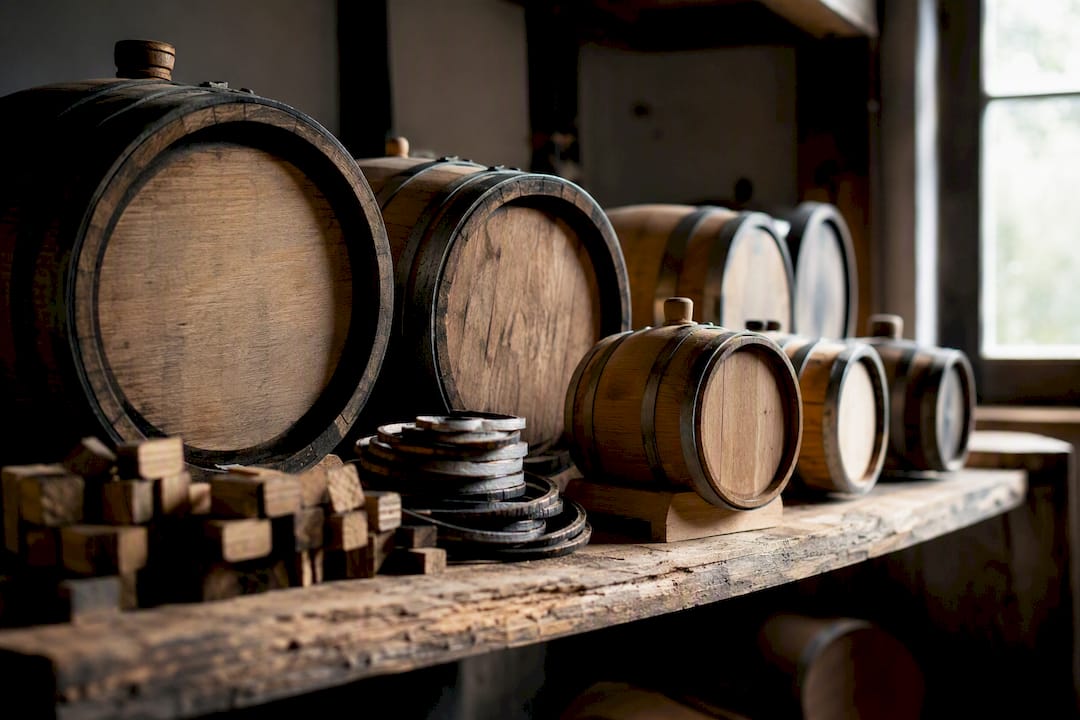
For homebrewers, a full 53-gallon barrel is often impractical. Small barrels in the 5 to 15 gallon range, or simply oak cubes and spirals dropped into a carboy, deliver genuine wood character at a fraction of the cost and space. Wine-oak specialists such as Blame It On Bacchus go into useful detail on how oak chemistry and toast level shape extraction, principles that transfer directly to beer.
How do you prepare and manage a barrel?
Getting a barrel ready is less about deep cleaning and more about restraint. Harsh chemicals strip out the exact wood character you paid for the barrel to deliver.
- Inspect the barrel for cracks, mould, or a sour smell that suggests it was stored badly before it reached you.
- Rinse gently with hot water only, avoiding bleach or strong sanitisers that leach into the staves and kill the flavour compounds you want.
- Fill quickly once the barrel is empty. A wet barrel loses spirit saturation fast, so the gap between emptying and refilling should be measured in hours, not days.
- Minimise headspace when filling, topping up as needed, since a large air gap accelerates unwanted oxidation and increases infection risk.
- Track the angels’ share, the beer lost to evaporation through the wood, and top up periodically to keep the barrel full.
- Taste on a schedule, roughly every few weeks for small barrels, checking for oak balance and any warning signs.
Pro Tip: A sharp, nail-varnish-like smell usually means acetic acid or excess oxidation, while a band-aid or barnyard aroma points to unwanted Brettanomyces. Catch either early and you can often blend it out; leave it too long and the batch is usually a write-off.
How long should beer age in a barrel, and how do you blend it?
Ageing time depends heavily on barrel type, beer style and barrel size, and the honest answer is that fixed timelines are less useful than tasting regularly. Commercial barrel-aged beers commonly spend three to twenty-four months in wood, though some sours stretch to several years and short-contact projects might use oak for only a few weeks.
Barrel size changes the maths considerably. Because smaller barrels have a higher surface-area-to-volume ratio, a 5 to 15 gallon barrel extracts flavour roughly twice as fast as a full-size commercial barrel. A beer that would need a year in a 53-gallon barrel might reach the same oak intensity in five to six months in a small one, but oxidation accelerates at the same pace, so tasting frequently matters more than following a calendar.
Watch for these markers to judge readiness:
- Oak tannin feels integrated rather than sharp or drying
- Any green, underdeveloped flavours from the base beer have faded
- Spirit or wine character is present but not overpowering
- The beer smells clean, with no acetic or solvent-like notes
Blending is where barrel programmes get genuinely creative. Rather than treating one barrel as a finished product, many brewers combine a sweeter, less oak-forward component with a drier, more heavily wooded one to hit a target balance, a technique sometimes called barrel stacking. Blending in a portion of fresh, unbarrelled beer is another common fix if a batch has picked up too much oak or oxidation. Keeping a simple tasting log against elapsed weeks, rather than relying on memory, makes these blending decisions far easier to defend later.
How should you taste, serve and store barrel-aged beer?
A barrel-aged beer deserves a proper glass, not a straight pint. A tulip or snifter concentrates aroma and lets you judge whether the oak, spirit character and base beer have actually integrated, rather than sitting as separate layers.
- Serve slightly warmer than lager temperature, around 10 to 13°C, to let vanilla and dark fruit notes open up
- Pour a smaller measure than usual; these beers are typically 9% ABV or higher and reward slow sipping
- Check bottle conditioning if packaged with live yeast, since barrel-aged beers often continue developing subtly for months after bottling
- Store upright, cool and dark, ideally below 13°C, to slow further oxidation
- Watch for flat sherry-like notes or dulled fruit character, both signs the beer has passed its peak
Our own guide to tasting beer and storage tips for every style both go into more detail on glassware and shelf life if you want to take tasting more seriously.
Where can you taste barrel-aged beer done well?
Reading about barrel character only gets you so far. Comparing several barrel-aged beers side by side, ideally within the same tasting session, is the fastest way to actually understand what bourbon versus wine oak does to a base beer.
- Lost And Found rotates barrel-aged stouts and other wood-matured beers through its curated selection alongside local and UK-wide craft breweries
- Tasting flights at the taproom let you line up two or three barrel-aged beers together, which is far more instructive than tasting one in isolation
- The current lineup changes regularly, so it’s worth checking what’s pouring before you visit
Our barrel-aged stout deep dive is a good starting point if you want background before your next visit.
What actually matters when you barrel age a beer
Most advice on barrel-aged beer obsesses over the barrel itself, which barrel, which distillery, how many fills, when the recipe is the part that actually determines success or failure. A mediocre base beer poured into an extraordinary bourbon barrel still comes out mediocre, just with vanilla notes bolted on top.
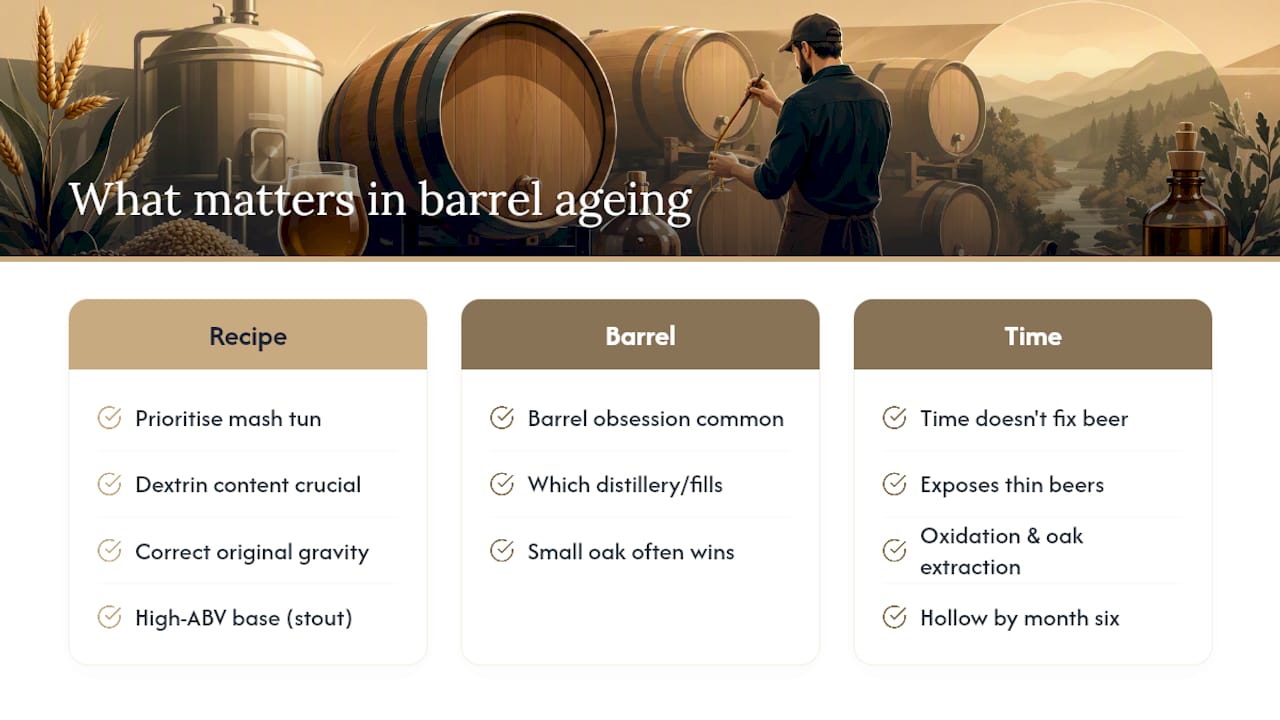
The conventional wisdom that “time fixes everything” is probably the most damaging myth in this whole practice. Time does not fix a thin, under-designed beer, it exposes it. Oxidation and oak extraction are relentless, and a base built without enough body or alcohol to absorb both will taste hollow by month six, not improved.
If you take one thing from this guide, prioritise the mash tun over the barrel hunt. Get the dextrin content and gravity right first. A small oak barrel and a properly built imperial stout will beat a prestige wine barrel and a rushed recipe every time, and it will teach you far more about what barrel-aged beer actually is.
— Author
Taste it before you brew it
Reading about vanilla, tannin and oak integration only gets you so far, and the fastest way to understand what actually separates a great barrel-aged beer from an average one is to taste several side by side. That’s exactly what Lost And Found offers that a recipe book or online forum cannot: a rotating, curated selection of local and UK-wide craft beers poured fresh, including barrel-aged stouts and other wood-matured styles as they come through.
Check what’s currently pouring on our beer menu, which is published online alongside our food offering, or book a tasting flight to compare a bourbon-barrel stout against a wine-aged sour in one sitting. If you’re planning a bigger gathering, our venue hire options let you build a private barrel-aged tasting session for a group, with the taproom’s rotating selection doing the heavy lifting. Come in, ask the staff what’s currently in the barrel-aged section, and taste the difference recipe design actually makes.
Sources
- Barrel-aged beer
- Bound for the barrel: Brewing big beers meant for oak-aging | Beer & Brewing
- The science of small barrel aging — Redhead Oak Barrels
- Barrel Aging Beer — BeerFYI