Barrel aged stout: what it is and why drinkers love it
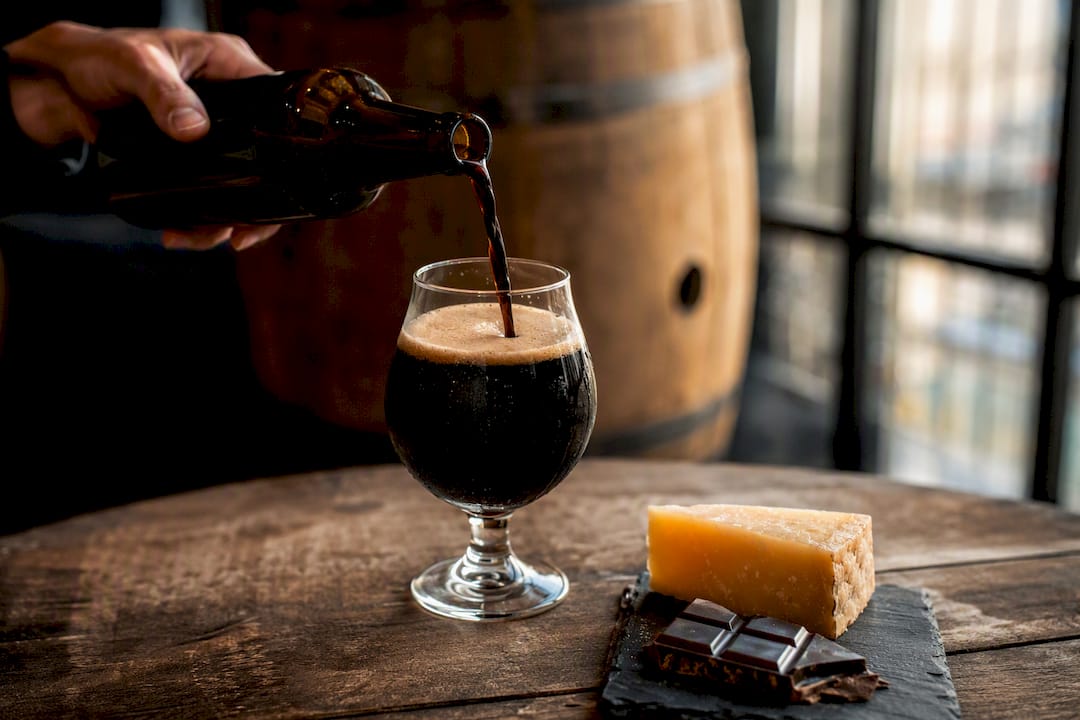
A barrel aged stout is a dark, roasted beer matured in wooden barrels, usually ex-bourbon, wine, or sherry casks, so it absorbs wood tannins, residual spirit character, and the gentle effects of slow oxygen exchange through the oak. The result sits well above standard stout strength and carries flavour you cannot get from a steel tank.
- ABV: typically within a range common for barrel-aged imperial stouts
- Ageing window: generally from a few months up to around 18 months
- Common prior fills: bourbon, sherry, red wine, rum
Bourbon barrel-aged imperial stouts typically spend 6 to 18 months in cask, and many sit in that 10 to 14% ABV band. If you like your beer with depth, patience, and a bit of theatre in the glass, this is the style built for you. Homebrewers chasing complexity beyond hops will find barrel work opens an entirely different set of levers.
Key Takeaways
Barrel aged stout gets its character from oak extraction and slow oxygen exchange, and matching barrel type to base beer strength determines whether the result tastes balanced or simply boozy.
| Point | Details |
|---|---|
| Flavour comes from prior fill | Bourbon gives vanilla and caramel; sherry gives dried fruit and nutty notes; wine adds tannin. |
| Small barrels age faster | A five-gallon barrel ages beer roughly twice as fast as a 55-gallon commercial cask. |
| Base beer strength matters most | A thin stout collapses under barrel intensity; aim for 1.090 to 1.110 original gravity. |
| Cellar upright, cool, and dark | Bourbon barrel stouts often reward cellaring for multiple years if stored properly. |
| Taste before you buy | Lost And Found Taproom pours a rotating barrel-aged stout selection so you can compare styles on tap before committing to a bottle. |
Table of Contents
- What is barrel ageing, and where does it come from?
- How do barrel type and previous fill shape the beer?
- What does a barrel aged stout actually taste like?
- How long should you age or cellar a barrel aged stout?
- How do you brew a barrel aged stout at home?
- Where can you find good barrel aged stouts, and what should you check on the label?
- What do we look for when tasting a barrel aged stout?
- Try a barrel aged stout at our Fiveways taproom
- Frequently asked questions
- Sources
What is barrel ageing, and where does it come from?
Barrel ageing works through two overlapping processes: extraction and micro-oxidation. The beer pulls flavour compounds out of the charred wood and whatever spirit or wine previously lived there, while oxygen creeps in slowly through the porous oak. That combination mellows sharp bitterness and rough alcohol heat while building sherry-like complexity that stainless steel simply cannot produce.
This is not a modern gimmick. Stouts and porters were often matured in wooden vats for months or years before industrial brewing standardised steel tanks, and the practice largely faded once refrigeration and stainless steel took over. Craft brewers revived it deliberately, chasing the layered complexity that only time in wood delivers.
Micro-oxidation through porous oak mellows aggressive bitterness and alcohol heat, creating complex, sherry-like notes not achievable in stainless steel.
Brewers turn to barrels for three reasons: added complexity, smoother alcohol, and the option to blend aged and fresh beer for balance.
How do barrel type and previous fill shape the beer?
The barrel’s past life dictates most of what you taste. A bourbon cask hands over vanilla, caramel, and coconut from the charred American oak. A sherry butt leans toward dried fruit, walnut, and a faint nutty oxidation. Wine barrels, particularly red, contribute tannin and dark berry notes, while rum casks bring tropical sweetness and molasses.
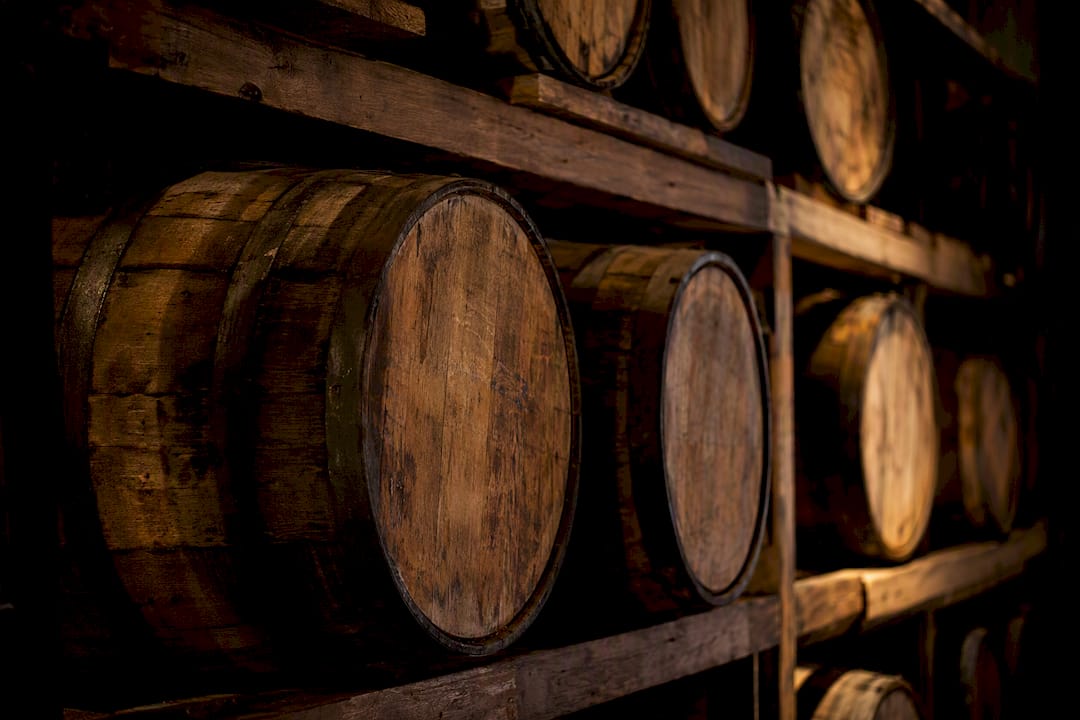
First-fill barrels, meaning ones used for beer for the first time after holding spirit or wine, give up flavour fast and hard. Rinsed or second-use barrels release character more gently, which suits brewers wanting subtlety rather than a spirit-forward punch.
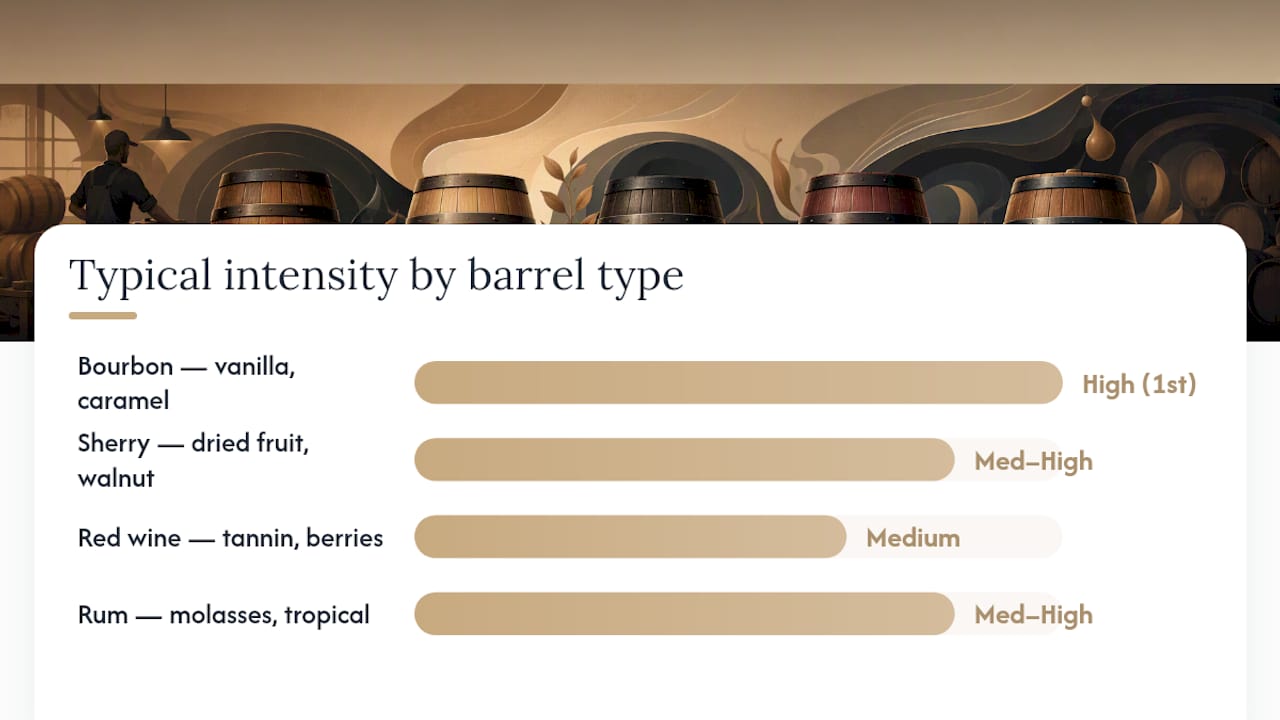
| Prior fill | Flavour fingerprint | Typical intensity |
|---|---|---|
| Bourbon | Vanilla, caramel, coconut, oak | High, especially first-fill |
| Sherry | Dried fruit, walnut, light oxidation | Medium to high |
| Red wine | Tannin, dark berry, subtle acidity | Medium |
| Rum | Molasses, tropical fruit, spice | Medium to high |
Wood species matters too. American oak, used for most bourbon barrels, is porous and vanilla-forward. French oak, more common in wine casks, extracts slower and leans spicier, with tighter grain that limits oxygen exchange.
- Heavier char accelerates vanilla and caramel extraction
- Used barrels need longer contact time to deliver the same intensity as first-fill
What does a barrel aged stout actually taste like?
Expect layers rather than a single flavour. Base stout gives you roasted malt, dark chocolate, coffee, and dried dark fruit. The barrel adds vanilla, oak tannin, baking spice, and whatever spirit lingered in the wood, be it bourbon’s sweetness or sherry’s nutty edge.
Serve these beers slightly warmer than a standard stout, around 10 to 13°C, in a small tulip or snifter glass that concentrates aroma without overwhelming you with a full pint’s worth of 12% beer. Pour gently; a thin head is normal and expected.
Food pairing works best when you match intensity rather than fight it. Aged cheddar or blue cheese, dark chocolate, and cured meats such as charcuterie all stand up to the barrel’s richness. For a broader look at matching beer with bold flavours, our guide on pairing beer with spicy food covers similar principles. If you want to sharpen your palate before diving into a barrel-aged release, our step-by-step tasting guide is worth a read first.
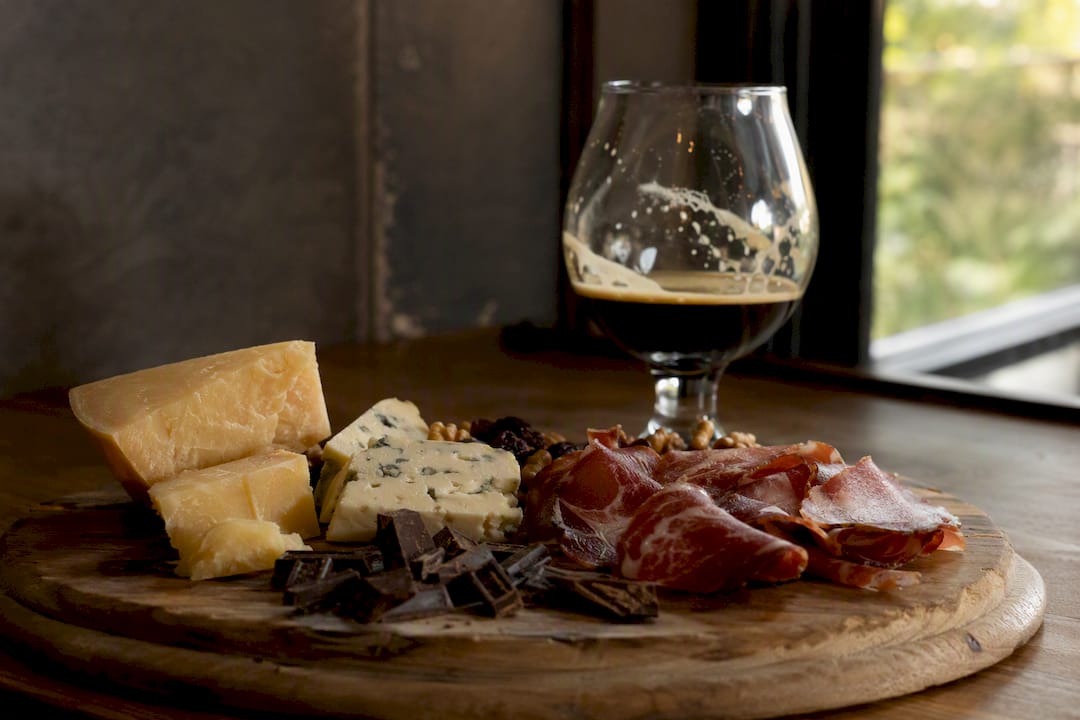
Pro Tip: Pour a small measure first and let it sit for a minute. High-ABV barrel beers open up as they warm, and the aroma at minute one is often quite different from minute five.
How long should you age or cellar a barrel aged stout?
In-barrel timing depends heavily on barrel size. Bourbon barrel-aged imperial stouts typically spend 6 to 18 months in cask, but that timeline assumes a standard 53 to 55 gallon commercial barrel. Smaller barrels move faster.
- Commercial-scale barrels (50+ gallons): 6 to 18 months for full character development
- Small barrels (5 to 15 gallons): roughly half the time, since a five-gallon barrel ages beer nearly twice as fast as a 55-gallon commercial cask due to a much higher oak-to-beer surface ratio
- Bottled releases at home: store upright, cool, and dark, away from light and temperature swings
Once bottled, barrel-aged stouts above 10% ABV often have extended shelf life compared with weaker beers, and premium bourbon barrel examples are frequently worth cellaring for multiple years as the flavours integrate further.
- Watch for excessive sherry-like oxidation or papery notes as signs a bottle has passed its best
- Once opened, drink within a few days or decant into a smaller container to limit air contact, since oxidation accelerates quickly at these strengths
How do you brew a barrel aged stout at home?
Start with the base beer, because a thin stout cannot survive months of oak and spirit intensity. You need a full-bodied imperial stout with a gravity high enough to carry the barrel’s punch without collapsing into watery bitterness. This mismatch between weak base beer and aggressive barrel character is the single most common failure homebrewers report.
- Design the base beer: target an original gravity of 1.090 to 1.110, using a malt bill heavy on roasted barley, chocolate malt, and a generous flaked oat or wheat addition for body
- Choose yeast carefully: a robust English ale strain with high alcohol tolerance handles the gravity without stalling
- Prepare the barrel: rinse with hot water, check for leaks, and swell the staves before filling; first-fill barrels need less time than rinsed, reused ones
- Manage oxygen from the start: purge headspace with CO2 and top up the barrel regularly to minimise unwanted oxidation
- Sample on a schedule: taste every four to six weeks once you hit the two-month mark, since small barrels can show perceptible bourbon character within a few months
If a whole barrel isn’t practical, oak cubes or spirals are a common substitute, though extraction runs faster and less evenly, so taste more often and pull the oak sooner than you would with a barrel.
Pro Tip: Keep a sanitised spare barrel plug and sample thief on hand. Every time you open the barrel to taste, you introduce a contamination risk, so work quickly and sanitise everything that touches the beer.
- Thin base beer: fix by increasing gravity and malt complexity next batch, not by extending barrel time
- Excessive booziness: pull the beer earlier or blend with fresh stout to soften the spirit
- Off-flavours or mould: usually poor barrel prep or a leaking stave; inspect before every fill
Where can you find good barrel aged stouts, and what should you check on the label?
Look for single-barrel taproom releases, specialist bottle shops, and brewery release lists, since barrel-aged stouts rarely sit on general supermarket shelves. Festivals dedicated to strong or aged beer are another reliable source, particularly for smaller UK breweries doing limited runs.
Before buying, check the label for four things:
- Prior fill: bourbon, sherry, wine, or rum tells you the flavour direction immediately
- First-fill or used: first-fill means bolder, more spirit-forward character
- Ageing time: longer generally means more integration, though not always more intensity
- ABV and release date: useful to consider when deciding to drink now or cellar
For collectors, note the vintage year and any storage history the brewery or shop provides. A bottle that has sat warm on a shelf for a year will taste noticeably different from one kept cool and dark since release.
What do we look for when tasting a barrel aged stout?
We want balance: the roasted stout backbone should still show through the barrel character, not get buried by it. Too much bourbon and you lose the beer entirely.
Our tip for tasting limited releases responsibly is simple, take small pours, share the bottle, and save half for a home tasting a few weeks later to see how it develops. We source our rotating stout selection from independent breweries whose barrel programmes we trust, the same approach behind our wider brewery curation across Fiveways.
Try a barrel aged stout at our Fiveways taproom
Reading about vanilla, sherry, and oak notes only gets you so far. Lost And Found Taproom keeps a rotating selection of barrel-aged and imperial stouts from independent UK breweries on tap and in bottles, so you can taste the difference between a bourbon-forward release and a sherry cask side by side rather than guessing from a label.

Our full beer and food menus are online and updated as new casks and bottles land, so you can check what’s pouring before you visit. If you’re planning a birthday, tasting session, or larger gathering, our space is also available for venue hire with a minimum bar spend, which works well for groups wanting a guided run through a few barrel-aged options. Check our current beer menu to see what’s on tap this week.
Frequently asked questions
Is barrel aged stout stronger than regular stout? Yes, typically. Standard stouts often sit around 4 to 6% ABV, while barrel-aged and imperial stouts commonly reach 10 to 14%, sometimes higher.
How long does a barrel aged stout last once opened? Drink it within a few days, or decant into a smaller container to limit air exposure, since these high-ABV beers oxidise faster than they did before opening.
Can I barrel age stout without a real barrel? Yes. Oak cubes or spirals are a widely used substitute, though extraction happens faster and less evenly than a full barrel, so taste frequently and adjust contact time.
What’s the difference between an imperial stout and a barrel aged stout? Imperial stout describes strength and body, usually above 8% ABV. Barrel aged describes the process. Many barrel-aged stouts start as imperial stouts before barrel time.
Sources
For homebrew technique, the Homebrewer’s Guide to Barrel-Aged Stouts covers recipe design and troubleshooting in depth. For historical context, the evolution of barrel ageing traces the technique back to pre-industrial brewing.
- The evolution of barrel ageing beer
- The art and science of barrel‑aged beer
- The Homebrewer’s Guide to Barrel‑Aged Stouts | Zymurgy Magazine
- Barrel aging beer at home: Your 9‑step complete guide
- Bourbon barrel aged imperial stout: complete guide 2025
Recommended
- Top 5 Craft Beer Providers for Stout vs Porter 2026
- Are Hazy IPAs Dead? Why Brighton is Rediscovering the Joy of Proper Independent Lager - Lost And Found Craft Beer Taproom Brighton
- Why Everyone Is Talking About Proper Craft Lager (And You Should Too for Your Next Brighton Craft Beer Fix) - Lost And Found Craft Beer Taproom Brighton