Don’t Panic: ‘Contains Sulphites’ Means Over 10 mg/L in the UK

Sulphites, or sulphur dioxide (SO₂), are preservatives that occur naturally in fermentation and are often topped up by winemakers to keep wine stable. Every bottle of wine contains some level of sulphites, whether the label mentions them or not. For the vast majority of drinkers this is a non-issue, but people with a diagnosed sulphite sensitivity or poorly controlled asthma should pay closer attention to labels and quantities.
TL;DR:
- Most wines contain sulphites, but the levels vary widely, with white and sweet wines generally carrying more than reds, and labels show “contains sulphites” if above 10 mg/L.
- Free sulphur dioxide is the active form that prevents oxidation and microbial spoilage, while bound SO₂ is inert and does not provide protection.
- Genuine sulphite allergies are rare, but people with asthma or sensitivities should monitor labels and keep symptom diaries to identify reactions.
- “Sulphite-free” wines do not truly exist because fermentation produces natural sulphites, though some wines use less added SO₂, often labeled as “no added sulphites.”
- The common belief that sulphites cause headaches is inaccurate; other compounds like histamines and alcohol are more likely triggers for those reactions.
Table of Contents
- What are sulphites in wine? The labels you’ll actually see
- Why winemakers use sulphites: oxidation, microbes, and free vs bound SO₂
- How much sulphite is in wine, and what the label legally means
- Are sulphites harmful? What the evidence actually shows
- The biggest myths about wine sulphites, debunked
- How to choose lower-sulphite wine and reduce your intake
- What Lost And Found has learned pouring wine at the bar
- The bottom line on wine sulphites and your health
- Why the sulphite panic misses the point
- Sources
What are sulphites in wine? The labels you’ll actually see
Sulphites are sulphur-based compounds, chiefly sulphur dioxide, used to stop wine spoiling. On a bottle or ingredients list, they show up under several names, and it helps to recognise them all rather than hunting for one specific word.
- Sulphur dioxide or SO₂, the base compound
- Sodium metabisulphite or potassium metabisulphite, common additive forms
- E220 to E228, the E-number range covering sulphite-based preservatives across food and drink
If a wine’s total sulphur dioxide content passes a set threshold, UK rules require the words “contains sulphites” somewhere on the label. That single phrase is doing more work than most drinkers realise, and it isn’t just a wine thing. Sulphites turn up naturally in foods well beyond the wine aisle, including dried apricots, which can carry far higher concentrations than anything in your glass, according to EUFIC.
Why winemakers use sulphites: oxidation, microbes, and free vs bound SO₂
Sulphites earn their place in the cellar because they do three jobs at once. They act as an antioxidant, slowing the browning and flat, stewed flavours that come from oxygen exposure. They control unwanted yeast and bacteria that would otherwise turn a wine sour or funky. And winemakers use them to halt fermentation deliberately, locking in residual sugar for a sweeter style, or to sanitise barrels and tanks between uses. According to EUFIC, sulphites are applied at several points, from harvest through to bottling.
Not all of this SO₂ comes from a bag of powder. Yeast produces a small amount of sulphur dioxide naturally during fermentation, entirely without human intervention. This is why the idea of a completely “sulphite-free” wine doesn’t really hold up. What winemakers add on top of that natural baseline is a choice, not a necessity.
Here’s the detail most drinkers never learn: not all the SO₂ in a bottle is doing anything. Sulphur dioxide splits into “free” and “bound” fractions. Free SO₂ is the active portion, the part actually available to fight oxidation and microbial spoilage. Bound SO₂ has already latched onto other compounds in the wine and sits inert, contributing to the total figure on a lab report without offering any protection. Winemakers watch free SO₂ closely for exactly this reason.
How much sulphite is in wine, and what the label legally means
Levels vary noticeably by style. White and rosé wines typically carry more added sulphite than reds, partly because reds get some natural antioxidant protection from tannins and phenolic compounds that whites lack. Sweet wines tend to sit higher still, since sugar-rich environments are more prone to unwanted fermentation and need extra microbial control.
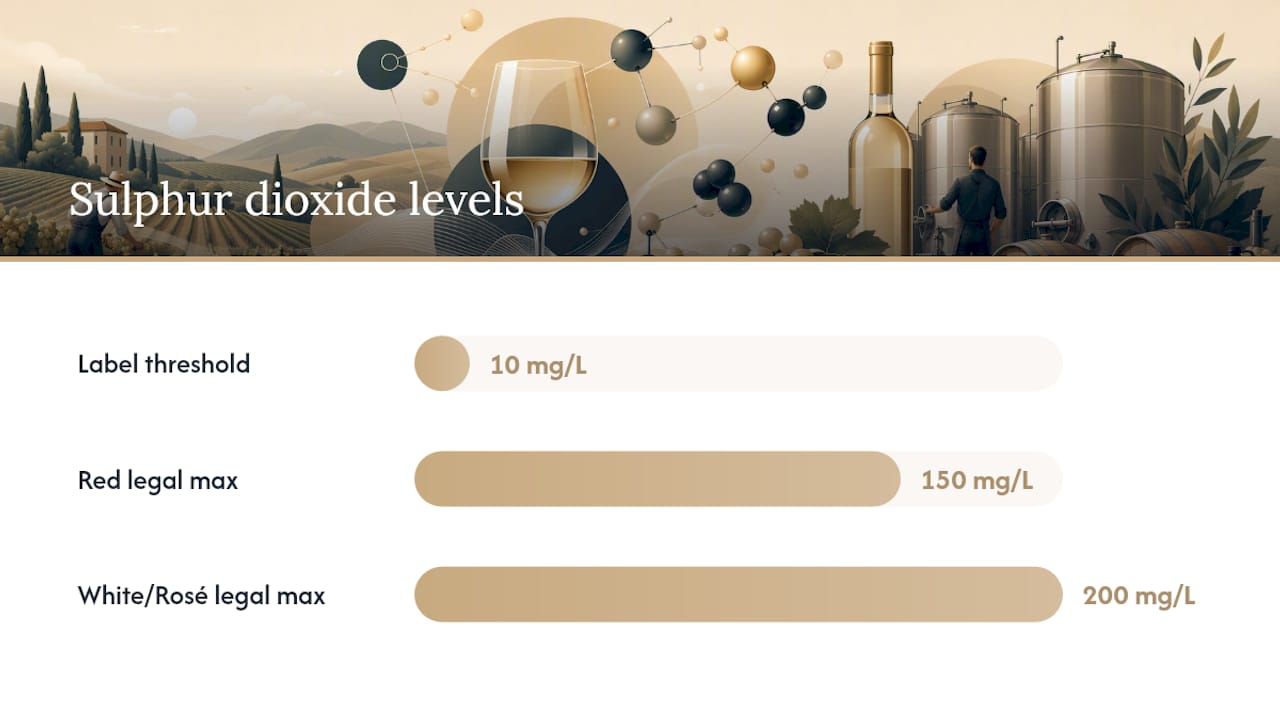
In the UK, any wine with total sulphur dioxide above 10 mg per litre must carry a “contains sulphites” statement. That threshold is deliberately low, which means most wine on a shelf will display it. Legal maxima sit far higher: UK wine production rules generally cap red wine around 150 mg/L and white or rosé around 200 mg/L, with sweeter styles sometimes permitted more. Seeing “contains sulphites” on a label, then, tells you almost nothing about whether that particular bottle is high or low within a legal range that spans a wide margin.
Are sulphites harmful? What the evidence actually shows
For most people, no. Reviews from the European Food Safety Authority conclude that sulphites are safe at the exposure levels found in typical food and drink. The vast majority of wine drinkers can finish a glass, or several, without any sulphite-related issue at all.
A genuine allergy to sulphites, the IgE-mediated kind that can trigger anaphylaxis, is rare. What’s more common, and often confused with allergy, is sensitivity or intolerance: a non-immune reaction that can bring on wheezing, flushing, or mild digestive discomfort. Anaphylaxis UK draws this distinction clearly, and it matters because the two conditions call for different responses. People with asthma, particularly those on higher-dose or steroid-dependent treatment, face a somewhat higher likelihood of adverse reactions to sulphites than the general population, which is why keeping asthma well controlled is part of the practical advice from allergy specialists.
There’s a wrinkle worth knowing: sulphites get blamed for a lot of symptoms they didn’t cause. Histamines, tyramine, and plain old alcohol are all capable of producing headaches, flushing, or a fuzzy next-day feeling, and EUFIC notes that these other compounds are often the real culprit in reactions people pin on sulphites. If red wine consistently gives you a headache but white doesn’t, that’s more likely a histamine or tannin story than a sulphite one, since reds usually carry less added SO₂ than whites, not more.
The biggest myths about wine sulphites, debunked
Two claims circulate constantly, and both deserve a proper correction.
- “Sulphites cause wine headaches.” For most people, this isn’t the main mechanism. Alcohol dehydration, histamines, and tyramine are more commonly implicated, and plenty of headache-prone drinkers react just as badly to low-sulphite wines.
- “Sulphite-free wine exists.” Not really. Because fermentation itself generates sulphur dioxide, typically in the region of 10 to 20 mg/L, a truly zero-sulphite wine would be almost impossible to produce through normal winemaking.
What you will see is “no added sulphites” on some labels, which is an honest and meaningful claim, it just isn’t the same as sulphite-free. Organic certification adds to the confusion too: organic wine rules restrict how much sulphite can be added, but they don’t ban it outright, so an organic bottle can still legitimately state “contains sulphites.”
How to choose lower-sulphite wine and reduce your intake
Start with the label. “Contains sulphites” simply confirms the wine crossed the 10 mg/L threshold, it says nothing about how far past it the bottle sits. “No added sulphites” is a more specific claim and generally signals a genuinely lower-SO₂ product, though it comes with trade-offs.
- Natural and low-intervention wines often use less added SO₂, but tend to have a shorter shelf life once opened and can show more bottle variation
- Reds generally carry less added sulphite than whites or rosés, thanks to natural tannin protection
- Producers chasing low-SO₂ styles frequently manage oxygen exposure tightly in the cellar instead, using inert gas and gentler handling rather than relying on preservative
Serving choices won’t change the sulphite content in your glass, but they can improve how a wine tastes and reduce any lingering off-notes; for example, decanting can help prevent staining, which is detailed in Yes, Red Wine Stains Teeth. Here’s What to Do Now. Decanting lets some of the more reactive compounds soften, and serving at a slightly cooler temperature can dull perceived bitterness. If you suspect a genuine reaction, a food and drink diary noting what you drank and how you felt afterwards is worth more to a clinician than a vague description months later.
Pro Tip: If you react badly to one glass of a particular style but feel fine after a different bottle the same evening, note the grape, region, and whether it says “no added sulphites”. That pattern is more diagnostic than blaming sulphites outright.
What Lost And Found has learned pouring wine at the bar
Behind the bar at Lost And Found Taproom, questions about sulphites come up almost weekly, usually from someone who’s had a rough night after red wine and wants to know why. Our team talks customers through labels and styles regularly, and we curate wines alongside our rotating beer selection with exactly this kind of question in mind. If you want to explore lower-intervention styles yourself, our guides to natural wine and pet nat are a good starting point, and our full beer and wine menu is available online if you’d rather browse before you visit.
The bottom line on wine sulphites and your health
Sulphites are in every wine you’ll ever drink, and for most people that’s simply not a problem worth worrying about. If you suspect a genuine sensitivity, especially alongside asthma, keep a symptom diary and ask your GP about an allergy referral rather than guessing. Checking for “contains sulphites” on the label tells you the wine crossed 10 mg/L, nothing more precise than that.
Why the sulphite panic misses the point
The internet’s obsession with sulphites gets the risk almost backwards. The louder myth, that sulphites are the villain behind every wine headache, has less evidence behind it than the quieter fact that most people tolerate normal wine sulphite levels without issue. Sulphites deserve attention for a genuinely small group, people with confirmed sensitivity or asthma that isn’t well controlled, and for that group, the advice is specific: read labels, keep a diary, talk to a clinician.
What gets overlooked is the trade-off in choosing “low-sulphite” wine as a blanket fix. Producers who cut added SO₂ usually shift risk elsewhere, into shorter shelf life or more bottle variation, and that’s a fair swap for some drinkers and a frustrating one for others expecting consistency. Chasing a sulphite-free bottle that doesn’t exist wastes energy that would be better spent identifying whether histamines, tannins, or plain alcohol are the actual cause of a reaction. If you want a real answer, track what you drink and how you feel, rather than reaching for the sulphite explanation by default.
— Author
This article is general information, not a substitute for advice from a qualified doctor. Consult a qualified healthcare professional about your own circumstances before acting on anything here.
Sources
- Wine labelling | Food Standards Agency
- What are sulphites in wine and are they bad for you? | EUFIC
- Sulphite Allergy | Anaphylaxis UK
- EFSA scientific opinion / related review