Pet nat wine explained: how to spot, open and enjoy it
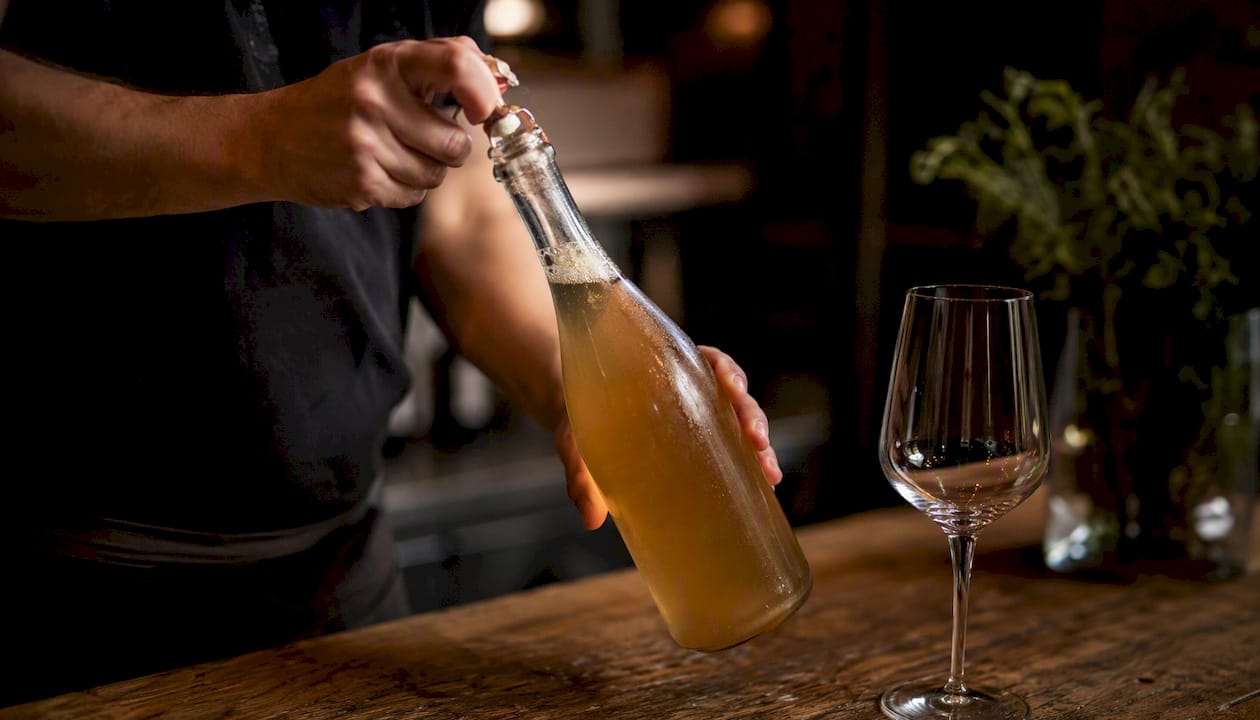
Pet nat (short for pétillant naturel, meaning “naturally sparkling”) is wine bottled mid-way through its first fermentation, so the yeast finishes its work inside the sealed bottle and the CO₂ has nowhere to go but dissolve into the wine. That single production decision explains almost everything distinctive about the style: the soft, frothy bubbles, the frequent cloudiness, the lively acidity, and the crown cap you’ll find on most bottles instead of a cork and cage.
On a shop shelf or wine list, look for:
- The phrase méthode ancestrale or pétillant naturel on the label
- A crown cap (the same pressed-metal cap used on beer bottles) rather than a Champagne-style cork
- The word pétillant or pét-nat anywhere on the front or back label
- A note about lees or non-disgorged, which signals the wine still contains yeast sediment
Drink it young, serve it cold, and expect something that tastes more alive and less polished than Champagne. That is the point.
Key takeaways
Pet nat is the oldest sparkling wine method still in use, and its single-fermentation process produces a style that no other method replicates: soft bubbles, genuine lees character, and a direct connection to the vintage.
| Point | Details |
|---|---|
| How to spot pet nat | Look for ‘méthode ancestrale’, a crown cap, and a vintage date on the label. |
| When to choose it | Pick pet nat over Champagne when you want softer bubbles, lower ABV, and a more food-friendly style. |
| How to open and serve it | Chill upright for at least two hours, ease the crown cap slowly, and pour into a wide white wine glass at 8–10°C. |
| Best food pairings | Fried chicken, aged cheese, spicy street food, and brunch dishes all suit pet nat’s acidity and soft effervescence. |
| Lost And Found Taproom | Stocks rotating pet nat bottles with in-venue tasters and staff guidance, available to try or take home in Brighton’s Fiveways. |
Table of Contents
- What is pet nat wine and how is it made?
- How does pet nat differ from Champagne and Prosecco?
- What does pet nat look, smell and taste like?
- Key regions and producers to know
- How to choose pet nat and where to buy it
- How to open, pour and store pet nat safely
- Lost And Found’s tasting protocol and pairing suggestions
- Common misconceptions about pet nat
- Why pet nat deserves more attention than it gets
- Lost And Found Taproom: try a pet nat in person
- Sources
What is pet nat wine and how is it made?
The méthode ancestrale is the oldest known method for making sparkling wine, predating the two-stage Champagne process by centuries. The production sequence is straightforward, but the timing is everything.
- Harvest and press the grapes, then begin alcoholic fermentation in tank or barrel as normal.
- Monitor sugar levels closely. Winemakers target a specific gravity that tells them roughly how much residual sugar remains and, therefore, how much CO₂ the yeast will still produce.
- Bottle mid-fermentation, before the yeast has consumed all the sugar. The wine goes in with live yeast still working.
- Seal the bottle with a crown cap. The fermentation continues inside, converting the remaining sugar into alcohol and CO₂, which is now trapped.
- Allow the fermentation to finish in bottle. The dead yeast cells (lees) settle at the bottom.
- Leave on lees or disgorge. Some producers sell the wine cloudy with lees intact; others chill the bottle, freeze the neck, and pop out the lees plug (disgorgement) for a clearer result.
The technical challenge is controlling how much fermentation happens before bottling. Producers often chill the fermenting juice to slow yeast activity, rack or centrifuge to clarify the must, and manage yeast nutrition carefully to avoid stuck fermentations or excessive pressure. Typical bottle pressure runs around 2.5–3 bar, noticeably lower than Champagne’s 5–6 bar.
Pro Tip: Bottle variation is real with pet nat. Because each bottle finishes fermenting individually, two bottles from the same batch can taste slightly different. If you buy a case, open one early to gauge the style, then decide how long to keep the rest.
How does pet nat differ from Champagne and Prosecco?
The core difference is the number of fermentations. Pet nat undergoes one continuous fermentation; Champagne and Cava undergo two (a primary fermentation to dryness, then a secondary fermentation triggered by adding sugar and yeast before the bottle is sealed). Prosecco typically uses the Charmat method, where the secondary fermentation happens in a pressurised tank rather than the bottle.
That structural difference cascades into everything the drinker notices:
- Bubbles: Pet nat’s lower pressure produces a softer, frothier bead. Champagne’s higher pressure gives finer, more persistent streams of bubbles.
- Clarity: Pet nat is often cloudy from lees. Champagne and Cava are disgorged and clarified; Prosecco is filtered.
- Sweetness: Pet nat can range from bone dry to gently off-dry depending on how much sugar remained at bottling. Champagne’s sweetness is controlled precisely by the dosage added after disgorgement.
- Closure: Crown cap for most pet nats; cork and cage for Champagne, Cava and Prosecco.
- Price: Pet nat is generally less expensive to produce because it skips the second fermentation, disgorgement and dosage steps.
| Feature | Pet nat | Champagne / Cava | Prosecco |
|---|---|---|---|
| Fermentations | One (in bottle) | Two (second in bottle) | Two (second in tank) |
| Bottle pressure | ~2.5–3 bar | ~5–6 bar | ~2.5–3 bar |
| Clarity | Often cloudy | Clear (disgorged) | Clear (filtered) |
| Closure | Crown cap (usually) | Cork and cage | Cork and cage |
| Typical price | £10–£25 | £12–£25 | £12–£25 |
For a broader look at how sparkling methods compare, this overview of sparkling wine types is a useful companion read.
What does pet nat look, smell and taste like?
Pour a pet nat and the first thing you notice is the colour. It may be pale gold, blush pink, or amber, but it is rarely crystal clear. A haze or visible sediment is normal, not a sign of a faulty bottle.
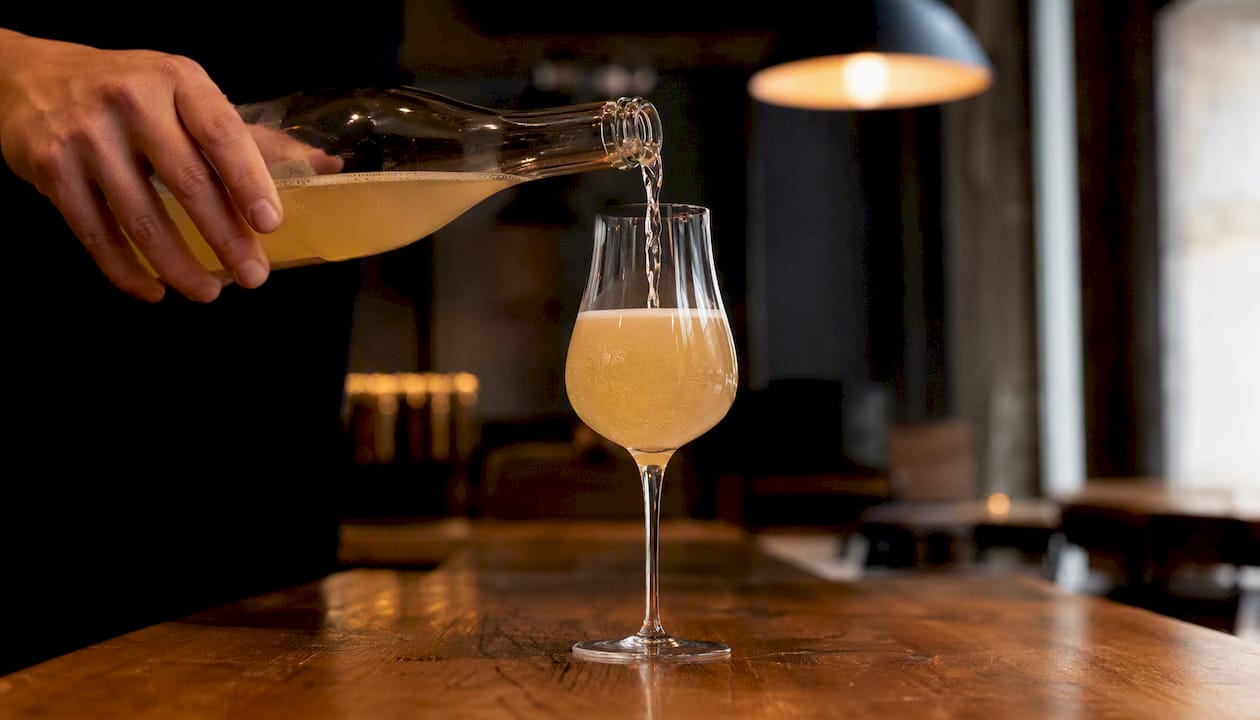
The bubbles are soft and mousse-like rather than sharp. They tend to dissipate faster than Champagne’s fine streams, giving the wine a texture closer to a lightly sparkling water than a classic fizz. Typical ABV sits around 11–12%, lower than most still wines, which makes pet nat easy to drink across a meal.
On the nose and palate, the flavour profile shifts with the grape and region, but a few threads run through most examples:
- Green apple and pear (especially in Chenin Blanc and Mauzac-based wines)
- Bread dough or brioche from the yeast contact
- Floral notes: elderflower, white blossom, sometimes dried herbs
- A cidery or slightly funky edge in non-disgorged bottles
- Light savoury or mineral finish, particularly in Loire Valley examples
Three styles that show the range well:
- Dry Loire Chenin (e.g. a Montlouis Pétillant Originel): taut, mineral, apple-forward with a clean yeasty finish
- Mauzac from Limoux (Blanquette Méthode Ancestrale): rounder, slightly honeyed, with a distinctive quince note
- Rosé Gamay-style: red berry fruit, a hint of strawberry, and a gentle tannic grip
Bubble note: Pet nat’s pressure of approximately 2.5–3 bar means the effervescence is closer to a lightly sparkling water than a classic fizz — which is why it pairs so naturally with food rather than as a standalone aperitif.
Key regions and producers to know
The méthode ancestrale has a documented history stretching back to 1531 in Limoux, in the Languedoc, where monks at the Abbey of Saint-Hilaire are credited with producing the first recorded sparkling wine using this method. That makes it older than Champagne by well over a century.
Three French regions remain the historic heartland:
- Limoux (Languedoc): Blanquette Méthode Ancestrale is the appellation-controlled style, made primarily from Mauzac. Antech is one of the most widely available producers in UK retail and a reliable entry point.
- Gaillac (South-West France): The Méthode Gaillacoise uses local grape varieties and has its own AOC recognition. Wines tend to be off-dry with stone-fruit character.
- Montlouis-sur-Loire and the Loire Valley: Chenin Blanc dominates here. Domaine La Grange Tiphaine produces a Pétillant Originel that is among the most cited examples in the category — the appellation formally permitted the ‘Pétillant Originel’ label designation in 2007.
For more on the regional picture and grape-by-grape breakdown, this region-by-region guide covers the main styles accessibly.
The style has spread well beyond France. English producers are now making credible examples: the M&S Rosé Pet Nat from Heppington Vineyard (sold as Sparkling Wine of England) is one of the clearest signals that pet nat has moved from specialist shops into mainstream supermarket listings. New World producers in Australia, South Africa and the United States have also embraced the method, often using Pinot Noir, Pinot Gris, and Riesling alongside the traditional French varieties.
How to choose pet nat and where to buy it
Reading a pet nat label takes a little practice, but a few markers make it straightforward.
- Look for ‘méthode ancestrale’ or ‘pétillant naturel’ on the front or back label. These are the clearest production indicators.
- Check the closure. A crown cap almost always signals pet nat; a cork and cage points to a traditional-method wine.
- Note whether it says ‘disgorged’ or ‘non-disgorged’. Disgorged bottles are clearer and often slightly drier; non-disgorged bottles are cloudier and may have more yeast character.
- ABV around 11–12% is typical. Anything significantly higher suggests the fermentation ran further than intended before bottling.
- No dosage listed is normal. Pet nat has no added sugar after bottling, so there is no dosage figure to declare.
On price, most pet nats sit between £12 and £25 in the UK. French AOC examples (Limoux, Gaillac) tend to cluster at the lower end; Loire Valley and English examples often sit higher, reflecting smaller production volumes and higher land costs. Supermarkets like M&S have brought entry-level options into the mainstream, while specialist merchants and natural-wine bars stock a wider range of producers and vintages.
Lost And Found Taproom’s bottle shop is a practical place to try before committing to a full bottle. Staff can pull a taster from an open bottle and talk through what’s currently in stock, which is exactly the kind of low-risk introduction the style benefits from.
How to open, pour and store pet nat safely
Pet nat is lower pressure than Champagne, but it still requires care, particularly if the bottle has been moved or warmed up recently.
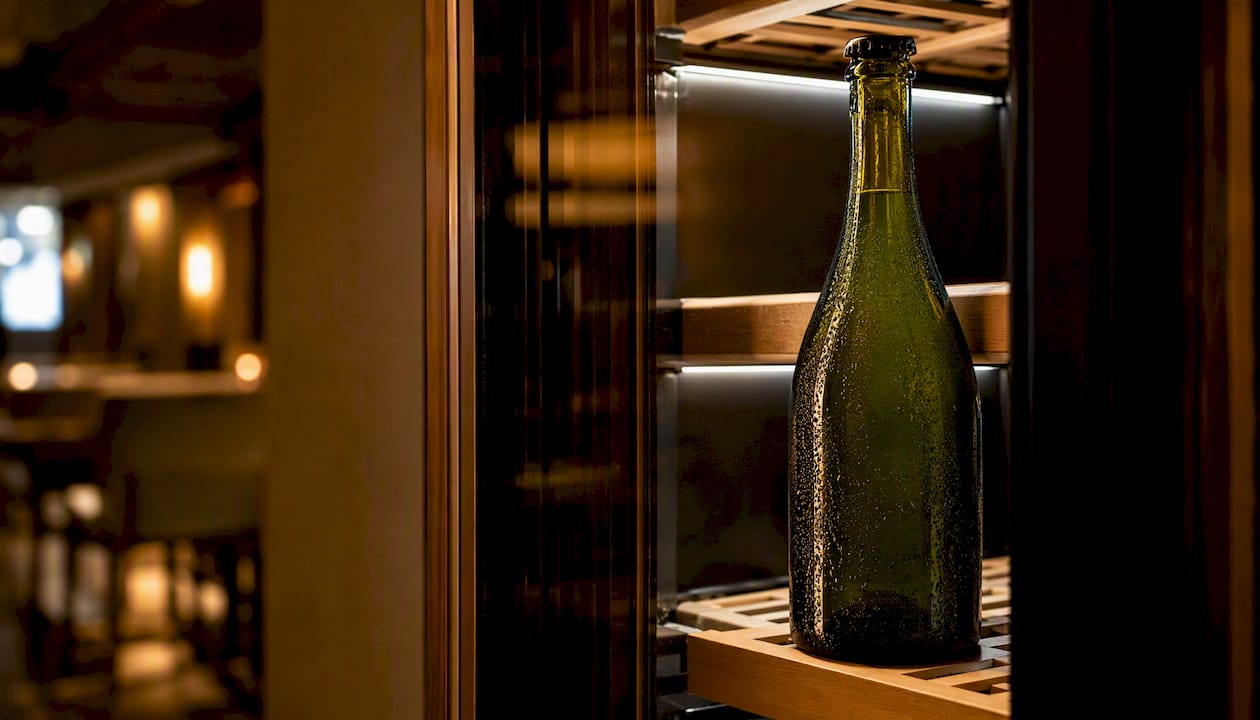
- Chill the bottle upright for at least two hours before opening, ideally overnight. Keeping it upright lets the lees settle to the bottom.
- Do not shake or agitate the bottle before opening.
- Wrap a cloth around the crown cap before using a bottle opener. This contains any foam if the cap releases quickly.
- Ease the cap slowly rather than popping it off in one motion. Press down gently on the cap as you lever it up to control the release of pressure.
- Pour at an angle into a wide-mouthed glass (a white wine glass or a tulip works well). A wide glass lets the bubbles settle and the aromas open up.
- Decide on sediment. You can pour carefully to leave the lees in the bottle for a clearer glass, or swirl the bottle gently before the final pour to include them for a cloudier, more textured result. Both are valid choices.
For storage after opening, reseal with a wine stopper and refrigerate. The bubbles will soften noticeably within a few hours and largely disappear within 24–48 hours. Pet nat is not built for long post-opening life, so plan to finish the bottle the same day if possible.
Pro Tip: If you are opening a bottle that has been transported recently, stand it upright in the fridge for 24 hours before opening. The lees will resettle and the pressure will stabilise, giving you a much calmer opening.
Lost And Found’s tasting protocol and pairing suggestions
At Lost And Found Taproom, a quick in-venue tasting of a pet nat follows a simple sequence that works just as well at home.
- Temperature check first. The bottle should feel cold but not icy. Around 8–10°C is the target. Too cold and the aromas close up; too warm and the bubbles rush out.
- Use a white wine glass, not a flute. The wider bowl lets you nose the wine properly and the bubbles behave more naturally.
- Pour a small measure and observe. Note the colour and the level of cloudiness. Swirl gently and watch how the bubbles behave.
- Nose before tasting. Identify the primary fruit note first (apple, pear, berry), then look for the yeast or bread character underneath.
- Take a small sip and let it sit on the palate. Notice the texture of the bubbles, the acidity, and whether there is any residual sweetness.
- Consider the finish. A clean, mineral finish suggests a well-made wine; a sharp vinegary note or a flat, oxidised character suggests a fault.
For pairing, pet nat’s acidity and soft effervescence make it one of the more food-friendly sparkling styles. The logic of pairing is straightforward: the bubbles cut through fat and salt, and the lower alcohol keeps the wine from overpowering lighter dishes.
Pairings that work particularly well:
- Fried chicken or fish and chips — the carbonation cuts the fat cleanly
- Aged or washed-rind cheeses — salt and funk mirror the wine’s yeast character
- Spicy street food (Korean fried chicken, tacos, Thai salads) — the slight sweetness in off-dry examples cools heat
- Brunch dishes — eggs, smoked salmon, avocado toast all work with a dry Chenin-based pet nat
- Charcuterie and cured meats — the acidity lifts the richness
Lost And Found’s current menu includes food and drink options that pair naturally with the wines stocked in the bottle shop. Ask the team for a tasting recommendation alongside whatever street food is on that day.
Common misconceptions about pet nat
“Pet nat is always a natural wine.” Not necessarily. The méthode ancestrale is a production method, not a philosophy. A wine can be made by méthode ancestrale using conventionally farmed grapes and added sulphites. Many pet nats are low-intervention, but the label does not guarantee it. If provenance matters to you, look for additional certification (organic, biodynamic) or ask the retailer. For a fuller picture of what natural wine actually means, the natural wine guide at Lost And Found covers the distinctions clearly.
“Cloudiness means the wine is faulty.” Cloudiness in pet nat is almost always lees, not a defect. A genuinely faulty bottle usually signals itself through smell: sharp vinegar (volatile acidity), nail-polish remover (ethyl acetate), or a flat, oxidised character. Cloudiness alone is not a red flag.
“Pet nats are sweet.” Most are dry or off-dry. The residual sugar at bottling is typically low, and the finished wine often has less than 5g/L of sugar. Some Gaillac examples lean slightly sweeter, but the style is not inherently sweet.
Watch for these buying red flags:
- No vintage date on the label (pet nat is meant to be drunk young; a missing vintage makes it impossible to judge freshness)
- Bottles stored upright in a warm shop (heat accelerates oxidation and can cause pressure build-up)
- Unusually high ABV (above 13%) for a pet nat, which suggests the fermentation was not stopped early enough
- A label that says ‘méthode ancestrale’ but also lists added CO₂ (a contradiction that points to mislabelling)
Why pet nat deserves more attention than it gets
The conventional wisdom positions pet nat as a quirky, niche alternative for natural-wine devotees. That framing undersells it and, frankly, misreads what makes the style interesting.
Pet nat’s real strength is that it is one of the few sparkling wines where the winemaker cannot fully control the outcome. The fermentation finishes in the bottle, not in a laboratory-monitored tank. That unpredictability is not a flaw in the production model; it is the point. Every bottle carries a small record of the vintage conditions, the yeast population, and the timing of the bottling decision. You are drinking something that was genuinely made rather than engineered.
The criticism that pet nat is inconsistent is true, and it matters less than critics suggest. Bottle variation is real, but it is also the reason the style rewards curiosity. A slightly different bottle from the same producer, a year later, tells you something new. That is not a problem to solve; it is the experience.
What the style does demand is a retailer or venue that knows its stock. A pet nat sitting in a warm shop for two years is a different proposition from one bought from a specialist who turns stock quickly and stores it correctly. That is where curation actually earns its keep.
Lost And Found Taproom: try a pet nat in person
Lost And Found Taproom in Brighton’s Fiveways stocks a rotating selection of curated wines alongside its craft beer range, and pet nat sits comfortably in that mix. The bottle shop carries examples from small producers across France and the UK, chosen for character and value rather than brand recognition.
The practical advantage of buying from a taproom rather than a supermarket shelf is straightforward: you can taste before you commit. The team at Lost And Found can open a bottle for a taster, talk through what is currently in stock, and point you toward a pairing that works with whatever food is on that day. The food and drink menu is available online if you want to plan ahead. If you are considering a group tasting or a private event, venue hire is available with no booking fee. Come in, ask for a pet nat recommendation, and see what’s on the shelf this week.
Sources
- Your Pét‑Nat primer | Wine Enthusiast
- What is Pét‑Nat Wine? | VinePair
- Technical information about Pét‑Nats (Pétillant Naturels, or Sparkling Wines Produced by Méthode Ancestrale) | Penn State Extension Wine & Grapes U.
- Pétillant Naturel / Pét‑Nat (Ancestral Method — Bottled Mid-Ferment) | WineWiki
- Why Pet Nat is the sparkling wine to know | The Telegraph