Wheat beer food pairing: style-led matches to try tonight
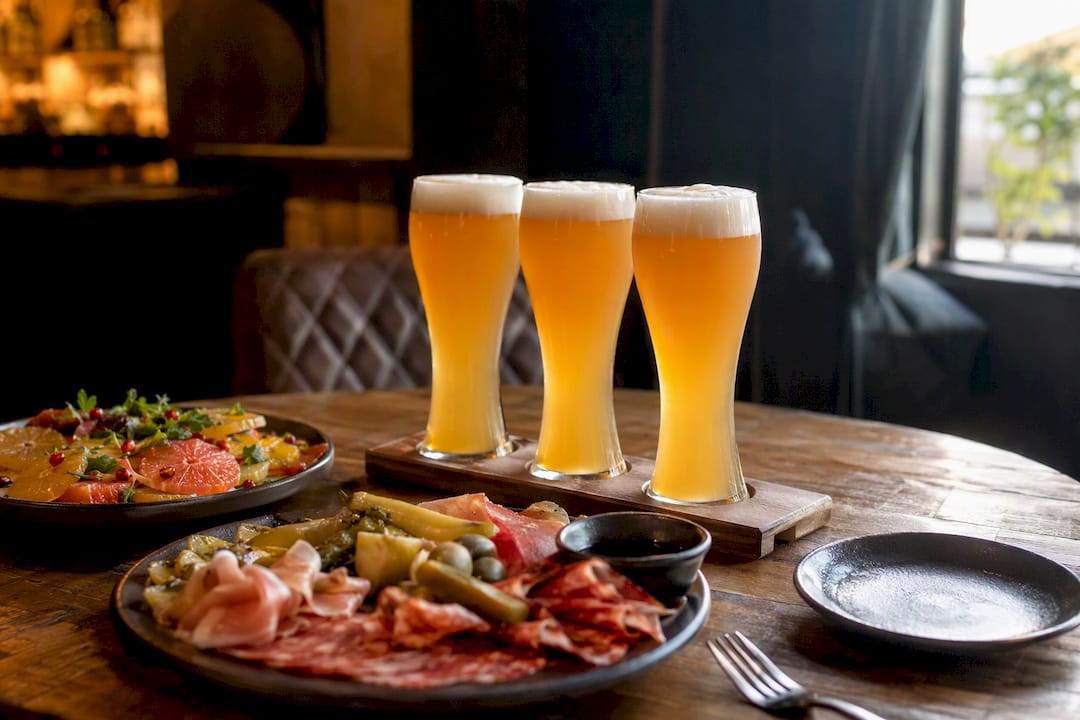
Choose hefeweizen for sausages, roast chicken and banana desserts; choose witbier for seafood, salads and citrus-led dishes; choose American wheat when you need to cool spicy or smoky food. Each of these food categories, seafood, sausages and roast, spicy dishes, cheese and salads, and desserts, responds to a different wheat style for reasons rooted in yeast and adjuncts, not fashion. Get the glass, temperature and carbonation right and the match works even better.
TL;DR:
- Hefeweizen pairs best with sausages, roast chicken, and desserts containing bananas, highlighting yeast-derived banana and clove flavors.
- Witbier complements seafood, salads, and citrus dishes, with orange peel and coriander adding brightness without overpowering delicate flavors.
- American wheat beer’s clean, hoppier profile effectively cools off spicy and smoky foods, especially when carbohydrates are heavy or starchy.
- Proper serving temperature, glassware, and carbonation are crucial for enhancing wheat beer’s pairing potential and should not be overlooked.
- Seasonality and meal timing influence pairing choices, with lighter styles ideal for summer and richer, caramel notes suited for colder months.
Table of Contents
- Wheat beer food pairing basics: hefeweizen, witbier, American wheat and weizenbock
- Food pairings by category: what actually works on the plate
- Pairing rules and a quick tasting checklist
- A three-pour flight to try at Lost And Found Taproom
- Getting the timing right: seasons and occasions matter
- Try these pairings at Lost And Found Taproom
- Sources
Wheat beer food pairing basics: hefeweizen, witbier, American wheat and weizenbock
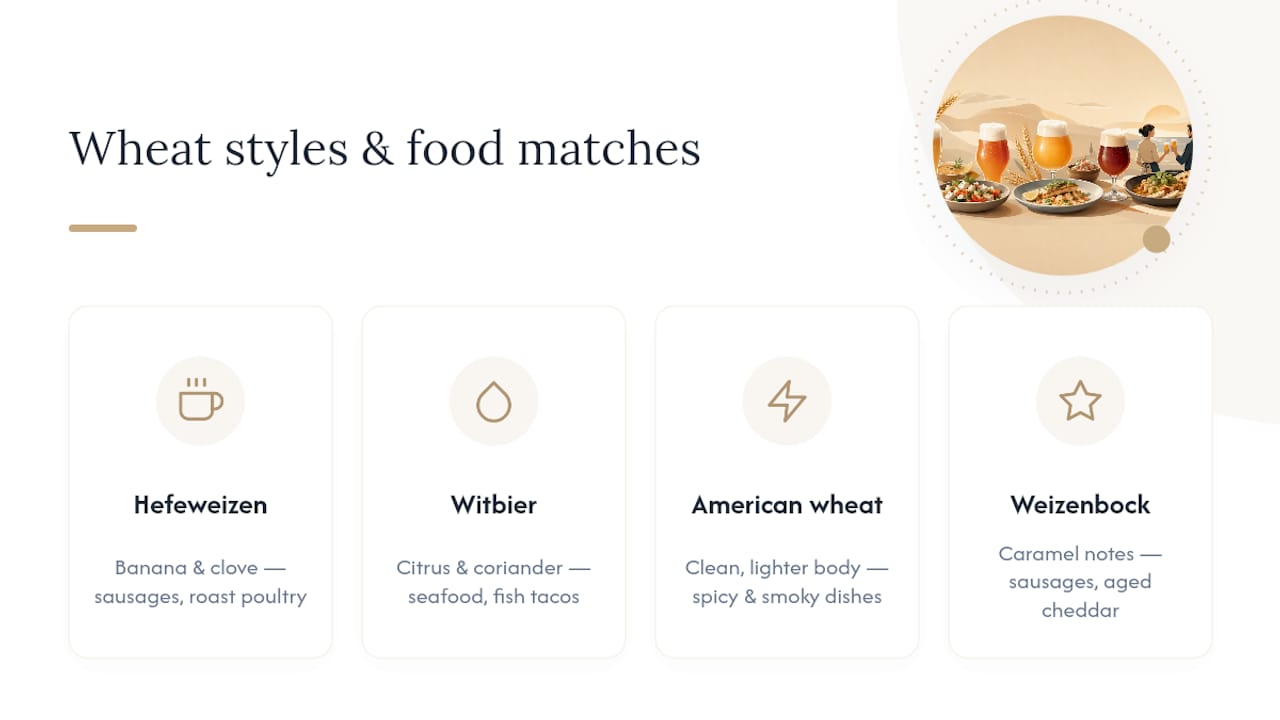
German hefeweizen gets its banana and clove character from a specific yeast strain, and that’s the whole game: those flavours are best treated as partners that echo something equally rich, think pork, sausage casings, or a dessert with actual banana in it. It’s a harmonising style, not a contrasting one.
Belgian witbier works the opposite way. Orange peel and coriander are added deliberately, and they behave like a garnish rather than a base flavour, brightening whatever sits next to them. That’s why witbier turns up so often alongside seafood, citrus dressings, and fresh herbs rather than heavier meats.
American wheat beer strips out most of the yeast character and adjuncts, leaving a cleaner, hoppier canvas that handles chilli heat and char without a fight. Weizenbock, the stronger cousin of hefeweizen, carries deeper caramel and dried fruit notes that suit colder months and heartier plates.
Serving matters more than most drinkers assume. Wheat beers want a tall weizen glass to preserve the head, a serving temperature that is cool but not too cold, and their natural high carbonation left intact. Serve one flat or too cold and half the pairing logic disappears with the bubbles.
Food pairings by category: what actually works on the plate
Pairing success comes down to matching the beer’s flavour origin with something on the plate that either mirrors it or cuts against it. Here’s how that plays out across the dishes readers ask about most.
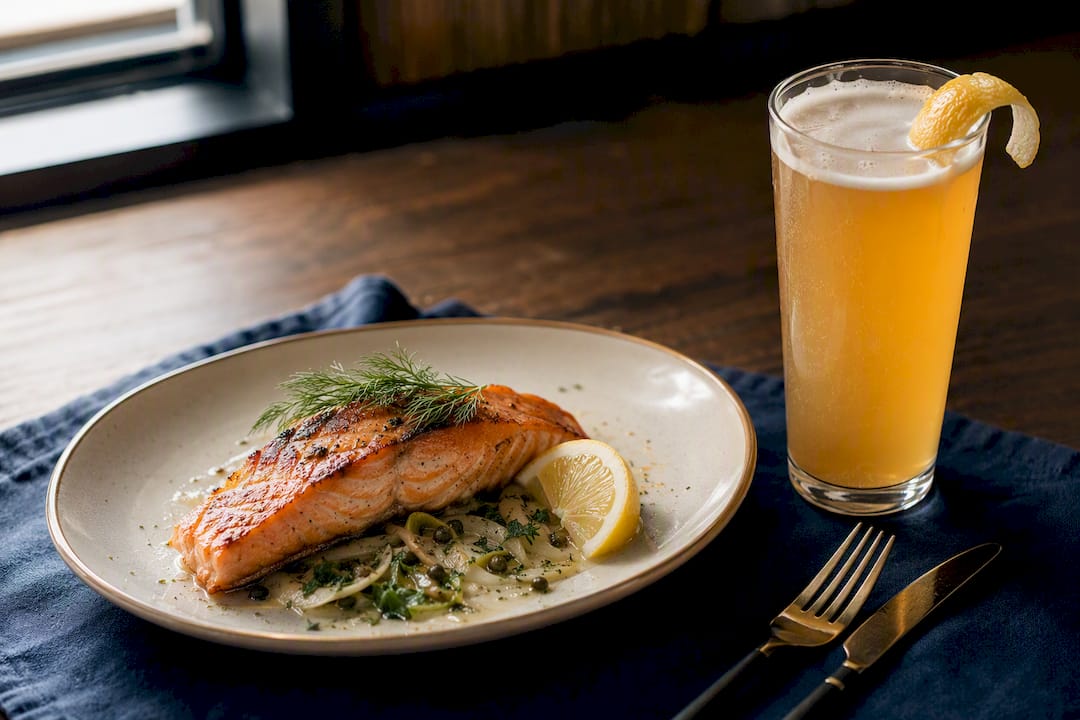
Seafood is witbier’s natural home. Steamed mussels, grilled white fish and ceviche all benefit from the citrus and coriander lifting delicate flavours rather than drowning them, and classic pairings like moules frites with witbier and fish tacos with witbier show up again and again for good reason. Wheat beer’s carbonation also does real technical work here: it sharpens acidity, cleanses the palate and cuts through fat, which is why highly carbonated wheat styles pair so well with oily fish and egg dishes. A squeeze of lime on a fish taco pulls the beer’s orange notes forward.
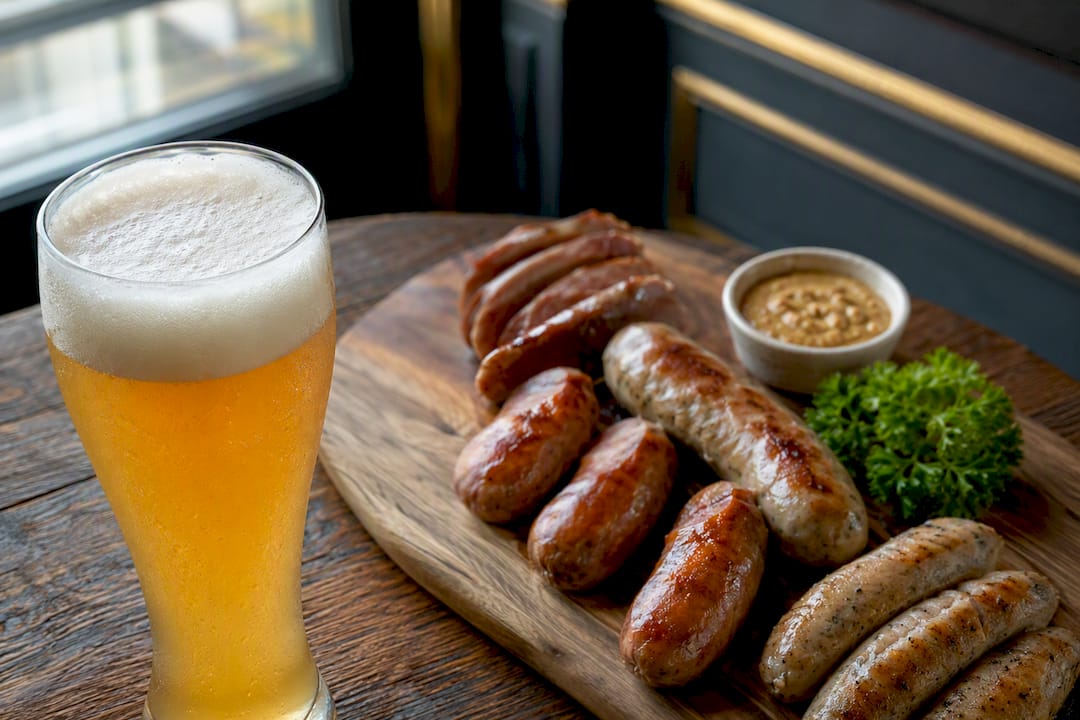
Sausages and roast poultry belong to hefeweizen and weizenbock. Weisswurst with hefeweizen is close to a textbook pairing, and that logic extends naturally to bratwurst, schnitzel and roast chicken, where the banana and clove notes sit comfortably against savoury, slightly fatty meat. A smear of sweet mustard or a squeeze of lemon on the chicken sharpens the contrast rather than fighting it.
Spicy and smoky food needs a different approach. Thai curries, chilli-laced tacos and BBQ wings all bring heat that a heavy or yeasty beer struggles against, so a cleaner American wheat, or a lighter hefeweizen if you want to keep some sweetness, works better at taming the burn. Wheat beer’s versatility stretches further than German food alone, and it partners comfortably with Thai, Japanese and Mexican dishes, including tempura and fish tacos. For a deeper look at matching carbonation and sweetness against chilli heat, see this guide to pairing beer with spicy food.
Cheese and salads offer more range than most drinkers expect. Soft, tangy goat’s cheese loves witbier’s citrus edge, while mild blue cheese and creamy spreads on pretzels suit hefeweizen’s rounder character. Aged cheddar, surprisingly, holds up well against weizenbock, where the caramel notes in the beer meet the nutty sharpness in the cheese rather than clashing with it. There’s more detail on matching specific cheeses in this cheese and beer pairing guide.
Vegetarian and small plates lean on the same principles. Avocado toast, grilled asparagus and quinoa bowls with a citrus dressing all sit comfortably with witbier, while roasted vegetable dishes with a touch of char do well with American wheat. Street food stalls have caught onto this too, and it’s worth browsing examples of beer and street food pairings for inspiration on building a plate around a pour.
Desserts split cleanly by style. Banana bread and banana-based puddings are an obvious match for hefeweizen’s yeast character. Lemon tarts and light cheesecakes work better with witbier’s citrus lift. Be careful with very sweet, dense chocolate desserts, though: they tend to overwhelm a wheat beer’s subtler notes rather than complement them.
Pairing rules and a quick tasting checklist
Four rules cover almost every pairing decision you’ll make with wheat beer.
- Match intensity first. A delicate ceviche needs a delicate witbier, not a heavy weizenbock; a rich weizenbock needs a dish with enough weight to stand up to it.
- Decide complement or contrast before you pour. Hefeweizen with sausage is complement (both rich and savoury); witbier with ceviche is contrast (bright cutting through delicate).
- Use carbonation on purpose. High carbonation cuts fat and oil, which is exactly why wheat beer works so well with oily fish and eggs, where matching strength with strength and finding shared flavours is the whole strategy.
- Let sweetness do the cooling. A touch of residual sweetness in hefeweizen tames chilli heat better than a bitter, hop-forward beer ever will.
Before you commit to a pairing, ask two quick questions: what’s the dominant trait on the plate, spice, fat or citrus, and does the beer’s flavour origin (yeast phenolics or fruit adjuncts) echo or cut against it? If you’re still unsure, run a simple sip, bite, sip routine and jot down whether the second sip tastes brighter, flatter or unchanged.
One caution worth flagging: avoid pairing wheat beer with very starchy or soupy mains, where practitioners note beer can turn clumsy against heavy carbohydrates; a wine-like beer or a much lighter wheat style handles those dishes better.
Pro Tip: Sequence your beers from lightest to heaviest during a tasting, witbier before hefeweizen before weizenbock, and rinse your palate with plain bread or water between pours so each beer gets a fair hearing.
For a fuller walkthrough of technique, this step-by-step tasting guide covers glassware, pour angle and note-taking in more depth.
A three-pour flight to try at Lost And Found Taproom
Order a witbier, a hefeweizen and a weizenbock in that sequence and you’ll taste the contrast-to-complement logic in real time: start bright and citrusy, move to rich and savoury, finish deep and warming. Pair the witbier with something light and citrus-forward, a marinated olive mix or a bright salad plate works well. Move to the hefeweizen alongside a proper sausage board, and close with the weizenbock next to a rich cheese or a small dessert plate.
Lost And Found Taproom’s rotating selection of independent UK breweries means the exact beers on that flight change regularly, so ask the team on shift for their current wheat beer recommendations. Our tasting events and staff pairing knowledge exist precisely for this kind of experimenting, and requesting a custom flight is always welcome.
Getting the timing right: seasons and occasions matter
Summer calls for witbier and lighter wheat styles alongside salads and seafood, when brightness and low weight matter more than richness. Come autumn and winter, weizenbock and its deeper caramel notes suit roasts and denser desserts far better. Brunch pairs naturally with hefeweizen against egg dishes and pastries, while evening meals can handle richer, more spiced plates and a stronger pour. Don’t be afraid to swap the textbook match for whatever’s freshest and local that week.
— Author
Try these pairings at Lost And Found Taproom
Reading about pairings only gets you so far; the real test happens with a glass in hand and something good on the plate beside it. Lost And Found Taproom in Brighton’s Fiveways stocks a rotating lineup of independent UK wheat beers, and our food and beer menus are available online, so you can plan a visit around exactly the kind of flight this article describes.

Staff on shift know the current tap list better than any guide can and are always happy to suggest a pairing based on what you fancy eating that evening. Browse our beer menu to see what’s pouring this week, or if you’re planning something bigger, our venue hire options work well for a group tasting built entirely around food and wheat beer matches. Book a table, ask for a custom flight, and taste the difference between complement and contrast for yourself.
Sources
For deeper technical grounding, WSET’s guide to beer and food pairing principles and Beer & Brewing’s notes on carbonation’s role in palate cleansing go beyond wheat styles into pairing theory more broadly.
- WSET — Mastering the art of beer and food pairing
- Beer & Brewing — role of carbonation and pairing notes
- Flavor365 — Food pairings for wheat beer