Cheese and beer pairing: 10 matches to try tonight
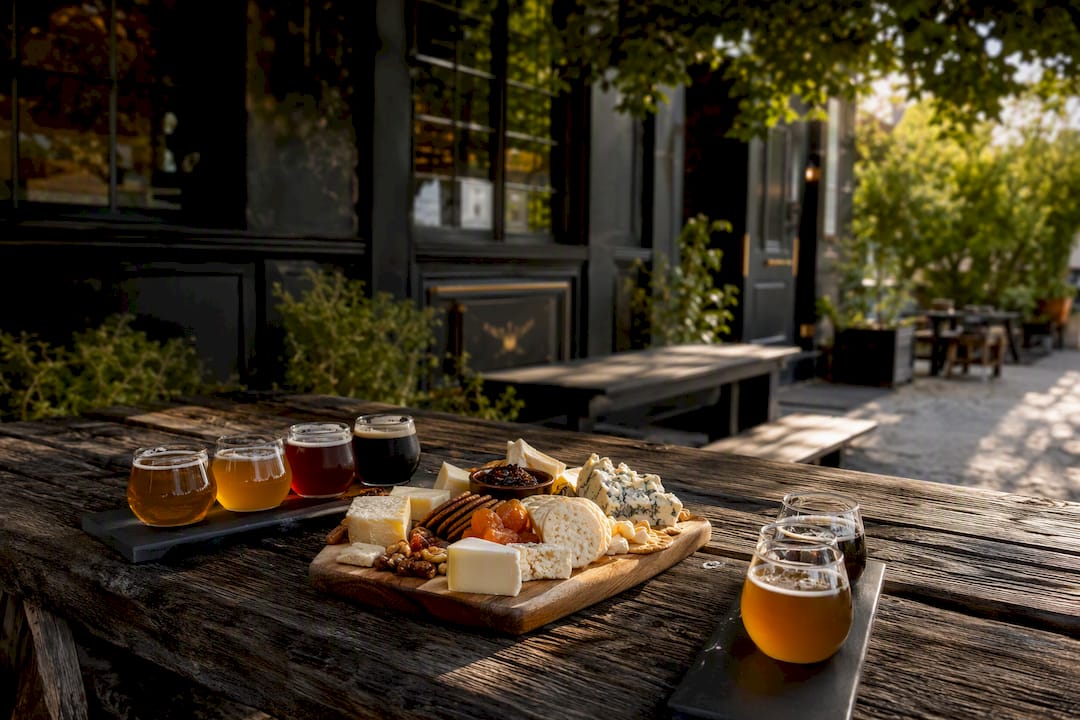
Match the weight of the beer to the weight of the cheese and you will get the pairing right nine times out of ten. That is the whole trick. A delicate goat’s cheese wants a light, fizzy pilsner, not a heavy stout that will flatten it. From there, you either complement the flavours (find what they share) or contrast them (let bitterness cut through fat and salt).
Try these six tonight:
- Stilton or Gorgonzola with stout or barleywine — sweetness against salt, big against big.
- Aged Cheddar with pale ale or IPA — hop bitterness slices through the fat.
- Brie or Camembert with a wheat beer (hefeweizen) — soft carbonation lifts the creaminess.
- Fresh goat’s cheese with pilsner or lager — clean and crisp meets tangy and light.
- Aged Gouda with brown or amber ale — caramel malt echoes the cheese’s own caramelised notes.
- Washed-rind cheese with saison — peppery, fruity carbonation tames the funk.
Key Takeaways
Matching the weight of a beer to the weight of a cheese, then choosing to complement or contrast the flavours, is the single most reliable rule in cheese and beer pairing.
| Point | Details |
|---|---|
| Match intensity first | Light beers suit mild cheeses; stouts and barleywine suit strong, aged, or blue cheeses. |
| Use carbonation deliberately | Fizzier beers like saison or pilsner cut through rich, fatty cheeses better than flat ones. |
| Look for bridge flavours | Caramel malt in brown ale echoes aged Gouda’s own toasted, buttery notes. |
| Sequence tastings correctly | Serve light to heavy and low to high bitterness to avoid palate fatigue. |
| Try it guided, not just solo | Lost And Found Taproom’s rotating UK beer selection lets you test pairings against a live, changing lineup. |
Table of Contents
- What makes cheese and beer pairing work so well?
- Should you complement or contrast the flavours?
- Which beer goes with which cheese style?
- How do you set up a small tasting at home?
- What mistakes ruin a cheese and beer pairing?
- What do experienced taproom hosts do differently?
- Where to try these pairings yourself
- Sources
What makes cheese and beer pairing work so well?
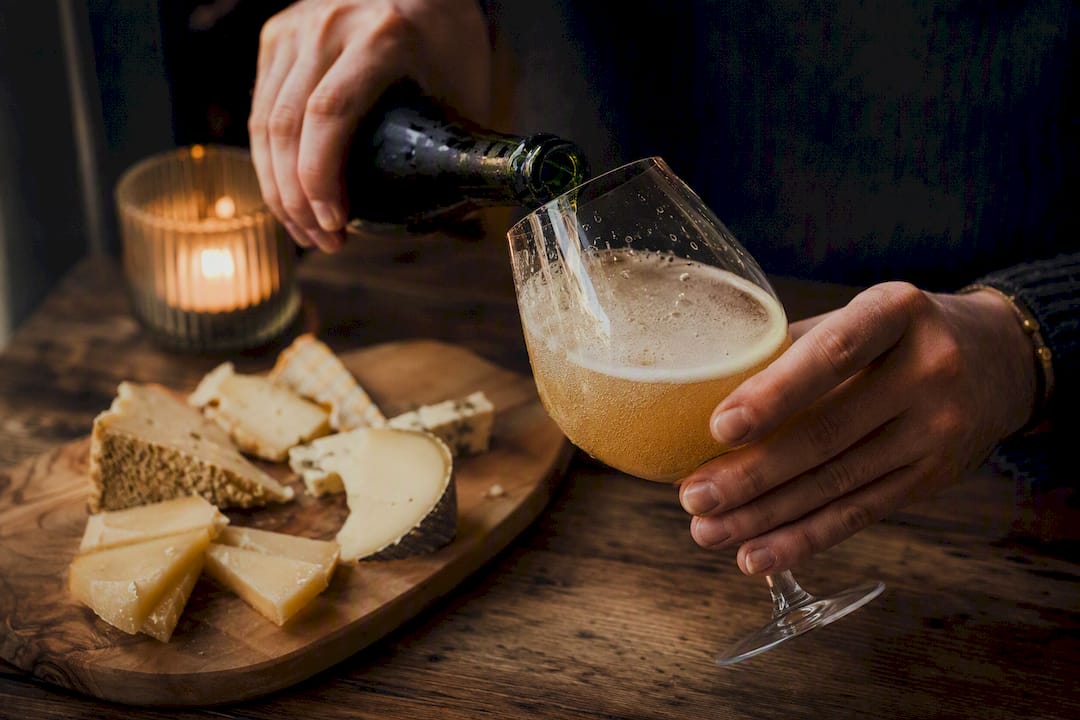
Carbonation and bitterness are doing the heavy lifting here. Beer’s fizz physically scrubs fat off the tongue, resetting your palate between bites in a way that flat, still wine cannot manage, which is why beer often outperforms wine with genuinely fatty cheeses, according to NPR’s reporting on beer and cheese pairing. Bitterness works alongside it, cutting through richness the same way a squeeze of lemon cuts through oily fish.
Malt adds a third layer entirely. Toasted, caramel, or roasted malt flavours echo the nutty, caramelised notes that develop in aged cheeses, building a bridge rather than a clash. This is closer to matching ingredients in a recipe than following strict rules.
Beer pairing works less like a rulebook and more like a shared vocabulary between two foods. Garrett Oliver has long argued that beer’s flavour range makes it a cheaper, more forgiving partner to experiment with than wine, since a duff pairing costs you a few pounds, not a bottle you were saving.
Pro Tip: Pull both the cheese and the beer out 30 to 60 minutes before tasting. Cold cheese loses most of its aroma, and an ice-cold beer mutes flavour just as much as it mutes temperature.
Should you complement or contrast the flavours?
Start with intensity, then decide whether to complement or contrast. Both strategies work; the mistake is picking neither and grabbing whatever is in the fridge.
- Match intensity first. A mild cheese needs a mild beer; a pungent one can handle something bigger.
- Look for bridge flavours. Caramel malt and aged Gouda share a toasted sweetness that makes the pairing feel obvious rather than accidental, a technique pros at BYO magazine rely on constantly.
- Choose contrast on purpose. Blue cheese against a hoppy IPA or roasty porter works because the bitterness pushes back against saltiness, not despite it.
- Factor in texture and salt. A crumbly, salty cheese needs more carbonation and bitterness than a soft, mild one.
When running several pairings in one sitting, go light to heavy and low bitterness to high bitterness. Starting on a stout wipes out your ability to taste a delicate pilsner afterwards.
Which beer goes with which cheese style?
Every cheese has a beer style that flatters it, and the logic is almost always about matching or bridging intensity.
- Fresh goat’s cheese (chèvre): pilsner or crisp lager. Both are clean and bright enough not to bury the cheese’s tang.
- Brie or Camembert (bloomy rind): hefeweizen. The banana and clove notes soften against buttery cheese, and the carbonation lifts the richness.
- Triple-crème: something with real fizz, like a Belgian-style saison or a bright lager. Very rich cheeses need carbonation more than they need malt, according to Beer and Brewing’s pairing notes.
- Halloumi: pale ale. Its grilled, salty character wants a beer with enough hop bitterness to balance the salt without fighting the char.
- Washed-rind cheese: saison. The pepperiness and fruit esters cut straight through the funk.
- Aged Cheddar: pale ale or IPA. Sharp cheddar and hop bitterness were made for each other.
- Aged Gouda: brown ale or amber ale. Caramel malt bridges directly to the cheese’s own butterscotch notes.
- Blue cheese (Stilton, Gorgonzola): stout or barleywine. Roasted sweetness and higher alcohol stand up to the salt and funk rather than getting flattened by it, as The Cheese Professor explains.
Pro Tip: When a pairing feels flat, hunt for a bridge flavour instead of swapping the whole beer. Aged Gouda’s caramel notes and a brown ale’s toasty malt are the clearest example of why this works so consistently.
How do you set up a small tasting at home?
Keep it small enough to actually taste properly. Five or six cheeses and beers is plenty for a first go.
- Pour a small amount per beer sample, enough for two or three sips.
- Cut a small portion of cheese per person per pairing.
- Serve lighter beers like pilsner and wheat beer at cooler temperatures, with stouts or barleywine served somewhat warmer, following All About Beer’s serving guidance.
- Sequence tastings light to heavy: pilsner and goat’s cheese first, stout and Stilton last.
- Keep plain water and unsalted crackers on the table as palate cleansers between rounds.
- When unsure where a cheese fits, reach for a medium-intensity beer; it is the safest middle ground on a mixed board.
What mistakes ruin a cheese and beer pairing?
Most bad pairings come down to the same handful of errors, and every one has a quick fix.
- Mismatched intensity: a delicate cheese disappears next to a big stout. Fix it by swapping to a lighter beer style, not by swapping the cheese.
- Serving beer too cold: you lose most of the aroma. Let it warm for 10 to 15 minutes before tasting.
- Cheese straight from the fridge: flavour is muted at low temperatures. Rest it at room temperature for half an hour first.
- Starting with hops before there’s fat or salt on the palate: the bitterness reads as harsh. Start on a milder pairing to prime your palate.
- Tasting heavy before light: palate fatigue kills your ability to taste anything delicate afterwards. Always sequence light to heavy.
What do experienced taproom hosts do differently?
- Rotate palate cleansers every two or three pairings, not just at the start.
- Pre-chill lighter beers separately from heavier ones so nothing arrives at the wrong temperature.
- Label each pairing clearly, including one line on why it works.
- Encourage guests to re-try a pairing after cleansing their palate; first impressions are often wrong.
- Keep portions small enough that guests can comfortably work through six pairings without filling up halfway through.
For groups, stagger service so not everyone tastes the same pairing at once. It keeps the room moving and stops a bottleneck at the cheeseboard.
A note from behind the bar
Hosting tastings taught us that guided pairings beat guesswork almost every time. Lost And Found Taproom’s rotating beer selection means there is always something new to test against a cheeseboard.
Where to try these pairings yourself
There are plenty of ways to run a pairing session at home, and the guidance above will get you most of the way there. But if you would rather skip the trial and error, Lost And Found Taproom gives you a rotating line-up of local and UK craft beers on tap, already chosen for variety across styles from crisp pilsners to heavyweight stouts, so you are never stuck with just one option to test against your cheeseboard.
Our full beer menu is online, alongside our food offering, so you can plan a pairing session before you even walk in. If you are hosting a bigger group, our venue hire space in Brighton’s Fiveways is worth a look, whether that is a birthday cheeseboard night or a proper tasting party. Come in, tell the staff what cheese you are working with, and let them point you towards a beer that will actually do it justice.
Sources
- Why Beer Pairs Well with Cheese and How to Do It | The Cheese Professor
- In matchup of beer and cheese, everybody wins — NPR
- Pairing beer and cheese: Tips from the pros — BYO
- How to pair beer and cheese — All About Beer
Recommended
- Why @boxxbbq is the Perfect Match for Craft Beer at Lost and Found Taproom - Lost And Found Craft Beer Taproom Brighton
- Why @boxxbbq is the Perfect Match for Craft Beer at Lost and Found Taproom - Lost And Found Craft Beer Taproom Brighton
- Beer with spicy food: what to drink with curry and wings
- Find Craft Beer, and a Connection! Lost and Found x Breeze Dating App Collab - Lost And Found Craft Beer Taproom Brighton