8 Saison Food Pairings to Order or Cook Tonight
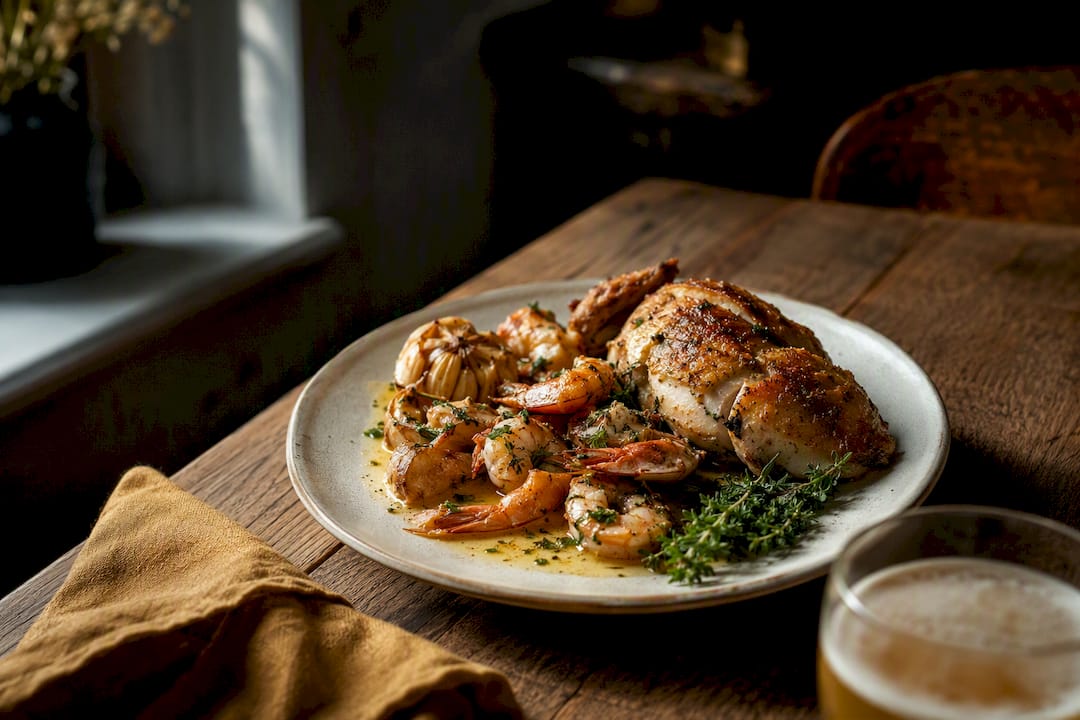
Saison pairs best with cheese, mussels and shellfish, herb-roasted poultry or pork, spicy Southeast Asian dishes, and fresh vinaigrette-dressed salads. That range isn’t an accident. It comes down to a dry finish, high carbonation, and a peppery, citrus yeast character that cuts fat, echoes spice, and refreshes the palate between bites. The specifics of which saison suits which plate follow below.
TL;DR:
- The dryness, high carbonation, and peppery citrus yeast notes of saison allow it to cut through fats and complement spicy, salty, and herbaceous dishes effectively.
- Different saison styles, from clean and session-strength to funky Brett-fermented variants, suit specific food categories, requiring careful matching of intensity and character.
- Pairings like mussels with farmhouse saison, herb-roast chicken with a clean saison, and spicy Asian dishes with Brett saisons leverage saison’s unique palate-cleansing and flavor-enhancing traits.
- Serving saison slightly cool and in tulip or Weizen-style glasses enhances aroma and flavor, while small tasting pours optimize the pairing experience.
- Heavy chocolate desserts generally do not match well with saison’s dry, peppery profile, which pairs best with lighter, fruitier, and savory dishes.
Table of Contents
- Why saison works with food: the sensory drivers of good matches
- Top pairing categories and what to order or cook to match them
- Eight pairing examples you can actually order or cook tonight
- How to taste and serve saison with food
- Lost And Found’s practical pairing notes
- Seasonal ingredients and saison’s farmhouse roots
- What the pairing rules actually tell you
- Try these pairings at Lost And Found
- Sources
- FAQ
Why saison works with food: the sensory drivers of good matches
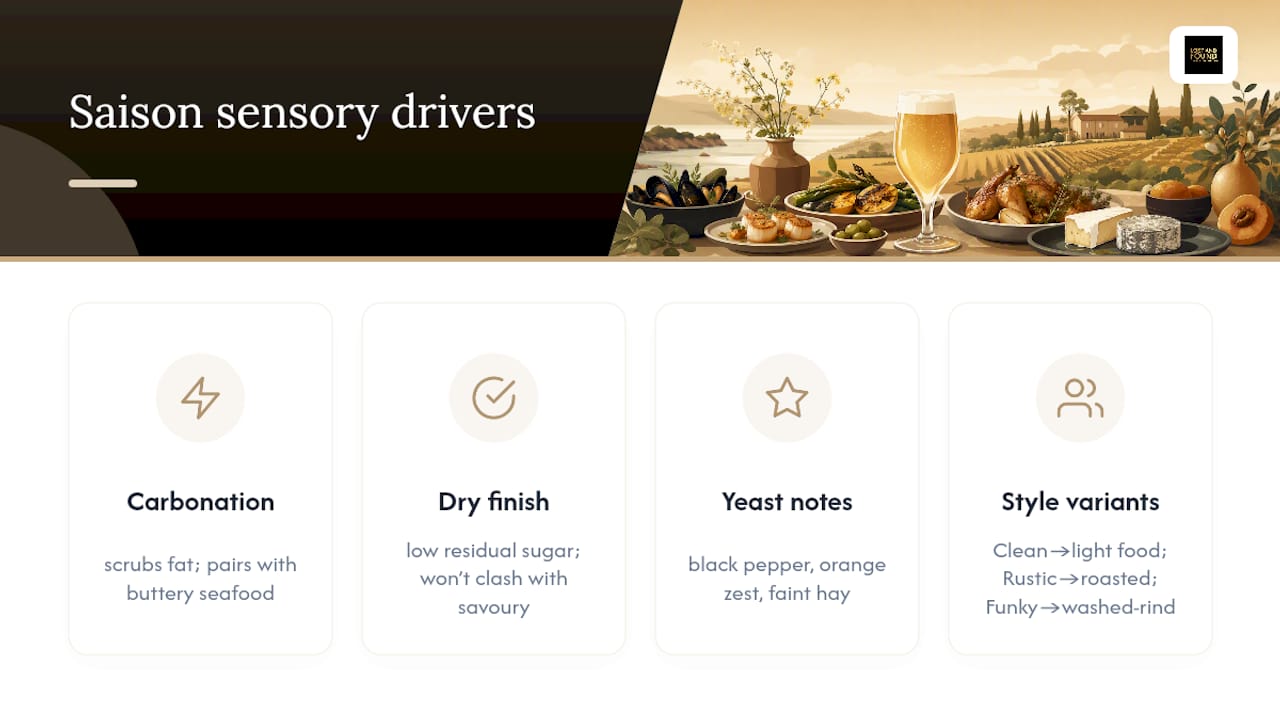
Saison earns its reputation as one of the most food-friendly beer styles because of what happens on the palate, not just in the glass. The style typically runs 5.0 to 8.5% ABV, with a bitterness around 20 to 35 IBU and carbonation levels that sit noticeably higher than most ales, according to Beer & Brewing’s style entry. That fizz matters more than most drinkers realise. It scrubs fat and richness off the tongue the way a squeeze of lemon does, which is exactly why saison performs so well alongside buttery seafood or fatty roasted meat.
The dry finish adds a second layer. Unlike a malt-forward ale that lingers sweet, saison’s fermentation typically pushes toward dryness, leaving little residual sugar to clash with savoury or spiced food. Layer in the yeast-driven notes of black pepper, orange zest, and faint hay or earth, and you get a beer that behaves almost like a seasoning in its own right, echoing herbs on the plate rather than competing with them.
Not every saison tastes the same, though, and that variation matters for pairing. A clean, session-strength saison behaves like a crisp white wine, best suited to light and bright food. A rustic, maltier, amber-hued version can shoulder richer, roasted fare. A funky, Brett-fermented saison brings barnyard complexity that wants something equally bold, like a washed-rind cheese. Knowing which camp your beer falls into is the real skill here.
Top pairing categories and what to order or cook to match them
Once you understand what drives saison’s versatility, matching it to a menu becomes a question of category, not guesswork. The Beer Connoisseur’s saison guide points to mussels, roast chicken, pork, and spicy Southeast Asian dishes as the style’s natural companions, and cheese boards belong right alongside them.
- Cheese: Soft, gooey cheeses like a ripe Brie work with a clean session saison, while washed-rind styles (think Taleggio or Époisses) call for a funkier, Brett-forward beer that can match their pungency. Alpine and aged cheeses such as Gruyère, aged cheddar, or Comté suit a maltier saison with enough backbone to stand up to their nuttiness, a pairing logic also backed by CraftBeerMe’s saison breakdown.
- Seafood: Mussels are the textbook match, their briny sweetness cut clean by carbonation and citrus notes. Clams, oysters, and grilled oily fish like mackerel all benefit from the same acid-and-bubble effect.
- Poultry and pork: Herb-roasted chicken plays off the peppery phenolics directly. Pork chops finished with apple or mustard lean into saison’s fruit-and-spice register, and grilled sausages work for the same reason.
- Spicy Asian cuisine: Thai, Vietnamese, and Sichuan dishes gain from saison’s ability to temper heat while its yeast spice complements lemongrass, chilli, and ginger, a dynamic Food52 highlights as one of the style’s standout strengths. If you want more detail on matching beer to heat generally, our guide to beer with spicy food covers the broader principles. This guide is available online.
- Salads and vegetarian plates: Vinaigrette-dressed salads, grilled vegetables, and goat cheese with herbs all sit comfortably with saison’s acidity, and for more seasonal vegetarian ideas, Wild Foodz’s seasonal menu guide is worth a look.
- Dessert: Fruit tarts and light lemon custards can work with a citrus-forward saison, but heavy chocolate desserts tend to overwhelm the beer’s delicacy.
Eight pairing examples you can actually order or cook tonight
Rules only take you so far. Here are specific plates, matched to the right saison subtype, with a note on why each combination works.
- A mixed cheese board with Comté and Brie: Choose a clean, citrus-forward session saison for the Brie and save a maltier or slightly funkier pour for the Comté; the beer’s dryness stops the plate from feeling heavy.
- Mussels in white wine and garlic: A classic farmhouse saison with moderate funk mirrors the dish’s own acidity, and the carbonation lifts the broth’s richness off your palate between spoonfuls.
- Herb-roast chicken with thyme and lemon: A clean session saison echoes the herbs directly. Serve it slightly cool so the peppery finish stays sharp rather than flat.
- Apple-glazed pork chops: A rustic, amber saison with a touch of caramel malt stands up to the glaze’s sweetness while the beer’s dryness keeps the whole plate from tipping sugary.
- Spicy Pad Thai: A funky, Brett-fermented saison tempers chilli heat while its earthy, citrus notes play well with lime and fish sauce.
- Vietnamese lemongrass salad: A bright, low-funk saison mirrors the herbaceous lift of lemongrass and coriander, making this one of the cleanest matches on the list.
- Grilled halloumi with herbs: A crisp session saison cuts the cheese’s salt and chew, keeping the whole bite feeling light rather than greasy.
- Roasted root vegetable platter with goat cheese: A maltier saison with a hint of spice complements the caramelised sweetness of roasted carrots and parsnips, while the goat cheese adds the acidity the beer expects.
Each of these works because the beer is doing a specific job on the plate, whether that’s cutting fat, echoing spice, or matching acidity. Get that logic right and you can improvise beyond this list with confidence.
How to taste and serve saison with food
Serving temperature changes everything about how these pairings land. Saison shows best slightly cool, around 8 to 12°C, rather than fridge-cold. Ice-cold serving mutes the peppery phenolics and citrus esters that make the style worth pairing in the first place.
Glassware matters almost as much. A tulip or Weizen-style glass concentrates aroma and holds a proper head, letting you smell the pepper and citrus before you taste them. A tumbler flattens all of that, so save it for casual sipping rather than a considered pairing session.
For the tasting itself, keep pours small and use a simple sip-then-bite method: taste the beer alone first, take a bite of food, then sip again to see how the flavours shift. The Beer Connoisseur notes that saison’s high carbonation works as a genuine palate cleanser between courses, which is why smaller pours across a multi-course pairing beat one large glass. If a saison runs high in ABV or leans heavily funky, cut the pour size further and pair it later in a tasting sequence, once the palate has warmed up to bolder flavours. Our glassware guide breaks down the differences by style if you want to go deeper.
Lost And Found’s practical pairing notes
A craft beer taproom curates a rotating lineup of local saisons, pairing them with street food collaborations, cheese boards, and seasonal plates as part of regular service. Tasting nights and events at the taproom double as a proving ground, where regulars and newcomers alike test which saison suits which dish in real time. That hands-on feedback shapes how the team recommends pairings across the bar, session by session.
Seasonal ingredients and saison’s farmhouse roots
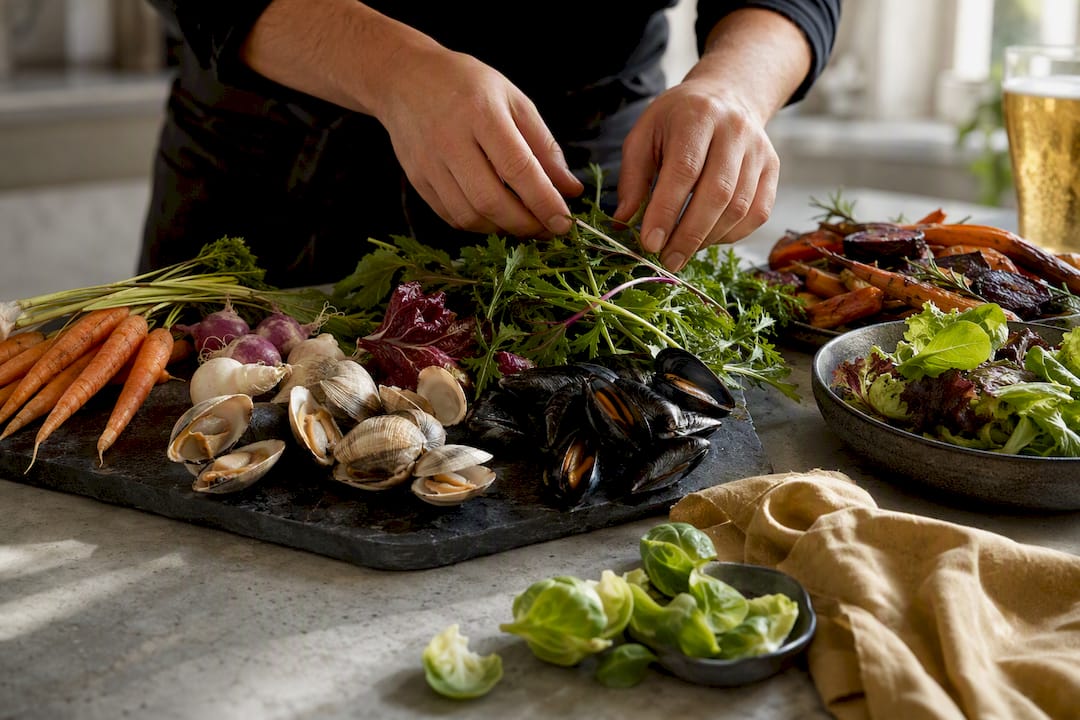
Saison began as a farmhouse beer, brewed by Belgian and northern French farms to refresh field workers during harvest and to use up whatever grain and fruit the season provided. That history explains why the style still pairs so naturally with seasonal produce rather than a fixed menu.
Spring and summer call for saison’s lighter, brighter expressions alongside grilled vegetables, fresh salads, and shellfish, a seasonal pattern Anytime Ale’s pairing guide also points to. As the weather turns, maltier or spiced saisons shift naturally toward roasted root vegetables, game, and richer autumnal dishes. The same beer style that started as a practical farmhouse solution still tracks the seasons on your plate.
This adaptability also explains why saison works so well with fatty sauces and dips. A mustard-heavy potato salad or a beer cheese dip both benefit from the same cutting acidity and carbonation that makes mussels or roast chicken work, refreshing the palate between rich, heavy bites rather than adding to the weight.
What the pairing rules actually tell you
The conventional advice on saison pairing tends to stop at “it goes with everything,” which is true but useless. What the evidence actually supports is more specific: saison’s versatility comes from three measurable traits, carbonation, dryness, and yeast spice, and each one points to a different category of food. Once you separate those three drivers, the guesswork disappears.
Where most guides fall short is treating saison as one beer rather than a spectrum. A clean Belgian-style session saison and a heavily Brett-fermented farmhouse ale share a name but behave completely differently at the table. Matching the wrong subtype to the wrong dish is the single most common mistake, not picking the wrong food category.
Prioritise the beer’s intensity first, then work backwards to the dish. Ask whether it’s clean or funky, light or malty, before you ask whether the plate has chicken or fish on it. That order of operations, style first, food second, is what separates a lucky pairing from a repeatable one.
— Author
Try these pairings at Lost And Found
Reading about saison pairings is one thing. Tasting them side by side, with the right beer poured at the right temperature, is another. A specialized taproom offers beers sourced from independent local breweries, with a rotating selection that often includes saisons to compare alongside other options.
Whether you’re planning a casual visit or booking the space for a private tasting night, here’s where to start:
- Check what’s currently pouring on our live beer menu
- Browse the full range of Sussex beers, cider, wine, and spirits on our on-tap and bottleshop list
- Enquire about hosting your own pairing event through Midweek and Weekend Hire, which comes with no hire fee and full flexibility on drinks selection
Our food and beer menus are available online, so you can plan a visit around exactly which saison you want to try before you arrive. If you’re organising a group tasting, get in touch about venue hire and we’ll help you build a pairing line-up around what’s currently on tap.
Sources
- Beer & Brewing: Saison (dictionary entry)
- The Beer Connoisseur: Saison (style guide and pairings)
- Food52: Choose this beer style the next time you’re eating Asian food
- CraftBeerMe: What is a Belgian Saison?
FAQ
Is saison a lager or an ale?
Saison is an ale, brewed with top-fermenting yeast strains that produce its signature pepper, citrus, and earthy character. It has no relation to lager beyond both being beer.
What does “saison” mean in French?
“Saison” means “season” in French, a nod to the style’s farmhouse origins as a beer brewed to refresh field workers across the agricultural year. The name reflects its history rather than any specific flavour.
Is saison a sour beer?
No, most classic saisons are dry rather than sour, though some examples carry noticeable tartness or funk from wild yeast strains like Brett, according to Beer & Brewing’s style profile. A dry finish and a sour finish are different things, and saison sits firmly in the former camp.
Can you give examples of saison beer styles worth trying?
Saison spans clean session versions, rustic malt-forward examples, and funky Brett-fermented interpretations, each suited to different food. The rotating selection at Lost And Found Taproom typically includes a mix of these styles from independent Sussex and UK breweries, so checking the current beer menu is the most reliable way to see what’s pouring.
What food pairs worst with saison?
Heavy chocolate desserts and very sweet dishes tend to clash with saison’s dry finish, muting the beer’s peppery, citrusy character rather than complementing it. Lighter, fruit-based desserts work far better if you want to pair through to the end of a meal.