12–18 Month Rule: Pét‑nat or Champagne for Brighton Drinkers
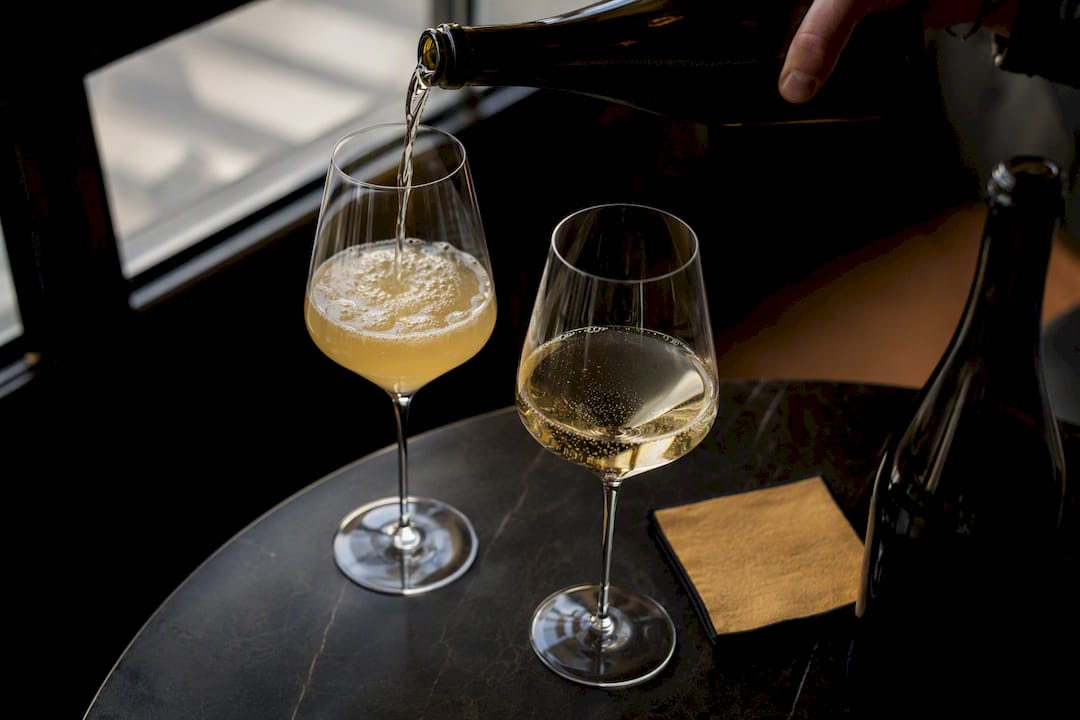
Pét-nat has a single fermentation that is bottled while still active; Champagne undergoes two fermentations, with the second taking place inside the bottle after riddling and disgorgement. This fundamental difference accounts for much else: pét-nat is typically cloudier, less predictable, and often more affordable, while Champagne is refined, consistent, and priced to reflect its labour-intensive production. Choose pét-nat for casual, exploratory drinking, and Champagne for occasions requiring reliable quality.
TL;DR:
- Pét-nat is bottled during its first fermentation, resulting in cloudiness, sediment, and variable pressure, making it less predictable and often more affordable.
- Champagne undergoes two controlled fermentations with disgorgement, resulting in consistent clarity, finer bubbles, and a longer aging process that develops complex flavors.
- Pét-nat usually pairs well with casual foods like charcuterie and spicy dishes, while Champagne is better suited for refined occasions with seafood and delicate dishes.
- Prices reflect production complexity: Champagne costs more due to labor-intensive methods and strict regional rules, while pét-nat is cheaper due to minimal intervention and quicker turnaround.
- Optimal serving and storage differ: Champagne is best cold and in a flute, lasting years in optimal conditions; pét-nat performs better slightly warmer and is best consumed within 12 to 18 months.
Table of Contents
- Pét-nat vs Champagne: the production split that defines both
- Champagne and méthode traditionnelle, explained
- Production differences that actually shape what’s in your glass
- How pét-nat and Champagne actually taste
- How long each style keeps and how to store it
- Getting the most from each style at the table
- What price actually buys you
- A quick checklist for choosing between the two
- Where to taste and buy pét-nat and Champagne near Brighton
- The natural vs traditional debate, and why it’s the wrong fight
- Sources
- FAQ
Pét-nat vs Champagne: the production split that defines both
The whole “pét-nat vs Champagne” question comes down to méthode ancestrale versus méthode traditionnelle. Pét-nat, short for pétillant naturel, is bottled while its first and only fermentation is still active, trapping carbon dioxide naturally as the wine finishes fermenting inside a sealed bottle rather than an open tank.
That single fermentation, arrested by bottling rather than engineered through a second one, explains most of what is unusual about it:
- Bottled unfiltered on lees, so cloudiness and sediment are normal, not faults
- Sealed with a crown cap in most cases, the same closure you’d find on a bottle of beer
- Lower and more variable pressure than Champagne, giving softer, larger bubbles
- Ready for sale relatively soon after harvest, rather than after extensive ageing
- No two producers, and often no two vintages, taste quite the same
This is méthode ancestrale at its rawest: minimal intervention, maximum vintage character, and a fair amount of bottle-to-bottle variation baked into the process by design.
Champagne and méthode traditionnelle, explained
Champagne runs on a completely different logic: two fermentations, the second one deliberately triggered inside the bottle to build pressure and complexity in a controlled way.
- Tirage: a base wine gets a dose of sugar and yeast, then goes into the bottle for a second fermentation
- Riddling (rémuage): bottles are gradually tilted and rotated to move spent yeast sediment towards the neck
- Disgorgement (dégorgement): that sediment is frozen and ejected, leaving the wine clear
- Dosage: a small addition of sugar and wine tops up the bottle and sets the final sweetness style
Months to years of lees contact during this process is what gives Champagne its brioche, toast and biscuit character. Industry commentary consistently points to méthode traditionnelle’s predictability and fine mousse as the direct payoff of that extra control, and the higher, steadier pressure it builds is what gives you the tight, persistent bead you expect from a proper flute.
Production differences that actually shape what’s in your glass
Line the two methods up side by side and every technical choice maps onto something you can taste or feel in your hand.
- Fermentation count and timing. One fermentation for pét-nat means residual sugar and final pressure are harder to predict; two fermentations for Champagne mean the winemaker controls sweetness and carbonation precisely through dosage.
- Closure and disgorgement. Crown caps and no disgorgement leave pét-nat cloudy with variable pressure; disgorgement and cork-and-cage closures give Champagne consistent clarity and a stable fizz that survives years in a cellar.
- Lees contact, sulphur and dosage. Extended lees ageing builds Champagne’s toasty depth, while pét-nat’s short lees contact and typically lower sulphur dioxide use protects its fresh, fruit-forward character but shortens its useful life.
A peer-reviewed comparison of commercial sparkling wines found ancestral-method bottles to be more heterogeneous than traditional-method ones, with generally lower internal pressure, higher turbidity and lower sulfur dioxide levels. Traditional-method wines, by contrast, showed higher pressure and far more consistent clarity across bottles, essentially confirming in a lab what tasters have said for years: one method chases consistency, the other embraces variation.
How pét-nat and Champagne actually taste
Pinot Noir, Chardonnay and Pinot Meunier are Champagne’s core grapes, and the traditional method draws out fine, persistent mousse, autolytic notes (that bread and biscuit quality), and a citrus or mineral backbone underneath. Pét-nat leans on different fruit and a different philosophy: Chenin Blanc, Gamay, and local field blends picked early for freshness, often bottled to preserve raw fruit character rather than refine it. Expect something more textural and occasionally a little funky or herbal, depending on the producer.
A few cues tell you which style you’re holding before you even taste it:
- Cloudiness and visible sediment usually signal pét-nat, not a flaw in Champagne
- A hiss and slow pop from a crown cap points to pét-nat; a firm cork pop with cage removal points to Champagne
- Bigger, softer bubbles that fade faster suggest pét-nat; fine, long-lasting streams suggest Champagne
Pro Tip: Give pét-nat a gentle swirl or a few minutes to settle before pouring. The lees at the bottom aren’t a problem, but a slow, careful pour keeps sediment from foaming everywhere the moment you crack the cap.
How long each style keeps and how to store it
Pét-nat is a drink-young wine. Most examples are best within 12 to 18 months of bottling, and because the fermentation was arrested rather than fully stabilised, some bottles can keep fermenting slowly or vary noticeably from one to the next even within the same case.
Champagne plays a longer game. Extended lees ageing before release already builds complexity, and a good vintage bottle can continue developing tertiary notes, nuttier, richer, more savoury, for years or even decades in the right conditions.
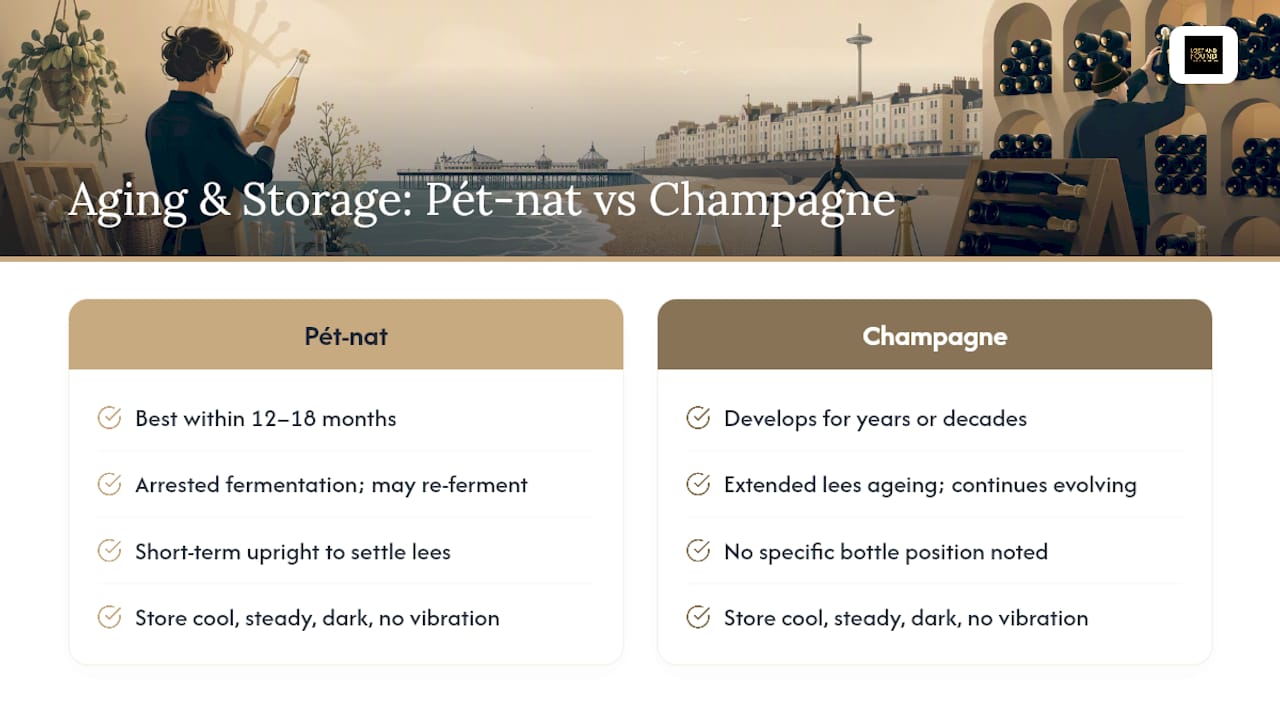
Store both somewhere cool and steady, away from light and vibration. Keep pét-nat upright short-term so the lees settle rather than get stirred back into the wine every time you move the bottle.
Getting the most from each style at the table
Temperature changes everything here. Champagne wants to be served properly cold, around 6 to 8°C, to keep that fine mousse tight and refreshing. Pét-nat actually performs better a touch warmer, around 8 to 10°C, because a slightly warmer pour lets its aromatics open up rather than staying muted by the cold.
- Champagne suits a flute or a tulip-shaped glass that concentrates the mousse and aroma
- Pét-nat shows better in a tulip or a standard white wine glass, which gives its texture room to breathe
- Champagne pairs beautifully with oysters, seafood and other refined dishes built for celebration
- Pét-nat handles charcuterie, salads and spicier, more casual food without missing a beat
If you’re building a bubbly-based cocktail menu for a gathering, a sparkling wine cocktail is a good way to stretch either style across a bigger crowd without opening bottle after bottle.
What price actually buys you
Champagne’s price tag reflects real labour: riddling by hand or machine, years of lees ageing, strict appellation rules, and a region where land alone commands a premium. Pét-nat skips most of that. A shorter production cycle and far less intervention keeps costs down, which is why a decent pét-nat often costs less than an equivalent-quality Champagne.
Pick pét-nat for weeknight drinking, picnics, or when you want to explore something a little different without a big spend. Save Champagne for occasions where consistency actually matters, an anniversary, a toast, a dinner you’ve planned around specific dishes. When buying pét-nat, producer transparency helps: look for a vintage or bottling date and ask whether the shop has stored it cool, since variability between bottles rewards a bit of extra homework before you buy.
A quick checklist for choosing between the two
- Define the occasion and the food. A formal dinner or seafood spread leans Champagne; a casual get-together or spicy food leans pét-nat.
- Set your budget and your tolerance for variation. If you want a guaranteed result every time, pay for Champagne’s consistency.
- Check the label and ask questions. Look for a disgorgement date on Champagne, a bottling date on pét-nat, and ask staff how it’s been stored.
- Still torn? Buy one of each. A side-by-side tasting flight settles the debate faster than any amount of reading.
Where to taste and buy pét-nat and Champagne near Brighton
Want to taste the difference rather than just read about it? Our pét-nat wine explained guide and Sussex sparkling wine feature go deeper into local options. A taproom may curate bubbly by style, not just by name, allowing visitors to compare a cloudy, funky pét-nat against something more classic in one sitting. Drink and food menus may be available online if you’d like to plan a visit or a bottle to take home.
The natural vs traditional debate, and why it’s the wrong fight
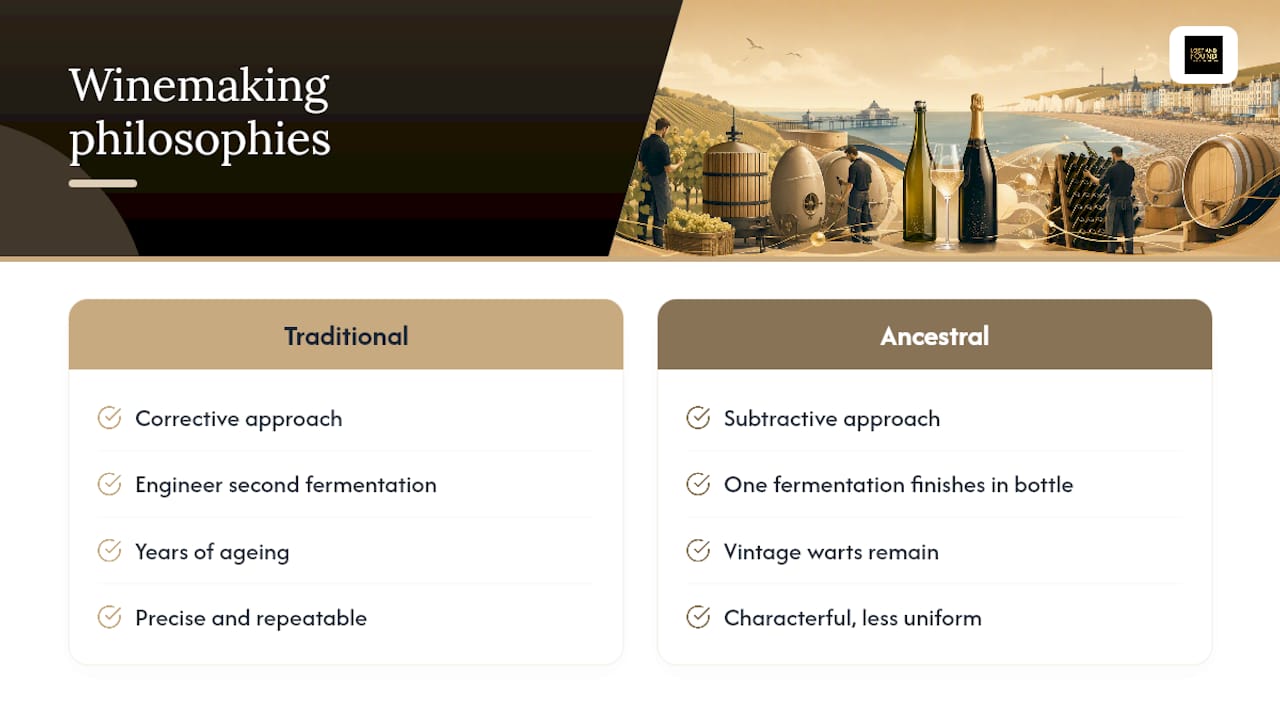
Most arguments about pét-nat versus Champagne treat this as a quality contest, and that’s the wrong lens entirely. These are two different philosophies solving two different problems. Méthode traditionnelle is corrective: build a base wine, then engineer a second fermentation and years of ageing to arrive at something precise and repeatable. Méthode ancestrale is subtractive: get out of the way and let one fermentation finish in the bottle, vintage warts and all.
What gets underestimated is how much this reflects winemaking conditions, not just taste preference. Pét-nat’s lower-intervention approach genuinely suits warmer vintages where high-acid base wines are harder to achieve, which is part of why it’s found new life recently rather than staying a historical curiosity from regions like Limoux.
If there’s one piece of conventional wisdom worth pushing back on, it’s the idea that Champagne is simply “better” and pét-nat is Champagne’s rough cousin. They’re not competing for the same job. Champagne is built for certainty. Pét-nat is built for character.
— Author
Sources
- Assessment of physicochemical and sensory characteristics of commercial sparkling wines obtained through ancestral and traditional methods (Beverages)
- Sparkling wine vs pét‑nat | Wine Enthusiast
- Pet Nat vs Sparkling Wine: What’s the Difference? | The Wine Collective
FAQ
How is pét-nat different from Prosecco?
Prosecco uses the Charmat method, a controlled second fermentation in a pressurised tank rather than the bottle, giving it clean, consistent bubbles closer to Champagne’s predictability. Pét-nat uses a single fermentation finished inside the bottle, making it cloudier, more variable, and generally lower in pressure.
What is “poor man’s Champagne”?
The phrase gets applied loosely to both pét-nat and Crémant, but it’s misleading either way: both are distinct styles with their own production methods, not cut-price imitations of Champagne.
Is Crémant the same as Champagne?
No. Crémant uses méthode traditionnelle, the same in-bottle secondary fermentation process as Champagne, but is made outside the Champagne region under separate appellation rules, which is largely why it costs less.
What does pét-nat wine taste like?
Expect fruit-forward, textural wine with softer, larger bubbles than Champagne, often showing herbal or lightly funky notes depending on the producer and grape. Cloudiness and sediment are normal rather than a flaw.