Hop Fade Explained: Why Hoppy Beer Loses Its Aroma

Hop fade is what happens when a hoppy beer slowly loses the bright, juicy, resinous aroma it had when it left the brewery. The pineapple, grapefruit and pine give way to something flatter, sweeter and sometimes papery. Once you know what causes it, you can choose beer that is drinking at its best, and that is easiest when the beer comes from a brewery down the road. At Lost And Found Taproom in Brighton’s Fiveways, every beer and cider we pour comes from independent Sussex breweries, so the journey from tank to glass is short.
If you landed here looking for the barbering or basketball meaning of the phrase, a quick note at the end of the article points you the right way.
TL;DR
- Hop fade is the gradual loss of hop aroma and flavour in a packaged or poured beer, most obvious in IPAs, pale ales and dry-hopped styles.
- The aroma comes from delicate hop oils that react with oxygen and change with time and warmth, so the fresher and colder the beer, the more of them you taste.
- Fade shows up as a duller nose, a bolder bitterness left behind and sometimes a honey, bread or cardboard note.
- Short supply chains, cold storage and drinking beer soon after it is made are the practical defences.
- Our beer menu is online, so you can see what is pouring from Sussex breweries before you visit.
Table of Contents
- What hop fade actually means
- Why hoppy beer fades
- What fade tastes and smells like
- Which beers are most affected
- Hop fade or fresh hop: not the same thing
- How to drink hoppy beer before it fades
- Why local helps
- A tasting exercise for a night out
- Our view: drink hoppy beer close to where it is made
- Bring a group to taste
- If you meant the haircut or the basketball move
- FAQ
- Sources
What hop fade actually means
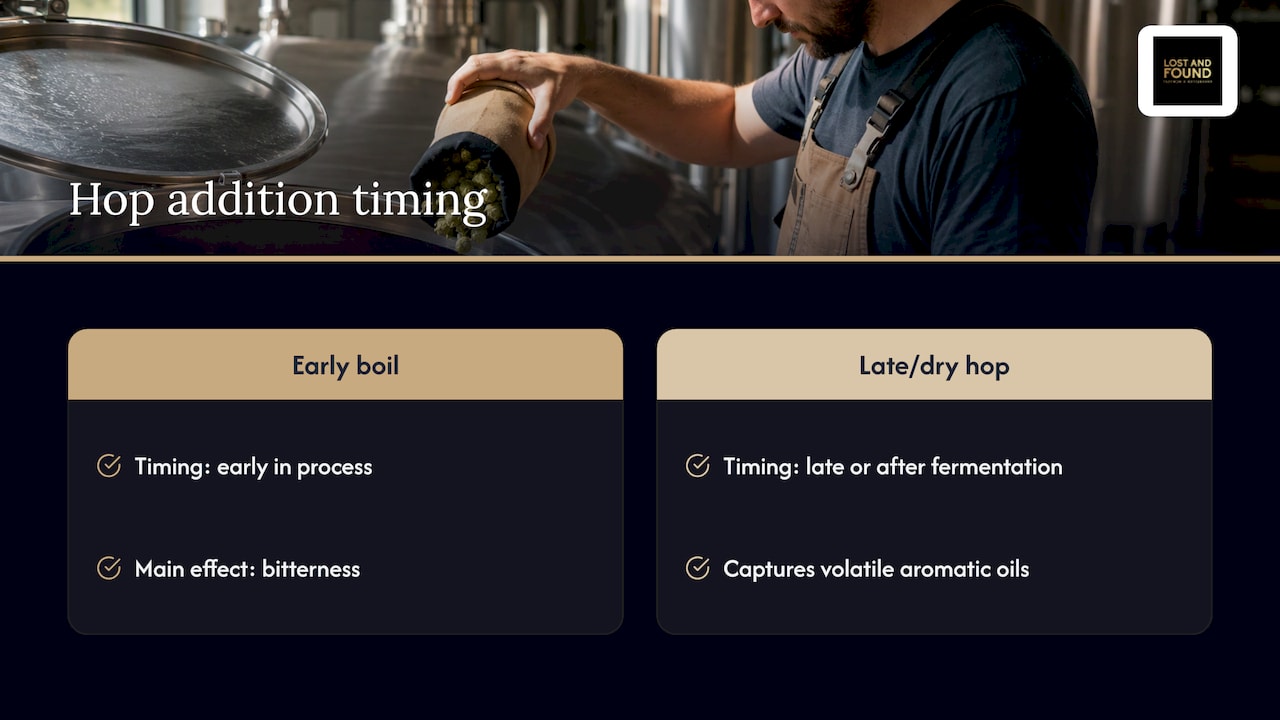
A hop is the small green flower that brewers add to give beer bitterness, aroma and flavour. Two different things happen to it in the brewery. Boiling hops early in the process mainly adds bitterness. Adding hops late, or after fermentation (called dry hopping), captures the volatile aromatic oils that smell of tropical fruit, citrus, resin, herbs and flowers.
Those oils are the fragile part. They are what you smell when you put your nose in a glass of fresh IPA, and they are the part that disappears first. Hop fade is simply the name beer drinkers and brewers give to that disappearance. Brewing publications have long covered the topic, and the Mr. Wizard column at Brew Your Own explores fading hop character in very hoppy beers.
It is not a fault in the way an infection is. A faded beer is not unsafe, it just tastes like a quieter version of what the brewer intended. That matters, because it means the fix is about when and how you drink, not about avoiding a style.
Why hoppy beer fades
Three things do most of the damage, and all of them are about chemistry that speeds up with time and warmth.
Oxygen
Oxygen is the main enemy of hop aroma. Once it gets into a package, it reacts with the aromatic compounds and with other beer components, changing the smell from vivid fruit to something duller. Brewers work hard to keep oxygen out during dry hopping, transfer and packaging for this reason. Even small amounts matter far more in a hop-forward beer than in a malty one, because the aroma is the whole point.
Warmth
Chemical reactions run faster when it is warm. A can left on a sunny windowsill or in a warm van will lose its aroma much faster than one kept cold. This is why hoppy beers are best stored and sold chilled, and why we cover storage in more detail in our guide to beer freshness storage.
Time
Even in perfect conditions, hop aroma has a shelf life. Weeks, not years, is the sensible way to think about a heavily dry-hopped beer. Lower-strength, lightly hopped beers hold up differently from a big double IPA, but the direction of travel is the same: the aroma is at its peak early and softens from there.
What fade tastes and smells like
Tasting your way to a diagnosis is easier than it sounds. Compare what you smell with what the label or the brewer’s description promises.
- A muted nose. You expect mango and citrus peel and get a faint, generic hoppy smell.
- Bitterness stands out. The aroma fades faster than the bitterness, so the beer can seem harsher and more one-dimensional than it should.
- Sweet, honeyed or bready notes. As bright aromas leave, malt and ageing notes become more noticeable.
- Cardboard or stale paper. This is a sign of more advanced oxidation, and it tends to show up in beer that has been stored warm or for a long time.
- A hazy beer that looks tired. In hazy IPAs, colour can darken and the juicy character can turn dull as the beer ages.
None of these on its own proves a beer is past its best, so treat them as clues. The simplest test is comparative: if you have the chance to try the same beer fresh, the difference is usually obvious.
Which beers are most affected
The more a beer relies on hop aroma, the more noticeable fade is.
| Style | How much it relies on hop aroma | How fade tends to show |
|---|---|---|
| Hazy or New England IPA | Very high | Juicy fruit turns flat quickly; colour may darken |
| West Coast IPA | High | Resinous, piney notes soften and bitterness dominates |
| Double dry hopped (DDH) beer | Very high | A big aroma drops away, leaving a heavier, sweeter beer |
| Pale ale | Moderate to high | Citrus lift fades, leaving a plainer malt character |
| Lager and bitter | Lower | Changes are subtler and usually come from other ageing notes |
If the letters DDH on a can puzzle you, our explainer on what DDH means on a beer label covers it. For a wider look at the styles themselves, our IPA styles guide walks through each one and what to expect in the glass.
Hop fade or fresh hop: not the same thing
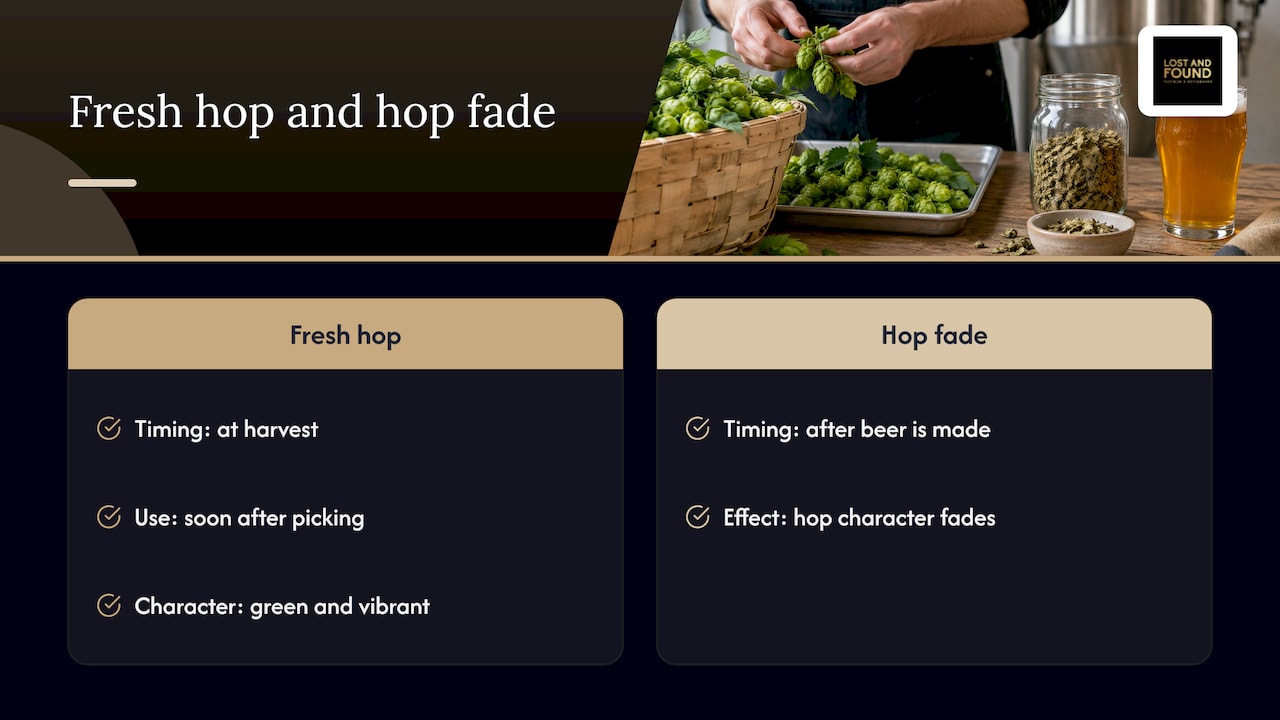
The two phrases sound related, but they describe opposite ends of the story. Fresh hop (or wet hop) beer is brewed with hops picked at harvest and used soon after, to capture green, vibrant character. Hop fade is what happens after the beer is made. If you like the idea of drinking hops at their liveliest, our guide to fresh hop beer in the UK explains what it is and when to look for it.
How to drink hoppy beer before it fades
You cannot stop fade, but you can make sure you meet the beer early in its life. These habits help.
- Look for a packaging or brew date. Many independent brewers print one on the can. A recent date on a hop-forward beer is a good sign. If there is only a best-before date, treat it as the outer limit rather than the peak.
- Buy from places that keep beer cold. Beer held in a chilled fridge ages far more slowly than beer sitting on a warm shelf.
- Drink hoppy cans sooner. Save the hazy IPA for this week and keep the sturdier, stronger or darker beers for later.
- Keep it cold at home. Put cans in the fridge on the day you buy them and keep them out of the light and heat.
- Pour it into a glass. Aroma needs a glass to open up. Drinking from the can hides most of what the hops are doing.
- Finish it the day you open it. Once the beer meets the air, the aroma starts leaving, so share a larger bottle rather than leaving it half full.
Cask and keg dispense also play a part in how a hoppy beer is served. Our guide to cask versus keg explains the difference, including why it matters for the way a beer tastes at the bar.
Why local helps
Every stage between brewery and glass gives hop aroma a chance to leave. Long distribution routes, warehouses, delivery vans and shelf time all add days. A beer brewed in Sussex and poured a short drive away spends far less time in transit, which is a practical advantage for any beer that depends on aroma.
That is one reason we focus on independent Sussex breweries for our beer and cider. It also happens to be what many of our customers come for: the chance to try something made nearby and talk to the people pouring it. You can see what is available on our on tap page, and our food and beer menus are available online, so you can plan before you visit.
If you want recommendations for hoppy beers to start with, our shortlist of the best UK IPAs is a useful place to begin. And if you are curious about what is new in the glass, our piece on new styles shaping craft beer in Brighton shows where tastes are heading.
A tasting exercise for a night out
Hop fade is much easier to understand by tasting than by reading, and a taproom is a good place to try it with friends or on a date.
- Order two hoppy beers of different styles, for example a pale ale and an IPA, and ask what is newest on the list.
- Smell each before you sip, with the glass swirled gently. Write down the first three things you notice.
- Taste, then wait a minute and taste again. Notice whether the fruit or the bitterness leads.
- Compare with a malt-led beer or a lager. The aroma is a different kind of experience, and the contrast shows you how much of an IPA’s appeal comes from its hops.
It turns a pint into a small piece of beer education, and it works as a talking point at a stag do or a birthday gathering as well.
Our view: drink hoppy beer close to where it is made
Hop fade is the reason we are so keen on local beer. A beer built around aroma should not spend weeks travelling before you taste it, and Sussex breweries are close enough that the hops have not had that long to wander.
Our approach is simple. Every beer and cider we serve is produced in Sussex by independent breweries, and we rotate the selection so there is always something new to try. That gives regulars and first-timers alike a reason to come back and ask what has just arrived.
We also think the best way to learn about beer is in company. That is why we host events and offer venue hire with no hire fee, so a group can come in, choose its own music and decorations, and spend the evening tasting rather than worrying about a booking charge.
If you are new to craft beer, start with one hop-forward beer and one that is not, and compare. You will understand fade, and your own preferences, much faster than any article can teach you.
Lost And Found Taproom
Bring a group to taste
If you are planning a birthday, a stag do or a get-together, our taproom in Fiveways is set up for it. Venue hire gives your group exclusive use of the space with no hire fee, and you have flexibility over decorations, music and drink selection. Midweek and weekend hire are both available, and you can find the details on the venue hire page.
For food, our street food vans and XXL hot dogs sit alongside the beer, and you can read our guide to street food catering at venues when you plan the evening. If you would rather take beer home, our bottleshop is listed on the on tap page.
If you meant the haircut or the basketball move
The phrase also turns up in searches about haircuts and basketball. A fade haircut is a style in which hair is clippered from very short at the bottom to longer on top, and in basketball a hop step and a fadeaway are two separate moves. Neither is something we cover here, so a barber or a coaching resource is the right place for those.
FAQ
Is hop fade the same as a beer going off?
No. Hop fade is a loss of aroma and flavour, not a safety problem. A faded beer is usually still drinkable, it simply tastes less vivid than it did when fresh. If a beer smells of vinegar, rotten eggs or is clearly spoiled, that is a different issue.
How quickly does a hoppy beer fade?
It depends on the beer, how it was packaged and how it has been stored. Heavily dry-hopped styles such as hazy IPAs are the quickest to lose their aroma, and warmth speeds things up. As a rule, drink hoppy beer within weeks of it being made and keep it cold in the meantime.
Can I slow hop fade at home?
Yes. Keep cans and bottles in the fridge, out of light and heat, and drink the most aromatic beers first. Pour into a glass and finish an opened beer on the day. Our beer freshness storage guide goes through it style by style.
Do lagers and darker beers suffer from hop fade?
Less noticeably. Those beers rely less on hop aroma, so there is less to lose. They still change with age, but the effect is subtler than it is in an IPA or pale ale.
Where can I try fresh Sussex hoppy beer in Brighton?
Come to our taproom in Fiveways. We pour beer and cider from independent Sussex breweries, and the beer menu is online so you can see what is available before you set off.