What does dry hopped mean, and why does it change a beer’s aroma?
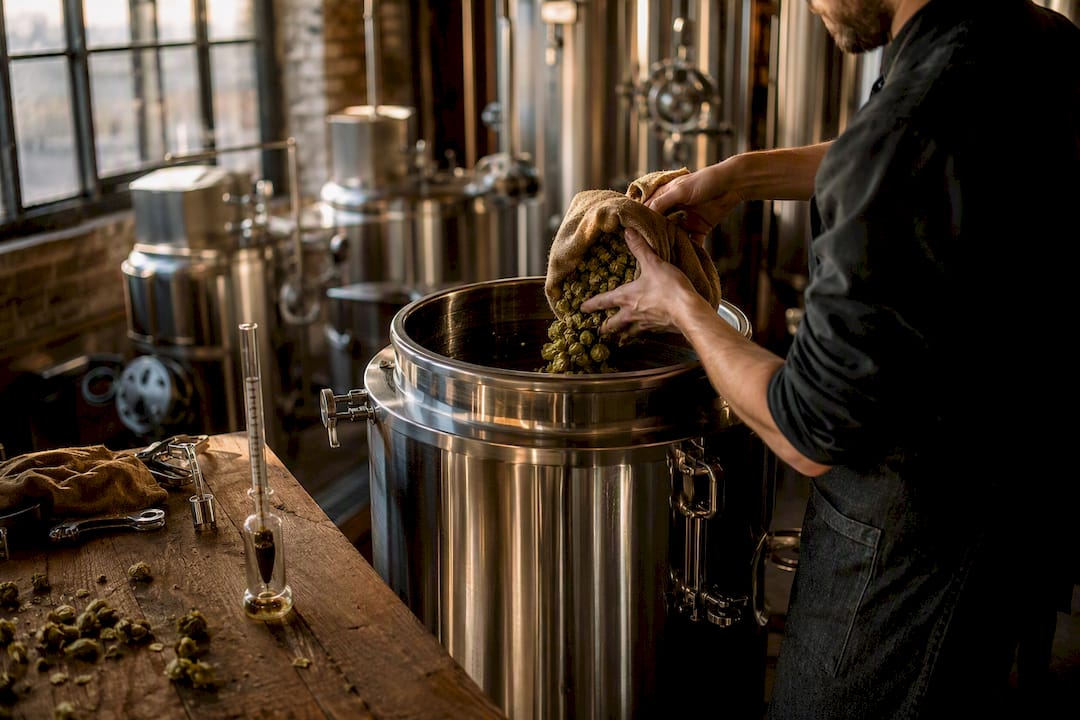
Dry hopping is adding hops after the boil, on the cold side, to boost hop aroma without materially increasing bitterness. It’s done during fermentation or later conditioning, once the beer has cooled, so the volatile aromatic oils survive instead of boiling off. If you see “DDH” on a can, it usually signals a second or heavier hop addition aimed at bigger aroma.
- Sensory effect: bright, punchy hop aroma (citrus, pine, tropical fruit) with a much smaller bitterness bump than boil hops.
- Label cue: DDH (double dry hopped) points to extra or repeated hop charges, though the term isn’t standardised across breweries.
Key Takeaways
Dry hopping adds hops cold, after the boil, to maximise aroma while keeping bitterness largely unchanged.
| Point | Details |
|---|---|
| Cold-side timing is the key | Adding hops after the boil preserves volatile aroma oils that heat would otherwise destroy. |
| Dose has a sweet spot | Studies point to roughly 400 to 800 grams per hectolitre before returns diminish and aroma turns herbal. |
| DDH isn’t standardised | Double dry hopped can mean two-stage additions, extra dose, or just marketing, so judge by aroma, not the label alone. |
| Freshness beats intensity | Hop oils fade with oxygen and heat, so a fresh, modest pour usually outperforms an older, heavily hopped one. |
| Taste it fresh at Lost And Found | Check the rotating online beer menu at Lost And Found Taproom for current dry-hopped pours in Fiveways. |
Table of Contents
- What is dry hopping, and how does it differ from wet hopping?
- What hop formats are used for dry hopping?
- When do brewers dry hop, and how long does contact last?
- What does “double dry hopped” actually mean?
- How is dry hopping done: static versus dynamic methods?
- Which compounds does dry hopping extract, and why doesn’t bitterness rise?
- What are the risks of dry hopping, and how should you store the beer?
- How does Lost And Found explain DDH on the tap list?
- What actually matters most when you’re evaluating a dry-hopped beer
- Try a fresh dry-hopped pour at Lost And Found
- Sources
What is dry hopping, and how does it differ from wet hopping?
Dry hopping works because heat is the enemy of hop aroma. Add hops to a boiling kettle and the volatile oils, the compounds responsible for citrus, pine, and tropical fruit notes, largely evaporate. Add the same hops once the beer has cooled, and those oils stay put. That’s the whole trick behind dry hopping versus wet hopping: cold-side timing preserves aroma that hot-side additions destroy.
Wet hopping is a different, seasonal practice. It uses hops picked straight from the bine and brewed with almost immediately, typically within 24 hours of harvest, because fresh hops spoil fast and can’t be stored like dried pellets. You’ll mostly see wet-hopped beers around the autumn harvest window, brewed near hop farms.
Late-boil and whirlpool additions sit somewhere in between. Three quick distinctions worth knowing:
- Boil hops (60+ minutes) isomerise alpha acids into bitterness; aroma oils mostly boil off.
- Whirlpool or late-boil hops (added as the kettle cools, before fermentation) retain more aroma than a full boil addition and can produce strong concentrations of certain aroma terpenoids like geraniol and linalool.
- Dry hops (added cold, during or after fermentation) deliver the most aroma with the least bitterness impact.
What hop formats are used for dry hopping?
Brewers reach for three main formats, and each behaves differently once it hits the tank.
- Whole cone hops: the unprocessed flower, bagged before going into the fermenter. They give a clean, traditional aroma profile but have a shorter shelf life, around a year, and soak up more beer, which means some liquid loss.
- T-90 pellets: whole cones milled and compressed. Processing exposes more lupulin (the aromatic resin) to the beer, which often speeds extraction and can push more aroma compound into solution. Pellets keep for up to roughly three years when stored cold and away from oxygen.
- Lupulin powder: a concentrated form made by separating out the lupulin glands. It’s the most potent by weight, extracts fast, and leaves less plant matter behind, useful for reducing haze and hop loss.
For home brewers and small taprooms, pellets remain the practical middle ground: reliable shelf life, consistent extraction, easier handling than loose cones.
When do brewers dry hop, and how long does contact last?
Timing is arguably the biggest variable in dry hopping, and brewers split into two camps.
- During active fermentation (sometimes called “hopping in the whirlpool of the fermenter” isn’t quite right, but the idea holds): yeast is still working, and living yeast can interact with hop compounds in a process called biotransformation, converting certain hop-derived precursors into new aroma molecules. This can produce juicier, more complex fruit character, but it’s less predictable batch to batch.
- After primary fermentation, during conditioning: the beer is more stable, and this is the more common approach in commercial breweries because outcomes are more repeatable.
Extraction isn’t instant, but it isn’t slow either. Most of the aromatic payoff arrives within the first day or two, though many breweries hold hops in contact for two to five days to balance extraction against the risk of extracting harsher, grassy compounds from prolonged contact with plant matter.
Pro Tip: If a beer tastes more “green” or vegetal than fruity, it’s often a sign of over-long hop contact rather than a fault with the hops themselves.
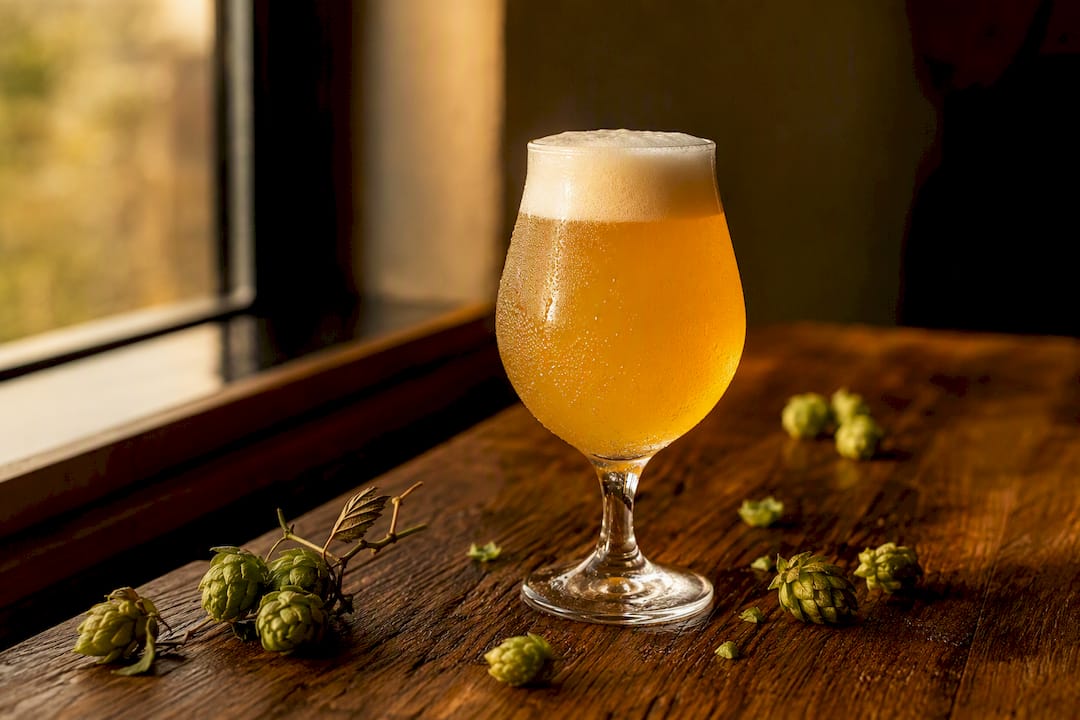
What does “double dry hopped” actually mean?
DDH is one of the fuzziest terms on a modern beer label, and it’s worth knowing why before you order one expecting a specific intensity.
- Two-stage additions: hops added at two separate points, often once during fermentation and again during conditioning.
- A heavier-than-usual single dose: simply more hops than the brewery’s standard recipe for that style.
- Marketing shorthand: some breweries use DDH loosely to signal “extra hoppy” without a defined process behind it.
There’s no industry standard tied to the word “double”, so two DDH IPAs from different breweries can taste worlds apart. Read DDH alongside the beer’s ABV and style description rather than treating it as a fixed intensity marker. Our own guide to what DDH means on a beer label breaks down how to interpret it can by can.
How is dry hopping done: static versus dynamic methods?
Method and scale change both extraction speed and how much control the brewer has.
- Static dry hopping: hops (often bagged) sit in the tank and steep, much like a tea bag. This is standard practice for homebrewers and many smaller breweries because it’s simple and gentle. Research suggests static methods are often preferred precisely because they avoid the extra polyphenol extraction and bitterness that more aggressive circulation can cause.
- Dynamic dry hopping: the beer is actively circulated through the hops, using pumps, hop torpedoes, or slurry dosing systems. Larger breweries favour this for more consistent extraction and easier hop removal at scale, since pumping the beer through a mass of hop matter speeds things up and standardises the process across batches.
Whirlpool and late-boil additions aren’t dry hopping at all, technically, since they happen before cooling. They’re closer cousins that trade some aroma delicacy for higher yields of specific terpenoids, which is why plenty of modern hazy IPAs combine both a whirlpool charge and a cold-side dry hop to layer aroma from two angles.
Which compounds does dry hopping extract, and why doesn’t bitterness rise?
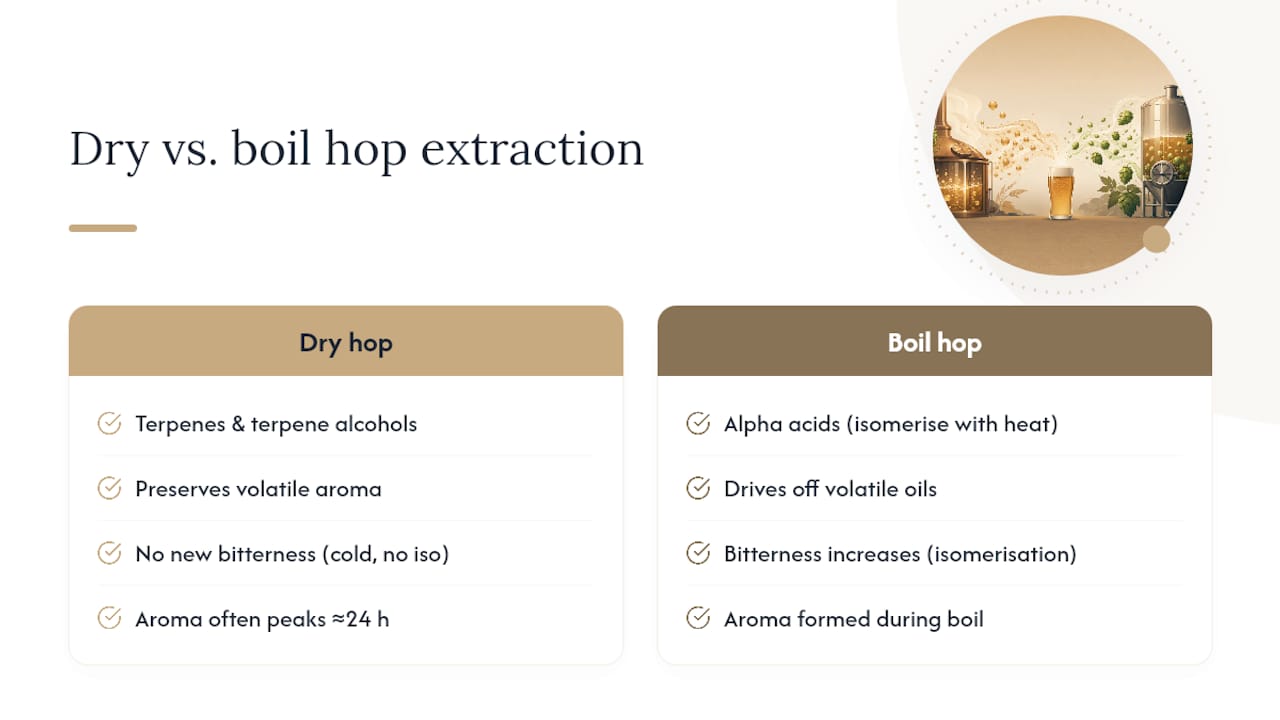
Dry hopping pulls out volatile aroma oils, mainly terpenes and terpene alcohols like linalool, geraniol, and beta-citronellol, the molecules behind citrus, floral, and stone-fruit character in modern hoppy beers. These compounds survive cold contact because they’re not being driven off by heat, which is precisely why cold-side additions taste so different from a boil hop charge using the same variety.
Bitterness, by contrast, comes from alpha acids being isomerised, a chemical change that requires the heat of a rolling boil. Since dry hopping happens cold, that isomerisation essentially doesn’t occur, which is why a heavily dry-hopped beer can smell intensely hoppy while tasting only moderately bitter. Some perceived bitterness can still shift slightly, partly from polyphenol extraction and partly from how intense aroma tricks the palate into reading flavour differently.
Dosage isn’t a case of more is always better. Pilot and industry studies point to an optimal static dry-hopping range of roughly 400 to 800 grams per hectolitre, with returns diminishing above that and aroma sometimes drifting toward herbal or tea-like notes rather than bright fruit.
That non-linear relationship between dose and outcome catches a lot of homebrewers out. Extraction of aroma compounds often peaks within the first 24 hours of contact in pilot studies, even though commercial practice frequently extends contact time for practical or process reasons. Piling in more hops past a certain point doesn’t multiply the aroma. It just extracts more plant matter, more polyphenols, and, eventually, more of those unwanted green notes.
What are the risks of dry hopping, and how should you store the beer?
Dry hopping introduces a handful of practical headaches that brewers manage carefully, and that you’ll sometimes taste if they don’t.
- Hop creep: raw hop matter carries enzymes that can convert residual sugars the yeast couldn’t otherwise touch, causing slight re-fermentation. Signs include extra carbonation and a beer that tastes drier than intended.
- Haze: over-extraction or poor hop handling can pull excess polyphenols and proteins into solution, contributing to cloudiness beyond the style’s intended look.
- Green or vegetal off-notes: usually a sign of hop contact running too long, or using hop matter that wasn’t handled well before use.
None of this should put you off. It just explains why freshness matters so much, since hop oils are sensitive to oxygen and heat, and a dry-hopped beer that sat warm on a shelf for months will taste noticeably flatter than one poured within weeks of packaging.
Pro Tip: Check the can date, keep dry-hopped beers refrigerated, and drink them sooner rather than later. Our guide to beer freshness and storage covers style-specific advice if you’re stocking up at home.
How does Lost And Found explain DDH on the tap list?
When a beer on our rotating tap list carries a DDH tag, our staff talk you through what that particular brewery meant by it, since the term shifts from one label to the next. We keep freshness front of mind too, favouring beers poured close to their canning or kegging date.
- Smell first: expect bright citrus, tropical fruit, or pine, not a sharp bitter bite.
- Taste next: aroma should dominate over bitterness on a well-made dry-hopped beer.
- Check before you visit: our online beer menu lists what’s currently pouring, so you can spot the freshest dry-hopped options before you arrive.
What actually matters most when you’re evaluating a dry-hopped beer
The industry loves to treat DDH as a badge of quality, and the research doesn’t really back that up. A beer dosed above roughly 800 grams per hectolitre isn’t necessarily better, it’s often just muddier, more herbal, and less precise than one dry hopped with restraint. The conventional wisdom, “more hops equals more flavour”, breaks down exactly where the science says it should: extraction is non-linear, and past a certain point you’re paying for volume, not clarity.
What gets overlooked is timing and handling, not dose. A modest, well-timed dry hop added during active fermentation, with attention to contact time, will usually beat a heavier charge added carelessly. If you’re judging a beer, prioritise freshness and balance over the number on the can. Ask when it was packaged before you ask how many grams per hectolitre went in. A DDH beer poured within two or three weeks of release will almost always outperform an older, more heavily hopped one that’s lost its edge sitting on a shelf.
That’s the gap worth knowing about: DDH tells you about process, not necessarily about quality.
— Author
Try a fresh dry-hopped pour at Lost And Found
Reading about dry hopping only gets you so far. Lost And Found Taproom’s tap list rotates constantly with local and UK-wide breweries, and our staff can point you towards whichever pour is showing the freshest, most vivid hop character that week, something a bottle sitting on a supermarket shelf simply can’t compete with.

We keep our online beer menu updated with what’s currently on tap, so you can check what’s pouring before you make the trip to Fiveways. If you want to taste several dry-hopped styles side by side and compare how format, timing, and dose show up in the glass, that’s exactly the kind of thing worth doing in person rather than guessing from a label. Check the beer menu, see what’s fresh this week, and come find out what dry hopping actually tastes like when it’s done properly.
Sources
- What is Dry Hopping vs. Wet Hopping? - Allagash
- Scientific study on dry-hopping rates and sensory outcomes - PMC
- What is dry-hopping? - Sierra Nevada
- Study: terpenoid content by addition timing - ASBC Journal
- What is dry-hopping - WSET Global blog
Recommended
- What does DDH mean on a beer label?
- Are Hazy IPAs Dead? Why Brighton is Rediscovering the Joy of Proper Independent Lager - Lost And Found Craft Beer Taproom Brighton
- IPA styles explained: your complete guide to every type
- US Trends, Brighton Vibes: 5 New Styles That Will Change the Way You Drink Craft Beer in Brighton - Lost And Found Craft Beer Taproom Brighton