10 Dessert and Beer Pairings to Test at Home (30–60 ml Pours)
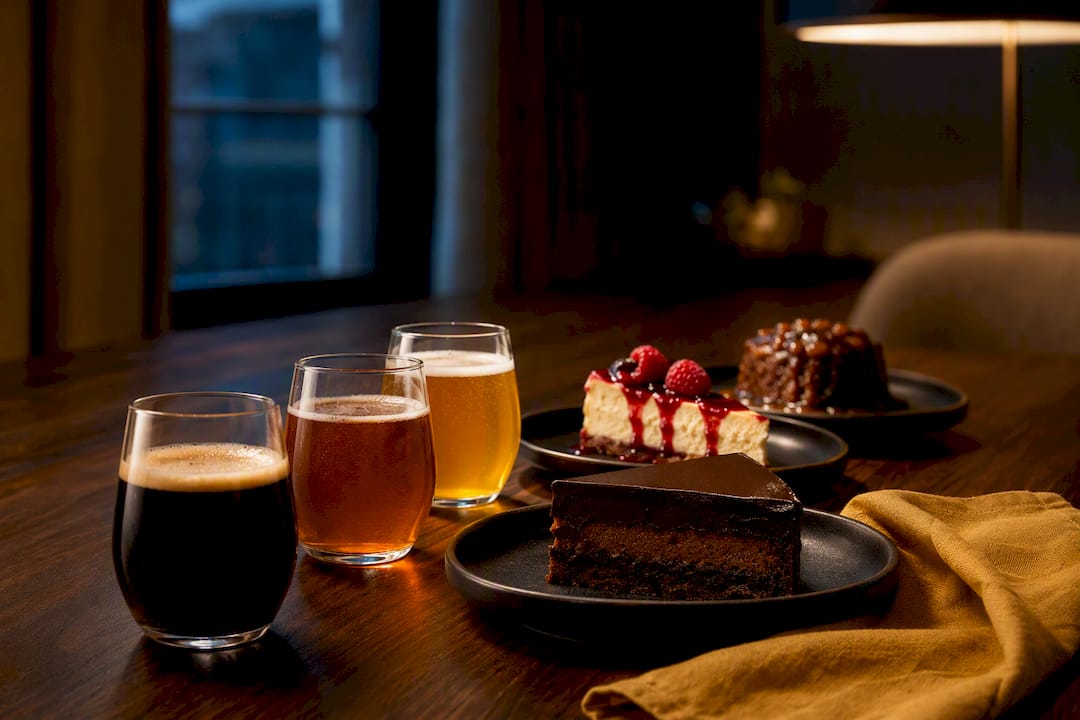
Match strength with strength, then decide whether to complement or contrast the dessert’s dominant flavour. Reliable starting points include stout or porter with chocolate, barleywine or strong ales with caramel and toffee, fruit lambic with cheesecake, wheat beer with citrus tarts, and sour ales or gose with ice cream. Pour small measures and taste before you commit a whole glass to any one match.
TL;DR:
- Matching the weight of beer and dessert is essential; light beers suit delicate sweets, while full-bodied beers complement richer desserts.
- Using carbonation to manage richness and selecting aromatic echoes enhance pairing balance without relying solely on sweetness.
- Small tasting measures between 30 and 60 milliliters prevent palate fatigue and allow better assessment of flavor interactions.
- Pairing dark, roasted beers like stouts with chocolate emphasizes flavor architecture, not just ingredients, while sour or fruity styles brighten fruit-based desserts.
- Serving beers at the appropriate temperature and in suitable glassware significantly influences taste and aroma, improving overall pairing success.
Table of Contents
- What makes a dessert beer pairing actually work
- How to test dessert beer pairings at home
- Dessert beer pairings by category, with the reasoning behind them
- Ten dessert and beer combinations to try tonight
- Getting temperature and glassware right
- What guided tastings and pastry expertise bring to pairing
- Why carbonation and strength matter as much as flavour
- Common dessert beer pairing mistakes to avoid
- Pairing dessert beers with savoury snacks and cheese
- Regional traditions behind pairing beer with dessert
- How to host a dessert beer pairing tasting
- What surprised me most about pairing beer with dessert
- Book a tasting flight and taste these pairings yourself
- Sources
- FAQ
What makes a dessert beer pairing actually work
Every successful pairing follows the same rule chocolate makes with wine: match the weight of the beer to the weight of the dessert. The Wine & Spirit Education Trust puts it plainly: delicate desserts want light beers, rich desserts want full-bodied ones. Get that one variable right and you have already avoided the most common failure in the room.
Once the weight is matched, you choose a direction. Complement means echoing a flavour already in the dessert (a coffee-noted stout alongside a mocha tart). Contrast means introducing something the dessert lacks (a tart gose cutting through a heavy cheesecake). Both work. Neither is “correct” on its own; it depends on whether you want the dessert to taste more like itself or want relief from it.
Sweetness and bitterness need careful handling too. Pairing a very sugary dessert with an equally sweet beer often flattens both, because neither has anything to push against. The Fine Dining Lovers team notes that sweet-on-sweet combinations can leave a pairing tasting dull rather than indulgent. A touch of bitterness or carbonation resets the palate between bites and keeps the sweetness from becoming cloying.
Texture matters as much as flavour. High carbonation scrubs richness off the tongue, which is why a fizzy gose can feel more refreshing against ice cream than a flat, heavy beer would. Low carbonation, by contrast, sits alongside a dessert rather than cutting through it, better suited to something already light.
Aromatics are the quiet bridge between beer and dessert. Spice, citrus peel, roasted nut, and coffee notes in a beer can echo similar notes baked into a dessert without duplicating its sugar content.
- Match intensity first: light beer with light dessert, big beer with big dessert.
- Choose complement or contrast deliberately, not by accident.
- Watch for sweet-on-sweet flatness and correct it with acidity or bitterness.
- Use carbonation to manage richness and mouthfeel.
- Look for aromatic echoes (spice, citrus, roast, nut) rather than matching sugar levels.
Pro Tip: If a pairing tastes flat rather than balanced, the fix is rarely more sweetness. Add acidity or bitterness instead, and the contrast usually snaps back into focus.
How to test dessert beer pairings at home
Testing pairings properly takes a method, not just a fridge full of beer and a slice of cake. Here’s a sequence that works whether you’re doing this solo on a Tuesday evening or running a proper tasting for six people.
- Pour small measures. Between 30 and 60 ml per sample is plenty. A full pint per pairing wastes beer and wrecks your palate before you reach the third combination.
- Cut the dessert into small pieces. One or two bites per pairing is enough to register the interaction without filling up.
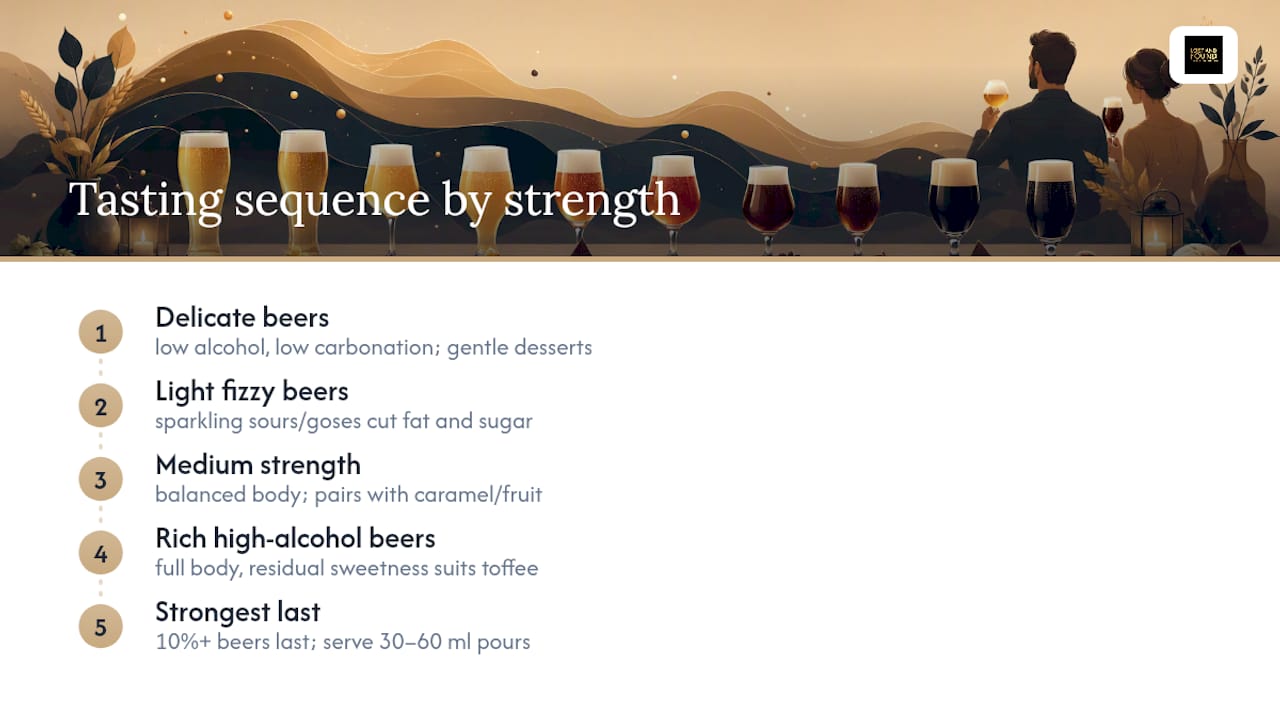
- Taste in order of intensity. Start light and finish rich, saving chocolate or dark, boozy desserts for last, following the light to dark tasting order that most tasting-flight formats use.
- Cleanse between rounds. Plain water crackers or a sip of still water resets your palate before the next combination.
- Take notes as you go. Write down the dominant flavour, how the texture feels, the aftertaste, and specifically how the beer changes the dessert (not just how they taste side by side).
If you’re hosting a small group, lay out tasting order on cards, keep portions consistent, and pace the session so nobody rushes to the last pairing with a dulled palate. Our step-by-step tasting guide covers the same technique for beer on its own, which transfers directly to pairing work.
Pro Tip: Note how the dessert changes after each sip, not just how the beer tastes on its own. That shift is the whole point of pairing.
Dessert beer pairings by category, with the reasoning behind them
Random guessing rarely produces a great match. Pairing by dessert category, using the dominant flavour as your guide, gets you there far more reliably.
Chocolate desserts
Stouts, porters, Baltic porters, and barleywines are the classic partners for chocolate, and for good reason: their roast and malt character genuinely echoes cocoa without needing actual chocolate in the brew. Master Cicerone Rich Higgins points out that beers described as “chocolatey” usually get there through roasted malt rather than added cocoa, which means the pairing works on flavour architecture, not literal ingredient matching. A dark chocolate torte alongside a dry stout brings out bitterness on both sides; a milk chocolate mousse against a sweeter barleywine leans into the sugar instead.
Creamy desserts and cheesecakes
Rich, dairy-heavy desserts need something to cut through the fat. Fruit lambics, Belgian ales, and wheat beers bring acidity and yeast-driven esters that slice through cream cheese or mascarpone without fighting it. A raspberry cheesecake alongside a raspberry lambic is one of the most reliable, well-tested pairings in the whole category because the fruit note echoes on both plates while the acidity resets your palate for the next bite.
Fruit-based desserts
Fruited lambics, Flanders reds, and goses all bring acidity that matches the tartness already present in a fruit dessert. Think of a bright, sour beer as playing the role a fruit coulis would on a plate: it lifts the dish rather than sitting heavily on top of it.
Caramel, toffee, and nutty desserts
Barleywine, doppelbock, and brown ale carry the malt-driven caramel and nutty character that these desserts need. Sticky toffee pudding against a barleywine works because both are built from the same base note, dark, sweet, faintly burnt sugar, so the pairing reads as one continuous flavour rather than two separate things on a table.
Ice cream and sorbets
Cold, fatty, or icy desserts respond well to contrast rather than complement. Sour ales, gose, and light wheat beers bring acidity and carbonation that refresh the palate against the richness of ice cream or the intensity of sorbet. This is where texture does most of the work: the fizz physically clears the coating a scoop of ice cream leaves behind.
Chefs and cicerones broadly agree that stouts and barleywines remain the standard reach for chocolate desserts, while fruited and sour styles handle fruit and cream better than most drinkers expect on first try.
Ten dessert and beer combinations to try tonight
Work through these in any order, though grouping by category (chocolate, fruit, cream, caramel) makes the differences easier to spot in one sitting.
- Dark chocolate torte with a dry stout. Roast bitterness mirrors the cocoa; serve the stout at 10 to 13°C.
- Chocolate cake with a rich porter. A classic, well-tested match; the malt sweetness carries the sponge without competing with it.
- Raspberry cheesecake with fruit lambic. Acidity cuts the cream cheese; keep portions small since lambic’s tartness is intense.
- Lemon tart with a crisp wheat beer or pilsner-style beer. Citrus notes echo the tart’s zest; serve chilled, around 7°C.
- Sticky toffee pudding with barleywine. Two dark, caramel-forward flavours meeting on equal footing; pour just 60 ml given the strength.
- Baklava with a Belgian dubbel. Spice and dried fruit notes in the beer sit naturally alongside honey and nuts.
- Vanilla ice cream with a fruited gose. The fizz and acidity clear the fat coating between spoonfuls.
- Pecan pie with a brown ale. Nutty, malty, low-key sweetness on both sides makes this an easy, forgiving match.
- Spiced fruit cake with a Belgian quad. Orange and clove notes in the beer echo the spice profile of the cake directly.
- Crème brûlée with a Baltic porter. The caramelised sugar top plays against the porter’s roasted, slightly burnt edge.
Vary the order across a tasting so you’re not stacking three chocolate-forward pairings in a row, and keep a note card by each glass so you remember which combination actually surprised you.
Getting temperature and glassware right
Serving details change how a pairing performs almost as much as the pairing itself. A stout served ice cold mutes the very roast character that made it a good match for chocolate in the first place.
- Temperature: Light wheat beers and goses show best chilled, around 6 to 8°C. Stouts, porters, and barleywines open up more between 10 and 13°C, cold enough to stay refreshing but warm enough to release aroma. Full details by style are in our beer serving temperature guide.
- Glassware: A tulip glass concentrates aroma for barleywines and strong ales. A snifter suits high-strength, sipping styles. A flute keeps carbonation lively for lighter sours and goses. A simple tumbler works fine for wheat beers and porters where aroma concentration matters less.
- Portion size: For a multi-pairing tasting, 60 ml pours and one or two bites of dessert per round keep the palate fresh across five or six combinations.
- Plating: A small garnish, orange zest next to a Belgian quad, a few toasted nuts beside a brown ale, gives the eye the same cue the beer is giving the palate. For more on presentation, these plating tips apply just as well to a pairing plate as to a standalone dish.
What guided tastings and pastry expertise bring to pairing
A taproom in Brighton’s Fiveways community runs a rotating selection of local and UK craft beers, with on-site tasting alongside take-home bottles and cans. Beer and food menus are available online, which makes planning a pairing session before visiting straightforward.
The principles behind our tasting flights echo what pastry professionals and cicerones already teach: identify the dessert’s dominant note, then either mirror it or contrast it deliberately.
Think like a pastry chef when you pick a beer: find the dominant note in the dessert, caramel, dark fruit, citrus, roast, and choose a beer that either mirrors that note or deliberately contrasts it.
Staff recommendations at the taproom follow that same small-pour, taste-before-you-commit approach that any home tasting session should copy.
Why carbonation and strength matter as much as flavour
Flavour notes get most of the attention in pairing advice, but carbonation and alcohol content shape how a beer performs at the table just as much. A highly carbonated beer physically scrubs fat and sugar off the tongue between bites, which is why fizzy sours and goses work so well against ice cream and rich cream desserts. A flat or low-carbonation beer, by contrast, sits alongside the dessert rather than cutting through it, better suited to something already delicate where you don’t want interruption.
Alcohol content changes the equation too. A 10% barleywine or imperial stout behaves differently. Its higher alcohol adds warmth and weight that can overpower a light dessert, and it fatigues the palate faster across a multi-course tasting. That’s exactly why small measures matter more with strong beers than with session-strength ones.
Body and residual sweetness also interact with strength. Higher-alcohol beers often carry more residual sugar and a fuller body, which is part of why they suit caramel, toffee, and dark fruit desserts so naturally, they’ve already got some of the same richness built in.
When you’re building a tasting flight, sequence by strength as well as by flavour. Save your highest-alcohol beers for last, and treat them with the same small-pour discipline you’d apply to any strong wine.
Common dessert beer pairing mistakes to avoid
The same handful of errors trip up most home tastings, and all of them are easy to fix once you know what to look for.
Pouring full glasses instead of tasting measures. A full pint per pairing means you’re on your fourth beer before you’ve properly assessed the first match, and palate fatigue sets in fast. Stick to small pours throughout.
Pairing sweet with sweet by default. It feels intuitive to match a sugary dessert with a sweet beer, but this is the single most common cause of a flat-tasting pairing. Reach for acidity or bitterness instead when a dessert is already heavy on sugar.
Serving everything at the same temperature. A stout served fridge-cold loses the roast character that made it worth pairing in the first place. Match temperature to style, not convenience.
Ignoring texture. Carbonation and mouthfeel matter as much as taste. A flat beer against a rich, fatty dessert leaves you with nothing to cut through the heaviness.
Skipping the palate cleanser. Jumping straight from one pairing to the next without water or a plain cracker carries flavour residue forward and muddies your next impression.
Tasting in the wrong order. Starting with a big imperial stout and finishing on a delicate lemon tart guarantees the tart tastes like nothing. Light to rich, finishing on chocolate or the boldest dessert, keeps every pairing fair.
Pairing dessert beers with savoury snacks and cheese
Dessert beer styles aren’t locked into dessert duty. Many of the same beers that work brilliantly with chocolate or fruit tarts perform just as well against savoury food, which makes them genuinely versatile additions to a wider tasting or a cheeseboard.
A stout or porter that shines against chocolate cake also holds up against blue cheese, where the roast bitterness cuts through the cheese’s sharp intensity in much the same way it balances sugar in a dessert. Barleywine, built for sticky toffee pudding, pairs just as naturally with aged cheddar or a rich pâté, since the malt sweetness and warming strength complement salty, umami-heavy food the same way they complement caramel.
Fruit lambics and goses, so effective against cheesecake and ice cream, also work well alongside charcuterie or a soft, tangy goat’s cheese. The acidity performs the identical job, cutting fat and refreshing the palate, whether the fat comes from cream cheese or from cured meat.
This crossover is worth remembering if you’re planning a mixed tasting rather than a strictly sweet one. Build a flight that moves from cheese and charcuterie into dessert using the same two or three beer styles throughout, and you get a coherent evening rather than two disconnected tastings bolted together.
Regional traditions behind pairing beer with dessert
Belgium arguably did more to establish beer and dessert pairing as a serious practice than any other beer culture. Fruited lambics developed there specifically to sit alongside fruit tarts and creamy desserts, and strong dark ales like quads have long been poured with spiced fruit cakes and rich pastries, particularly around winter celebrations.
German brewing traditions lean the other way, toward malt-forward strength. Doppelbock, originally brewed by monks partly as sustenance during periods of fasting, carries the caramel and dark-fruit depth that makes it a natural match for nutty and toffee-based desserts, a pairing that long predates the more recent craft-beer interest in dessert matching.
British brewing history contributes barleywine and strong old ales, historically poured in small measures after a meal in much the same role port or a dessert wine might fill on a different table. That tradition of a small, potent glass to close out a meal maps directly onto how dessert beer pairing works today: strong, complex beer in a modest pour, matched deliberately rather than poured generously and left to overwhelm the food.
Craft brewing has borrowed and blended all three traditions rather than replacing them, which is why a modern tasting flight might move from a Belgian-style fruited sour through a German-style doppelbock to a British barleywine without feeling inconsistent. The common thread across every tradition is restraint: strong, flavour-dense beers were always meant to be poured small.
How to host a dessert beer pairing tasting
Running a pairing night for friends takes more planning than a standard beer tasting because you’re coordinating two things at once, drinks and food, on the same timeline.
Start by choosing four to six pairings rather than ten. Attention spans and palates both fade well before the tenth combination, and a tighter flight lets guests actually compare notes. Arrange pairings by category, chocolate, fruit, cream, caramel, so the evening has a shape rather than jumping between wildly different flavours.
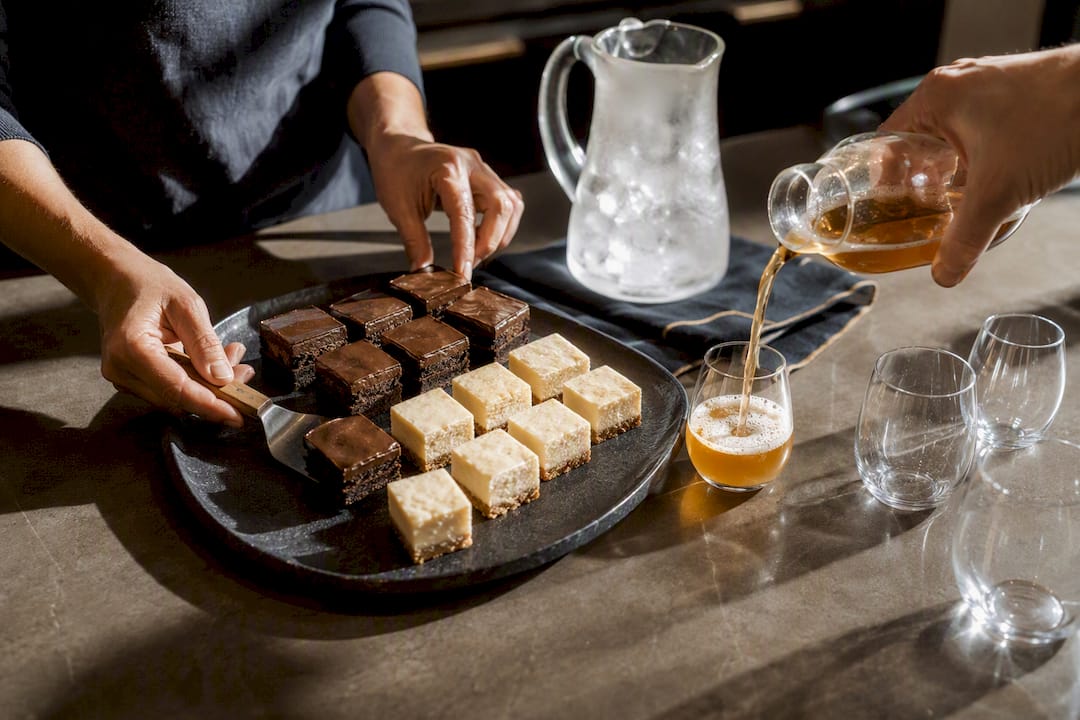
Prepare dessert portions in advance: small, uniform pieces cut before guests arrive save time and keep portions consistent across the table. Pour beer only when each course is ready to serve, since a beer poured too early loses carbonation and aroma before anyone tastes it.
Give every guest a simple note card with space for the dessert name, the beer style, and a line for their impression. This does two things: it slows people down enough to actually taste properly, and it creates a record you can compare against afterwards, which pairings people genuinely rated and which fell flat.
Keep water and plain crackers on the table throughout for palate resets between rounds. If you want a structured starting point, our home tasting guide walks through timing and pacing in more depth, and the same etiquette principles that guide a well-run private tasting apply whether you’re pouring wine or beer.
What surprised me most about pairing beer with dessert
The pairing that changed my mind was a fruited gose against a rich, heavy chocolate cake, not the stout I expected to reach for. The acidity did something a dark, roasty beer never could: it woke the whole plate back up. That’s the real lesson here. Match strength, then experiment with contrast before you default to the obvious complement. Pour small, taste properly, and let a guided flight show you combinations you’d never have picked on your own.
— Author
Book a tasting flight and taste these pairings yourself
Reading about these pairings only gets you so far, tasting them side by side is where the differences actually land. Lost And Found Taproom’s rotating selection of local and UK craft beers changes often enough that there’s usually something new worth building a flight around, and our beer menu is updated online so you can check what’s pouring before you visit.
If you’d rather have someone else do the sequencing, our tasting flights are built around exactly the light-to-rich structure covered above, with staff on hand to talk through why each beer was chosen. Bring your own dessert, or ask what pairs well with what’s currently on tap. Either way, book ahead if you’re coming with a group, small pours and considered flights work best when we know you’re coming.
Sources
- How to create the best beer and food pairings | Wine & Spirit Education Trust
- The art of matching beer with desserts | Fine Dining Lovers
- The absolute best beers to pair with chocolate, according to a master cicerone
FAQ
What food pairs best with beer generally?
Rich, fatty, or spiced food tends to pair best with beer because carbonation and bitterness cut through heaviness, while matching the weight of the food to the weight of the beer is the rule that applies across savoury and sweet dishes alike.
What’s the best dessert to eat after drinking alcohol?
Something with contrasting acidity or bitterness, like a fruit tart or dark chocolate dessert, tends to sit better than another very sweet dish, since a second sugary hit on top of alcohol can feel cloying rather than satisfying.
Which beer works best with chocolate desserts?
Stout, porter, and barleywine are the most reliable choices, because their roasted malt character echoes cocoa flavour directly, a link a master cicerone attributes to malt rather than added chocolate.
How much beer should I pour for a tasting session?
Around 30 to 60 ml per sample is enough to judge a pairing without fatiguing your palate before you’ve worked through the full flight.
Can dessert beers be paired with savoury food too?
Yes. Stouts work well with blue cheese, barleywine suits aged cheddar or pâté, and fruited sours cut through charcuterie the same way they cut through cream-based desserts.
What is the biggest mistake people make when pairing beer with dessert?
Pairing an intensely sweet dessert with an equally sweet beer, which tends to leave both tasting flatter than either would on its own; adding acidity or bitterness usually fixes it.