Beer and Tacos Pairing: UK Accessible Matches With a 4–6 Beer Flight
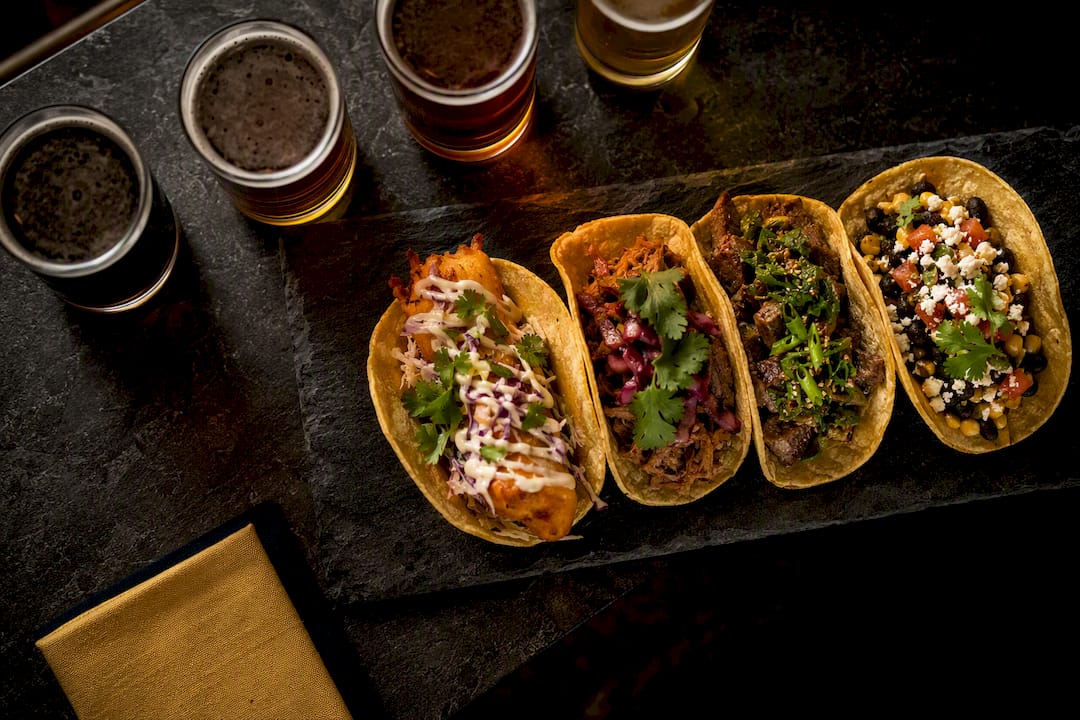
Crisp lagers, pilsners, and Belgian wit are the safest beer and tacos pairing for most fillings, cutting through fat with carbonation and light body. Punchier options work too: reach for IPA or amber ale when the meat is spicier or more heavily roasted. The rule underneath all of it is simple: match the beer’s weight to the food’s intensity, and let carbonation do the cleansing.
TL;DR:
- Light beers like pilsners or Belgian wits are best for delicate fish tacos due to their high carbonation and low bitterness.
- Richer, malt-forward styles such as amber ales or Vienna lagers suit roasted or charred beef and pork tacos by balancing their intensity.
- Spicy fillings like chorizo or chipotle require beers with malt sweetness and carbonation, avoiding heavily hopped or high-ABV options that amplify heat.
- Vegetarian tacos with earthy or roasted notes pair well with Saison, Vienna lager, or session IPAs, emphasizing umami and sweetness.
- Mixing a beer flight from light to strong allows guests to find their preferred pairing, with neutral and malt-backed styles for complex, gourmet tacos.
Table of Contents
- Beer and tacos pairing cheat sheet for your next party
- Fish and seafood tacos: which beers and why
- Pork tacos: al pastor, carnitas, and chorizo
- Beef tacos: carne asada and barbacoa
- Chicken tacos and lighter fillings
- Vegetarian tacos: mushroom, squash, and bean fillings
- How to taste and test pairings practically
- Party and serving tips: temperature, glassware, and portion sizes
- Consideration of different salsa and spice levels
- Pairings for toppings and garnishes: cheese, crema, cilantro, and lime
- Regional taco variations and their pairing nuances
- Street-style versus gourmet tacos
- Our take: what running taco nights has taught us about pairing
- Try these pairings for yourself at Lost And Found Taproom
- Sources
Beer and tacos pairing cheat sheet for your next party
Pin this to the fridge before your next taco night. Each pairing below leans on a straightforward idea: light, bubbly beers reset the palate after fried or fatty bites, while richer, malt-forward styles stand up to char and spice.
- Fish or shrimp tacos → Pilsner or Belgian wit. High carbonation and citrus notes cleanse fried batter without fighting the delicate flesh.
- Al pastor → Citrus-forward pale ale or session IPA, echoing the pineapple and cutting the pork fat.
- Carnitas or chorizo → Amber ale or Vienna lager for malt balance against the richness.
- Carne asada or barbacoa → Porter or schwarzbier for roasted depth, or a balanced pale ale if the marinade is citrus-heavy.
- Chicken tacos → Hefeweizen or light amber, flexible enough for mild or lightly spiced fillings.
- Vegetarian tacos (mushroom, squash, bean) → Saison or Vienna lager, depending on whether the flavour leans earthy or roasted.
If in doubt, pour a pilsner. It is the one style that rarely clashes, whatever is inside the tortilla. Avoid heavily hopped double IPAs and very high-ABV beers across the board. They tend to bully small, delicate bites rather than complement them.
Fish and seafood tacos: which beers and why
Fish tacos want a beer that gets out of the way. High carbonation and low bitterness suit fish because they don’t overwhelm the delicate flesh and cleanse residual fat, especially with beer battered or fried fillings. A crisp pilsner does this job reliably, and it is widely available in UK bottle shops and on cask.
When the taco leans on citrus or herb, coriander, lime crema, a fresh salsa verde, switch to a Belgian wit or wheat beer. The orange peel and coriander seed character in witbier lifts those same flavours in the food rather than competing with them. Steer clear of heavily hopped or roasted styles here. A stout or a resinous IPA will flatten fish rather than flatter it, burying the fish under bitterness or roast character it was never built to handle.
Pork tacos: al pastor, carnitas, and chorizo
Pork fillings vary wildly in fat content and spice, so the beer needs to shift with them. Al pastor, marinated in chilli and pineapple, wants a citrus-forward pale ale or session IPA. The hop character mirrors the fruit while the bitterness cuts the pork fat.
Carnitas and chorizo sit at the other end. Both are richer and often greasier, so an amber ale or Vienna lager works better here. The extra malt body matches the intensity of the meat instead of getting lost in it. Slow-braised pork, the kind that spends hours in its own fat and spice, can even take a light porter, provided the beer stays on the drier side rather than sweet or heavy. If you enjoy playing with heat generally, the same logic carries over to pairing beer with spicy food beyond tacos.
Beef tacos: carne asada and barbacoa
Grilled and slow-cooked beef both bring depth that a thin lager cannot match. Porter and schwarzbier suit roasted, smoky flavours because their malt character echoes the char rather than clashing with it. For barbacoa, which is often richer and fattier, that same roasted maltiness helps balance the meat’s weight.
Amber ale or an English bitter also works well with carne asada, particularly when the beef carries a strong char from the grill. If the marinade leans citrusy, lime, orange, a bit of chilli, a balanced pale ale or a moderately hopped IPA can work. Push too far into heavily hopped territory, though, and the bitterness starts fighting the char instead of framing it.
Chicken tacos and lighter fillings
Chicken tacos are the easiest fillings to pair, which makes them a good starting point if you are new to the best beer for tacos generally. Hefeweizen, pilsner, and light amber all work as sessionable, low-risk matches for mild or lightly spiced chicken.
A touch of malt sweetness in a hefeweizen or light amber calms any chilli heat in the marinade, while citrus notes lift lime or achiote seasoning without overpowering it. There is little to avoid here. Chicken tacos are forgiving, which is exactly why they suit a first attempt at any ideal beer taco match.
Vegetarian tacos: mushroom, squash, and bean fillings
Vegetable-forward tacos live or die on umami and roasted sweetness, so the beer needs to resonate with those notes rather than mask them. Saison and other farmhouse ales bring an earthy, slightly funky character that pairs naturally with mushroom or bean fillings.
Session IPAs add fruity hop lift without heavy bitterness, useful when the taco includes a bright salsa or pickled onion. Roasted vegetables, particularly squash, do well with a Vienna lager or amber ale, since the light caramel malt notes echo the roast. Vegetarian tacos are often underestimated in taco and beer combos discussions, but they offer some of the most interesting matches on this whole list.
How to taste and test pairings practically
Running your own tasting flight is the fastest way to find your personal ideal beer taco match, and it takes less effort than it sounds.
- Line up four to six beers, lightest to strongest: pilsner or wit first, then amber, then something hoppier or darker.
- Taste the beer alone first, noting carbonation, bitterness, and body.
- Take a bite of taco, then sip the same beer, and note whether the pairing lifts the food or fights it.
- Cleanse your palate with water or a plain cracker between beers.
- Move to the next beer only once your palate feels reset.
Cicerone-trained tasters recommend this light-to-heavy order specifically to avoid palate fatigue, since a hoppy or roasted beer tasted early will mask the subtler qualities of everything that follows. Lost And Found Taproom runs its own beer flights on exactly this principle during taco-night events, building each flight from lightest to boldest so guests can track how their own preferences shift.
Pro Tip: If a filling is especially rich or fatty, try a chelada style approach, a squeeze of lime and a pinch of salt in a light lager, to reset your palate mid meal rather than reaching for a heavier beer.
Party and serving tips: temperature, glassware, and portion sizes
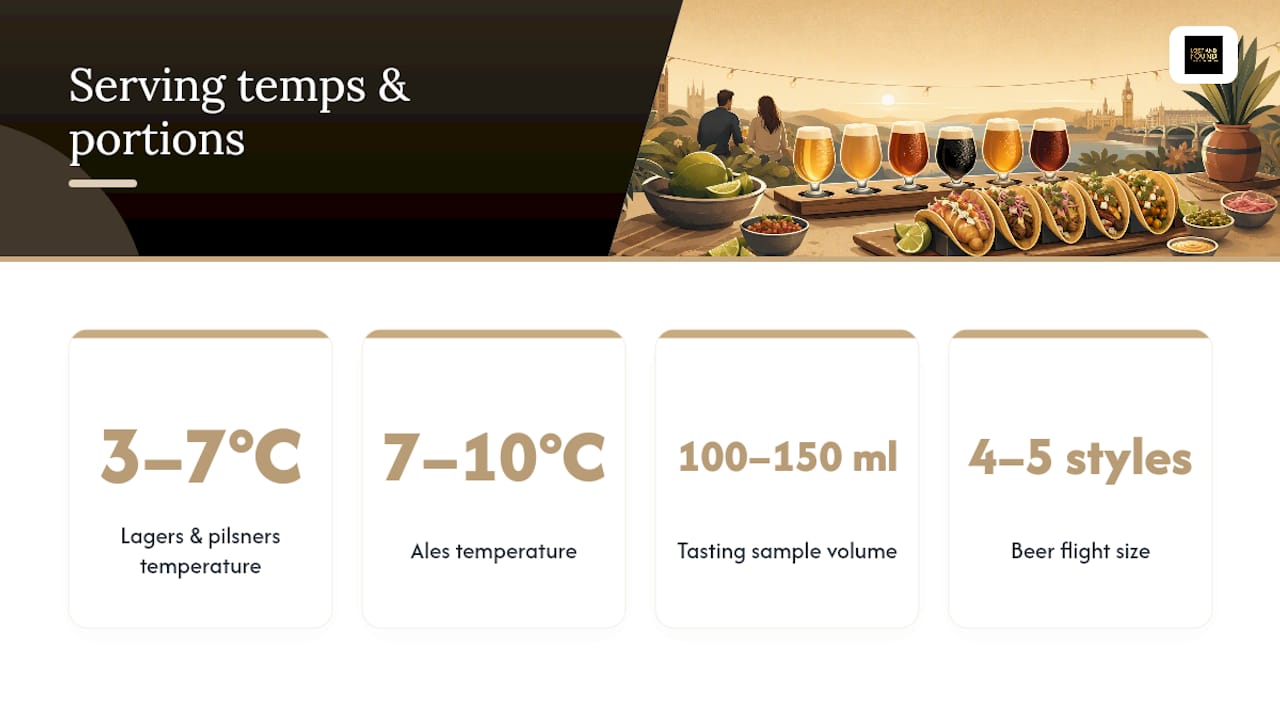
Serve lagers and pilsners cold, around 3 to 7°C, and pull ales up slightly warmer, 7 to 10°C, so their malt and hop character actually shows. For a tasting flight, pour samples of 100 to 150ml each rather than full pints, so guests can work through four or five styles without getting full or losing their palate halfway through.
Keep lime wedges and plain crackers within reach as neutral resets between pours. Avoid loading a table with several IPAs alongside small, delicate tacos; the bitterness will dominate every bite regardless of filling. A mixed case of four or five styles, or a rotating keg if you have the setup, gives guests real variety without you needing to guess what everyone likes in advance.
Consideration of different salsa and spice levels
Spice level changes the calculation more than almost any other variable in pairing beer with Mexican food. A mild pico de gallo barely shifts the beer choice, but a fiery salsa roja or a chilli-heavy salsa macha can throw off an otherwise good match entirely.
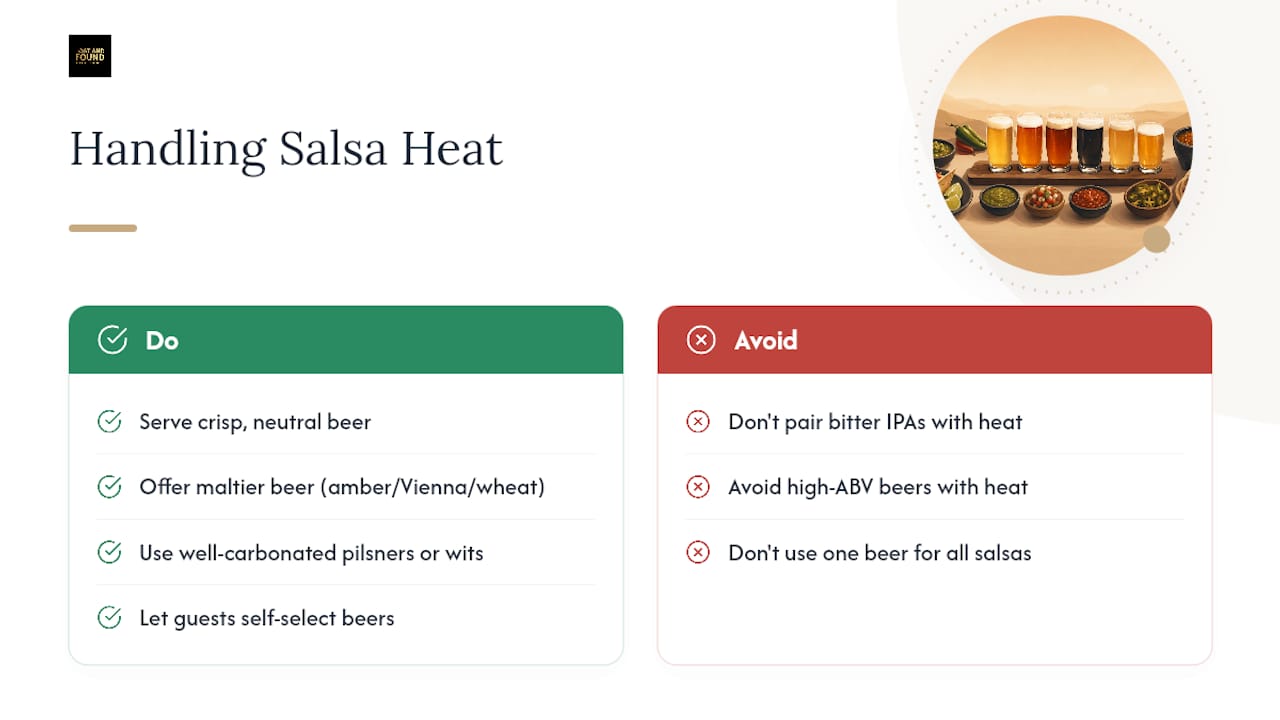
As heat climbs, very bitter IPAs and high-ABV beers tend to clash rather than cool things down. Bitterness and alcohol both amplify the burn of capsaicin instead of soothing it, which is the opposite of what most drinkers want with a spicy taco. Malt sweetness works better here. An amber ale, a Vienna lager, or even a slightly sweeter wheat beer helps calm heat rather than stoke it.
Carbonation still matters at every spice level, arguably more once the chilli enters the picture. A well carbonated pilsner or wit rinses capsaicin oils off the tongue between bites, resetting your palate for the next one. This is worth testing directly: taste the same taco with a crisp lager, then with a hoppy IPA, and notice how differently the heat registers each time. For readers who like pushing this further, the same principles apply directly to pairing beer with spicy food generally, curry, wings, or anything else that brings real heat to the table.
One practical note: if you are serving a range of salsas from mild to very hot, offer at least two beer styles, one crisp and neutral, one with a touch more malt sweetness, so guests can self-select based on how much heat they have piled onto their plate.
Pairings for toppings and garnishes: cheese, crema, cilantro, and lime
Garnishes shift the pairing equation just as much as the filling itself, and they are often overlooked. A taco loaded with avocado or crema behaves very differently from the same taco served plain.
Heavy crema or a generous smear of avocado adds fat and richness, so it needs a crisp, high-carbonation beer to cut through it, the same logic that makes pilsner work with fried fish. A hefeweizen or a Vienna lager also handles this well, since the carbonation still does the cutting even with slightly more malt character underneath.
Cheese, particularly a salty queso fresco or a melted cheddar in a Tex Mex style taco, calls for a beer with a bit more malt backbone. An amber ale balances the salt nicely, while a very hoppy or very light beer can taste thin against a cheese-heavy bite.
Cilantro and lime push in the opposite direction. Both bring bright, herbal, citrus notes that a Belgian wit or wheat beer will echo rather than clash with. If a taco is dressed heavily with fresh lime juice and coriander, this is one of the more reliable pairing beer with Mexican food combinations you can make.
The practical takeaway: taste the same taco with and without its garnishes if you are testing pairings seriously. The garnish alone can be enough to change which beer wins, so judging a filling in isolation can lead you to the wrong beer once the crema and lime actually go on.
Regional taco variations and their pairing nuances
Not all tacos follow the same template, and regional differences change what the beer needs to do. Baja-style fish tacos, battered and fried with a cabbage slaw and a creamy sauce, want the same crisp pilsner or wit that works for seafood generally, but the slaw’s vinegar edge means a slightly more citrus-forward wit often wins over a plain lager.
Yucatan-style tacos, built around achiote-marinated pork or pibil, bring a tangy, citrus-and-spice profile from the sour orange marinade. These do well with a Vienna lager, which has enough malt to hold its own against the tang without adding sweetness that clashes with the citrus.
Tex Mex tacos, heavier on cheese, ground beef, and sometimes a smoky barbecue element, shift the pairing toward amber ale or even a light porter, since the extra richness and smokiness need more body than a pilsner can offer.
Street-style tacos from central Mexico, simple corn tortillas, a single meat, onion, and coriander, are often the easiest to pair precisely because they are uncomplicated. A pilsner or session IPA handles most of these without any real risk. If you enjoy hunting down authentic recipes to test these variations at home before matching a beer, a resource like these chipotle shrimp tacos gives a useful starting point for the fish and seafood category specifically.
Street-style versus gourmet tacos
Street-style tacos, small, simple, built around one or two ingredients, are designed to be eaten in a couple of bites, which makes bold or high-ABV beers a poor match. A crisp pilsner or session beer keeps pace with the food without overshadowing it, and it lets you eat several tacos across a sitting without your palate tiring out.
Gourmet tacos flip that logic. When a kitchen adds truffle, unusual cheeses, elaborate slow-cooked fillings, or a chef-driven sauce, the taco itself is asking for more attention, so the beer can afford to bring more character too. This is where a well-chosen amber ale, saison, or even a barrel-aged stout for a rich, dessert-style taco can genuinely add something rather than compete.
The general rule holds either way: simpler food wants a simpler beer, and more complex food can handle a more complex one, provided you are still matching intensity rather than just reaching for whatever is strongest on the shelf.
Our take: what running taco nights has taught us about pairing
Some taprooms have hosted taco-and-beer nights with local street-food vendors and found that the “best” pairing is rarely the one written in a guide. It is the one a guest lands on themselves after two or three tries. That is why every flight we build for these events starts light and works up: pilsner, then wit, then amber, then pale ale, letting people track their own preference rather than being told what to like.
— Author
Try these pairings for yourself at Lost And Found Taproom
A taproom can be a practical alternative to guessing at pairings from a supermarket shelf: instead of buying six bottles you might not enjoy, guests can taste a proper flight and only commit to what actually works for their palate. Our food and beer menus are available online, so you can check what is currently pouring before you visit.

If you would rather taste your way through a lineup than build one blind at home, our craft beer tasting flights are built exactly for this: light to bold, guided, and no commitment beyond the glass in front of you. Browse the current beer menu online to see what is pouring this week, then come find your own favourite taco and beer pairing at our Fiveways taproom in Brighton.
Sources
- Ask a Cicerone: The Best Beers for Tacos
- 10 best taco and beer pairings
- Taco and Beer Pairings to Celebrate Cinco de Mayo