Cover Any Cookout With 3 Beers: Practical Beer and Barbecue Pairings
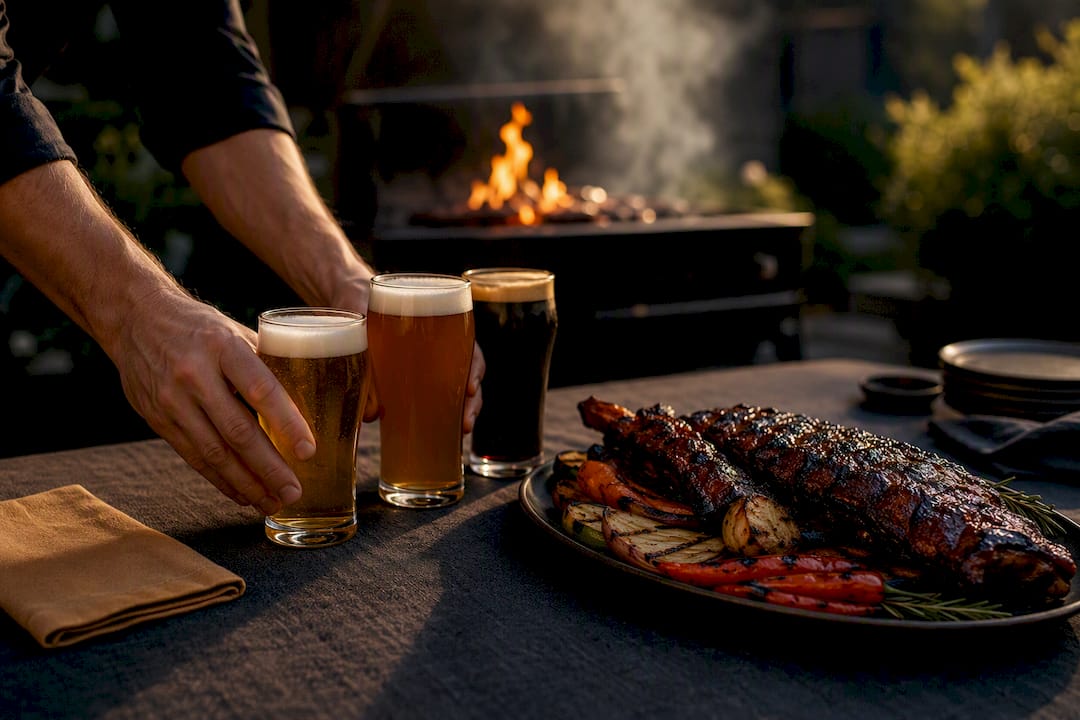
Match intensity first: serve a crisp lager or pilsner for lighter grilled dishes, an amber ale for mixed plates, and a roasty porter or stout for the richest smoked meats. The reason is simple. Carbonation and hops cut through fat and sweetness, while dark malt echoes the smoke and char already on your plate. Use the cheat sheet below to sort the rest by dish and sauce.
TL;DR:
- Pair smoked brisket with smoked porter or rauchbier to echo the smoky, roasted malt flavors on the meat’s crust.
- Use crisp lagers or pilsners to cut through tangy, vinegar-based sauces on pulled pork, especially Carolina-style.
- Pick amber ales for rich, sweet-glazed meats like barbecue with honey or molasses to complement the sweetness without overpowering it.
- Serve delicate seafood with high-carbonation beers such as pilsners, kölsch, or wheat beers to avoid flattening their subtle flavors.
- Plan on two to three beers per person for a three- to four-hour cookout, mixing sessionable light options with more robust styles.
Table of Contents
- Beer and barbecue pairing cheat sheet by dish
- How to choose beer using contrast, complement and cut
- Why sauce and rub change your beer choice more than the meat does
- Pairing beer with grilled seafood and vegetarian barbecue
- Serving temperature, glassware and how much beer to buy
- What Lost And Found Taproom pours alongside a cookout
- Why beer, not wine, is the barbecue drink that actually works
- Taste these pairings yourself at Lost And Found Taproom
- Sources
- FAQ
Beer and barbecue pairing cheat sheet by dish
Forget theory for a second. Here’s what to pour depending on what’s coming off the grill or out of the smoker.
- Brisket (smoked, heavy bark): A smoked porter or rauchbier is the classic move here, because smoke mirrors smoke and roasted malt echoes the crust on the meat, according to MeatPairing’s guide. A dry stout works nearly as well if smoked styles aren’t on tap.
- Pulled pork, vinegar-style (Carolina): Go crisp. A pilsner or clean lager cuts the tang and refreshes the palate between bites, per MeatPairing.
- Pulled pork, sweet KC-style sauce: Swap to an amber ale or brown ale. The caramel malt complements the sticky glaze rather than fighting it.
- Pork ribs (dry rub): An amber ale bridges the char and the spice without overwhelming either.
- Beef ribs or steak off direct heat: A hoppy pale ale or IPA gives enough bitterness to stand up to seared fat, but a brown ale also works if you want something less aggressive.
- Burgers: A lager or session pale ale keeps things light between bites of bun, cheese and beef; see our beer and burger pairing guide for specific matches by topping.
- Sausages and bratwurst: An oktoberfest or märzen is the textbook pairing, a point the Cicerone guidelines make explicitly.
- Chicken (grilled, lightly sauced): A wheat beer or pale lager keeps things clean; if it’s been glazed with something sweet, a light amber holds up better.
- Spicy jerk or Nashville hot chicken: A hoppy pale ale, not a heavy IPA, tempers the heat without adding more bitterness on top of chilli burn.
- Fish and seafood off the grill: Pilsner, kölsch or wheat beer, every time. Anything roasty will flatten the delicate flavour.
For a mixed platter with three or four proteins on the table, an amber ale is the most sensible single choice. It has enough malt backbone to sit with richer meats and enough restraint not to clash with lighter ones, which is why it turns up again and again as the pragmatic pick for backyard gatherings.
How to choose beer using contrast, complement and cut
Three mechanisms explain almost every pairing decision you’ll ever make at a barbecue, and once you understand them you don’t need a cheat sheet at all.
Contrast means opposing flavours on purpose. A crisp, bitter pilsner against a fatty, sweet-glazed rib works because the beer refuses to match the food, and that tension is the point, a principle laid out in detail on how to pair beer and food. Complement does the opposite: a smoked porter alongside smoked brisket, where the beer and the meat share the same flavour language. Cut is about texture and cleansing, using carbonation or hop bitterness to scrub fat off the palate so the next bite tastes as good as the first.
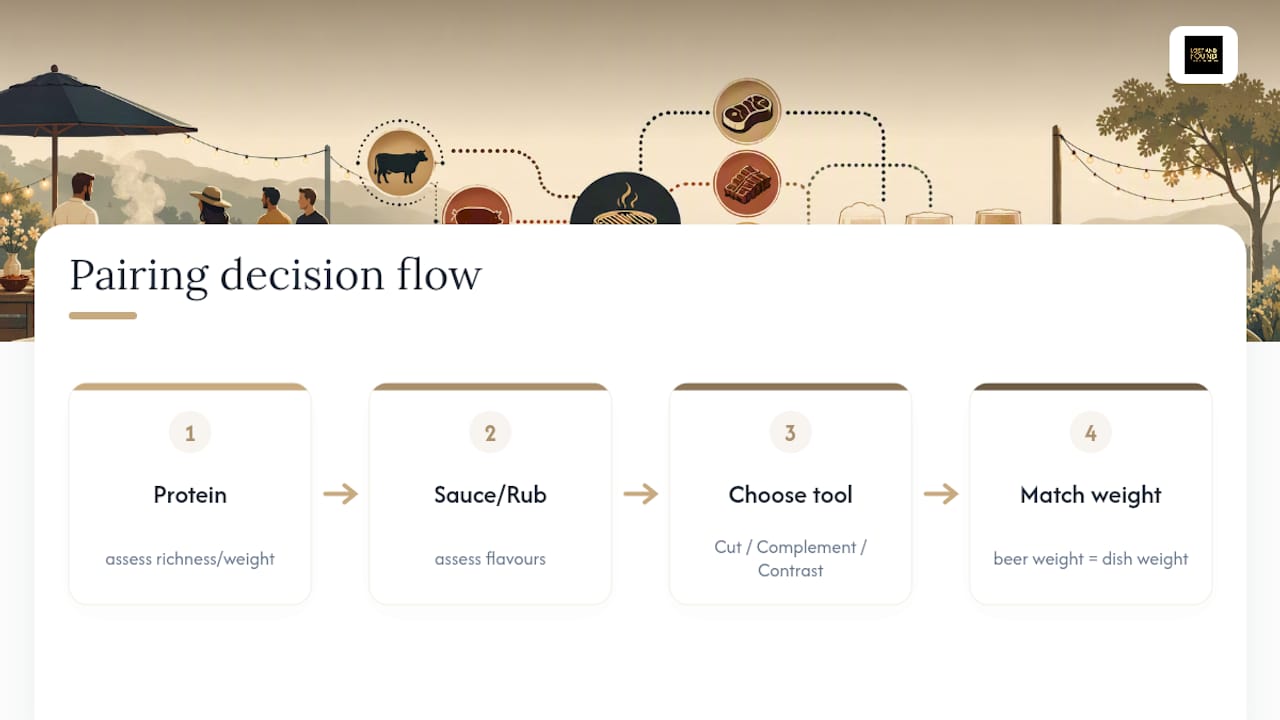
Layered onto all three is what Garrett Oliver calls “impact” (his own term for intensity matching): a delicate fish taco loses to a double IPA every time, and a smoked brisket will flatten a light lager just as easily. Oliver’s pairing guidance boils down to one rule: match the weight of the beer to the weight of the dish before you worry about flavour notes.
A simple decision flow works in practice. Assess the protein’s richness first, then the sauce or rub, then pick your tool: carbonation and hops to cut, malt and roast to complement, or a genuine flavour mismatch to contrast. Miss step one and even a technically “correct” pairing can feel wrong on the plate.
Why sauce and rub change your beer choice more than the meat does
The rub or sauce is often the deciding factor, more than the cut of meat itself, a point worth keeping in mind whenever a recipe looks unfamiliar. The same pork shoulder can call for three completely different beers depending on what’s brushed onto it.
- Sweet glazes (honey, molasses, KC-style sauce): reach for malt-forward styles like amber ale or brown ale; they complement rather than compete with the sugar.
- Vinegar-based or tangy sauces (Carolina, mustard-based): a crisp pilsner or clean lager cuts through the acidity and resets your palate.
- Spicy rubs and hot sauces: hoppy pale ales work better than aggressive double IPAs, which can amplify the burn instead of taming it.
- Cooking method matters too. Direct, high-heat grilling suits a higher-carbonation, clean-finishing beer, while low-and-slow smoking asks for more malt and roast character to stand up to hours of smoke exposure.
Get this wrong and you’ll notice it immediately: a heavy stout against a mustard-vinegar sauce just tastes muddy, while a thin lager against a sweet molasses glaze disappears entirely.
Pairing beer with grilled seafood and vegetarian barbecue
Delicate fish and shellfish need a beer that stays out of the way rather than one that tries to compete. Pilsner, kölsch and wheat beer all share the same qualities that make them work: high carbonation, light body, and minimal roast character. The Cicerone guidelines specifically flag pilsner as the classic match for delicate fish, and that logic holds whether the fish is poached, fried or straight off the grill.
Grilled vegetables and halloumi have more room to play. A saison brings peppery, slightly funky notes that suit char-grilled peppers and courgette, while a sour beer can lift a plate of grilled aubergine or charred sweetcorn with genuine acidity. A fruity wheat beer works well if the vegetables have been glazed with something sweet or citrus-heavy.
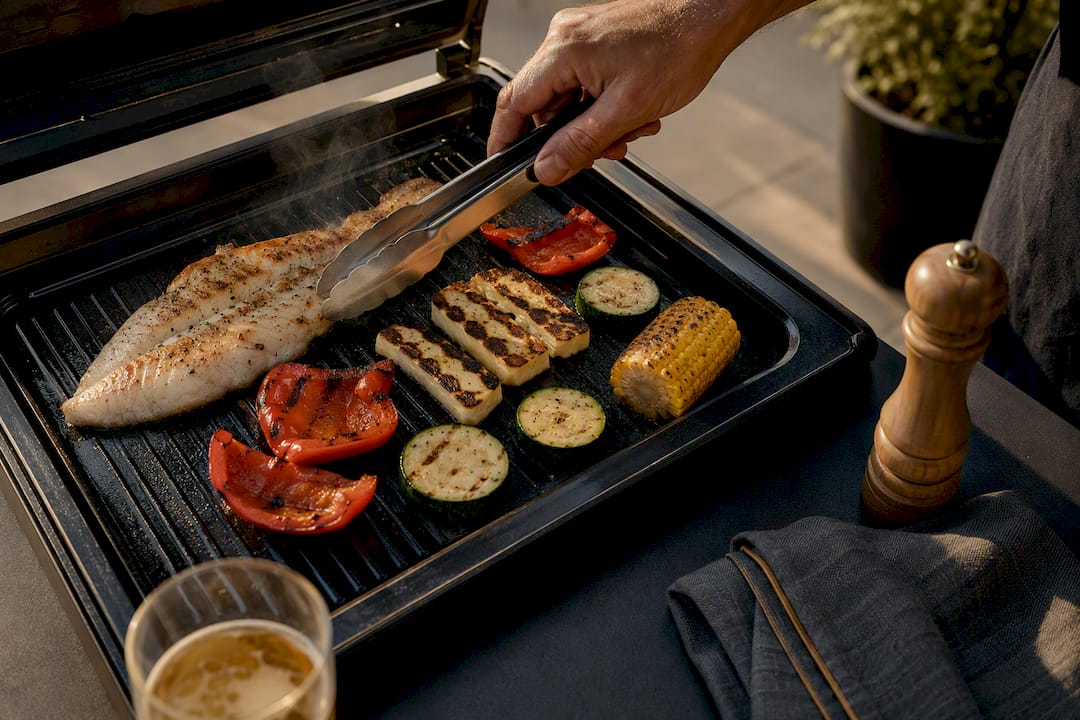
The one rule worth remembering: never put a heavyweight roasty beer next to delicate seafood. A stout will bulldoze prawns or sea bass every time, no matter how well it smells on its own.
Serving temperature, glassware and how much beer to buy
Temperature affects how a beer’s carbonation and aroma perform, so it’s worth getting right rather than just grabbing whatever’s coldest in the cooler. Crisp lagers and pilsners taste best served properly cold, since chill keeps the carbonation lively and refreshing. Ambers and browns do better a touch warmer, and porters or stouts open up further still, letting roast and chocolate notes come through rather than getting muted by the cold.
A proper glass, even a simple tumbler rather than a can, genuinely improves how carbonation and aroma read on the palate. It also makes the pairing feel more deliberate rather than incidental.
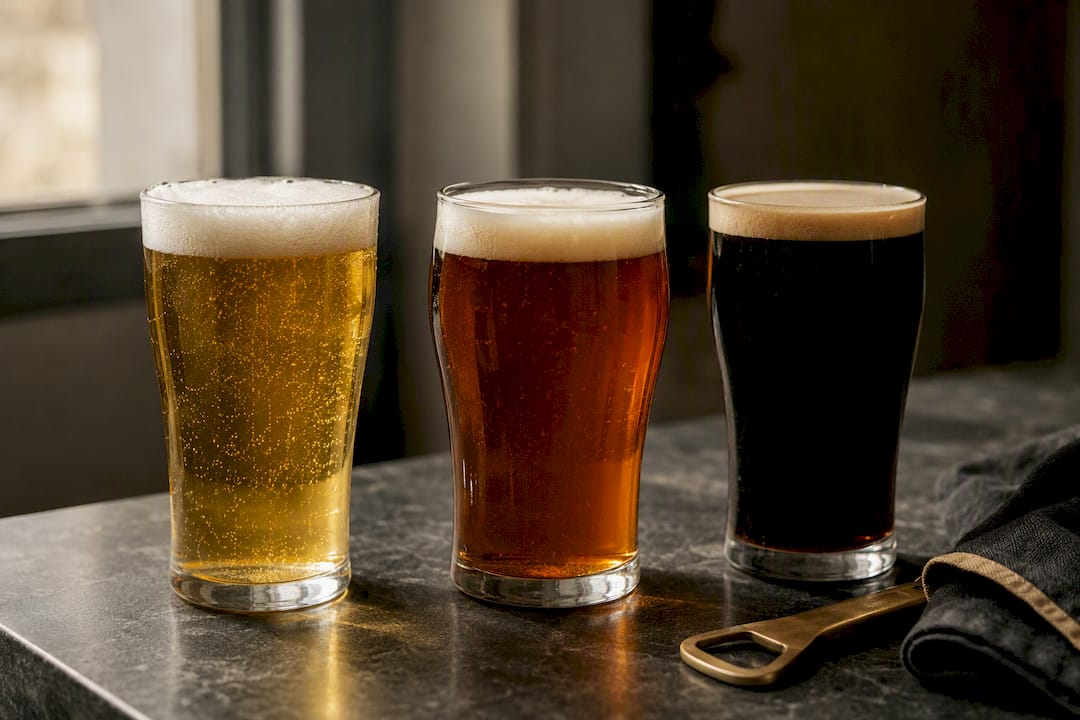
For stocking, plan on a few beers per person across a cookout lasting several hours, and always offer at least one light, sessionable option alongside something more characterful, a split that pitmasters interviewed by VinePair consistently favour for long outdoor sessions. If you’re accommodating guests who aren’t drinking alcohol, non-alcoholic beers pair using the same mechanics of carbonation, bitterness and malt, so the same logic still applies without needing separate rules, as MeatPairing notes.
What Lost And Found Taproom pours alongside a cookout
The taps rotate often, drawing on independent breweries alongside guest beers, so the exact match on offer changes regularly. Common pairings include a pilsner with vinegar-based or fish-forward dishes, an amber ale for mixed platters, and a roasty stout or porter for smoked or heavily charred meat.
If you’re planning a private tasting or a proper cookout gathering, our venue hire space and full bottleshop let you build a flight around exactly the dishes you’re serving.
Why beer, not wine, is the barbecue drink that actually works
Beer’s carbonation is doing real work at a barbecue that wine simply can’t replicate. Wine has no mechanism to scrub fat off the palate the way a well-carbonated pilsner does, which is why so much conventional “pair the fanciest thing you have” advice falls apart the moment smoke and char enter the picture.
The bigger failure in most barbecue pairing advice is treating the protein as the whole decision. Sauce and rub intensity usually matter more than whether you’re eating pork or beef, and any guide that sorts purely by meat type will steer you wrong on a Carolina-style vinegar pork shoulder versus the same cut with a sweet Kansas City glaze. Get the sauce read right and the protein mostly takes care of itself.
If there’s one habit worth adopting above all others, it’s buying at least one beer you wouldn’t normally choose. A crisp lager for the delicate fish course, a proper amber for the mixed platter, and a roasty stout waiting for the brisket. That range covers almost everything a real cookout throws at you.
— Author
Taste these pairings yourself at Lost And Found Taproom
Reading about pairings only gets you so far. Lost And Found Taproom is the place to actually taste them, with rotating Sussex beers and UK guest taps that change often enough to keep every visit interesting, alongside a bottleshop for anything you’d rather take home.
Our beer menu is online if you want to check what’s pouring before you head down, and if you’re planning something bigger, our venue hire covers both Midweek Hire and Weekend Hire slots for private tastings, birthdays or barbecue-themed gatherings, with full details on the venue hire page. None of this requires committing to anything beyond popping in. Come with a plate of ribs in mind or no plan at all, and let the staff point you towards whatever’s pouring that suits it best.
Sources
- Beer and Food (Cicerone)
- Garrett Oliver — beer and food pairing guidance
- Flavor fever: beer-food science (Beer & Brewing)
- Best beer for BBQ: Expert Pairing Guide (MeatPairing)
FAQ
What pairs well with barbecue?
Crisp lagers and pilsners suit lighter grilled dishes and fish, amber ales work across mixed platters, and roasty porters or stouts stand up to smoked, heavily charred meat. The right choice depends more on the sauce and cooking method than the type of meat itself.
What food is best paired with beer?
Rich, fatty, or smoky foods generally pair best with beer because carbonation and hop bitterness cut through fat while malt echoes charred and roasted flavours, a mechanism explained in Beer & Brewing’s flavour science coverage. Grilled meats, smoked barbecue, and spicy dishes are classic matches for this reason.
What does adding beer to the barbecue do?
Beer used in a mop, marinade or braise should generally match the style you plan to serve alongside the finished dish, since this creates flavour continuity between the cooking liquid and the drink in your glass, according to Cicerone’s pairing guide. Darker beers suit braising richer cuts, while lighter beers work better in mops meant to keep meat refreshed during long cooks.
What food should you avoid pairing with beer?
Very delicate dishes, such as raw seafood or lightly steamed fish, clash with heavy, roasty or high-alcohol beers because the beer overwhelms rather than complements the food. Stick to pilsners, kölsch or wheat beer for anything delicate, and save stouts and strong IPAs for correspondingly bold, rich dishes.
How many beers should I plan per person for a barbecue?
A reasonable planning figure is two to three beers per person across a three to four hour cookout, based on guidance from pitmasters interviewed by VinePair. Offering at least one light, sessionable beer alongside a more characterful option keeps most guests satisfied throughout the afternoon.