Allergens at Bars: What’s in Your Drink and What to Ask

Yes, drinks can contain allergens, and UK bars have to be able to tell you which ones. Beer usually brings gluten, wine and cider often bring sulphites, and milk, egg, nuts or fish turn up in stouts, cocktails, liqueurs and some wines. The fix is simple: ask at the bar before you order, and ask about the specific drink in your hand, not drinks in general.
This guide covers what is in each type of drink, what the law says a bar must provide, how cross-contamination happens, and the questions that get you a useful answer quickly. It is written for drinkers with an allergy or intolerance, and for anyone planning a night out or a party with guests who have one.
TL;DR
- Beer commonly contains gluten, wine and cider can contain sulphites, and milk, egg, nuts and fish appear in some stouts, cocktails, liqueurs and wines.
- UK bars must give allergen information for loose drinks too, either in writing or verbally, with a visible notice telling you how to get it.
- Cross-contamination from shared glasses, shakers and blenders is a real risk, so name your allergy and ask how the drink is made.
- Ask about the exact drink, the brand and any garnish, syrup or topping.
- Our food and beer menus are online, so you can plan before you arrive.
Table of Contents
- Why drinks hide allergens
- The 14 allergens a UK bar has to declare
- Allergens by drink type
- Cross-contamination: the risk you cannot read on a label
- What UK bars must tell you
- How to ask at the bar: five steps
- Our perspective
- Hosting a party with allergy-aware guests
- Plan your visit to Lost And Found
- Related reading before you go
- FAQ
- Sources
Why drinks hide allergens
Most people think of allergens as a food problem. Drinks are made from grains, fruit, dairy, eggs, nuts and botanicals, and some of those survive into the glass. An estimated two million people in the UK live with a food allergy, so this is a common situation behind any bar, not a niche one.
The NCASS guide to allergens and alcohol says the main allergens in alcoholic drinks are gluten and sulphites. It also lists less obvious ones: milk in stouts, low-alcohol beers, cocktails and Baileys; peanuts and tree nuts in some beers, spirits, cocktail syrups and liqueurs; eggs in cocktails; and crustaceans in some flavoured beers and ciders.

The trouble is that you cannot see any of this. A pint of stout and a pint of pale look like drinks, not ingredient lists. That is why the first rule is to ask rather than assume.
The 14 allergens a UK bar has to declare
GOV.UK sets out the 14 allergens that businesses must tell customers about when they are ingredients in food or drink:
- celery
- cereals containing gluten (wheat, rye, barley and oats)
- crustaceans
- eggs
- fish
- lupin
- milk
- molluscs
- mustard
- nuts
- peanuts
- sesame seeds
- soya beans
- sulphur dioxide or sulphites above 10 mg per kilogram or per litre
Several of these have no obvious link to a drink until you look at garnishes and mixers. Celery, for example, is the classic Bloody Mary garnish, and Allergy UK notes that celery garnishes and pink peppercorns in some gins can introduce allergens.
Allergens by drink type
Use this as a map of where to ask more questions, not as a replacement for the label or the answer from the person serving you. Recipes and brands differ.
| Drink | Allergens that can be present | What to ask |
|---|---|---|
| Beer, lager, ale | Gluten from barley, wheat, oats or rye; milk (lactose) in some stouts and low-alcohol beers; occasionally nuts or crustaceans in flavoured styles | Which cereals, and are any lactose, nuts, shellfish or other additions used? |
| Cider | Sulphites; sometimes gluten; crustaceans in some flavoured ciders | Is it flavoured, and is there a sulphite or gluten declaration? |
| Wine and sparkling wine | Sulphites; some wines and champagne use cow’s milk, egg or fish in processing | Does the label or producer list milk, egg or fish? |
| Spirits | Nut flavourings in some; botanicals such as pink peppercorn in some gins | Is any flavouring or botanical on the allergen list? |
| Liqueurs | Tree nuts (amaretto style), cream (Baileys) | Does it contain nuts or dairy? |
| Cocktails | Egg white, milk, cream, nuts, celery, syrups | What goes in, including syrups, garnish and shared equipment? |
The sources behind the table: beer and gluten, wine and cider with sulphites, spirits with nut flavourings and cocktails with egg, milk or nuts are summarised in this UK pub guide to allergens in drinks, and Lancaster City Council notes that some wines and champagne contain cow’s milk, egg or fish.
Beer: gluten first, then the surprises
Most conventional beers and lagers are made with malted barley or wheat, so they contain gluten and are not suitable on a gluten-free diet. NCASS adds that most beers, lagers and sometimes ciders contain gluten cereals such as barley, wheat, oats and rye.
If gluten is your issue, our guide to gluten free beer in the UK explains the options and what to ask for.
Then come the extras. Milk (lactose) is frequently used in stouts and low-alcohol beers. Craft brewing is inventive, so a pastry stout, a fruited sour or a coffee porter may carry ingredients you would not expect. Ask the person pouring, and ask for the brewery’s ingredient information if they do not have it to hand.
For draught beer, NCASS notes that allergen information should accompany casks or barrels supplied by breweries or wholesalers, and that the Cask Finder App holds allergen information on different beer varieties. A bar working properly should be able to answer from that paperwork.
Wine and cider: sulphites, plus processing aids
NCASS explains that sulphites are used as a preservative in wine, beer, soft drinks and dried fruit, and are also produced naturally during fermentation. Above the specified levels they must be highlighted on bottles of wine and beer.
The more surprising point is that some wines and champagne contain cow’s milk, egg or fish, which is why a wine label is worth reading for an allergy and not just for the vintage.
Spirits and liqueurs: flavourings and botanicals
Plain spirits are rarely the problem, but flavoured ones can be. NCASS lists peanuts and tree nuts in some spirits and liqueurs, and Baileys contains cream. One quirk worth knowing: cereals used to make alcoholic distillates, including ethyl alcohol of agricultural origin, are exempt from allergen labelling under the EU rules that the UK framework follows. So a spirit made from a cereal may carry no gluten warning on the label, and a coeliac or wheat-allergic customer should ask the producer or seek advice from their doctor or dietitian.
Cocktails: the highest-variable category
Cocktails combine many ingredients and many steps. NCASS names milk in White Russians, Pina Colada, Lumumba, Panda Bear and Brown Cow, notes that some ready-made margarita mixes contain milk, and lists eggs in cocktails. Garnishes and syrups are the other trap. If you have a nut allergy, ask about syrups and liqueurs, not just the main spirit.
Cross-contamination: the risk you cannot read on a label
A drink can be free of an allergen on paper and still pick it up on the way to you. NCASS says cross-contamination can happen at every stage: delivery, storage, preparation, service and cleaning.
In practice, the risk points are:
- Shakers and blenders used for a milk or nut cocktail, then reused.
- Glasses washed or stored near allergen ingredients.
- Open containers of celery, peanuts or other garnishes sitting on the bar.
- Shared jiggers, spoons and straws.
NCASS advises that when a bar makes a specific drink for a customer with a food allergy, glasses, blenders and shakers must be thoroughly cleaned first to remove allergen residue, and that allergen ingredients such as celery or peanuts should be kept in sealed containers.
So tell the bartender your allergy plainly, then ask how the drink will be made. Good staff will not be put out. It is the question that lets them clean the right equipment.

Food and heat: the kitchen side of a bar
Bars that serve food face the same discipline in the kitchen. If you run a venue and want to read about how cooking equipment affects cross-contact, this piece on allergen control ovens is a good place to start, especially alongside the written-first approach the FSA recommends.
What UK bars must tell you
The rule is not limited to food. According to GOV.UK guidance for food businesses, in England, Northern Ireland and Wales businesses must provide allergen information for prepacked and non-prepacked food and drink. For non-prepacked items, that includes every item containing any of the 14 allergens.
Here is how it works at the bar:
- Bottles and cans (prepacked): allergens should be emphasised on the label, such as in an ingredients list or an allergen warning.
- Draught beer, cocktails and other loose drinks (non-prepacked): the information can be given in writing or verbally, but there must be a clearly visible written notice explaining how you can get it.
- Pre-packed for direct sale food: it must carry the name of the food and a full ingredients list with allergens highlighted.
The Food Information Regulations 2014 apply to drinks as well as food. Lancaster City Council states that failing to provide allergen information is a criminal offence, with a fine of up to £5,000.
This guidance was last updated on 17 July 2026. The rules for Scotland are set separately, so check with Food Standards Scotland if you are drinking north of the border.
What about Owen’s Law?
Owen’s Law is the proposed move toward requiring written allergen information at the point of ordering. One industry write-up says that as of March 2026 it was not yet a legal requirement, though the Food Standards Agency has issued voluntary best practice guidance recommending written information when you order. The same piece cites estimates that a law could take effect in late 2027 or 2028 at the earliest. Check GOV.UK for the current position.
For drinkers, the takeaway is practical: even where only a verbal answer is strictly required, you are entitled to ask for the information, and a bar that has it written down makes your life easier.
How to ask at the bar: five steps
- Check the menu first. Look online if the venue publishes its drinks and food menus. Ours are available online on our on tap page, so you can shortlist before you leave home.
- Say your allergy at the start. “I have a nut allergy” gets a better answer than “is this vegan?”. Be specific about the allergen and about how severe it is.
- Name the exact drink. Brand, style, syrup, garnish. Ask for the ingredient or allergen information, written if possible.
- Ask about preparation. For a cocktail, ask whether the shaker, glass and tools will be cleaned before use.
- If the answer is unsure, choose something else. A confident answer from the person serving you, or a sealed bottle with a label you can read, is better than a guess.
If you travel or the bar is loud, Allergy UK says its restaurant cards can help in busy or loud venues and its translation cards help across language barriers.
Carry any prescribed medication your doctor has given you, and speak to your GP or allergy specialist about alcohol if it has ever triggered a reaction. Alcohol can make it harder to notice early symptoms, so tell the friends you are with.
Reading a bottle label
For bottled beer and wine, look for the allergen emphasised in the ingredients list or a separate allergen warning. Sulphites appear when they are above the stated threshold. If a bottle has no useful information, put it back. Our bottle shop range is meant for taking home, so you can read the label at your own pace.
Our perspective
We think a taproom should be a place where you can ask questions and get straight answers. Our whole approach is built around independent breweries: every beer and cider we serve is produced in Sussex, and that short chain matters when you want to know what is in the glass.
A small list that rotates is easier to talk through than a wall of unknown brands. When the range is local and independent, you are one conversation away from the people who made it, and that is the most useful tool a drinker with an allergy can have.
Our beer and food menus are online, so you can read them before you visit, and you can always tell us about your allergy when you order. We would rather you ask ten questions than take a chance on one drink.
Author
Hosting a party with allergy-aware guests
If you are organising a birthday, stag do or private event, collect allergy information when you collect RSVPs. A short note asking guests to flag allergies is enough. Pass that information on to the venue before the day, and remind guests they can ask at the bar as well.
It also helps to think about the drinks list in advance. Mixing a gluten-free option, a plain sealed-bottle option and a non-alcoholic option into your order means no one is left choosing between a risk and nothing. Our beer for 50 guests planner walks through sample orders, and our vegan beer guide is useful if some guests avoid animal products as a dietary choice.
Street food collaborations are part of how we work, so mention any food allergies when you plan. It is easier to organise before the event than on the night.
Plan your visit to Lost And Found
We are a craft beer taproom and bottle shop in Brighton’s Fiveways, serving a rotating selection of Sussex beer and cider, curated wines and spirits, and street food. You can browse what is pouring and what is on the food menu on our on tap page before you arrive.
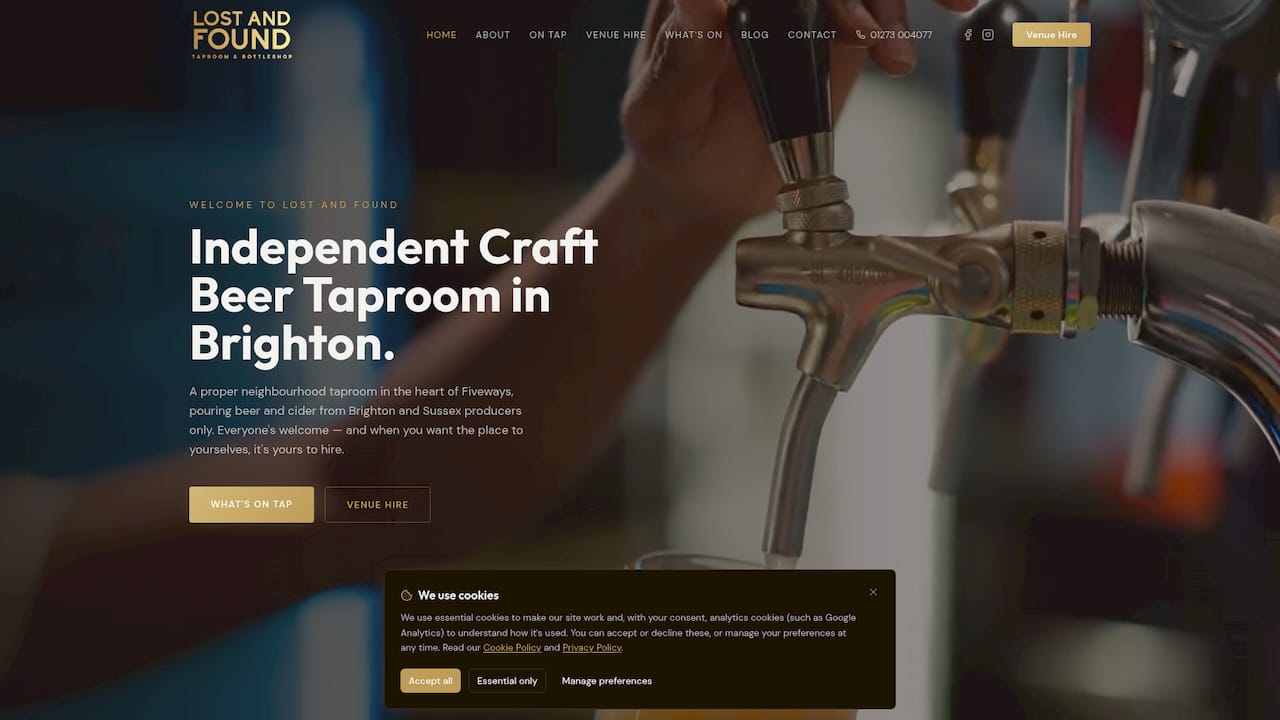
Planning a get-together? Our venue hire offers exclusive use of the taproom with no hire fee, with flexibility over decorations, music and drinks. Tell us about any guest allergies when you get in touch, and we can plan around them together. For a general look at us, start at Lost And Found Taproom Brighton.
Related reading before you go
- Alcohol units in the UK: worth knowing if you are pacing yourself on a night out.
- How to taste beer: a step-by-step way to slow down and notice what is in your glass.
- Wine for beer drinkers: eight styles explained in beer terms, handy if you want to swap from beer.
FAQ
Are there nuts in alcohol?
Sometimes. Nuts appear in some beers, spirits, cocktail syrups and liqueurs such as amaretto, according to NCASS. Flavoured spirits and some gins with botanicals can also cause problems. If you have a nut allergy, ask about the exact brand and any syrup or garnish before you order.
Does a bar have to tell me what allergens are in a draught beer or cocktail?
Yes. In England, Wales and Northern Ireland, loose drinks count as non-prepacked food and drink, so the bar must be able to give you allergen information. It can be written or spoken, but a visible notice must tell you how to ask for it.
What are the most common allergens in drinks?
Gluten and sulphites are the main ones, according to NCASS. Gluten is found in most beers and lagers, and sulphites in wine, cider and some beers. Milk, egg, nuts, fish and crustaceans appear in certain stouts, cocktails, liqueurs, wines and flavoured ciders.
Can I trust a drink to be safe if it does not list an allergen?
Check the label for bottled drinks and ask the person serving you for loose drinks. Some ingredients, including cereals in distilled spirits, are exempt from allergen labelling, so a missing warning does not always mean the allergen is absent. For a gluten or wheat allergy, speak to your GP or dietitian about spirits.
How can I reduce the risk of cross-contamination at a bar?
Tell staff your allergy, ask whether shakers, glasses and blenders will be cleaned before use, and avoid drinks made with shared equipment if you are unsure. A sealed bottle or can with a readable label is the lowest-variable choice.
Sources
- NCASS Guide to Allergens & Alcohol
- NCASS: what are the 14 specified allergens
- GOV.UK: Allergen guidance for food businesses
- GOV.UK: Allergen labelling
- Lancaster City Council: Food allergies
- Allergy UK: Reactions to alcohol
- Allergy UK: Food allergy
- Allergens in drinks: a UK pub guide
- EU 1169/2011: exceptions to allergen labelling
- Owen’s Law UK guide