Up to 222 kcal: Wine vs Beer Calories in the UK, How to Cut Them
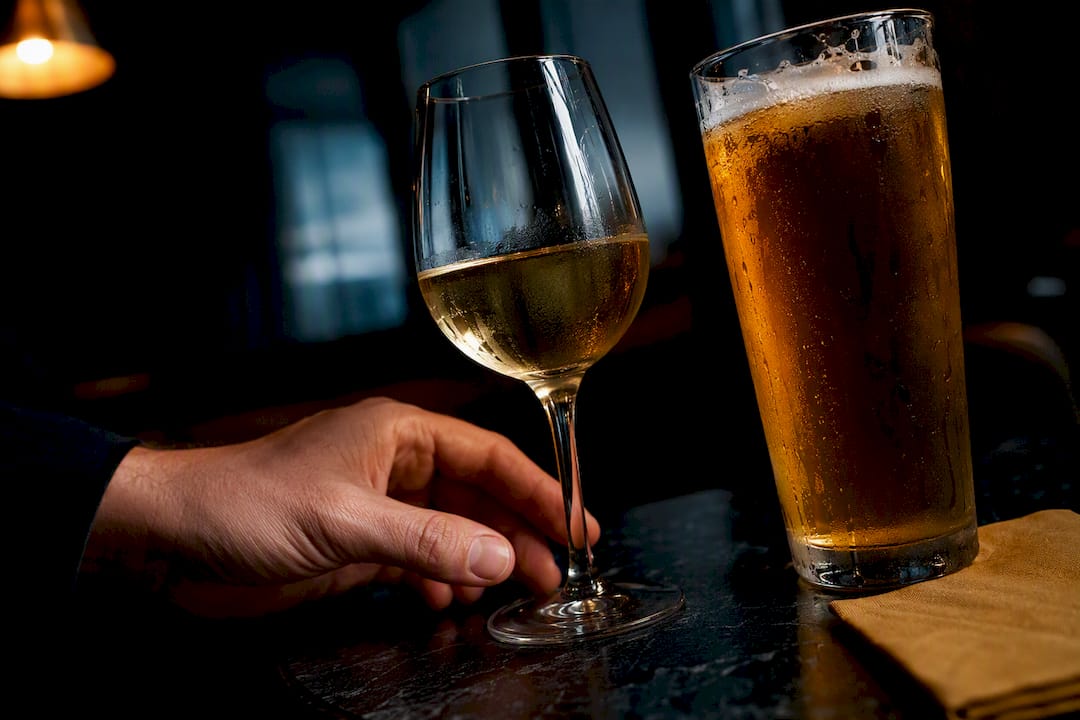
A standard 175ml glass of 12% wine and a pint of 5% lager sit at roughly the same calorie mark, both nudging past 150 to 220 kcal, but the pint usually wins the wrong contest. Serving size, not the drink itself, decides most of the damage. Watch your measure and check the ABV before you worry about the label on the bottle.
TL;DR:
- The calorie difference between wine and beer largely depends on pour size and alcohol strength, not drink type, with larger pours and higher ABV increasing calories.
- Checking the ABV before ordering is more informative for calorie control than category labels, as a strong wine can rival or exceed the calories in a session beer.
- Spreading alcohol intake across multiple days and opting for smaller pours can significantly lower weekly calorie consumption from drinks.
- Choosing lower-ABV and sugar-free options, along with water in between, helps manage calorie intake without sacrificing social drinking.
- The NHS recommends limiting weekly alcohol to 14 units, but calorie counts from alcohol can add up quickly, approaching 1,300 calories from drinks alone if consumed in excess.
Table of Contents
- Wine vs beer calories: the numbers per serving and per 100ml
- Why wine and beer calorie counts differ
- UK units and what 14 a week actually means for calories
- Practical swaps that cut calories without cutting out drinking
- What the research actually says about beer, wine and weight
- How Lost And Found helps you drink smarter, not less
- The take: portion control beats picking sides
- Explore lower-calorie options at Lost And Found Taproom
- Sources
- FAQ
Wine vs beer calories: the numbers per serving and per 100ml
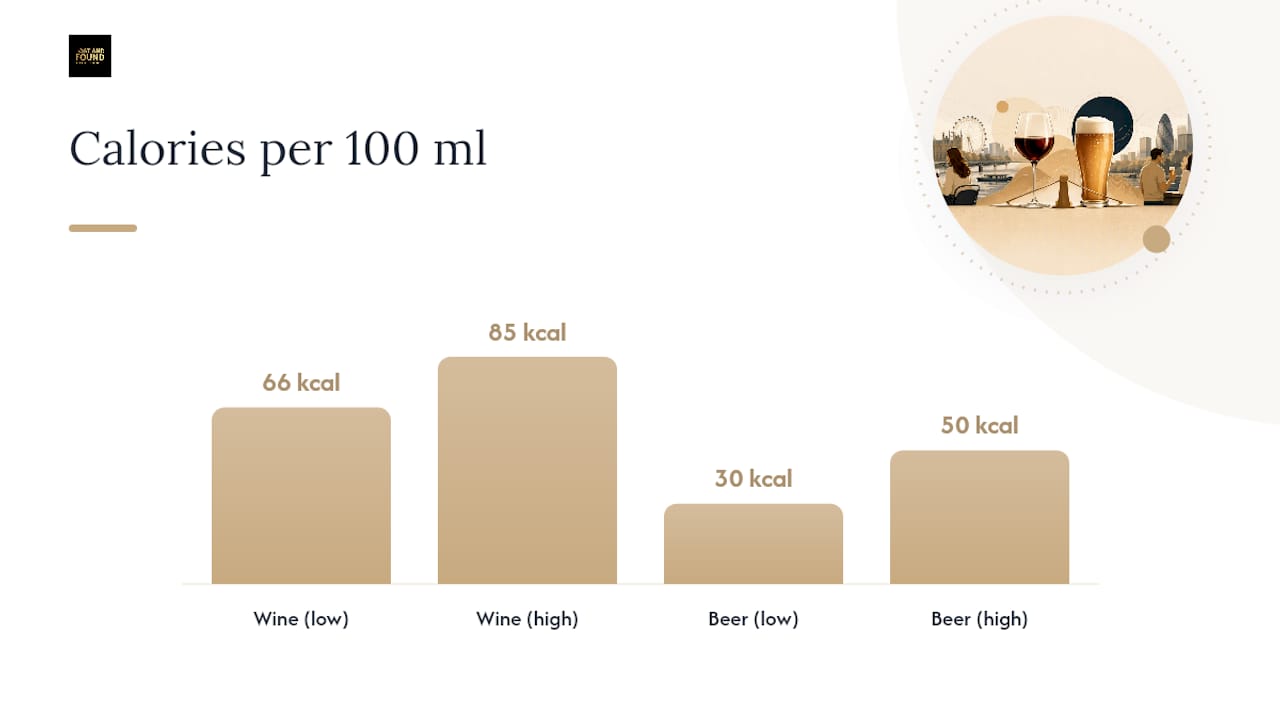
Calories in wine and beer both track two things: how much alcohol is in the glass and how much liquid you’re actually drinking. Per 100ml, wine and beer land in a similar band, roughly 66 to 85 kcal for most table wines and 30 to 50 kcal for standard lagers and ales. The catch is portion size. A wine glass is small; a pint glass is not.
The NHS calorie table for alcohol puts a 175ml glass of 12% wine at up to 158 kcal, a large 250ml glass at up to 225 kcal, and a pint of 5% lager at up to 222 kcal. Stronger stouts and craft ales with higher ABV push past that.
Quick reference for common servings:
- 175ml glass, 12% wine: up to 158 kcal
- 250ml glass, 12% wine: up to 225 kcal
- 568ml pint, 5% lager: up to 222 kcal
- 330ml bottle, 5% beer: roughly 130 to 145 kcal
- 125ml glass, 12% wine (the old “small” pour): around 113 kcal
Alcohol itself carries about 7 kcal per gram, making it one of the densest calorie sources in any diet, denser gram for gram than sugar. That single figure explains most of the wine vs beer carbs and calorie debate before you even factor in sugar or hops.
Why wine and beer calorie counts differ
Two things drive the gap between a light lager and a heavy red: alcohol content and residual sugar. Neither wine nor beer is inherently “worse”. It depends on strength and style.
Here’s the maths behind it:
- Convert ABV to grams of alcohol. Multiply the volume in millilitres by the ABV percentage, divide by 1,000, then multiply by 789 (the density of ethanol in g/L) to get grams of pure alcohol.
- Multiply grams by 7. That gives you kcal from alcohol alone, using the Drinkaware conversion.
- Add sugar and extras. Sweet wines, fruit beers, and anything with a mixer add calories on top of the alcohol maths. A dry red or a crisp pilsner has almost none of this extra load; a dessert wine or a fruity stout can carry considerably more.
Run a 175ml glass of 13% wine against a 568ml pint of 5% lager and the wine comes out lower in raw alcohol grams, but the larger pour and lower strength of the pint often land it in a similar calorie zone. Checking the ABV on the label before you order tells you more than the drink category ever will.
UK units and what 14 a week actually means for calories
One unit of alcohol equals 10ml, or 8 grams, of pure alcohol. The UK Chief Medical Officers recommend no more than 14 units a week for both men and women, spread across several days rather than in one sitting.
What 14 units looks like in practice:
- Roughly 6 pints of average strength (4%) beer
- About 10 small 125ml glasses of a lower strength wine (around 11%)
- Around 6 large 250ml glasses of 13% wine, which uses up your week faster than most people expect
Stack those against the NHS calorie figures and a week at the 14 unit ceiling in beer form can sit close to 1,300 kcal from drink alone, before food. Spreading your units across the week, and building in a few drink free days, is the simplest lever for pulling that number down.
Practical swaps that cut calories without cutting out drinking
You don’t need to give up your Friday pint to control the calorie count. Small changes to what you order do most of the work.
- Downsize the pour. A 125ml glass of wine instead of a 250ml one halves the calories instantly.
- Choose lower ABV. Session beers under 4% ABV, or wines labelled “light” or lower strength, cut both units and kcal.
- Try alcohol-free. Drinks at 1.2% ABV or below must carry nutritional labelling in the UK, so you can actually see the calorie count rather than guess.
- Avoid sugary mixers and cocktails. A glass of wine over a sugar-laden cocktail is often the lower-calorie social option.
- Alternate with water. Slows your pace and cuts total volume without you noticing.
- Check ABV before you order. Ask staff. It varies more within categories than most drinkers realise.
Pro Tip: Order a tasting flight instead of a full pint when you want variety. You get to sample three or four beers for roughly the volume of one pint, which keeps total calories in check while you actually taste more of what’s on tap.
Around 9% of daily calorie intake for regular drinkers comes from alcohol on average. Trim the pours and that share drops fast.
What the research actually says about beer, wine and weight
An analysis of 280,183 participants in the UK Biobank study found beer and spirits drinkers tended to have slightly higher BMI than never-drinkers, while wine drinkers showed lower BMI in some of the models tested.
The pattern held across a very large sample, but it’s an observational study, not a controlled trial. Diet, activity levels, income and social habits all differ between people who mostly drink beer and people who mostly drink wine, and any of those could be doing the real work behind the BMI difference.
That’s the caveat worth holding onto. The researchers themselves flag confounding as a real limitation, not a footnote. The honest takeaway isn’t “wine is healthier than beer.” It’s that moderation and portion control matter more than which bottle you reach for. Choosing wine over beer for weight management on the strength of one dataset would be reading more into the numbers than they support.
How Lost And Found helps you drink smarter, not less
A rotating selection of local and UK craft beers gives you the chance to compare styles side by side rather than committing to a full pint blind. Our beer flights let you sample several beers in smaller measures, so you control total volume without missing out on variety.
Our staff will always talk you through ABV if you ask, and we stock lower-ABV options alongside our stronger craft brews. Beer and food menus are often available online before you visit, so you can check strengths and styles in advance.
The take: portion control beats picking sides
The wine versus beer debate misses the point most of the time. Two drinks from the same category can differ by 100 kcal depending on strength alone, which makes the “which is healthier” question less useful than it sounds. What actually moves the number on your weekly tally is pour size, ABV, and how many drink free days you build in.
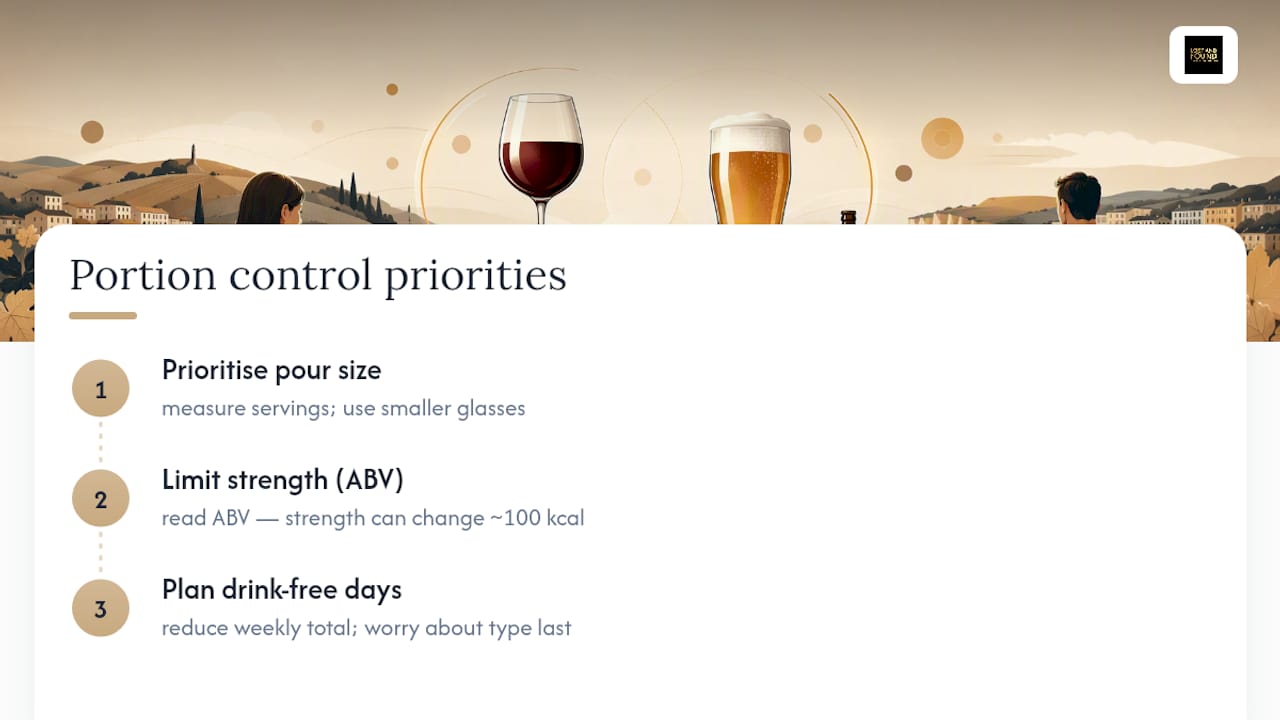
Conventional advice tends to push people toward wine as the automatically lighter choice. The NHS figures don’t support that as a blanket rule. A large glass of strong wine can easily out calorie a pint of session lager. If you’re tracking intake seriously, learn to read ABV and go by measure, not category.
Prioritise the pour size first, the strength second, and only then worry about whether it’s grape or grain in the glass.
— Author
Explore lower-calorie options at Lost And Found Taproom
If you’re trying to enjoy a night out without losing track of your intake, Taprooms offering a rotating selection of local and UK craft beers often have lower-ABV or session options on tap alongside bigger stouts and ales.
A few ways we help you keep control of what you’re drinking:
- Order a tasting flight to sample several beers in smaller measures instead of committing to a full pint each time
- Ask any member of staff for the ABV on tap and they can talk you through strength and style before you order
- Browse take-home bottles if you want to check labels and plan your week’s drinking at your own pace
Check what’s currently pouring on our beer menu before you visit, and come find us in Fiveways for a pint, a flight, or a bottle to take home.
Sources
- Calories in alcohol - NHS
- Is there a link between different types of alcoholic drinks and obesity? — UK Biobank analysis
- Alcohol, calories and maintaining a healthy weight - Drinkaware
FAQ
Is beer or wine better for weight loss?
Neither has a consistent edge. Calories depend far more on ABV and portion size than on whether the drink is wine or beer, so a large glass of strong wine can carry more calories than a session lager.
Is beer healthier than wine?
Neither is straightforwardly healthier. The UK Biobank data shows a small BMI difference favouring wine drinkers in some models, but the study is observational and can’t rule out lifestyle factors driving the result.
How many glasses of wine are equal to a beer?
By calories, one 175ml glass of 12% wine (up to 158 kcal) roughly matches one pint of 5% lager (up to 222 kcal), though a smaller 125ml wine pour or a 330ml beer bottle brings the numbers closer together.
What is the 2 2 2 rule for alcohol?
This isn’t an official NHS or UK guideline; the recognised framework in the UK is the 14-unit weekly limit spread across several days with drink-free days included, rather than any “2 2 2” formula.