Plan Parties with UK Wine Serving Sizes and the Six Four Three Rule
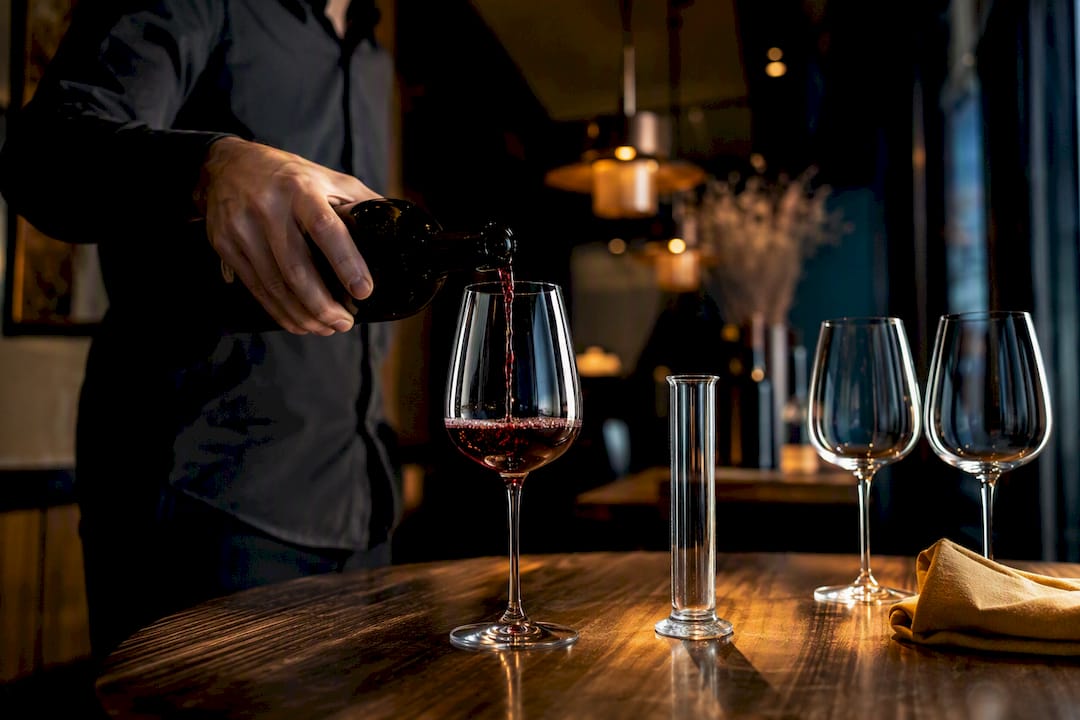
A standard bottle gives roughly six small pours, four medium pours or three large pours. The formula behind every number on this page is simple: glasses = bottle size in ml ÷ pour size in ml. UK licensed premises almost always work in 125 ml or 175 ml measures, so those two figures are the ones worth memorising.
TL;DR:
- Most standard UK wine pours are either 125 ml or 175 ml, with specific legal limits for different wine types and serving methods.
- A 750 ml bottle typically yields six glasses at 125 ml or four at 175 ml, but larger bottles like magnums double these amounts.
- Drinking a 175 ml glass of typical wine contains just over two alcohol units and around 130 to 160 calories, depending on alcohol strength.
- Planning for events generally involves budgetting about three glasses per person for a seated dinner, with additional bottles for longer parties and toasts.
- Accurate pouring and measure selection are essential to avoid waste, and staff should offer standard measures, starting with 125 ml first and switching to larger on request.
Table of Contents
- Wine serving sizes at a glance: a quick conversion table
- What UK law actually requires for wine by the glass
- How many glasses per bottle, worked out by size
- How many units and calories are in a glass of wine?
- How much wine should you buy for a party?
- Getting a consistent pour without a measuring jug
- How we handle pours and menus at Lost And Found Taproom
- Why the maths matters more than the marketing
- Bring the maths to life at Lost And Found Taproom
- Sources
Wine serving sizes at a glance: a quick conversion table
Once you know the formula, every other conversion follows the same logic: divide the bottle volume by the pour you want, and round down. A magnum at a medium pour gives roughly eight servings; a half-bottle at a small pour gives around three. Here’s how the common combinations shake out.
| Bottle format | 125 ml pours | 125 ml pours | 175 ml pours | 250 ml pours |
|---|---|---|---|---|
| 175 ml (mini) | 1 | 1 | 1 | 0 |
| 375 ml (half) | 3 | 2 | 2 | 1 |
| 750 ml (standard) | 6 | 5 | 4 | 3 |
| 1.5 L (magnum) | 12 | 10 | 8 | 6 |
Sparkling wine almost always defaults to the 125 ml measure, partly tradition and partly practicality, since a bigger glass loses its fizz faster. Fortified and dessert wines go the other way: a 750 ml bottle of port poured in 50 ml measures stretches to 15 servings, which is why a bottle lasts so much longer at the end of a meal than anyone expects.
What UK law actually requires for wine by the glass
Wine sold by the glass in England and Wales cannot be poured in whatever quantity a bartender fancies. The law sets specified quantities for still wine at 125 ml or 175 ml, or exact multiples of those figures, and the same rule extends to carafes and fortified wines.
The permitted volumes break down like this:
- Still wine by the glass: 125 ml or 175 ml, or a multiple of either.
- Carafes: 250 ml, 500 ml, 750 ml or 1 L, with nothing in between allowed.
- Fortified wine (sherry, port, vermouth): 50 ml or 70 ml, or a multiple of those.
- Wine below 75 ml, such as a small tasting sample, sits outside the specified-quantity rules entirely, according to Business Companion’s guidance for licensed premises.
This is exactly why nearly every bar defaults to offering 125 ml as its “small” glass. The rule works both ways, too: premises must tell you the smallest measure they sell if you ask, and staff pouring a 175 ml round should be ready to switch down to 125 ml on request. Government guidance on intoxicating liquor equipment also requires that whatever measures a bar or restaurant uses.
How many glasses per bottle, worked out by size
Numbers only mean something once you’ve applied them to an actual bottle in front of you. A few worked examples make the maths concrete.
- A 375 ml half-bottle at 125 ml pours yields exactly 3 glasses. At 175 ml, you get 2 full pours with roughly 25 ml left over.
- A standard 750 ml bottle gives 6 glasses at 125 ml, 4 at 175 ml, or 3 at a generous 250 ml.
- A 1.5 L magnum doubles everything: 12 glasses at 125 ml, 8 at 175 ml, or 6 at 250 ml.
- Sparkling wine in a 750 ml bottle poured at the standard 125 ml gives 6 flutes, and even a full-bodied Champagne rarely stretches past that without going flat before the last glass is poured.
- Fortified wine in a 750 ml bottle at 50 ml pours yields 15 servings; at 70 ml, that drops to around 10.
That last figure surprises most people who assume a bottle of port behaves like a bottle of red. It doesn’t, and the Majestic guide to bottle conversions confirms the same six-four-three pattern holds across most retailers’ recommendations for still wine.
How many units and calories are in a glass of wine?
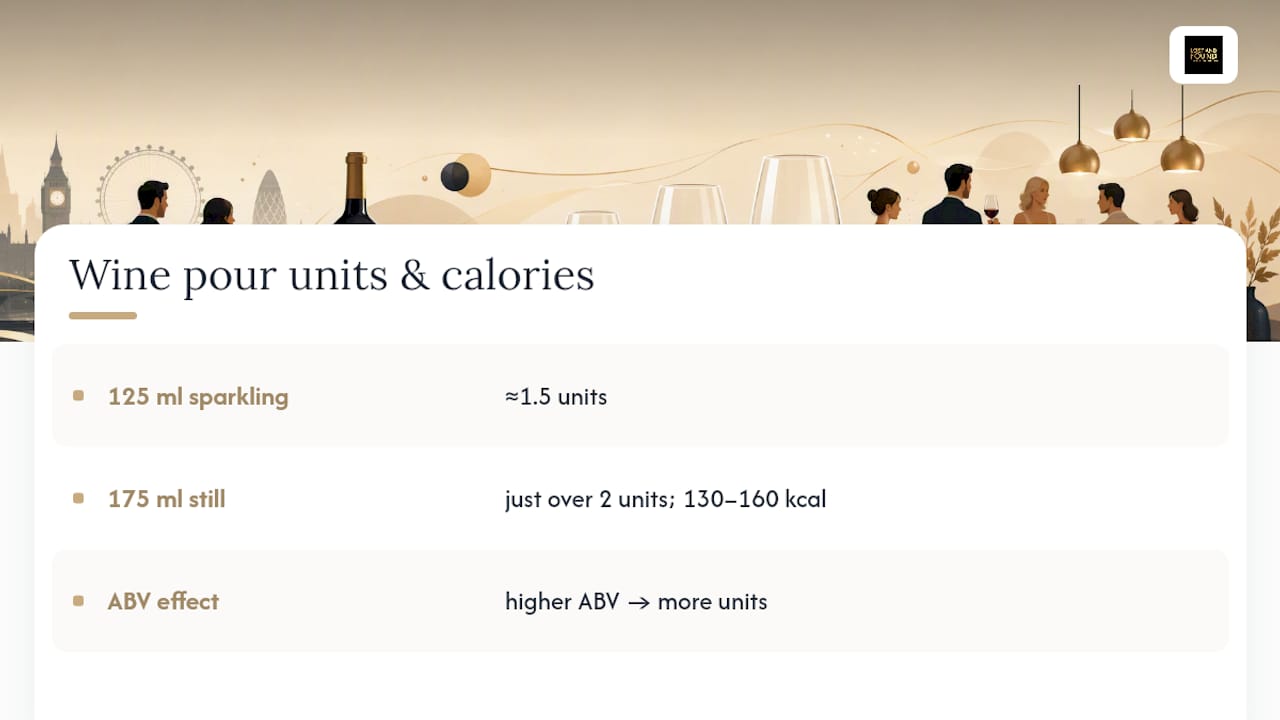
A 175 ml glass of still wine at a typical strength contains just over 2 units of alcohol, while a 125 ml glass of sparkling comes in at around 1.5 units, according to Drinkaware’s unit and calorie guidance.
Statistic to remember: A 175 ml pour of a standard 12% ABV wine is just over 2 units, roughly the same as a pint of regular-strength lager — a fact worth knowing before pouring your third glass at dinner.
Calories follow a similar pattern, running somewhere in the region of 130 to 160 per 175 ml glass depending on the wine’s sweetness and strength, with fuller details on the NHS calories in alcohol pages. The number that actually changes all of this maths is the ABV printed on the bottle, not the pour size alone. A 14.5% Zinfandel and an 11% Riesling poured into identical 175 ml glasses carry noticeably different unit counts, so it’s always worth a glance at the label before you plan a session around “a couple of glasses.”
How much wine should you buy for a party?
Planning drinks for a group gets easier with some practical guidelines. For a seated dinner, budgeting around three medium-sized glasses per person is common, roughly two-thirds of a standard bottle each. For longer parties where guests drink more casually, planning for about half to three-quarters of a bottle per person is considered sensible.
- Work out your guest count and event length; a four-hour party needs more buffer than a two-hour lunch.
- For 10 guests at a 4-hour party, plan on roughly 6 to 7 bottles of still wine if wine is the main drink, plus 2 to 3 bottles of sparkling for arrivals or toasts.
- Split the order across reds, whites, and one sparkling option rather than betting everything on a single style.
- Add one extra bottle beyond your calculated total. Open bottles get finished; unopened ones don’t go to waste.
Pro Tip: Buy slightly more sparkling than you think you need. It disappears fastest in the first thirty minutes, when people are still arriving and thirsty from travelling.
Getting a consistent pour without a measuring jug
Consistency matters for more than fairness. Pour too generously and a bottle runs out early; pour too little and it looks stingy on the table, and either way you throw off your own unit and calorie maths from earlier.
- Lined or stamped glasses show the legal measure etched into the glass itself, so bar staff can pour to the line without guesswork.
- Short measures, known as SMIs (spirit measuring instruments) and their wine equivalents, deliver a fixed volume every time.
- A jigger or thimble measure works well for home use and costs little.
- For tastings, pours of 60 to 75 ml let a group work through several wines without anyone tipping into “unsteady” territory too fast, a technique similar to the flight-pouring approach behind beer tasting flights.
- Glassware shape and size affects perceived pour too. Larger bowls make the same 175 ml look smaller, which is worth bearing in mind if you’re hiring glassware for an event.
How we handle pours and menus at Lost And Found Taproom
Measures should be clear, consistent, and printed where guests can see them. Our food and beer menus are available online, and wine measures follow the same 125 ml and 175 ml standard covered above.
Staff default to offering the smaller 125 ml pour first, particularly for guests trying something new, and switch up to 175 ml on request. Tasting-style sample pours, drawn from the same approach we use for craft beer flights, let visitors work through a few wines by the glass without overcommitting to a full pour on something they haven’t tried.
Why the maths matters more than the marketing
Most wine advice online skips the legal detail entirely and goes straight to vague suggestions like “a bottle serves four to six people,” which tells you nothing useful when you’re standing in a shop trying to work out quantities for Saturday. The number that actually matters is the pour size you’re planning around, because a 125 ml glass and a 250 ml glass turn the same bottle into completely different party maths.
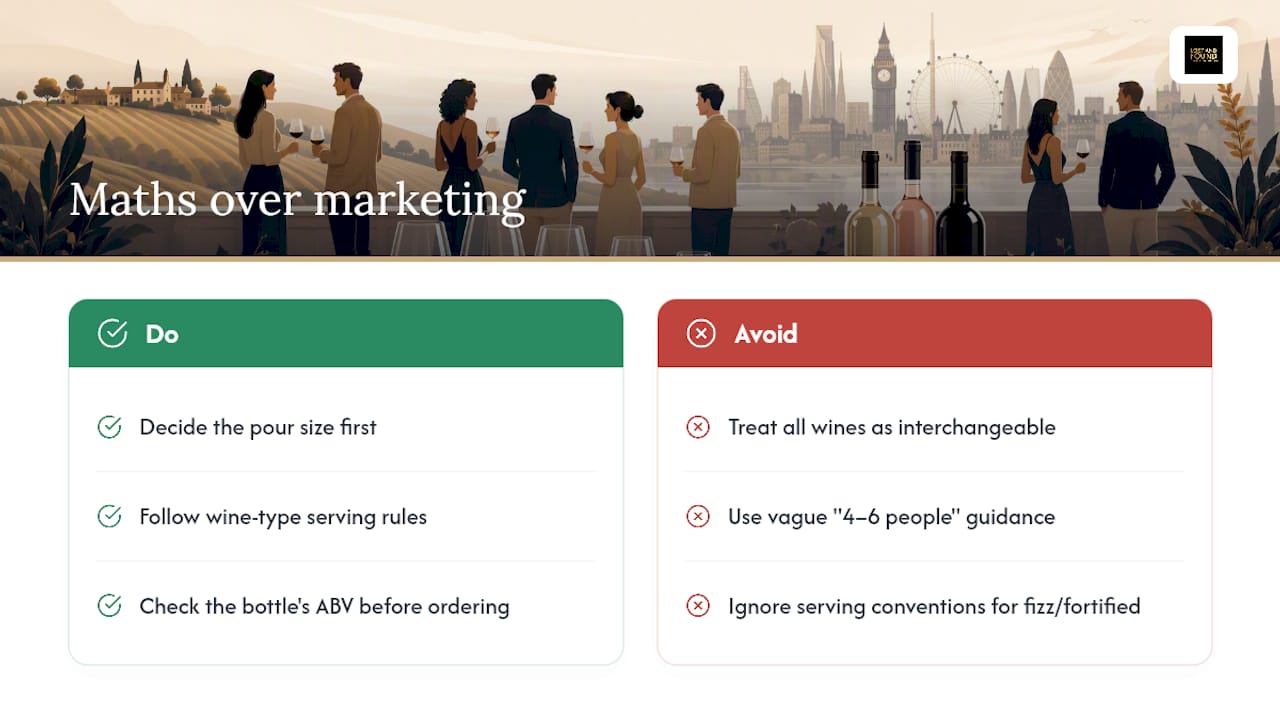
Where most guidance falls short is treating all wine as interchangeable. Sparkling, fortified, and still wines follow different serving conventions for good reason, temperature, carbonation, and strength all behave differently, and lumping them into one “half a bottle per person” rule leads to over-ordering red and under-ordering fizz almost every time.
If there’s one thing to prioritise, it’s checking the ABV on the bottle before finalising quantities for a big event. Pour size alone gives you glass counts; ABV is what tells you whether those glasses are going to catch up with your guests faster than the food does.
— Author
Bring the maths to life at Lost And Found Taproom
Working out pours on paper is one thing. Tasting the difference between a 125 ml and a 175 ml glass, side by side, is another, and that’s exactly what a visit to Lost And Found Taproom gives you that a spreadsheet can’t. Unlike ordering wine blind from a shop shelf, our Fiveways taproom lets you taste before you commit, with staff on hand to talk through strength, style, and the right pour for what you’re planning.
If you’re hosting an event and want the pouring, measuring, and stocking sorted for you rather than doing the maths yourself, our venue hire comes with a minimum bar spend and a space built for exactly the kind of gathering this guide has been helping you plan. Browse the full drinks and food menu online, check availability for your date, and get a quote for your next party or tasting session at Lost And Found Taproom.
Sources
- Gov
- Guidance: Intoxicating liquor equipment regulations — GOV.UK (PDF)
- Selling alcohol in licensed premises — Business Companion