Tip by Service, Not Signage: Tipping Rules for UK Bars and Taprooms
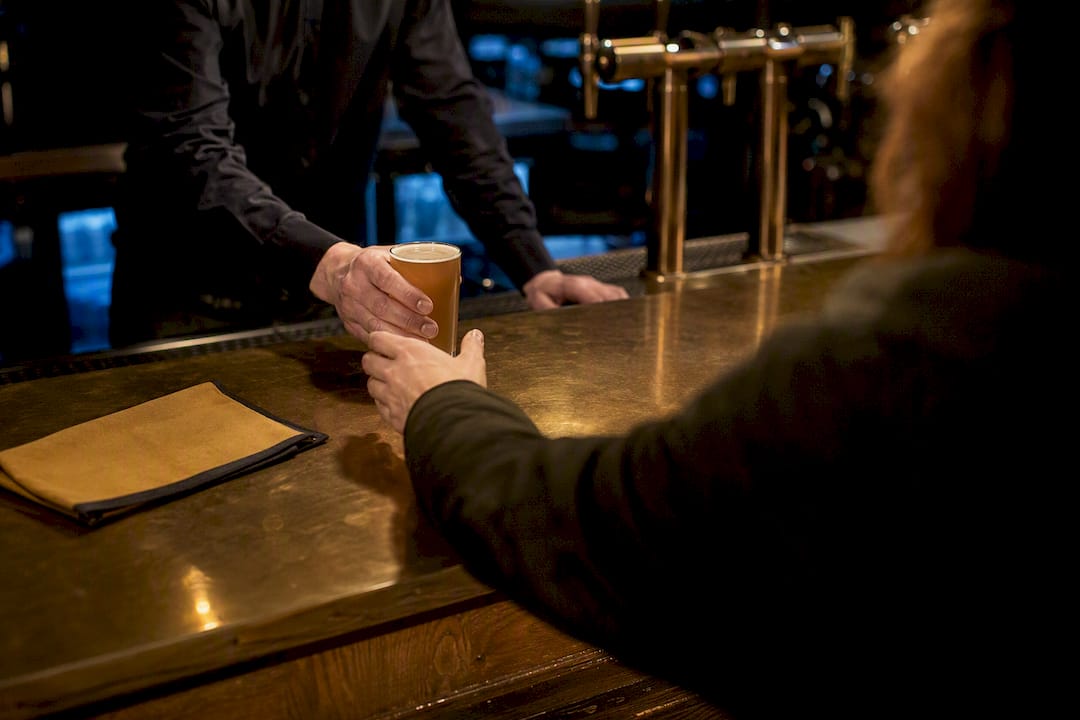
Tipping drinks at a bar is entirely discretionary in the UK: round up to the nearest pound or leave small change, nothing more is expected. If a card machine flashes up a tip prompt on a round of pints, you can select “no” or “£0” without a flicker of awkwardness.
TL;DR:
- Tipping at UK pubs for drinks at the bar is optional and usually limited to rounding up or leaving small change, with no service expectation.
- Service charges on bills are discretionary, and tipping is only customary for table service without an already included gratuity, generally around 10 to 12.5%.
- Declining card prompts for tips is normal, as UK staff earn at least the National Living Wage, unlike the US system where tips are essential to income.
- Buying a round among friends is a social gesture, not a service moment, and tips should be based on individual service quality rather than group size or social context.
- Always check the bill before tipping to avoid double tipping and understand whether a service charge is already included, especially at venues with table service or private events.
Table of Contents
- Tipping at bars: the baseline rules behind British pub culture
- When to tip and how much: rules of thumb for common situations
- How to actually hand over a tip: cash, card prompts and buying a round
- Service charges and where the money actually goes
- Rounds, tabs, groups and private hires: quick decisions for tricky moments
- Lost And Found Taproom: how we handle tips and guest etiquette
- What tipping actually does for bartender pay and service
- Where bar tipping actually comes from
- An honest take on tipping etiquette in British bars
- Sources
Tipping at bars: the baseline rules behind British pub culture
Walk into most British pubs and the whole transaction happens at the bar. You order, you pay, you carry your own drinks to the table, and nobody hovers waiting for a gratuity. That single detail explains almost everything about tipping at bars in this country: there’s no waiter attached to your pint, so there’s no service moment that traditionally invites a tip.
Compare that with a restaurant, or a pub that’s really running a kitchen and floor service behind a pub-shaped front door. Someone takes your order, carries plates to your table, checks back on you, clears up after. That’s the service model tipping was built around in the UK, and it’s why the etiquette splits so cleanly between “drinks at the bar” and “food at the table.”
The BBC’s guide to British pub etiquette puts it plainly: tipping for drinks at a bar isn’t expected or required, and most people who do tip simply round up or leave loose change as a gesture rather than a transaction. VisitLondon’s official tipping guidance says much the same thing, framing rounding up as the standard local move rather than a fixed percentage.
That’s a genuinely different culture from the one many visitors arrive with. In the United States, bar tipping norms typically sit around a dollar or two per drink, or 15 to 20% on a tab, and those numbers get treated as close to compulsory because bartenders’ base pay is often built around tips. Nothing in UK bar work runs on that model. Staff earn at least the National Living Wage regardless of what lands in the tip jar, which is precisely why declining a prompt doesn’t carry the same social weight it does elsewhere.
That gap in expectations is exactly what’s causing friction right now. The Guardian’s reporting on tip creep in UK service describes a spike in complaints about digital card terminals defaulting to a suggested tip on transactions where none was ever customary, essentially importing American habits through the payment technology rather than through any real change in service culture.
A few things worth holding onto when you’re working out whether tipping applies:
- Ordering and paying at the bar is the default in most pubs. No server, no built-in tipping moment.
- Table service with a menu and a kitchen behind it shifts the etiquette closer to restaurant norms.
- A card reader asking for a tip doesn’t mean tipping is customary there. It means the software has a tipping module switched on.
- Modern venues that operate more like restaurants, even if they call themselves a bar, tend to carry restaurant-style tipping expectations, so judge by how the place actually runs rather than the sign above the door.
If you want a broader sense of how service styles vary between formats, it’s worth reading about the difference between a pub and a bar-style venue, since the format itself often predicts the tipping expectation before you even get to the till.
When to tip and how much: rules of thumb for common situations
The amount changes depending on exactly what kind of service you’re getting, and the good news is the rules are simple enough to memorise in under a minute.
- Counter-service drinks. Round up to the nearest pound, or drop the coins from your change back into a jar on the bar. If you’re feeling generous, “keep the change” while handing over a note works fine and signals the gesture without making anyone count it out loud.
- Table service with food, no service charge on the bill. Leave 10 to 12.5%, in line with what The Guardian’s coverage of UK tipping norms reports as standard when a discretionary charge hasn’t already been applied.
- Table service with an automatic service charge already on the bill. No extra tip is expected. The charge is doing the job the tip would otherwise do.
- Exceptional service, a complicated cocktail order, or a genuinely memorable evening. This is where you can go beyond the baseline, a fiver dropped in a jar after a bartender has spent ten minutes building a round of proper cocktails is a fair reflection of the effort, not an obligation.
- Private events and large group bookings. Check whether a service charge or event fee is already built into the booking cost before adding anything extra, since many venue-hire packages fold gratuity into the overall price.
Pro Tip: Check the bill before you tip anything, not after. Etiquette specialists quoted in The Guardian’s tipping coverage specifically flag “double tipping” — adding cash or a card tip on top of a service charge you didn’t notice was already there — as the single most common mistake British diners make when eating in pub-restaurants.
None of this requires you to do mental maths under pressure. Counter service gets loose change. Table-served food gets a percentage, but only if nothing’s already been added. Everything else is a bonus for genuinely good service rather than a baseline expectation. If you’re at a venue that leans more towards a full pint-and-plates experience, it’s also worth understanding the range of British beer styles on offer, since a bartender talking you through a flight or a rare cask ale is exactly the kind of service that tends to earn something extra.
How to actually hand over a tip: cash, card prompts and buying a round
The moment of paying is where most of the awkwardness happens, and it’s almost always avoidable once you know the mechanics.
With cash, hand the tip directly to whoever served you, or drop it into a visible tip jar on the bar. Don’t leave notes sitting on a table in a busy pub and wander off. The BBC’s British pub etiquette guide points out that money left unattended on a table in a crowded venue has a habit of disappearing before staff ever clear it, which helps nobody.
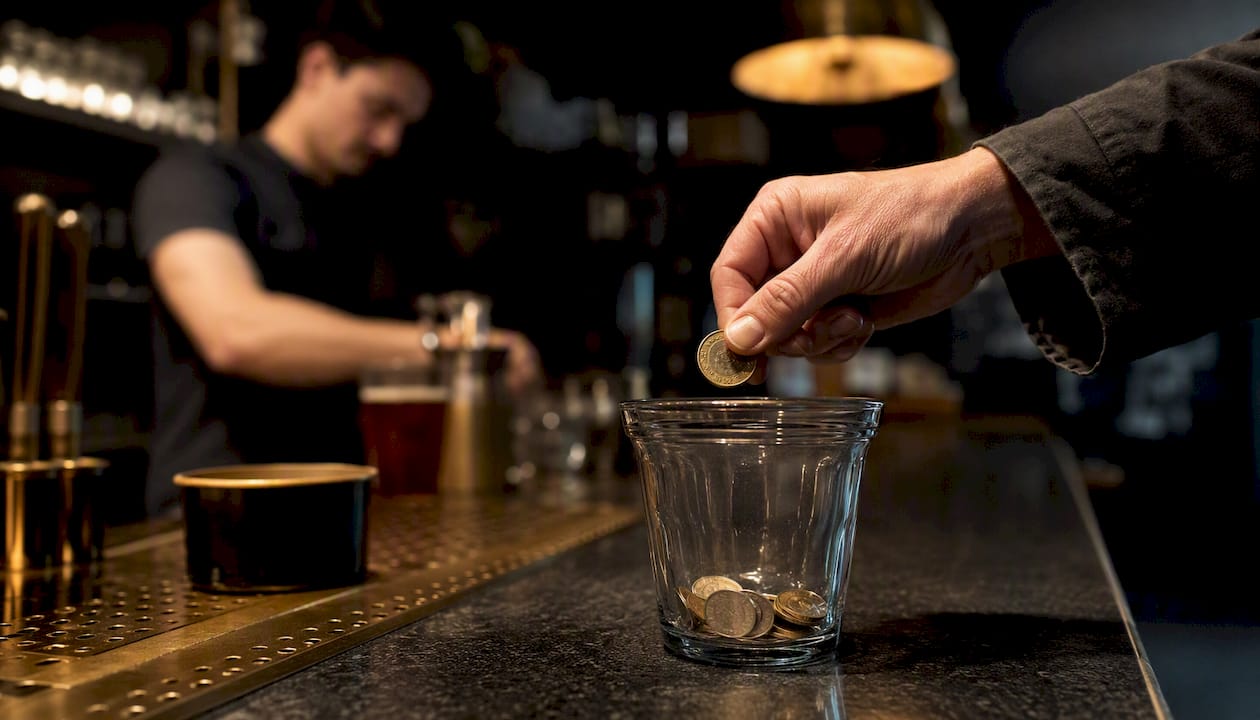
With card and digital terminals, “discretionary” means exactly that. Most machines now default to a percentage or a fixed amount, but tapping “no” or entering “£0” is entirely normal when tipping isn’t customary for what you’ve just bought. This is the exact tip creep The Guardian describes: software increasingly nudges customers toward gratuities in contexts, like a round of lagers at the bar, where nobody expected one five years ago. Declining doesn’t make you rude. It makes you accurately reading the situation.
A few practical points on the mechanics:
- Cash tips go straight into a hand or a jar, never left loose on a table.
- Card prompts can be skipped entirely for standard bar orders.
- Round numbers (“keep the change” on a note) are easier for staff than working out coins.
- If you’re unsure whether service was table-based or bar-based, tip as if it was bar-based. It’s the safer default.
Buying the bartender a drink is its own tradition, and it’s worth understanding what it actually means. It’s a gesture of camaraderie rather than a guaranteed form of gratuity, closer to buying a mate a pint than settling a bill. Saying “and one for yourself” when you pay for a round is the classic phrasing, and most bar staff will either take it as cash added to the tip jar or simply thank you and get on with the next order.
Service charges and where the money actually goes
Spotting a service charge takes about two seconds. The general rule holds regardless of which: once that charge is on the bill, no additional tip is expected on top of it.
Discretionary is the word that matters here. It means you can ask for it to be removed, and doing so isn’t a confrontation. If service was genuinely poor, a simple request to the person who brought the bill, something like “could you take the service charge off, it wasn’t quite right tonight” is standard practice and etiquette specialists quoted in The Guardian’s reporting on service charges treat it as entirely reasonable.
What you often can’t tell from the bill alone is where that money ends up. Whether it goes to the server, gets pooled across the floor team, or gets split with kitchen staff varies venue by venue, and it’s the kind of detail worth asking about directly if you’d rather know your tip reaches the person who served you specifically.
A quick checklist for reading a bill properly:
- Look for a line marked “service charge,” “optional service,” or a percentage figure near the total.
- If it’s there, treat your tipping obligation as met. Nothing extra needed.
- If service genuinely fell short, ask for the charge to be removed rather than paying it grudgingly.
- If you want to know how tips are shared among staff, ask the person who hands you the bill. Transparency here varies by venue and there’s no shame in asking.
Roughly 10 to 12.5% is the going rate for these charges, consistent with what The Guardian found when reporting on how UK hospitality venues have adjusted their billing since digital payment prompts became standard.
Rounds, tabs, groups and private hires: quick decisions for tricky moments
A few situations come up again and again, and each one has a clean answer if you know the pattern.
- Rounds. Buying a round is a cultural fixture in British pub life, but opting out is entirely normal. “I’m alright for this one, thanks” or “I’ll get the next one” covers it without any fuss. Rounds themselves don’t carry a tipping expectation, they’re a social exchange between friends, not a service transaction.
- Starting a tab. Once you open a tab rather than paying drink by drink, you’re closer to a running bill than a series of one-off bar orders. It doesn’t create a tipping obligation on its own, but it’s the natural moment to add a tip when you finally settle up, particularly if you’ve been served by the same person all evening.
- Large groups. Bigger orders mean more work for whoever’s behind the bar, and a jar contribution when the round finally clears is a decent gesture, though still not obligatory.
- Private hires and event bookings. Check the booking terms first. Many venue-hire arrangements already fold a service or staffing fee into the overall minimum spend, in which case personal tipping on top is a bonus rather than an expectation, not a requirement layered on top of what’s already been agreed.
The pattern across all four: tipping tracks individual service, not group size or social context. A round among friends isn’t a service moment. A tab settled after a long evening with one attentive bartender often is.
Lost And Found Taproom: how we handle tips and guest etiquette
Lost And Found Taproom in Brighton’s Fiveways runs on the same counter-service model as most independent taprooms: you order at the bar, staff talk you through the rotating line-up of local and UK craft beers, and you carry your own drinks to a table. Menus are often available online, so you can check what’s offered before you arrive.
Tipping here follows the same low-key UK norms covered throughout this article. Nobody expects it for a round of pints at the bar, and if you’d like to leave something for particularly good recommendations or a well-built flight, a jar contribution or “keep the change” is entirely welcome and entirely optional. For venue hire and private events, check the booking details for our event space directly, as arrangements around minimum spend and service are set out clearly at the time of booking.
A few pointers for getting the most out of a visit:
- Ask staff for recommendations. The people pouring your pint often know the rotating line-up on our beer menu better than the chalkboard does.
- Buying a round for your table doesn’t obligate a tip, it’s a social gesture between friends.
- If you’re planning a private booking, ask about what’s already included before assuming extra gratuity is expected.
- Come curious. Staff are used to guiding total beginners through the taproom’s rotating selection without judgement.
What tipping actually does for bartender pay and service
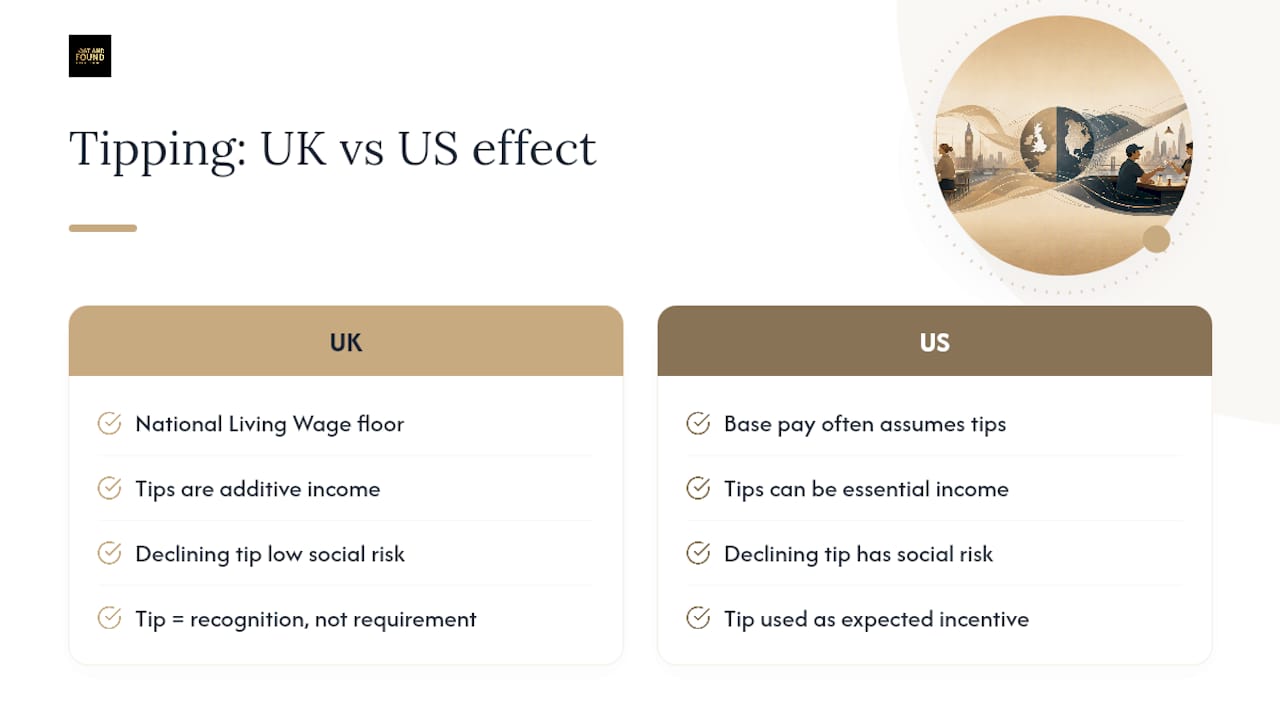
Tipping’s effect on income depends entirely on the underlying wage structure, and that’s where the UK and US genuinely diverge. UK bar staff are paid at least the National Living Wage as a legal floor, so a tip is additive rather than essential to making rent. That single structural fact is why declining a card prompt in a British pub carries none of the social risk it would in a country where base pay assumes tips will fill the gap.
Whether tipping actually lifts service quality is a murkier question than tipping culture likes to admit. There’s no solid evidence that a jar on the bar makes pints get poured faster or friendlier. What tends to correlate with good service is staff experience, staffing levels on a busy night, and whether a venue treats its team well in the first place, none of which a tip jar fixes on its own.
Where tipping does matter is as recognition rather than incentive. A fiver in the jar after someone’s spent real time building a tasting flight or talking you through unfamiliar styles isn’t propping up their wages, it’s acknowledging effort that went beyond simply pulling a pint. That distinction, reward versus requirement, is the one piece of nuance that gets lost whenever tipping debates flatten into “should you or shouldn’t you.”
Where bar tipping actually comes from
Tipping’s British roots trace back to coaching inns and gentlemen’s clubs of the 18th century, where a coin pressed into a servant’s hand was meant “to insure promptness,” giving rise to the (almost certainly mythical) acronym story that still gets repeated today. What survived from that era wasn’t a fixed percentage system. It was the idea that a tip is a personal thank you, given at your discretion, not a mechanical add-on to the bill.
The US took a completely different path. Post-abolition labour practices there embedded tipping into the wage structure itself, and that history is precisely why American service culture treats tipping as close to mandatory while British pub culture never developed the same dependency. Bar counters, in particular, kept their tip-free character longest because there was simply no waiting staff involved in the transaction to tip in the first place.
What’s shifted recently isn’t the culture so much as the technology sitting on top of it. Card terminals with built-in tipping prompts have started nudging British customers toward habits that never existed at the bar counter, which is exactly the tension The Guardian’s reporting on tip creep captures: old etiquette meeting new software that assumes an American default.
An honest take on tipping etiquette in British bars
The conventional advice on tipping at bars usually flattens everything into one rule, which is exactly where it goes wrong. Counter service and table service aren’t the same transaction, and treating them identically is how people end up either over-tipping a bartender who never expected it or under-tipping a server who genuinely earned more.
What the research actually supports is judgement based on service type, not venue type. A pub-shaped building with a kitchen and floor staff behaves like a restaurant. A taproom where you order at the counter behaves like, well, a bar. Read the service model, not the signage.
Prioritise this first: check the bill before you reach for cash or tap a card prompt. That single habit avoids double tipping and stops you rewarding a service charge twice. Everything else, rounding up, buying a round, tipping a bartender who built you something properly good, follows naturally once that one check becomes automatic.
— Author
Sources
Three sources anchor the practical guidance in this article. The BBC’s guide to British pub etiquette covers counter-service norms and the risks of leaving cash unattended on tables. The Guardian’s investigation into tip creep explains the friction between digital tip prompts and traditional UK expectations, including guidance on service charges and double tipping. VisitLondon’s official tipping page offers a concise, visitor-facing summary that backs up the rounding-up convention described throughout.
- How to not embarrass yourself in a British pub
- ‘It’s absolutely criminal’: US tipping culture has reached the UK – and is causing chaos
- Tipping guidance — VisitLondon