Rotating taps: Why 12–20 taps, FIFO and sales data matter

Rotating taps are draught lines that change regularly to feature guest, seasonal or limited beers alongside a venue’s core pours. Bars and taprooms use them to keep the beer selection fresh, introduce drinkers to new breweries and give regulars a reason to keep coming back. The practice sits at the centre of modern craft beer culture, where discovery often matters as much as the pint itself.
TL;DR:
- Most taprooms rotate their beer lines weekly for cask ales and every few days to weeks for kegs, maintaining freshness and variety.
- Small venues with fewer taps tend to outperform larger setups by tracking sales data and ensuring rapid turnover for each line.
- Digital taplists and real-time updates help customers identify current offerings and avoid ordering out-of-stock or stale beer.
- Successful rotation supports independent breweries, creates marketing moments for limited releases, and encourages discovery and loyalty among drinkers.
- Proper management of FIFO and Rate of Sale principles is essential to prevent spoilage, ensure optimal freshness, and maintain a curated selection.
Table of Contents
- What rotating taps actually mean on a beer menu
- Why venues rotate their beer taps
- How operators decide what stays on and what goes
- How often taps change and how many you should expect
- What to expect and how to check the current line-up
- Weighing the benefits and drawbacks of rotating taps
- How Lost And Found curates its rotating taps
- Where rotating taps came from
- The equipment behind a rotating tap system
- Does rotation make beer fresher or riskier?
- Rotating taps as a sign of a healthy beer scene
- Taste it for yourself at Lost And Found
- FAQ
- Sources
What rotating taps actually mean on a beer menu
Most venues run a mix of two kinds of lines. Core or permanent taps pour the house favourites that rarely change, the pale ale or lager a venue is known for. Rotating or guest taps cycle through different breweries, styles and one-off releases, often on a schedule set by the bar rather than the brewer.
The beer itself can come through different formats, each with its own vocabulary:
- Cask ale: unfiltered, naturally conditioned beer served through a handpump, often rotating weekly.
- Keg beer: filtered or pasteurised beer served under gas pressure, able to rotate at almost any frequency.
- Guest tap: a line reserved for a visiting brewery’s beer rather than the venue’s own range.
- Seasonal tap: a line that changes with the time of year, such as a spring saison or a winter stout.
- Tap takeover: an event where one brewery temporarily occupies several lines at once, usually tied to a tasting or launch night.
Understanding these terms helps when reading a chalkboard or a social media post announcing “new on tap”, since the phrase can mean anything from a single guest pour to a full takeover. Our guide to taproom culture covers how these formats differ from a brewpub or a standard pub setup.
Why venues rotate their beer taps
Rotation is rarely random. Venues use it as a deliberate tool to keep customers engaged and to support the wider independent brewing scene.
- Variety drives repeat visits: a changing line-up gives regulars a reason to return rather than drinking the same pint every time.
- Rotation supports small breweries: guest slots let independent producers reach drinkers they would not otherwise find on the bar.
- Limited runs create marketing moments: a one-off cask or a collaboration brew gives a venue something worth posting about and something customers want to try before it disappears.
- Discovery builds loyalty: drinkers who find a new favourite through a guest tap often come back specifically to see what is on next.
This is part of why rotating taps have become central to how taprooms build community, something we explore further in our piece on why Brighton taprooms change the way you think about beer.
How operators decide what stays on and what goes
Behind every rotating tap list sits a set of inventory decisions. Operators lean on two core principles borrowed from general stock management: FIFO and Rate of Sale.
FIFO, or first in, first out, means the oldest keg or cask gets poured before a newer one of the same beer, so stock never sits long enough to lose freshness. This is a basic principle in the pub and hospitality glossary from Greene King and Belhaven, which treats FIFO and Rate of Sale as standard tools for managing rotating draught lines.
Rate of Sale, or ROS, measures how many pints or serves a line pours per day or week. A tap that sells slowly ties up a line, a fridge slot and staff attention without earning its place, so operators combine ROS with margin to work out which guest beers deserve to stay and which should make way for something new.
Pouring through a keg of Session IPA in four days against two weeks for a barrel-aged stout tells an operator everything about which beer earns a permanent slot and which was a one-off. source: industry guidance on FIFO and ROS
Large tap counts bring their own trade-offs. More lines mean more cleaning cycles, more risk of draught loss from kegs that go stale before they sell through, and more staff hours spent managing changeovers. A venue with thirty taps is not automatically better than one with twelve if half those lines pour too slowly to stay fresh.
Pro Tip: When you see a huge tapwall, ask how often the slower-moving lines actually change. A long list only means variety if the beer behind it is turning over.
How often taps change and how many you should expect
Rotation frequency varies by venue type and beer format. Cask ales commonly change weekly as handpumps empty, while keg lines might refresh every few days to every few weeks depending on demand. Many well-run independents treat the tap list as a living thing, refreshing a meaningful share of their taps on a monthly basis to keep the selection feeling current, according to craft beer business planning guidance.
On tap counts, that same guidance suggests most successful independent taprooms start smaller, in the region of 12 to 20 taps, rather than chasing a sprawling 30-plus tapwall from day one. Fewer lines, properly rotated and tracked against sales data, tend to outperform a huge wall where half the beers sit too long. Bigger venues that do run large tapwalls accept higher cleaning and spoilage overheads as the cost of offering that much choice.

What to expect and how to check the current line-up
Because the beer on tap can change between your last visit and this one, it pays to check before you order.
- Look for a QR code on the table or at the bar, since many taprooms now link straight to a live digital taplist rather than a printed menu.
- Check the venue’s website for an on-tap page, which is often updated faster than a chalkboard.
- Ask staff for the keg put-in date on anything unfamiliar, since fresher kegs generally taste better.
- Order a tasting pour or a flight if you want to sample two or three rotating beers before committing to a full pint.
- Buy a bottle or a growler to take home if a seasonal release turns out to be a favourite.
Digital taplists exist largely because printed menus go stale as fast as the beer does. Taproom technology platforms note that QR codes and website embeds let venues update their list the moment a keg changes, so customers never order something that ran out an hour ago. A similar logic applies to ordering systems more broadly, as covered in this restaurant manager’s playbook on QR table ordering.
Pro Tip: If a beer you love is only on for a limited run, ask whether it is available as a bottle or growler to take home, since rotating kegs rarely come back once they are gone.
Weighing the benefits and drawbacks of rotating taps
Rotating taps change the experience for drinkers and operators in different ways.
- Customer benefit: constant novelty and the chance to discover breweries you would never seek out deliberately.
- Customer drawback: a favourite beer can vanish without warning, and availability is never guaranteed.
- Operator benefit: higher turnover on popular lines, built-in marketing hooks and closer relationships with brewers.
- Operator drawback: more frequent line cleaning, more complex inventory tracking and a real risk of wasted stock if a guest beer underperforms.
None of this makes rotation a flawed idea so much as a trade-off. Venues that manage it well lean on the FIFO and ROS principles already covered, turning a potential headache into the reason customers keep showing up.
How Lost And Found curates its rotating taps
Our approach at Lost And Found Taproom centres on independent breweries from Sussex and across the UK, with every beer and cider on tap produced by small producers rather than the usual national brands. A handful of pours act as reliable anchors, while the remaining lines rotate to bring in guest beers, seasonal releases and collaborations throughout the year.
Walking in on any given week, you might find a familiar local pale alongside something you have never heard of, poured for the first time that month. That balance between dependable and new is deliberate: it gives regulars something to trust while still giving them a reason to try the next pour. Our food and beer menus are available online, so you can check what is currently pouring before you arrive by visiting our on-tap page, which lists the current line-up of Sussex Beer & Cider, Bottleshop and Wines & Spirits selections alongside the food on offer. Curation like this, built on staff knowledge and brewery relationships, is what separates a thoughtfully rotated list from one that simply swaps kegs at random.
Where rotating taps came from
Rotating taps are not a recent invention so much as an adaptation of an old habit. Traditional British pubs have long served cask ale from handpumps that naturally rotate as each cask runs dry and a new one, often from a different brewery, goes on in its place. CAMRA venue listings still describe pubs today running rotating cask and keg line-ups side by side, a direct continuation of that older practice, as seen in entries such as a Manchester pub listing 15 keg taps alongside continental and cask beers.
What changed with the rise of craft beer from the 2000s onward was the deliberateness of it. Where cask rotation was once mostly dictated by whichever cask happened to be available from a local brewery or wholesaler, modern taprooms turned rotation into a programming tool. Breweries began producing one-off and seasonal beers specifically for guest slots, and bars started scheduling tap takeovers and collaboration releases as events in their own right rather than incidental restocking.
The growth of specialist taprooms, often attached to or closely tied with a brewery, accelerated this shift further. These venues built their entire identity around variety and discovery, treating the tap list itself as the main draw rather than a backdrop to food or sport. That evolution from “whatever cask is available” to “a curated, scheduled programme of guest beers” is the clearest line between old-fashioned pub rotation and what rotating taps mean in a modern craft beer venue.
The equipment behind a rotating tap system
Running a rotating tap list depends on infrastructure that has to handle frequent changeovers without compromising the beer. At the centre sits the dispense system itself, whether that is handpumps drawing cask ale through gravity and suction, or a keg system using gas pressure, typically carbon dioxide or a nitrogen blend, to push beer through chilled lines to the tap.
Each keg or cask connects via a coupler or tap specific to its container type, and swapping a line means disconnecting the empty container, cleaning the coupler and connecting the next one, a process that happens far more often on a rotating line than on a fixed house beer. Line cleaning itself is a recurring technical task: beer lines need regular flushing with a cleaning solution to remove yeast and protein residue that builds up and can sour the next beer poured through, which is one reason frequent rotation adds real labour.

Temperature control matters just as much as the taps themselves. Glycol-cooled lines or a cold room keep beer at the right serving temperature from the keg to the glass, and inconsistent cooling can undo even a perfectly curated tap list. On the customer-facing side, many venues now pair that physical setup with a digital taplist system, updated the moment a line changes, so the equipment behind the bar and the information in front of it stay in sync.
Does rotation make beer fresher or riskier?
Rotation is generally good for freshness, provided it is managed properly. A beer poured soon after its keg or cask goes on tends to taste closer to how the brewery intended, since draught beer begins to lose carbonation, aroma and balance once a container is opened and exposed to repeated pours over time.
The FIFO principle exists specifically to protect this: by always pouring the oldest compatible stock first, operators avoid a scenario where a slow-selling keg sits half-empty for weeks while a newer one of the same beer sells through faster. Rate of Sale data reinforces this further, flagging which lines are moving quickly enough to stay fresh and which are not.
The risk runs the other way when rotation is too aggressive or poorly tracked. A line changed purely for novelty, without checking how quickly the previous keg actually sold, can mean kegs get pulled before they are empty or, worse, left too long because nobody checked the put-in date. Asking staff when a keg went on, as covered earlier, remains the simplest way for a drinker to judge freshness for themselves rather than relying on rotation alone as a guarantee of quality.
Rotating taps as a sign of a healthy beer scene
The real value of a rotating tap list goes beyond novelty. Every guest slot is a small vote of confidence in an independent brewery, and every drinker who tries something new through one builds a slightly better sense of what they actually like, rather than defaulting to the same familiar pint out of habit.
That is why the venues that do rotation well treat it as curation rather than turnover for its own sake. A tap takeover or a seasonal collaboration works because someone behind the bar chose it deliberately, not because a line needed filling. Seen this way, rotating taps are less a marketing gimmick and more a quiet mechanism keeping independent brewing viable, one curious pint at a time.
— Author
Taste it for yourself at Lost And Found
Reading about rotating taps only gets you so far. The simplest way to understand what guest, seasonal and limited beers actually taste like is to visit a taproom running them properly, and our rotating line-up at Lost And Found Taproom changes regularly as new Sussex and UK independent beers come through.
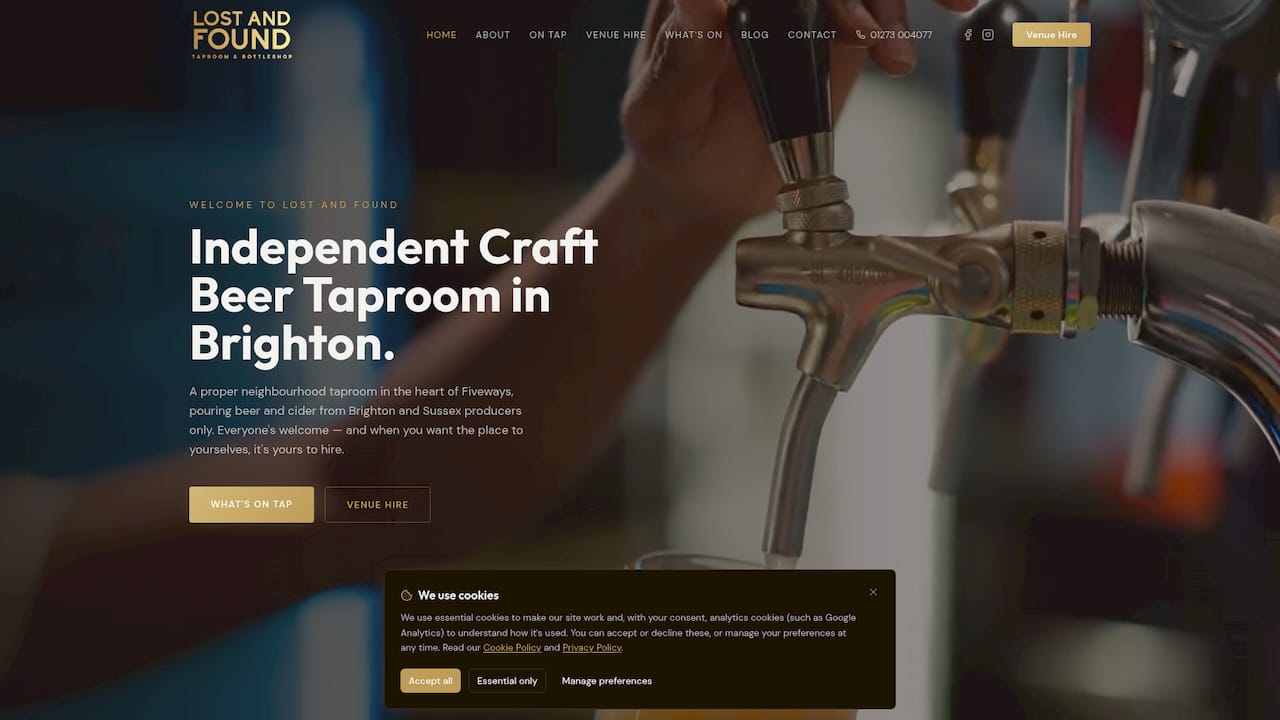
Our current selection, spanning Sussex Beer & Cider, Bottleshop and Wines & Spirits, is always listed on our on-tap page, so you can check what is pouring before you set off. If you are planning something bigger than a pint, our venue hire gives you exclusive use of the space for a party or event, with the flexibility to choose your own drinks, decorations and music around whatever is rotating that week.
FAQ
What is a rotating tap beer?
A rotating tap beer is any beer poured through a draught line that changes periodically, rather than staying the same indefinitely. Venues use these slots for guest breweries, seasonal releases or limited runs, keeping the line-up fresh alongside a smaller set of core, permanent pours.
How do I find out what’s currently on tap?
Most taprooms now publish a live taplist online or via a QR code at the table, which updates faster than a printed menu ever could. Checking the venue’s website or asking staff directly for the current list is the most reliable way to avoid disappointment.
Why do some beers disappear from the tap list?
Beers usually come off rotation once a keg or cask sells through, based on tracking methods like Rate of Sale that measure how quickly each line moves. A beer that performed well may return later, while a slow seller is more likely to be replaced permanently.
Are rotating taps better than a fixed beer list?
Rotating taps offer more variety and a better chance of discovering a new favourite, while a fixed list offers consistency for drinkers who prefer a dependable pint. Many good venues, including ours at Lost And Found, run both: a few steady core pours alongside rotating guest and seasonal lines.
How often do taproom taps typically change?
Cask lines often change weekly as each cask empties, while keg lines can rotate anywhere from every few days to monthly depending on demand, according to craft beer business planning guidance. Well-run independents tend to refresh a meaningful share of their taps on a monthly basis to keep the selection current.
Sources
- Pub & Hospitality Glossary - Greene King & Belhaven
- Craft Beer Bar Business Plan Template (Avvale)
- Barrel - taproom tools
- CAMRA | Cask, Manchester, Continental Beers & 15 Keg Taps
Recommended
- Looking For the Best Craft Beer in Brighton? 10 Things You Should Know Before Your Next Pint
- US Trends, Brighton Vibes: 5 New Styles That Will Change the Way You Drink Craft Beer in Brighton
- What Is a Taproom? Your Guide to Craft Beer Culture
- August Craft Beer Styles at Lost and Found: What’s on Our Brighton Taps This Month