Find well kept real ale in the UK with 3 CAMRA tools and Brighton taproom tips
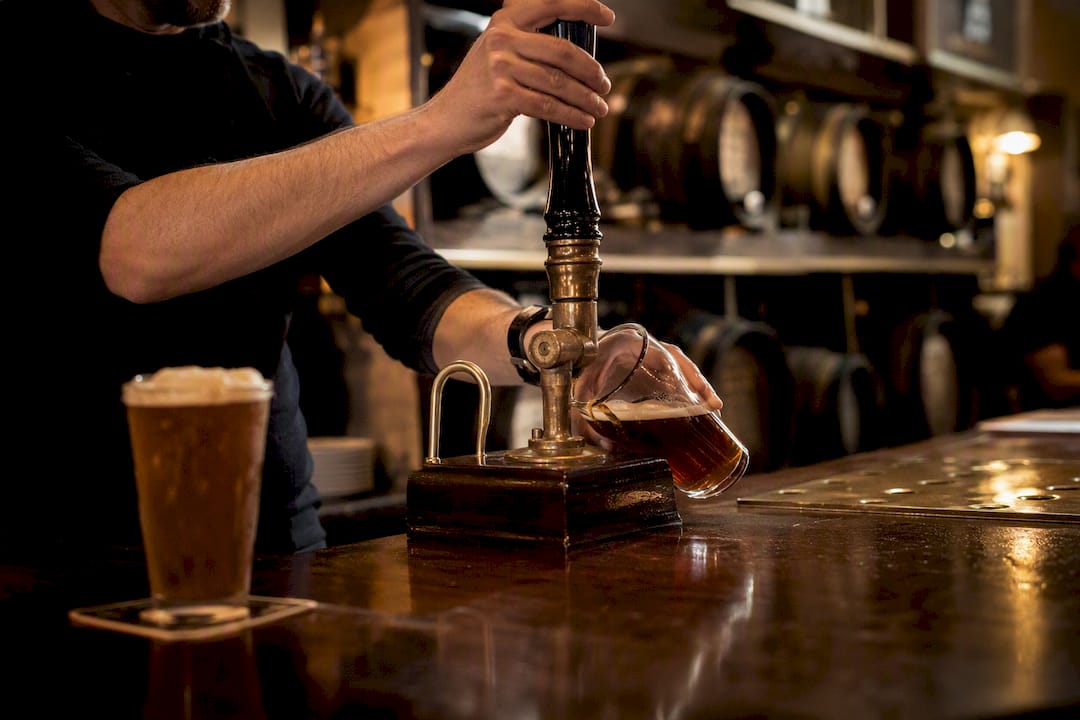
Open the Good Beer Guide or WhatPub, or fire up the CaskFinder app, and you’ll find a properly kept cask ale within a few miles of wherever you’re standing. Those three resources cover pub recommendations, live local listings, and Cask Marque accreditation between them. Everything else in this guide is about judging what you find and getting the most out of it.
TL;DR:
- Asking staff how long a cask has been on provides a more accurate gauge of quality than visual or superficial cues.
- Using tools like Good Beer Guide, WhatPub, and CaskFinder helps identify well-kept pubs, but priority should be given to turnover and provenance for the freshest beer.
- Properly stored real ale should be at cellar temperature, not too warm or cold, to preserve flavor and carbonation during serving.
- Recognizing seasonal and regional styles can improve your tasting experience and help you choose beers suited to different times of year or locations.
- Regular line cleaning, precise temperature control, and quick turnover are essential practices pubs use to prevent off flavors and ensure top-quality cask ale.
Table of Contents
- Where to actually look: real ale guide UK discovery tools
- How can you tell a pint is well kept?
- Award-winning pubs and breweries worth seeking out
- How do you plan a real ale trail that actually works?
- A quick glossary of real ale terms
- How Lost And Found Taproom keeps its cask ale in top condition
- What actually happens during real ale brewing?
- How should real ale be served to protect its quality?
- Do real ale styles change with the seasons and regions?
- Why does cask ale sometimes taste off, and how do good pubs prevent it?
- The gap between the “official” advice and what actually gets you a good pint
- Try well-kept real ale at Lost And Found Taproom in Brighton
- Sources
Where to actually look: real ale guide UK discovery tools
Most people give up on finding good cask ale because they walk into the nearest pub and hope. Don’t. Three tools do the legwork.
The Good Beer Guide is CAMRA’s annual print listing, now in its 54th edition, covering over 4,500 recommended pubs and 1,700 breweries. Entries aren’t paid placements. They come from volunteer branch members visiting pubs repeatedly and voting on consistency, which makes it closer to a crowd-sourced quality audit than a directory.
WhatPub is the Good Beer Guide’s live sibling, CAMRA’s free searchable database that updates constantly, so it catches new openings and closures the annual book can’t. Use the guide for planning a trip, WhatPub for checking a specific postcode right now.
CaskFinder works from Cask Marque’s accredited pub list and adds two useful features: a pump-clip Beer Scanner for identifying an unfamiliar beer on the bar, and the Ale Trail function for tracking accredited pubs you’ve visited.
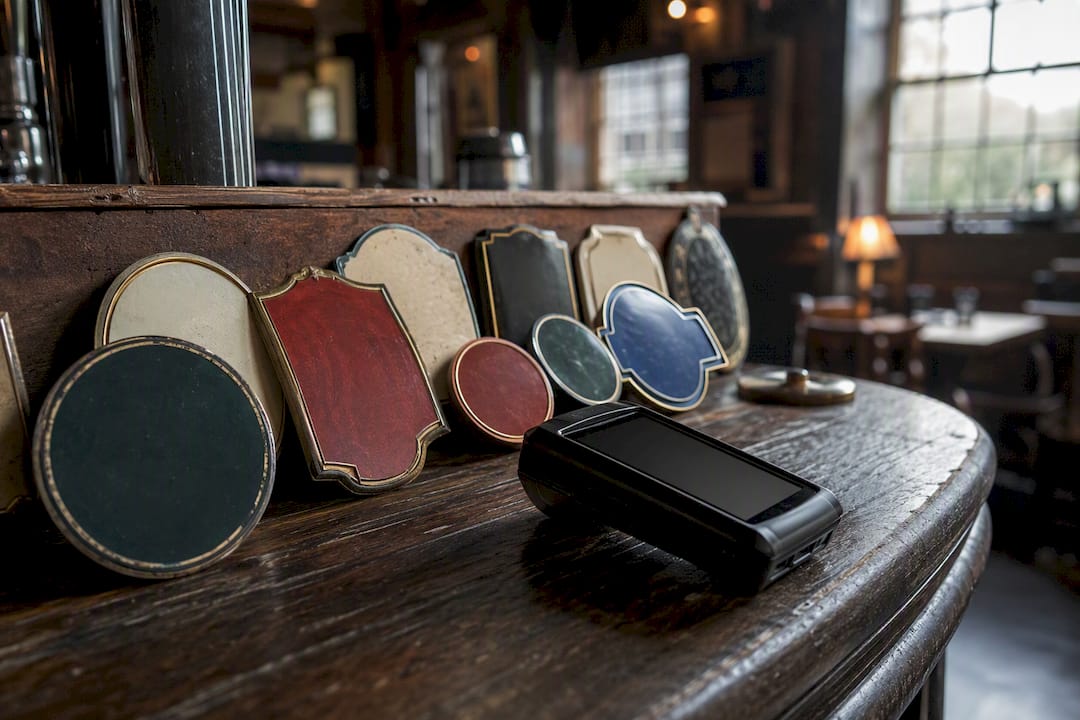
For finding where beer is actually brewed rather than just poured, most independent breweries publish taproom opening hours directly on their own sites, and seeking those out supports the LocAle principle: drinking beer brewed close to where you’re sitting, which usually means it travelled less and arrived fresher.
How can you tell a pint is well kept?
Judging a pint takes seconds once you know what you’re looking for. CAMRA’s own guidance on finding real ale boils down to checking the beer’s condition rather than the kit it comes from, since modern bar fonts can serve cask-conditioned beer perfectly well.
- Temperature first. Real ale should arrive cool, not warm and not fridge-cold. A pint that feels either extreme has usually been mishandled in the cellar.
- Look at the glass. The beer should be bright, not hazy (unless the style is meant to be cloudy), with a loose head that holds for a minute or two.
- Smell before you sip. A sour, vinegary, or flat aroma is your first warning sign.
- Check the dispense. Hand-pulls, direct cask taps, and some bar fonts can all serve real ale well. What matters is how often the line’s been used that day.
- Ask the staff a direct question. “How long’s this cask been on?” tells you more than any visual cue. A confident, specific answer is a good sign; a shrug is not.
Pro Tip: If a pump clip looks dusty or the beer’s been on for over a week in a low-turnover pub, order something else. Slow-selling casks are the most common cause of a poor pint.
Red flags worth remembering: a sour tang, a flat or lifeless head, and staff who can’t tell you which cask is currently in use.
Award-winning pubs and breweries worth seeking out
Awards matter here because they’re peer-judged, not paid-for, so they’re a genuinely useful shortcut for discovery.
The current benchmark is Champion Beer of Britain 2026, awarded to Independence, a 4.6% pale strong beer from Bristol Beer Factory. It’s judged blind by CAMRA members from hundreds of entries, so a win signals genuine consistency, not marketing spend.
On the pub side, the Tamworth Tap has won CAMRA’s National Pub of the Year three times, including consecutive wins running to 2025. That kind of repeat recognition tends to mean a landlord who genuinely understands cellar management, not a one-off lucky pour.
Long-standing independents like Bathams Brewery, still family-run and still brewing traditional bitters, illustrate why age and independence often correlate with quality: breweries that have survived decades usually did so by keeping standards consistent.
A wider pattern worth knowing: multinationals still dominate cask sales across UK pubs, with brands such as Timothy Taylor’s Landlord among the best-selling cask ales nationally, as explored in detail on Blame It On Bacchus. That’s precisely why seeking out independents, Brighton’s own independent breweries included, tends to reward the effort with more interesting and often fresher beer.
How do you plan a real ale trail that actually works?
A good ale trail isn’t a pub crawl with extra steps. It’s a route planned around clusters, not distance.
- Pick a walkable cluster of three to five accredited pubs, rather than spreading your afternoon across a whole town.
- Use CaskFinder’s Ale Trail feature to scan QR codes and log accredited visits as you go, which is the most efficient way to sample several well-kept pints while tracking your progress without doubling back on yourself.
- Check opening hours and rotation in advance. Many small taprooms only open Thursday to Sunday, and beer lists change weekly.
- Pace your drinking by ABV, not just pint count. A session of 3.8% milds allows far more stops than a run of 6% IPAs.
- Sort transport before you start. Public transport or a pre-booked taxi beats trying to figure it out three pints in.
A quick glossary of real ale terms
Pump clips and tasting notes assume vocabulary most newcomers haven’t met yet. Here’s the shortlist that unlocks most of it.
- Cask ale / cask-conditioned: beer that undergoes a secondary fermentation in the cask it’s served from, rather than being force-carbonated.
- Bottle-conditioned / can-conditioned: the same living-beer principle, packaged instead of casked, with live yeast still working.
- Hand-pull: the traditional beer engine handle used to draw cask ale from the cellar.
- LocAle: CAMRA’s scheme promoting beer brewed and sold within a short distance, cutting beer miles.
- Cyclops tasting notes: an independent framework giving consistent descriptions of appearance, aroma and taste across different beers.
- Best bitter, mild, IPA, pale ale: broadly, bitters run malty and balanced, milds are darker and lower strength, IPAs lean hoppier and stronger, and pale ales sit somewhere between bitter and IPA in hop character.
How Lost And Found Taproom keeps its cask ale in top condition
At Lost And Found Taproom, the beer list changes constantly because that’s the point: a rotating selection of Sussex and wider UK independents means no cask sits around long enough to lose condition. Staff taste new arrivals before they go on, and cellar checks happen daily rather than reactively.
A cask’s flavour tells you exactly where it is in its life, if you know how to read it. Training staff to spot that early, before a customer ever notices, is the difference between a good taproom and an average one.
That approach mirrors what CAMRA’s own guidance on finding real ale recommends: talk to the people pulling the pint. Ours can usually tell you exactly which brewery, which batch, and how long it’s been on.
What actually happens during real ale brewing?
Real ale starts the same way as most beer: malted barley is mashed in hot water to release fermentable sugars, the resulting liquid (wort) is boiled with hops for bitterness and aroma, then cooled and fermented with yeast. The difference that defines “real ale” comes after fermentation.
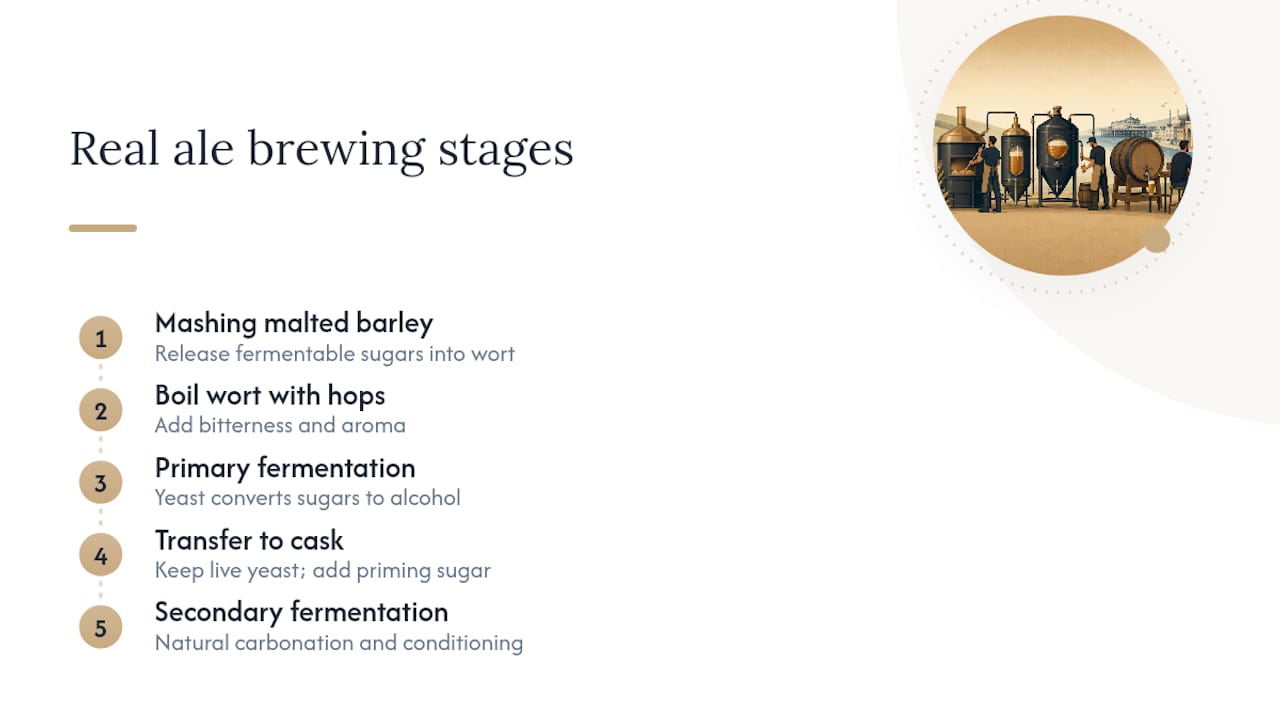
Instead of being filtered, pasteurised, and force-carbonated like most keg beer, real ale is transferred to the cask while still containing live yeast and unfermented sugar. That yeast keeps working inside the cask, a process called secondary fermentation, producing natural carbonation and continuing to develop flavour right up until the moment it’s served. This is why cask ale is sometimes called “living beer”: the process genuinely doesn’t stop at the brewery.
Before the cask leaves the brewery, it’s usually primed with a small amount of extra sugar (or occasionally more hops, for a technique called dry-hopping) and fined with isinglass or a vegan alternative to help clear the beer naturally rather than through mechanical filtration. Once it reaches the pub cellar, the cask needs several days to settle and condition before it’s ready to tap, which is why a landlord’s cellar schedule matters as much as the brewing itself. Traditional methods like this take longer and demand more attention than kegging, but they’re also why a well-kept cask ale has a depth and freshness that force-carbonated beer rarely matches.
How should real ale be served to protect its quality?
Serving real ale badly can undo weeks of careful brewing and cellar work in seconds. The fundamentals are simple but easy to get wrong under a busy Friday-night bar.
Temperature comes first. Real ale should be served at cellar temperature, roughly 11 to 13°C, noticeably cooler than room temperature but well above fridge-cold. Serving it too cold mutes the flavour and aroma that secondary fermentation was meant to develop; too warm and it turns flat and cloying fast.
The pour itself matters more with cask ale than with keg beer. A hand-pull draws beer through a sparkler (a small nozzle attachment) that can add a tight, creamy head, though some drinkers and some styles prefer it without one, particularly in the north of England where a looser, less sparkler-heavy pour is traditional. Either way, the beer should be pulled steadily rather than in short bursts, which helps avoid excess agitation that can knock out the natural carbonation too fast.
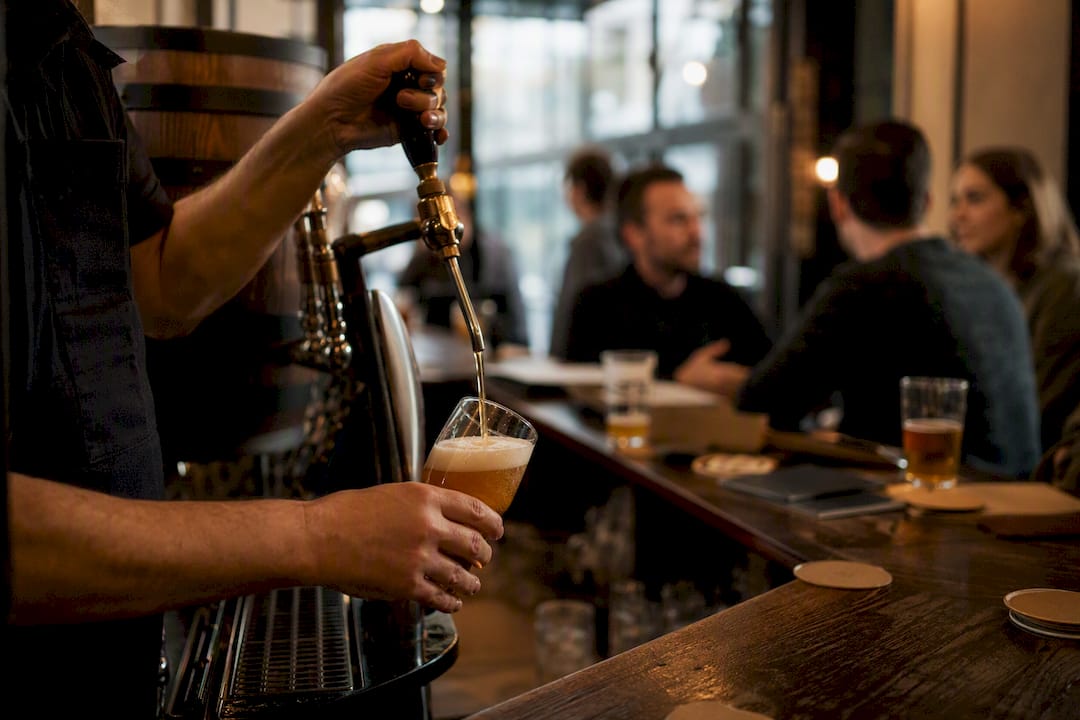
Line cleaning is the unglamorous part that makes the biggest difference. Beer lines need cleaning roughly every seven days regardless of how much has passed through them, because residue builds up and taints flavour even when a pub looks spotless behind the bar. Glassware matters too: a genuinely clean glass, free of detergent residue, holds a head properly. Grease or soap film is one of the quickest ways to kill a pint’s presentation before a single sip.
Do real ale styles change with the seasons and regions?
Cask ale in the UK has always followed the calendar more closely than most drinks, partly tradition and partly practicality: darker, stronger beers suit cold pubs, lighter ones suit a beer garden.
Winter and autumn tend to bring out milds, porters, and stronger old ales, often with higher ABVs and richer, more roasted malt character. Many breweries release a seasonal “winter warmer” in the 5 to 6% range specifically for the colder months. Spring and summer shift the balance towards golden ales and lighter bitters, brewed to be more refreshing and often served slightly cooler within the cask-temperature range.
Regional style differences are just as real, if less rigid than they once were. The north of England, particularly Yorkshire, has a strong tradition of well-hopped bitters served with a tight sparkler head, reflecting a local drinking culture built around long-standing regional breweries. The West Midlands and Black Country favour a maltier, less aggressively hopped style, a tradition long-established breweries like Bathams still represent. The south and south-east, including Sussex, lean towards balanced golden ales and pale ales, partly a reflection of the newer wave of independent breweries that have opened across the region over the past decade.
None of this is a rulebook. It’s a useful way to read a pump clip and guess roughly what you’re getting before you order, and a good excuse to try a style you wouldn’t normally reach for when you’re travelling.
Why does cask ale sometimes taste off, and how do good pubs prevent it?
Cask ale is unforgiving in a way keg beer isn’t. Because it’s still alive when it reaches the cellar, every stage after delivery carries risk, and most bad pints trace back to one of a handful of recurring problems.
The biggest is simply time. A cask that’s been tapped but sells slowly starts to oxidise once air reaches the beer, turning it flat and giving it a papery, stale edge within a few days. Well-run pubs manage this by rotating stock aggressively, ordering smaller casks of slower-selling styles rather than leaving a large cask half-finished for a week, and using cask breathers or blanket pressure systems to slow oxidation without force-carbonating the beer.
Temperature swings cause the next most common issue. A cellar that isn’t properly cooled, or a cask stored too close to a heat source, accelerates both oxidation and unwanted secondary activity, producing off-flavours or excess gassiness. Reliable pubs invest in cellar cooling and check temperatures daily rather than assuming a system is working.
Poor line cleaning is the quieter culprit. Residue from previous casks or infrequent cleaning introduces bacteria that sour the beer, and it often shows up as a persistent taint across multiple different beers on the same line, a giveaway that the problem is the equipment, not any single cask. The pubs that handle this well tend to be the same ones with strict, dated cleaning schedules and staff trained to taste-check a new cask before it goes on sale, catching a problem before a customer ever does.
The gap between the “official” advice and what actually gets you a good pint
CAMRA’s tools do the heavy lifting here, and anyone serious about finding good cask ale should be using the Good Beer Guide or WhatPub as a baseline. But the conventional advice stops short of what actually separates a good pint from a great one, which is turnover, not tradition.
A pub can tick every box, hand-pulls, a Cask Marque plaque on the wall, a listing in the guide, and still serve a tired pint if that particular cask has sat too long. The single most useful habit isn’t checking credentials. It’s asking the person behind the bar how long a cask has been open, and trusting a confident, specific answer over a shrug.
The other overlooked point: independent breweries deserve more attention than they get, not out of loyalty, but because a shorter supply chain genuinely means fresher beer arriving in better condition. National brands dominate cask sales for reasons of distribution, not necessarily quality. Prioritise turnover and provenance over branding, and you’ll drink better more often than any app alone can guarantee.
— Author
Try well-kept real ale at Lost And Found Taproom in Brighton
Lost And Found Taproom gives you what an ale trail is designed to find, without the travel: a genuinely rotating selection of independent UK breweries, served by staff who can tell you exactly how long a cask has been open. Our Fiveways taproom in Brighton runs tasting flights alongside the full pour list, and both our beer menu and food menu are available online, so you can check what’s pouring before you set off.
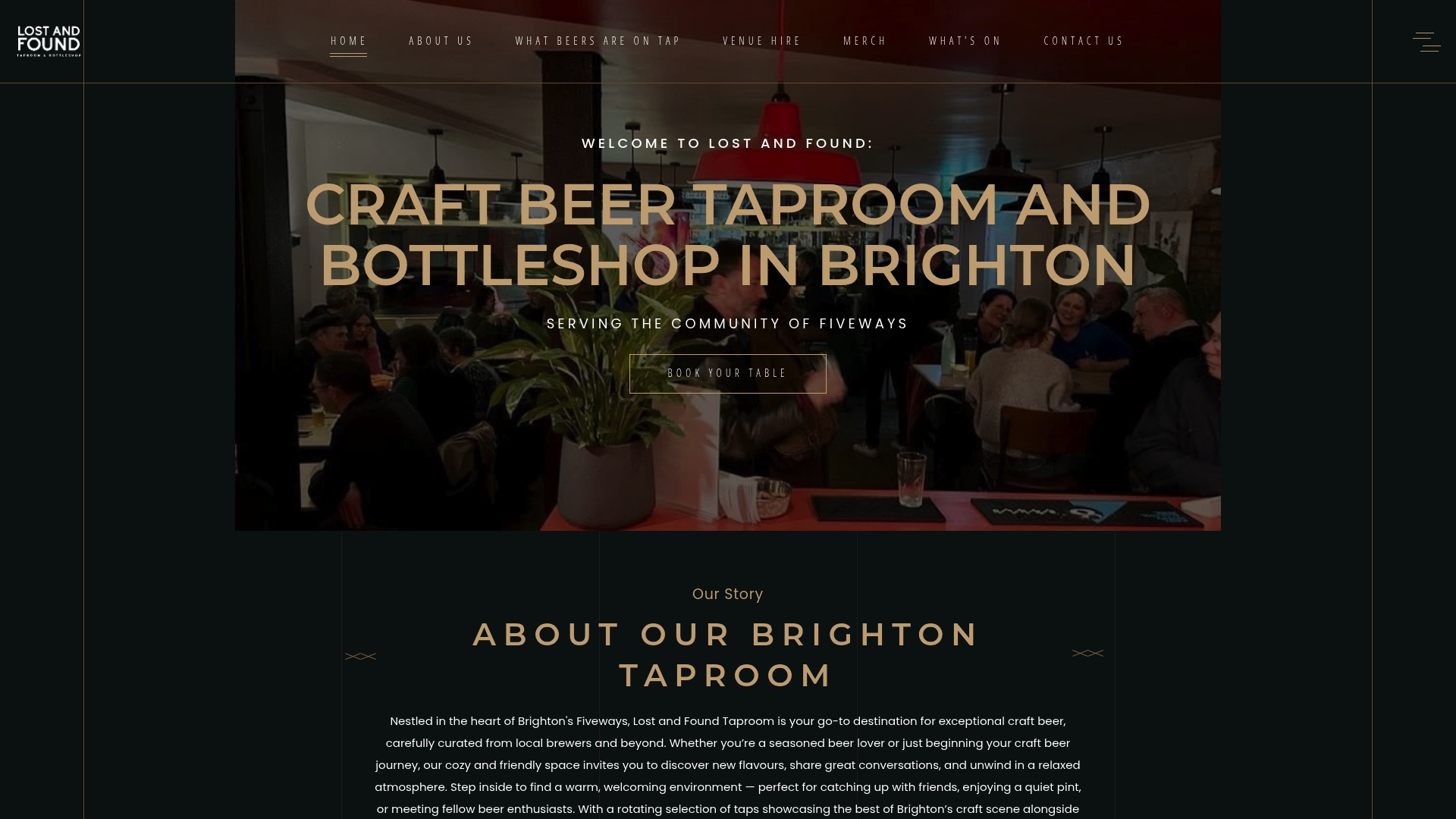
If you’re planning something bigger than a solo visit, our venue hire service covers private tastings and group bookings across Brighton’s Fiveways area, with no need to chase down multiple pubs to keep a group happy. Whether you’re curious about the region’s independent scene or just want a properly kept pint tonight, check our current beer lineup and come find us in Fiveways.
Sources
- Good Beer Guide 2027 (CAMRA)
- CaskFinder
- Morning Advertiser: Tamworth Tap named CAMRA pub of the year 2025