9 Porter Food Pairings to Try Tonight: Menu Ready Matches from Brighton
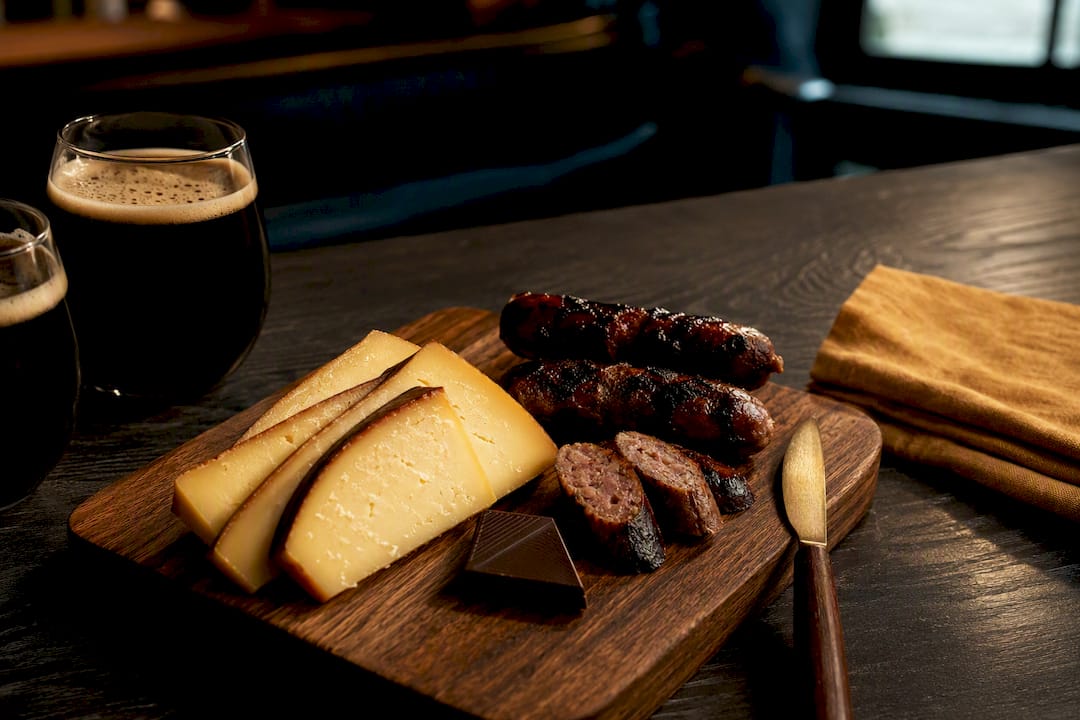
Porter’s best matches are mature cheese, grilled or barbecued meat, oysters and shellfish, dark chocolate desserts, and hearty stews or burgers. The rule behind every one of them is simple: either echo the beer’s roasted malt with char or smoke, or contrast its light sweetness with something acidic or briny. Get the temperature and glass right and even a basic pub plate starts tasting deliberate.
TL;DR:
- Porter’s roasted malt pairs best with charred, smoked, or acidic elements in food, such as BBQ, grilled meats, and shellfish.
- Cheese pairings like aged cheddar, smoked gouda, and blue cheese complement porter’s caramel, smoke, and salt notes, while delicate cheeses should be avoided.
- Serving porter at 45 to 55°F, with proper glassware and a slight warm-up, enhances aroma and flavor, which is crucial for successful pairings.
- Avoid pairing porter with oily, fatty fish or very delicate cheeses, as these can overpower or flatten the beer’s complex notes.
- Versatile meal combinations like beef stew, burgers, seafood, and chocolate desserts work well when matching the beer’s roasty profile with complementary flavors.
Table of Contents
- Porter food pairing shortlist to try tonight
- Cheese and charcuterie pairings for porter
- Grilled, roasted and barbecue meats with porter
- Oysters, crab and other seafood matches
- Chocolate, caramel and nut-based desserts
- Stews, pies and burgers for colder months
- Serving porter properly: temperature and glass
- Foods and pairing mistakes to avoid
- Three ready-made porter menus
- Applied tasting notes from Lost And Found Taproom
- Why the obvious pairing isn’t always the safest one
- Try these pairings at Lost And Found Taproom
- Sources
Porter food pairing shortlist to try tonight
- Aged cheddar — the nuttiness mirrors porter’s caramel notes. Serve at room temperature.
- Smoked gouda — smoke meets roast for a clean echo. Slice thin so it melts on the tongue.
- Beef brisket — char and roasted malt are the same flavour, twice. Rest the meat before plating.
- BBQ ribs — sticky glaze needs the beer’s dryness to cut through. Add a vinegar slaw alongside.
- Oysters — porter’s smoothness lifts their sea sweetness. Serve well chilled, beer at a temperature just above fridge cold.
- Dark chocolate torte — coffee notes in the beer meet cocoa head on. A pinch of sea salt sharpens both.
- Sticky toffee pudding — caramel matches caramel. Pour the beer a touch warmer to open the aroma.
- Beef and porter stew — cooking with the beer, then drinking it, doubles the depth. Serve in the same session, not after.
- A well-charred veggie burger — char works even without meat. Add smoked paprika mayo for the same effect.
Cheese and charcuterie pairings for porter
Cheese is porter’s most reliable partner, and the reason is textural as much as flavour based. Mature, nutty cheeses like aged cheddar and Gruyère hold their own against roasted malt without disappearing, while smoked cheeses such as smoked gouda pick up the beer’s char notes directly. Blue cheese works too, its salt cutting through any sweetness in the glass.
- Aged cheddar or Gruyère: nutty depth that matches caramel and toffee notes
- Smoked gouda: smoke complements roast, a genuine echo pairing
- Blue cheese: salt balances sweetness, especially with a milk or brown porter
- Charcuterie: smoked chorizo and thick-cut bacon lean into the same roasted register
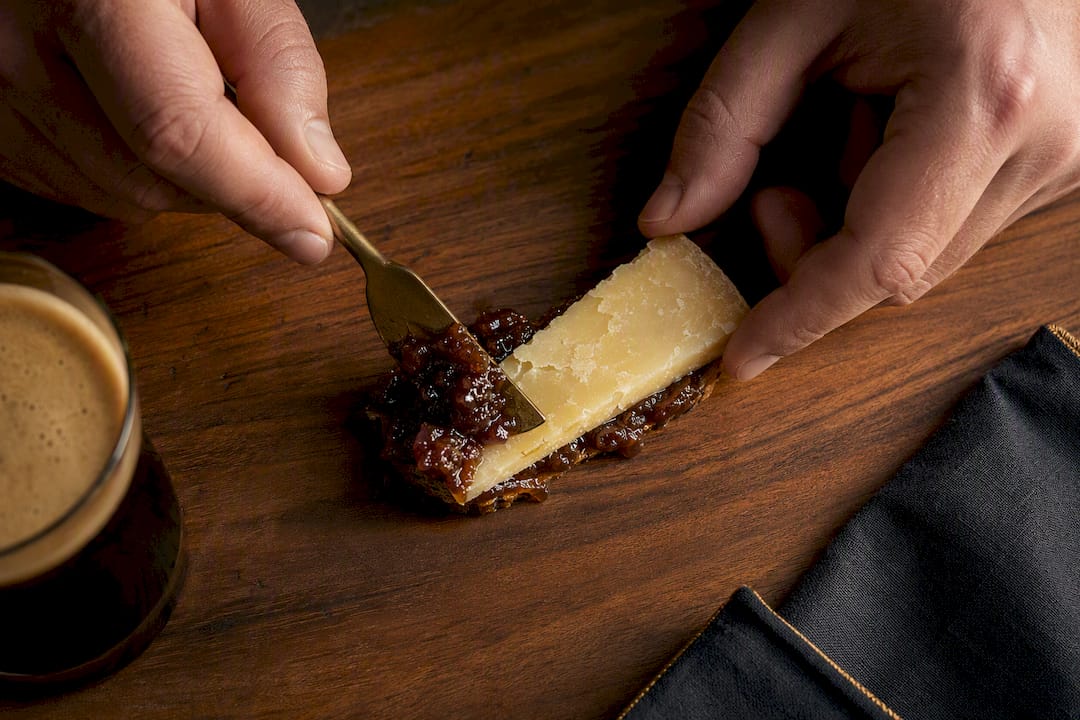
- Accompany with salted butter, fruit chutney or dried figs to round out the plate
Build the board from mild to strong, and serve the porter alongside rather than after; it works as a running companion, not a chaser.
Pro Tip: Put a thin smear of fruit chutney under the strongest cheese, not beside it. The sweetness meets the porter before the cheese’s saltiness does, and the whole bite balances rather than fights.
Grilled, roasted and barbecue meats with porter
Garrett Oliver’s matching principle is worth learning by heart: match the beer’s roast to the char on the plate. Porter’s roasted malt was practically designed for a grill. Brisket, flat iron steak, sausages and burgers all pick up caramelisation from direct heat, and that caramelisation is chemically close to what happens when barley is roasted for the mash.
- Brisket and steak: the char on the crust mirrors the roast in the glass
- Sticky, caramelised BBQ sauce works because porter’s dryness resets the palate between bites
- Add an acidic side, like a vinegar based slaw, when sauce gets heavy, to stop the pairing turning cloying
- Charred mushrooms or smoked tempeh give vegetarian diners the same roast echo without meat
- Sausages with a smoky glaze do the same job on a smaller scale
If you’re planning a full barbecue spread rather than a single dish, Lost And Found Taproom’s street food pairing guide covers how to build a whole menu around this principle rather than one plate.
Oysters, crab and other seafood matches
Porter is an unusual seafood beer, and that’s precisely what makes it interesting. Because porter tends to be smoother and less bitter than some stouts, it enhances rather than fights the natural sea sweetness in oysters and crab. This is a contrast pairing, not an echo one: briny sweetness against roasted malt.
- Oysters on the half shell: a light mignonette keeps the pairing clean
- Crab, especially dressed or in a bisque: the sweetness holds up against the beer’s body
- Avoid oily, fatty fish like salmon or mackerel; PerfectDraft’s pairing guidance warns porter’s assertive roast can clash with or overpower these
- A squeeze of lemon on shellfish sharpens the contrast rather than dulling it
Serve the shellfish cold and the porter slightly warmer than fridge temperature. The gap between the two is part of what makes the pairing work.
Chocolate, caramel and nut-based desserts
This is the pairing most people already sense intuitively, and the beer’s own tasting notes explain why: porter regularly carries chocolate, coffee and caramel notes that dessert menus have been chasing for decades. A dark chocolate torte or fondant meets those notes head on, which is a complementary pairing rather than a contrast.
- Dark chocolate torte or fondant: cocoa mirrors the beer’s own roast
- Sticky toffee pudding: caramel against caramel, a genuinely complementary match
- Salted caramel tart: the salt keeps the sweetness from tipping into sickly
- Nutty desserts like pecan pie lean on porter’s toasted malt character
For a sweeter milk porter, go complementary with caramel puddings. For a drier, more bitter porter, a contrasting approach, pairing it against something with real acidity like a berry compote, tends to work better. Serve a small chocolate fondant with a scoop of crème fraîche alongside a half pint poured slightly warmer than fridge cold, and the coffee notes in the beer come through far more clearly.
Stews, pies and burgers for colder months
Porter earns its keep in winter cooking as much as in the glass. Recent pairing guides consistently list beef stew, pies and burgers among the most reliable porter matches, and the logic holds: these are slow, rich, savoury dishes that need a beer with body rather than fizz.
- Beef and porter stew: cooking with the beer and drinking it alongside doubles the depth
- Steak pie or shepherd’s pie: the gravy’s richness needs a beer that won’t get lost
- A well-built burger, particularly one with a smoky glaze or bacon, echoes the same roasted register as grilled meats
- Mushroom bourguignon covers the same ground for vegetarians
Porter suits these dishes as a companion through the meal rather than a finishing drink; save something lighter or sweeter if you want a genuine digestif afterwards.
Serving porter properly: temperature and glass
Most of the pairing effort is wasted if the beer itself is served wrong. The Homebrewers Association recommends stouts and porters sit in a warmer band than pale lagers, roughly 45 to 55°F, or about 7 to 13°C. Straight from the fridge, a porter’s aroma stays locked down; a few minutes at room temperature before pouring opens up the chocolate and coffee notes that make the pairings above work.
- Let the bottle or can sit out for 10 to 15 minutes before pouring
- A tulip or snifter glass concentrates aroma better than a straight pint glass
- Pour with a decent head; carbonation and foam carry aroma up to the nose, which matters for food pairing
- Match the beer’s temperature to the richness of the dish; warmer for heavier plates, slightly cooler for shellfish
Foods and pairing mistakes to avoid
A handful of mismatches come up again and again. Delicate goat’s cheese gets flattened by porter’s roast rather than complemented by it, and the same goes for oily, fatty fish like salmon or mackerel, where the clash is more common than the win. Stacking several heavy, smoky elements on one plate without any acid or freshness tends to flatten every flavour into one register.
- Skip delicate soft cheeses; save them for a lighter beer
- Avoid pairing oily fish with porter altogether
- If a dish already leans smoky, don’t add another smoky element without something fresh to cut it
- Quick fix: a squeeze of lemon, a pickled side, or a scattering of fresh herbs resets an overloaded plate
Three ready-made porter menus
- Cheese board: aged cheddar, smoked gouda and a blue cheese, with fruit chutney, dried figs and salted butter. Serve mild to strong, porter throughout.
- BBQ night: brisket or ribs, a vinegar slaw, charred corn, and a milk porter for its dryness against the sauce.
- Dessert pairing: a single chocolate fondant with crème fraîche, plated simple, porter poured slightly warm to bring out the coffee notes.
Applied tasting notes from Lost And Found Taproom
At Lost And Found Taproom in Brighton’s Fiveways community, porter pairings get tested against whatever’s rotating on tap that week. Three combinations that consistently work at the bar: smoked gouda against a chocolate forward porter, charred sausages with a drier milk porter, and a simple dark chocolate square alongside anything with pronounced coffee notes. Our food and beer menus are available online, so you can check exactly which porter is pouring before you plan a plate around it.
Why the obvious pairing isn’t always the safest one
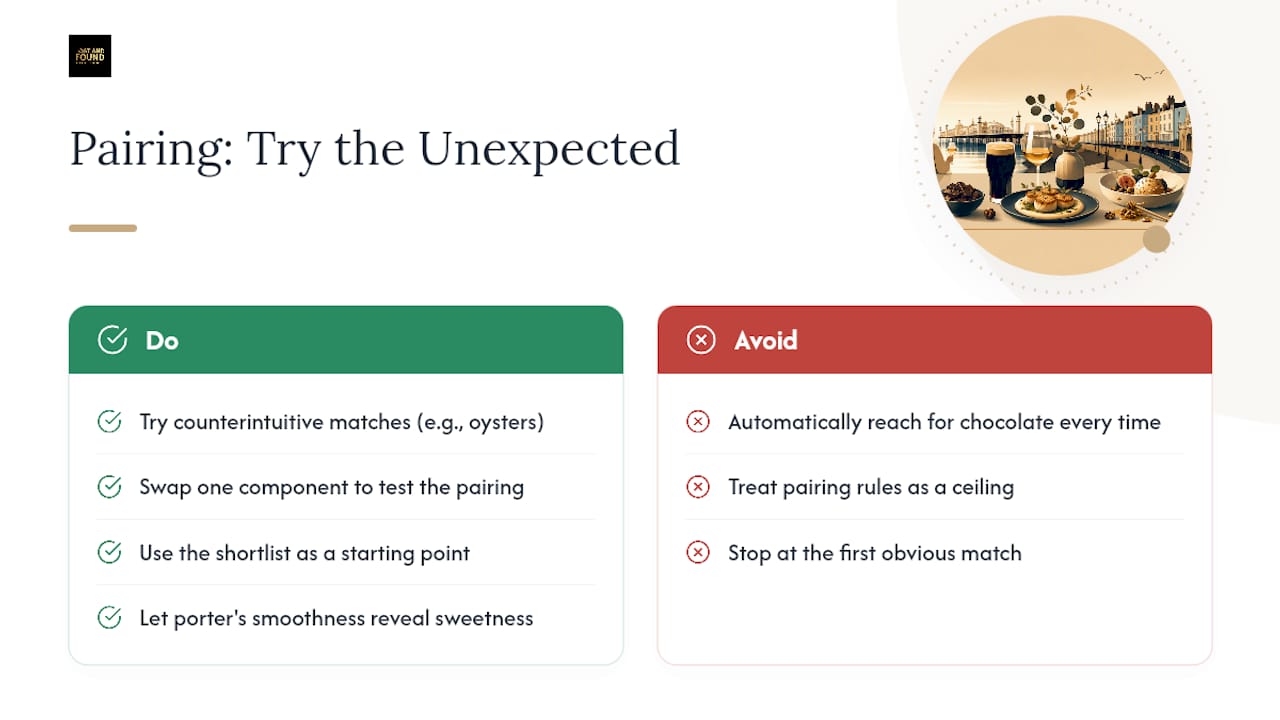
The instinct to reach for chocolate every time you pour a porter is understandable, but it’s also the least interesting choice on the list. The oyster pairing gets underused because it feels counterintuitive, and that’s exactly why it works. Porter’s smoothness does something a sharper stout can’t: it lets sea sweetness through instead of burying it.
Try the shortlist above, but don’t stop there. Swap one component, a different cheese, a spicier BBQ rub, a fruitier dessert, and see what shifts. Pairing rules are a starting point, not a ceiling.
— Author
Try these pairings at Lost And Found Taproom
Reading about porter pairings is one thing; standing at a bar with three porters on tap and a cheese board in front of you is another. Lost And Found Taproom’s rotating selection of local and UK craft beer means the exact porter available changes week to week, so the smartest move is checking our beer menu before you visit, then building your plate around whatever’s pouring.
If you’re planning something bigger than a solo pint, whether that’s a birthday, a work gathering or a proper tasting session with friends, venue hire at Lost And Found Taproom puts a group in front of a curated beer selection without anyone having to guess what pairs with what. Book a visit, bring the shortlist from this article, and let the staff point you toward whichever porter is on tap that day.
Sources
- Food and beer matching: Porters and stouts | Good Food
- The best food and beer pairings for Porter - PerfectDraft
- Proper beer serving temperatures | Homebrewers Association