5 label checks for UK buyers of organic and biodynamic wine
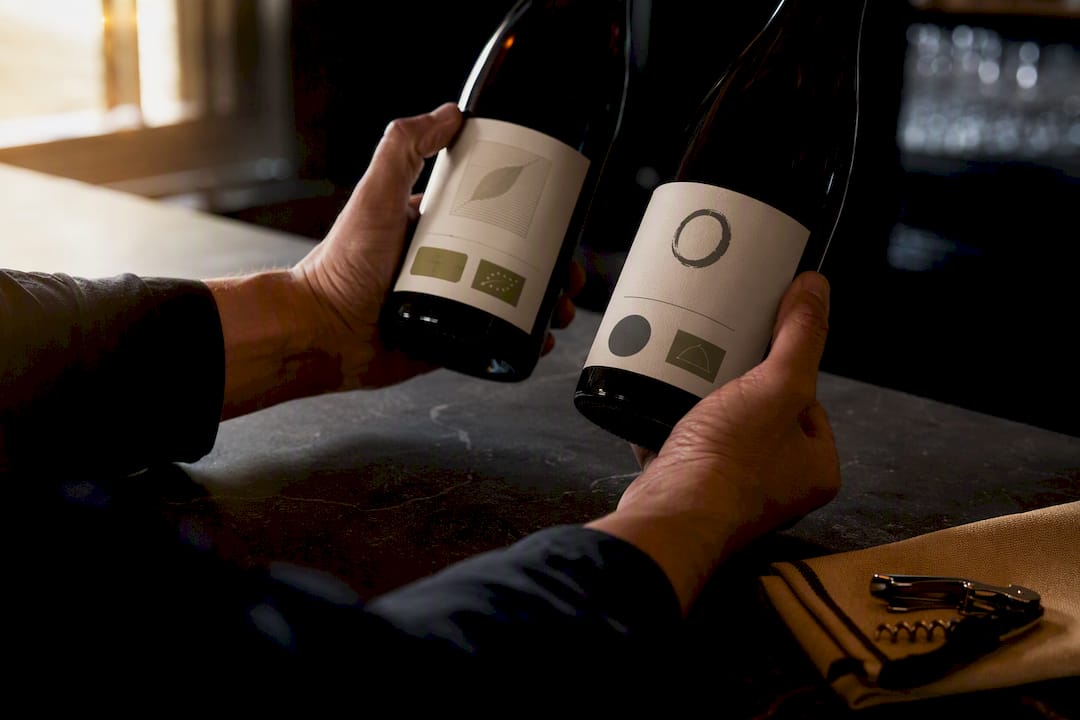
Biodynamic wine starts with organic farming, then adds a stricter set of rules, from lunar planting calendars to specific compost preparations. It is not automatically better or more delicious. For most shoppers, what matters day to day comes down to three things: the certification mark on the label, how much the winemaker intervened in the cellar (especially sulphites), and how honest the producer is about their methods.
TL;DR:
- Organic certification requires a label mark, while biodynamic wine also must carry Demeter or Biodyvin seals, with biodynamic rules focusing on lunar calendars and soil preparations.
- Biodynamic wines often use indigenous yeasts and minimal cellar intervention, leading to greater bottle variation and a stronger sense of terroir.
- Lower sulphite limits apply to both organic and biodynamic wines, with biodynamic producers typically favoring even less sulphur and natural yeasts for fermenting.
- Certification offers a legal baseline but does not guarantee the producer’s skill, consistency, or environmental impact, which vary widely.
- Tasting in person at a trusted retailer or winery provides a clearer sense of differences, especially for low-intervention wines sensitive to storage conditions.
Table of Contents
- Organic vs biodynamic wine at a glance
- What does “organic wine” actually mean?
- What does “biodynamic” actually mean?
- Sulphites, yeast and fining: the choices that change what’s in your glass
- Does biodynamic wine actually taste better than organic?
- The environmental case for both approaches
- How to choose an organic or biodynamic wine
- Myths worth dropping before you buy
- Publisher perspective: how Lost And Found thinks about these wines
- Taste organic and biodynamic wine at Lost And Found
- Sources
Organic vs biodynamic wine at a glance
Both start from the same soil, literally. Biodynamic farms must be certified organic before they can apply for biodynamic status, so every biodynamic wine is also an organic one, but not the other way round.
The practical differences show up in three places: the vineyard, the cellar, and the label.
- Vineyard rules: organic farming bans synthetic pesticides and fertilisers; biodynamic adds specific herbal and mineral preparations, a planting calendar tied to lunar cycles, and often live animals for soil fertility.
- Certifiers you will see: organic wine carries the EU leaf or a Soil Association mark; biodynamic wine carries Demeter or Biodyvin alongside the organic mark, never instead of it.
- Cellar rules: organic wine allows sulphites at levels lower than conventional wine; biodynamic producers often push further, favouring indigenous yeasts and minimal cellar additions.
- What it means for buying: organic wine gives you a clear legal floor and reasonable shelf stability; biodynamic wine leans towards more variation between bottles, a stronger terroir story, and sometimes a higher price.
What does “organic wine” actually mean?
Organic wine has a legal definition, which is more than you can say for “natural” wine. In the EU, Regulation (EU) 2018/848 sets the framework for organic production, and implementing rules built on it specify exactly what organic wine requires: grapes grown without synthetic pesticides or fertilisers, organic yeast strains, and a ban or tight restriction on several conventional oenological practices, including notably lower sulphite limits than non-organic wine.
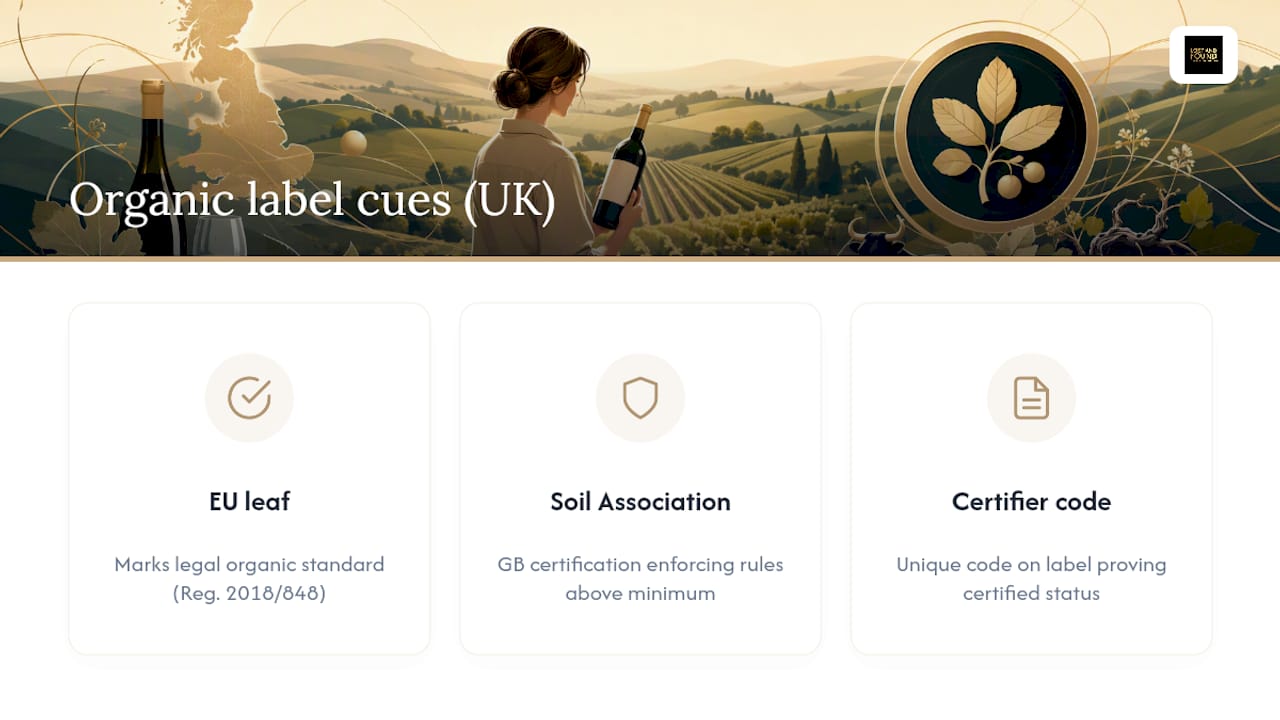
In the UK, Soil Association Certification enforces these standards and, in several areas, applies requirements above the legal minimum. A product generally needs a very high proportion of organic agricultural ingredients to carry organic labelling, and Soil Association’s own GB standards documentation sets out extra detail on packaging, additives and traceability that go beyond what EU rules require. Look for the green EU leaf or the Soil Association symbol, plus a certifier code number. If a label only says “made from organic grapes” without a certification mark, the wine itself, once vinified, has not been through the same additive and sulphite scrutiny as a fully certified organic wine.
What does “biodynamic” actually mean?
Biodynamic viticulture treats the vineyard as one interconnected organism rather than a collection of separate inputs to manage.
Every biodynamic estate must clear organic certification first, then meet a further layer of restrictions: typically lower permitted copper limits than standard organic rules, encouragement (sometimes a requirement) to use indigenous rather than cultured yeasts, and detailed record-keeping on the specific biodynamic preparations used.
Two names dominate the certification landscape. Demeter is the older, internationally recognised mark, covering agriculture broadly rather than wine alone. Biodyvin is wine-specific, run by a union of biodynamic winegrowers, with inspections carried out by Ecocert and vinification rules designed to keep cellar intervention to a minimum.
Some serious biodynamic producers skip certification entirely, usually over cost or philosophical objection to paperwork. In those cases, the only real gauge is what the producer tells you directly, or a merchant you trust to have asked.
Sulphites, yeast and fining: the choices that change what’s in your glass
Sulphite limits are where organic and conventional wine diverge most clearly on paper. Organic wine rules under EU regulation cap total sulphur dioxide well below the conventional ceiling, with some flexibility built in for difficult vintages. Biodynamic producers frequently go further still, treating low sulphite use as a point of principle rather than a compliance requirement, though Demeter and Biodyvin don’t universally demand zero addition.
Yeast choice matters more than most drinkers realise. Cultured yeast strains are predictable: they ferment cleanly and consistently, which is exactly why large commercial wineries rely on them. Indigenous, wild yeasts native to a specific vineyard behave less predictably, and that unpredictability is precisely what gives many biodynamic wines their vintage-to-vintage character, and occasional inconsistency.
Fining and filtration decide clarity and texture. Skipping or reducing both, which is common practice among biodynamic and natural-leaning producers, means slightly cloudier wine, softer texture, and less certainty about how the bottle will hold up after a few years in a rack or a long journey in a delivery van.
Does biodynamic wine actually taste better than organic?
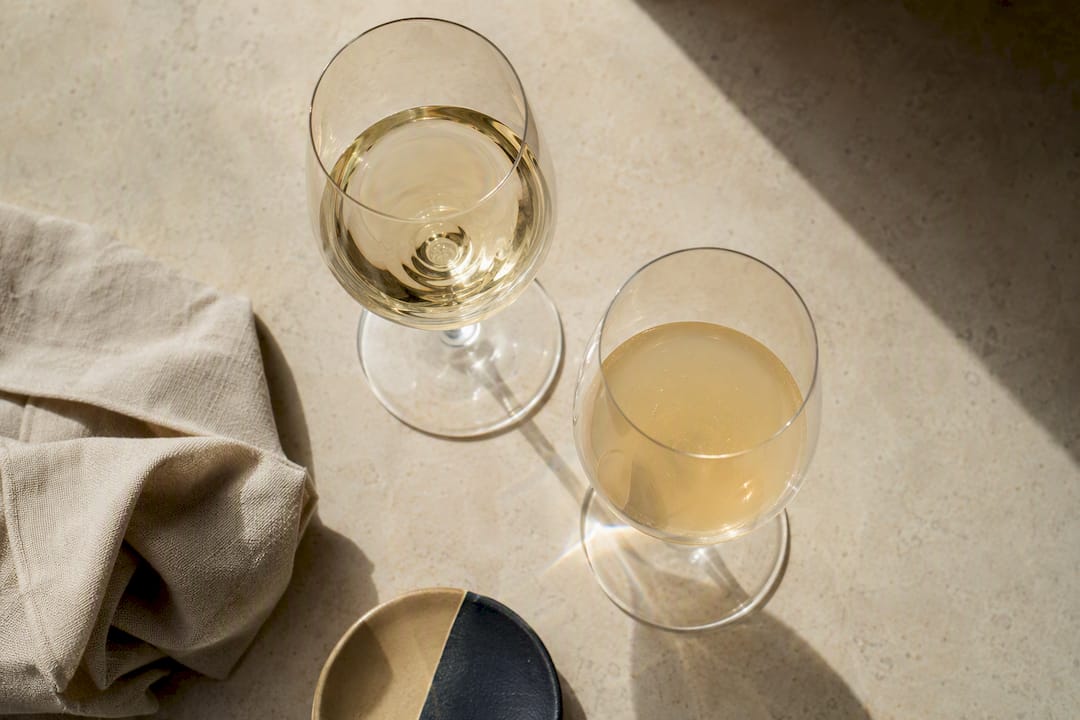
Proponents argue biodynamic farming produces a livelier, more transparent expression of a specific vineyard site, sometimes called terroir. Sceptics counter that winemaking skill and vintage conditions shape flavour far more than any farming certification does, biodynamic included.
Decanter’s own commentary on the question lands somewhere sensible in the middle: biodynamic is essentially organic plus additional preparations, and any taste advantage is genuinely debated rather than settled. A brilliant winemaker working organically will usually beat a mediocre one working biodynamically. Certification tells you how a wine was grown and made. It does not tell you whether the person making it actually knows what they’re doing.
The environmental case for both approaches
Cutting synthetic pesticides and fertilisers, the baseline requirement for both organic and biodynamic farming, reduces chemical run-off into local waterways and tends to support healthier populations of insects, birds and soil microbes around the vineyard. Biodynamic’s compost preparations and emphasis on closed-loop farming push further, aiming to build soil biology that keeps vines resilient through drought or disease pressure without external chemical inputs.
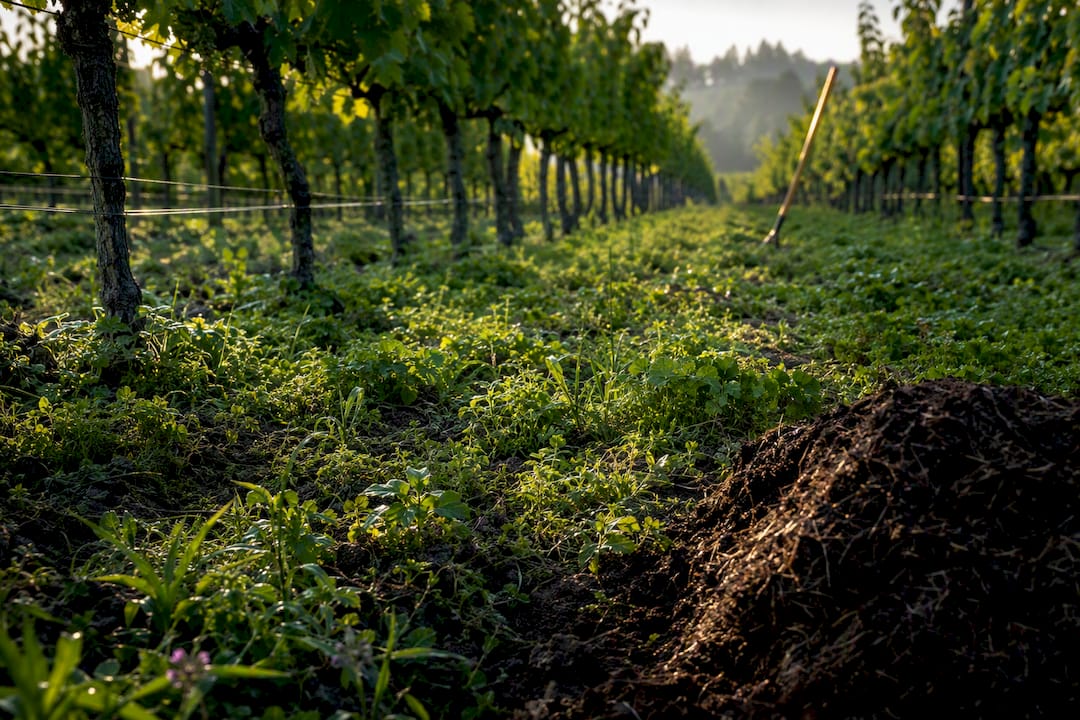
Results still depend heavily on scale, local climate and the skill of whoever is running the vineyard. Certification confirms which practices a producer followed. It says considerably less about the measurable outcome in that specific soil in that specific year, which is a distinction worth holding onto before assuming a label guarantees an ecological result.
How to choose an organic or biodynamic wine
Reading a label properly takes about ten seconds once you know what to look for.
- Check for the EU organic leaf or Soil Association mark, plus a certifier code, which confirms actual certification rather than a marketing claim.
- Look for Demeter or Biodyvin alongside the organic mark if you specifically want biodynamic, since biodynamic status never stands alone.
- Ask staff, or the back label, about sulphite levels and whether indigenous yeasts were used, since both shape flavour more than the certification badge itself.
- Ask whether the whole estate is certified or only a single cuvée, as some producers certify selectively.
- Ask how the wine was fined and filtered if you’re sensitive to sediment or prefer a cleaner style.
Pro Tip: Low-intervention wines, organic or biodynamic, are more sensitive to heat and light than mass-produced bottles. Store them somewhere cool and dark, and if you’re unsure how a bottle will taste after time in transit, ask the seller when it last moved before you buy it.
If you want a clear legal baseline and consistent style, organic is the safer starting point. If you’re chasing a specific vineyard’s personality and don’t mind some bottle variation, biodynamic rewards the curiosity. For sparkling styles specifically, our English sparkling wine buyer’s guide covers label cues worth knowing before you buy.
Myths worth dropping before you buy
Organic doesn’t mean lower alcohol, less sugar, or automatically fewer calories; nothing in either certification governs those figures. Biodynamic and natural-leaning wines can show more bottle variation than conventional wine, and occasionally a “funky” or unusual bottle, which is a feature of low intervention rather than a fault every time.
Certification costs money, and that cost usually lands in the retail price, which partly explains why organic and biodynamic bottles often sit above conventional equivalents on a shelf. Some producers also use words like “natural” loosely, since the term carries no legal definition, unlike organic or biodynamic. That’s exactly why asking questions beats trusting a label alone.
Publisher perspective: how Lost And Found thinks about these wines
When Lost And Found chooses a bottle for the list, certification is one input, not the whole decision. Taste, consistency, and whether a producer will actually answer a straight question about their sulphite use matter just as much as a Demeter sticker.
Ask the staff about any bottle on the shelf. We’d rather talk you through a producer’s approach than let a label do the talking on our behalf. If you enjoyed reading about how these wines are made, our piece on a locally sourced Chardonnay shows the same curation thinking in practice.
— Author
Taste organic and biodynamic wine at Lost And Found
Reading about sulphite limits and lunar calendars only gets you so far. A taproom is where you actually taste the difference, glass in hand, with staff who can tell you about how a specific bottle was grown and made, rather than leaving you to guess from a label.

Our curated wine selection sits alongside a rotating line-up of independent UK craft beer, and our full food and beer menus are available online if you want to see what’s currently pouring before you visit. Drop into the Fiveways taproom, ask what’s organic or biodynamic that week, and take a bottle home if you find one you like. Check our menu to see what’s on offer right now.
Sources
- Organic production and products - Agriculture and rural development (European Commission)
- Regulation (EU) 2018/848 — EUR‑Lex
- Food and drink: apply | Soil Association Certification
- Biodyvin approval — Biodyvin
- Biodynamic vs organic - ask Decanter | Decanter