How to transport beer safely by air, post, or courier
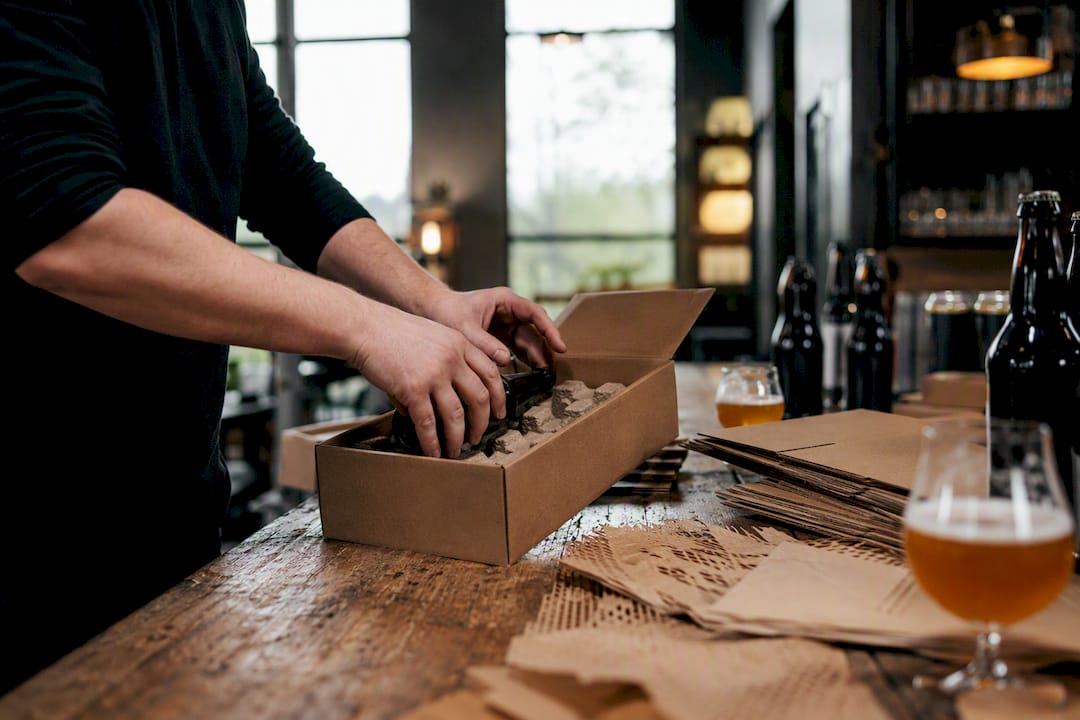
Yes, you can transport beer by air or courier, provided you respect three limits: airline liquid and baggage rules, courier volume caps (usually 5 litres per parcel), and the golden packing rule of wrapping every bottle individually, and stopping it from moving inside the box.
- Flying: cans in checked baggage beat bottles for survival odds. Carry-on liquids still follow the 100ml rule unless bought airside.
- Posting or courier: use a specialist liquid service, not a standard parcel bag, and expect a 5 litre per parcel ceiling.
- Packing: individually wrap, then immobilise. Skip either step and something will break.
Read on for the airline checkpoints if you’re flying, or jump to the courier section if you’re shipping.
Key Takeaways
Transporting beer safely comes down to matching the right transport method to the right packing standard, then respecting the volume and ABV limits each carrier sets.
| Point | Details |
|---|---|
| Check ABV and volume limits first | Beer under 24% ABV faces no special CAA restriction; couriers typically cap parcels at 5 litres. |
| Wrap individually, then immobilise | Every bottle needs its own sleeve or wrap, plus full void fill so nothing shifts in the box. |
| Cans travel better than bottles | For checked baggage and standard courier parcels, cans remove most of the breakage risk entirely. |
| Watch the temperature band | Beer holds up best between roughly 5°C and 20°C; long or hot routes justify insulated or reefer options. |
| Insure anything valuable | Standard courier cover often excludes or caps alcohol; specialist add-on insurance covers glass breakage properly. |
Table of Contents
- How to transport beer on a plane without breaking the rules
- Can you send beer through the post or by courier?
- How do you pack beer so it survives the journey?
- Does temperature affect beer in transit?
- Quick checklists: flying with beer vs shipping beer
- When does personal transport become a commercial matter?
- What does a taproom actually do to protect your beer?
- What happens if there’s a delay or a temperature swing?
- Can you get insurance for beer damaged in transit?
- What the rules actually tell us about moving beer safely
- Sources
How to transport beer on a plane without breaking the rules
The Civil Aviation Authority’s baggage guidance is your starting point: alcoholic drinks under 24% ABV face no special restriction, which covers virtually every beer you’ll ever buy. Stronger stuff (spirits, fortified beers above that threshold) triggers extra packaging and volume rules, so check before you pack a barrel-aged imperial stout that’s crept up to 12% or higher, let alone anything spirit-adjacent.
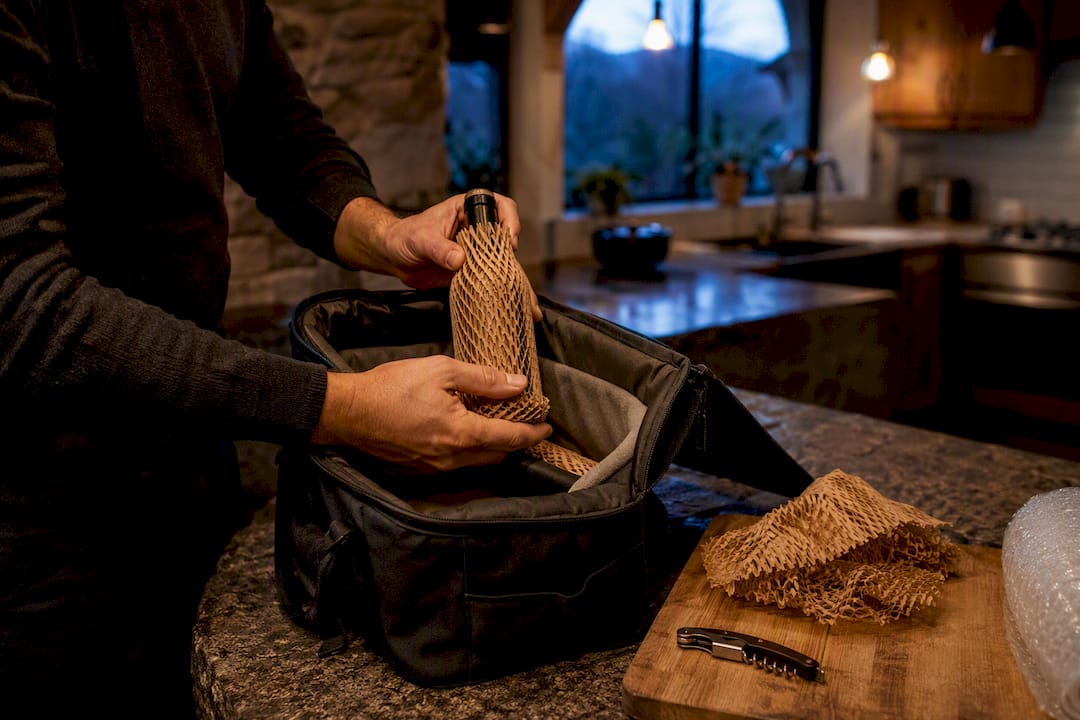
Carry-on is where things get fiddly. Security screening still enforces the 100ml container rule for liquids, so a full-size bottle in your hand luggage isn’t getting through unless it’s a sealed, retail-bought item from airside duty-free.
Checked baggage is far more forgiving, and you can genuinely check in a suitcase full of beer as long as you stay within your airline’s weight allowance. The catch is handling. Baggage systems are not gentle, and glass bottles rattling around a hold for hours don’t often survive intact.
- Cans travel better than bottles in the hold, full stop.
- Weigh your case before you leave the house; excess baggage fees erase any saving on beer you carried yourself.
- Pad bottles between soft clothing, centred in the case, never against the shell.
- If you’re carrying a serious volume, mention it at check-in rather than hoping nobody notices a suspiciously heavy case.
Customs allowances still apply on arrival, and personal import guidelines set certain limits for beer, so a couple of six-packs is never going to raise an eyebrow.
Can you send beer through the post or by courier?
You can, but only through the right channel. Standard parcel networks weren’t built with glass bottles in mind, and their claims processes for breakage are notoriously thin. Specialist liquid services exist for exactly this reason, and it’s worth using one.
Services like APC’s and Parcelforce’s liquid-shipping options handle bottles by hand and keep them in separate cages rather than tipping them into a general sorting chute, which meaningfully cuts breakage risk on a fragile shipment. Most UK courier services that accept alcohol at all cap parcels at 5 litres, with some also imposing a per-item limit on volume, so a case of 12 bottles at 500ml each is roughly the ceiling for a single box.
Adult-signature-required delivery isn’t optional friction, it’s the whole point. It confirms the parcel reached someone legally entitled to receive alcohol rather than being left on a doorstep.
- Never use a standard, unlabelled parcel service for glass bottles of beer.
- Confirm the 5 litre limit (and any per-item cap) before you pack, not after you’ve sealed the box.
- Always select adult-signature delivery where offered.
- Keep receipts and tracking numbers in case a claim is needed later.
Commercial carriers add another layer. UPS, for instance, only ships alcohol under a signed ISC Alcohol Shipping Addendum, with documentation and age-verification obligations attached. That’s a contractual arrangement for approved commercial shippers, not something a hobbyist sending a birthday six-pack needs to worry about, but it explains why you can’t just walk into a generic courier drop-off and post a crate of IPA without warning.
How do you pack beer so it survives the journey?
Glass breaks because it moves, not because it’s fragile in some abstract sense. The fix is a two-stage method that professional packers swear by, and it works whether you’re shipping one prized bottle or a mixed case.
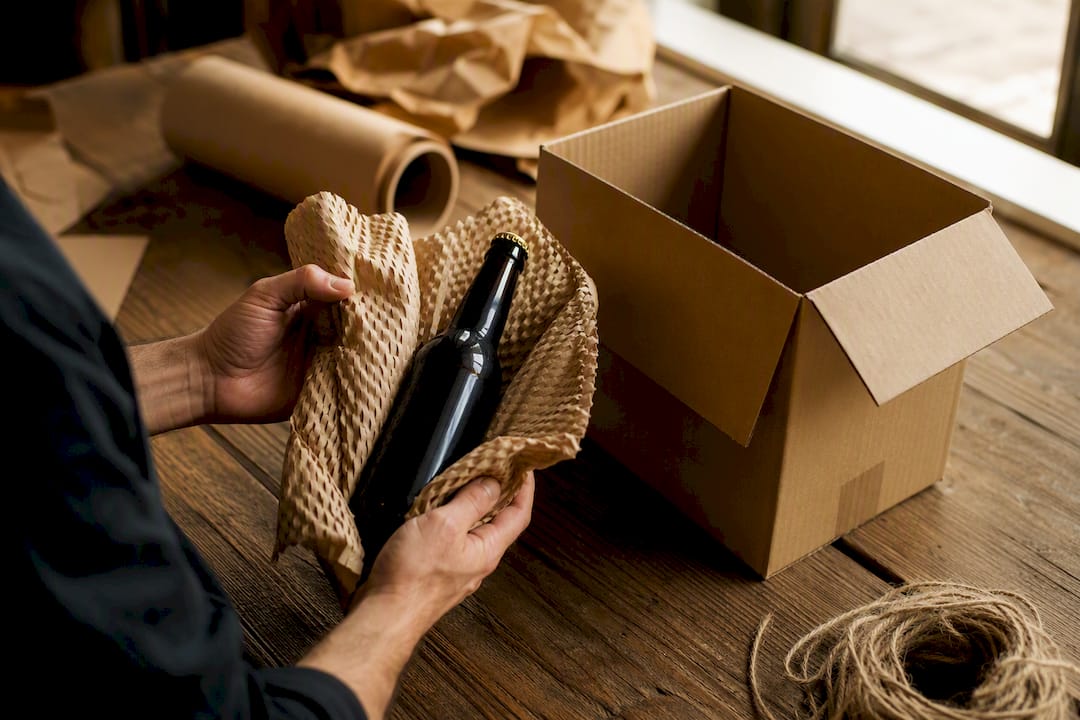
- Wrap every bottle individually. A honeycomb paper sleeve is the gold standard here because the honeycomb structure absorbs impact; bubble wrap or foam sleeves work as a substitute if you don’t have sleeves to hand.
- Stand bottles upright wherever possible. The base of a bottle tolerates knocks far better than the neck or shoulder, and an upright bottle is much less likely to suffer a hairline crack near the cap.
- Choose a double-walled box, not a single-wall postal box, sized so bottles sit snugly rather than loose.
- Fill every remaining gap with void fill. Packing paper, foam chips or air pillows all work, but the box must not rattle when you shake it gently. If it moves, add more fill.
- Seal with proper packing tape across all seams, and label the box clearly as fragile and containing glass.
This layered approach, individual wrap first, full immobilisation second, is exactly the method packaging specialists recommend for glass shipments of any kind, and it’s the difference between a bottle arriving intact and one arriving as shrapnel in a puddle.
Pro Tip: Slip each wrapped bottle into a small polythene bag before boxing. If a cap does fail in transit, the bag contains the leak instead of soaking your void fill, your packing paper, and every other bottle in the box.
Does temperature affect beer in transit?
Beer sits happily between roughly 5°C and 20°C; outside that band, quality suffers. Heat accelerates staling and can push a cap or crown seal to fail under pressure, while freezing risks a cracked bottle as the liquid expands.
- Short domestic trips rarely need special measures beyond sensible timing (avoid leaving beer in a hot car boot at midday).
- Long-haul or international routes, hot-season ground handling, and rare or expensive craft beers are where climate control earns its cost.
- Insulated boxes with gel packs suit short-to-medium journeys; genuinely long or high-value shipments justify reefer container freight.
If you’re posting a case of something special rather than everyday cans, that’s the point to weigh up paying more for a controlled service. For everyday drinking beer on a short trip, sensible timing and decent packing cover most of the risk. Our beer freshness storage guide covers the storage side in more depth.
Quick checklists: flying with beer vs shipping beer
Flying with beer:
- Check your airline’s specific alcohol and baggage policy, not just the CAA baseline.
- Favour cans over bottles for anything going in the hold.
- Pack bottles centrally in your case, cushioned by clothing on all sides.
- Weigh your case before leaving home to avoid excess baggage charges.
- Label the case or bag as fragile if staff will accept that request.
Shipping beer by courier:
- Choose a specialist liquid-shipping service, never a generic parcel bag.
- Wrap each bottle individually, then fill every void in the box.
- Confirm you’re within the 5 litre parcel limit before sealing.
- Declare the alcohol content honestly and select adult-signature delivery.
- Insure anything valuable, and photograph the packed box before it leaves your hands.
Keep every receipt and tracking number until the parcel is confirmed delivered intact. It’s the first thing any claims process will ask for.
When does personal transport become a commercial matter?
Carrying a few bottles home from a trip is personal use. Running regular consignments between breweries, taprooms or retailers is a different regulatory category entirely, and HMRC’s rules apply.
Movements of alcoholic products between approved premises typically require EMCS or a simplified equivalent, alongside proper dispatch documentation, whenever duty suspension is involved rather than duty already paid.
- Keep dispatch documents, receipts and traceability records for any commercial movement.
- Never misdeclare a commercial shipment as a personal parcel to dodge paperwork; that’s the fastest way to trigger a compliance issue.
- When genuinely unsure which category your shipment falls into, HMRC’s own guidance is the reference point, not a courier’s FAQ page.
What does a taproom actually do to protect your beer?
At Lost And Found Taproom, take-home orders get the same care we’d want for our own fridge. Staff wrap bottles individually, steer customers toward cans when a journey looks rough, and can supply insulated bags for anyone heading straight home on a warm afternoon.
Customers ask us constantly which beers travel best. Our honest answer is almost always the same: check the can option first, and only commit to glass if you’re prepared to pack it properly.
Our beer menu changes regularly, so ask in person which formats are best suited to travel that week.
What happens if there’s a delay or a temperature swing?
Delays are where most temperature damage actually happens, not the scheduled transit time itself. A flight sitting on a hot tarmac for three extra hours, or a parcel stuck in an unrefrigerated depot over a bank holiday weekend, does far more harm than the planned journey ever would.
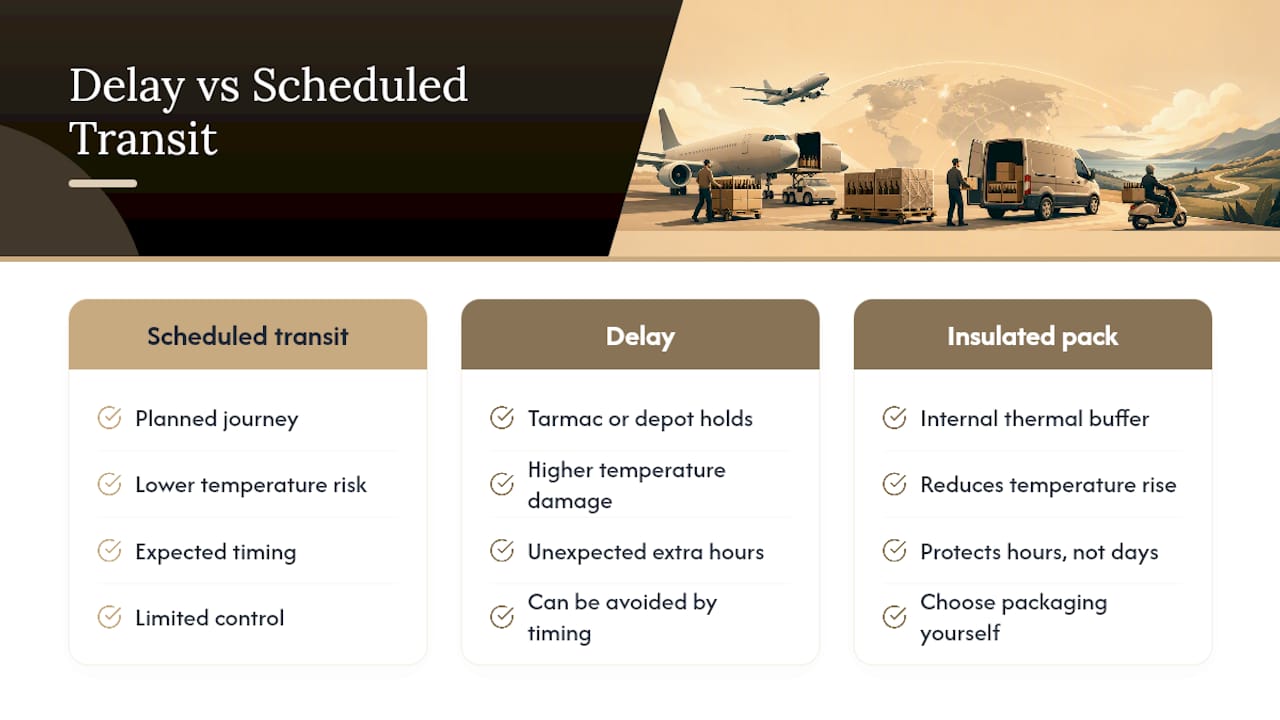
There’s little you can do about the delay itself, but you can control your exposure to it. Insulated packaging buys you hours, not days, so build in a buffer if you know a shipment might sit around. Avoid booking courier collections on a Friday afternoon before a long weekend if the parcel contains anything temperature-sensitive; it may well spend three days in a warm warehouse before it moves again.
For flights, keep beer out of direct sun on the tarmac side of things by packing it centrally in checked luggage rather than in an outer pocket, and avoid connecting itineraries with long layovers in hot climates where you can choose a more direct route instead.
If you’re shipping something valuable and the tracking shows an unexpected delay, contact the carrier rather than assuming it’ll sort itself out. Ask specifically whether the parcel has been held in a temperature-controlled area, particularly during a heatwave or a cold snap. Most couriers won’t proactively flag this, but they can usually tell you where a parcel has been sitting if you ask directly. A short call can also establish a paper trail that helps enormously if you later need to make a damage claim.
Can you get insurance for beer damaged in transit?
Most standard courier services include a modest amount of compensation cover as standard, but it’s rarely enough to cover a case of rare or imported beer, and alcohol is frequently excluded or capped separately from general goods cover. Read the carrier’s terms before you assume you’re protected.
Specialist liquid-shipping services and higher-tier courier options usually offer paid add-on insurance that specifically covers glass breakage and leakage, which is worth the extra cost for anything beyond everyday cans. For genuinely high-value shipments, commercial freight insurance through a specialist logistics provider is the appropriate route rather than relying on a courier’s built-in cover.
Whichever route you take, the claims process runs on evidence. You’ll typically need:
- Photographs of the packed box before dispatch, showing the packing method used.
- The original receipt or proof of value for the beer itself.
- Tracking information showing the parcel’s journey and delivery condition.
- Photographs of the damage on arrival, taken before anything is moved or discarded.
Claims get rejected far more often for missing evidence than for genuine carrier fault, so the five minutes spent photographing a box before it leaves your hands is rarely wasted. Keep every document together until the claim, if needed, is fully resolved.
What the rules actually tell us about moving beer safely
Most advice on this topic gets the emphasis backwards. People fixate on airline liquid limits when the bigger risk, by far, is glass breakage from bad packing, whether you’re flying or posting. The two-stage wrap-then-immobilise method is the part that actually determines whether your beer arrives drinkable.
The other gap in conventional advice is temperature. Guides mention it as an afterthought, when in reality a beer left on a hot tarmac or in an unrefrigerated depot over a delay can do more damage than any amount of jostling. If there’s one thing worth prioritising above all else, it’s this: choose cans when the beer allows it, and treat glass as something that needs deliberate engineering, not casual bubble wrap. Everything else, the courier choice, the insurance, the paperwork, is secondary to getting that one decision right.