Brighton Pop Ups: Book on Eventbrite, Visit Markets and Lost And Found Nights
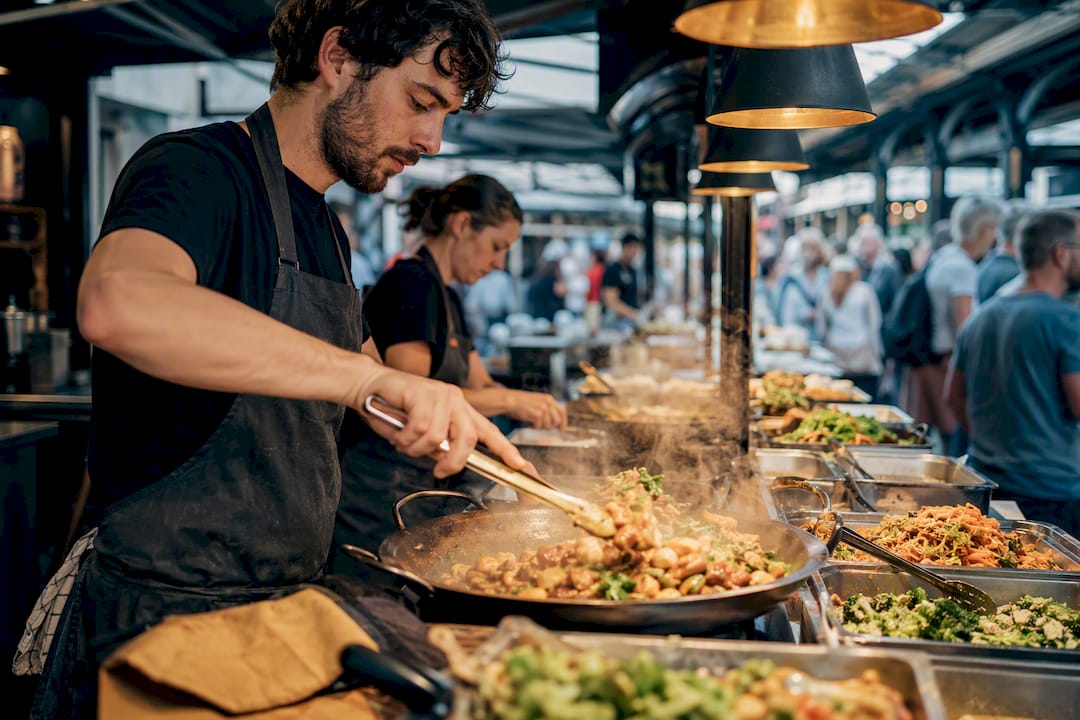
Check Saturday morning for Brighton Open Market, drop into Shelter Hall any lunchtime, and follow venue Instagram feeds for evening residencies. Those three moves cover most of the city’s food pop-up scene. For a supper club or hotel takeover, book ahead on Eventbrite. And if you fancy a street-food night with a pint in hand, Lost And Found Taproom in Fiveways hosts its own rotating vendor collaborations too.
TL;DR:
- Brighton Open Market remains the most reliable spot for daily pop-up stalls, especially busy on Saturday and lunchtime, with food options under £10.
- Shelter Hall offers social dining with seven kitchens and must-be-booked supper clubs or residencies that sell out quickly, often requiring at least a week’s notice.
- Using Eventbrite, Instagram, and local blogs regularly helps track ticketed events and last-minute pop-ups, especially for supper clubs that sell out fast.
- Market stalls and food halls are best for casual, group-friendly visits, while supper clubs and hotel pop-ups are suited for special occasions needing advance booking.
- Visiting Lost And Found Taproom in Fiveways provides a neighborhood hub for street-food collaborations and rotating craft beers, with potential for private bookings.
Table of Contents
- Where to look for food pop ups in Brighton
- How do you find current pop-up listings and book a table?
- What are the different pop-up formats and which suits you?
- Three weekend plans for Brighton’s food pop-up scene
- Local host spotlight: Lost And Found’s role in Brighton’s pop-up scene
- How do seasons and COVID-era habits still shape Brighton pop-ups?
- Why Brighton’s pop-up scene is worth paying attention to
- Fancy pairing your next pop-up visit with a proper pint?
- Sources
Where to look for food pop ups in Brighton
Brighton doesn’t have one central pop-up calendar, so you need to know the handful of places that reliably deliver. Each has its own rhythm, and knowing that rhythm is the difference between a great lunch and an empty stall.
Brighton Open Market on London Road is the most dependable starting point. It’s a covered market rebuilt in 2014, home to more than 50 independent traders, and open seven days a week. Saturday is by far the busiest day, and lunchtime is when the street-food stalls hit their stride. Check the Brighton Open Market official site for current opening hours before you set off, since trader lineups rotate through the week.
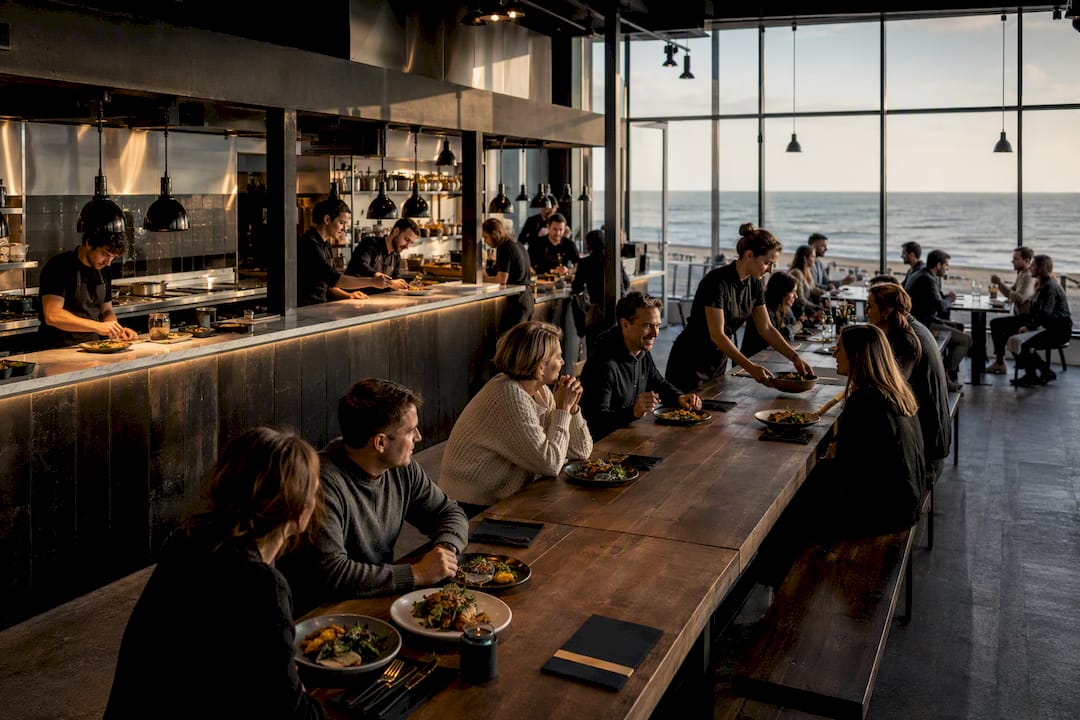
Shelter Hall on the seafront takes a different approach. It’s a semi-permanent food hall with seven independent kitchens under one roof, sea views, and shared tables that push you toward the kind of social dining you don’t get at a solo restaurant table. It opens daily from 11:30am, and weekends bring live music and DJs alongside the food. Go early. Popular stalls there sell out by early afternoon.
For something cheaper and more low-key, the Brighton Marina car boot runs every Sunday, 6am to 2pm, with free entry for buyers and free parking. Food traders sit alongside the usual car-boot stalls, so it’s less curated but genuinely free to browse.
Smaller venues fill the gaps. Hearth Cafe & Garden and similarly sized spots around the city run occasional supper clubs and one-off pop-up nights, usually announced with only a week or two’s notice.
A few practical notes worth keeping in mind:
- Markets and car boots are cash-and-card friendly and generally pram and dog accessible.
- Food-hall residencies like Shelter Hall suit groups better than quiet dinners.
- Budget stalls at the Open Market and Marina sit well under £10 a head; supper clubs run considerably higher.
How do you find current pop-up listings and book a table?
There’s no single app for this, so building a small habit of checking three sources covers almost everything.
- Eventbrite’s Brighton food-and-drink page aggregates most ticketed pop-ups, chef residencies and supper clubs happening across the city, and it’s the first place to check for anything requiring a booking.
- Venue Instagram and Facebook pages carry last-minute announcements that never make it to ticketing sites, especially for one-night residencies and vendor takeovers.
- Local food blogs and neighbourhood newsletters, such as roundups from Brighton on the Inside, tend to flag upcoming pop-ups a few weeks out, which gives you a head start on booking.
Ticketed events, particularly supper clubs, sell out fast because seating is deliberately limited to keep the format intimate. Market stalls don’t need booking at all, but they do run out of food, often by early afternoon.
Pro Tip: Set a phone alert for Thursday evening. That’s when most weekend pop-up announcements land on Instagram, giving you a full day’s head start on Friday bookers.
What are the different pop-up formats and which suits you?
Not every pop-up works the same way, and picking the wrong format for your plans is the most common mistake first-timers make.
- Market stalls are the entry point. Quick, cheap, no booking, ideal for sampling three or four different traders in one visit without committing to a full meal anywhere.
- Food-hall residencies, the Shelter Hall model, work well for groups with different tastes. Everyone picks a different kitchen, then meets at a shared table. It’s social by design.
- Supper clubs and chef residencies are the opposite: intimate, ticketed, often a fixed tasting menu with a dozen or so seats. These are where chefs test new dishes before they land on permanent menus.
- Hotel takeovers and seasonal pop-ups, like the Japanese pop-up Sora that ran at Brighton Marina’s Malmaison, tend to run for fixed weeks over summer. They’re scenic and well-reviewed but usually pricier and always need advance booking.
For a family outing, markets and Shelter Hall are safest, since both have easy walk-up access and no dress code. Vegans generally do best at markets, where trader variety means more substitution options. Budget diners should stick to market stalls and the Marina car boot. Save supper clubs and hotel takeovers for a proper celebration, when the extra cost and the booking effort feel worth it.
Three weekend plans for Brighton’s food pop-up scene
If you want a ready-made itinerary rather than a list of options, here are three that work without much planning.
- Budget Saturday morning: arrive at Brighton Open Market by 11am, before the lunchtime crowd, and work through three or four stalls. Total spend under £20, no booking needed.
- Full foodie crawl: lunch at Shelter Hall around midday, then book a supper club or chef residency for the evening through Eventbrite at least a week ahead, since good ones sell out fast.
- Relaxed afternoon: a late lunch at one of Shelter Hall’s resident kitchens around 2pm, once the queues thin out, followed by a slow walk to the seafront for drinks.
Whichever plan you choose, factor in walking time between the seafront and London Road. It’s roughly 20 minutes on foot, so don’t try to squeeze both into a tight lunch window.
Local host spotlight: Lost And Found’s role in Brighton’s pop-up scene
Away from the seafront and market halls, Lost And Found Taproom in Fiveways has become one of the neighbourhood’s steadier spots for street-food collaborations. The taproom offers a rotating lineup of craft beers and pairs that with occasional vendor nights hosting street-food traders on-site.
- Rotating beer selection from various breweries, swapped regularly rather than fixed
- Space used for street-food collaborations and occasional vendor nights
- Venue hire available for private events, subject to conditions
One recent example was a Hungry Nomad street-food night held at the taproom, giving a sense of the kind of casual, community-first evening on offer. Check the taproom’s social channels for upcoming dates, since these nights aren’t on a fixed weekly schedule.
How do seasons and COVID-era habits still shape Brighton pop-ups?
Pop-up frequency in Brighton still moves with the calendar in ways that predate the pandemic but were sharpened by it. Summer brings the heaviest concentration of events: seafront food halls extend hours, hotel takeovers like seasonal Japanese or Mediterranean residencies run for fixed multi-week windows, and outdoor markets stay busy well into the evening. Winter thins things out considerably, with fewer outdoor stalls and more indoor supper clubs replacing the seafront crowds.
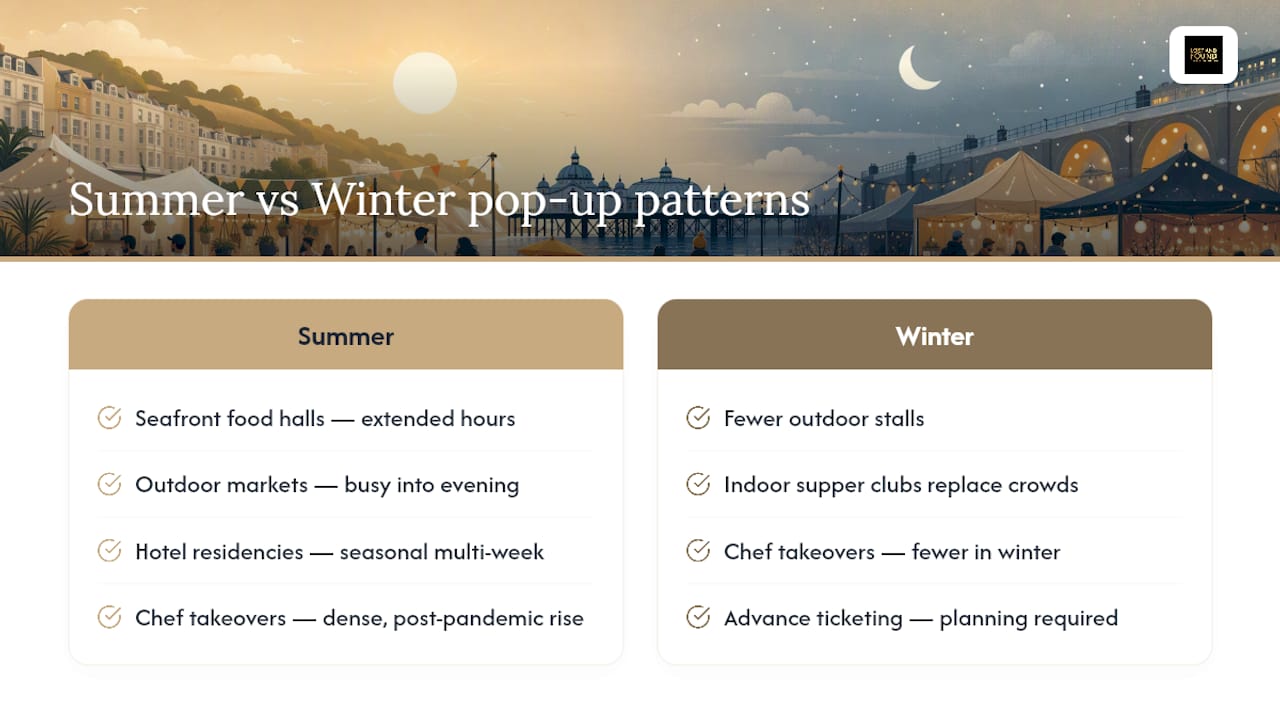
The pandemic left a lasting mark on format rather than frequency. Many chefs who lost restaurant jobs or couldn’t reopen full sites turned to pop-ups as a lower-risk way back into the trade, testing menus without the overheads of a permanent lease. That shift help explain why Brighton now has such a dense cluster of chef residencies and short-term takeovers compared to before, alongside the traditional markets that never really changed.
Booking culture also shifted permanently. Advance ticketing through platforms like Eventbrite became the default for smaller events during the pandemic and never reverted, which is why walk-in supper clubs are now rare. If you’re planning around a specific season, expect summer to reward spontaneity and winter to reward planning ahead.
Why Brighton’s pop-up scene is worth paying attention to
Pop-ups are where Brighton’s food scene actually experiments. A trader testing a new dish at a market stall or a chef trying a tasting menu in a borrowed kitchen carries none of the financial risk of a full restaurant launch, which is exactly why the food tends to be more adventurous than what you’ll find on a permanent menu. Lost And Found’s own street-food nights fit that same spirit: giving vendors and drinkers in Fiveways a low-stakes place to try something new. That’s community building disguised as a good night out.
— Author
Fancy pairing your next pop-up visit with a proper pint?
Lost And Found Taproom offers a local option for drinks after a market crawl. Its beer and food menus are available online for checking current offerings, with a rotating lineup of UK breweries that changes regularly.
Whether you’re after a pint to finish off a Shelter Hall lunch or you’re organising your own street-food collaboration, the taproom’s venue hire page covers what’s involved in booking the space, and the current beer menu is worth a look before you visit. If you’re planning a bigger event, event-hire specialists like Champagne Tower Hire offer useful planning guidance for the extras, and get in touch to check upcoming street-food nights or ask about hosting your own.
Sources
- Brighton markets guide — Brighton Insider
- Brighton Open Market, London Road — official site
- Eventbrite — Brighton food-and-drink pop-ups listings
- What I thought of Japanese pop-up Sora at Brighton Marina — The Argus
Recommended
- Stanmer Park Makers Fair: Brighton’s Local Creators, Craft Beer & Community
- The Ultimate Brighton Summer Bucket List: 10 Things to Do with Friends That Don’t Cost a Fortune
- Date night ideas Brighton: experience-led plans for couples
- Festive Artist Open Houses in Brighton: Your Guide to Local Creativity & Christmas Cheer