Field blend wine: a terroir-first guide for enthusiasts
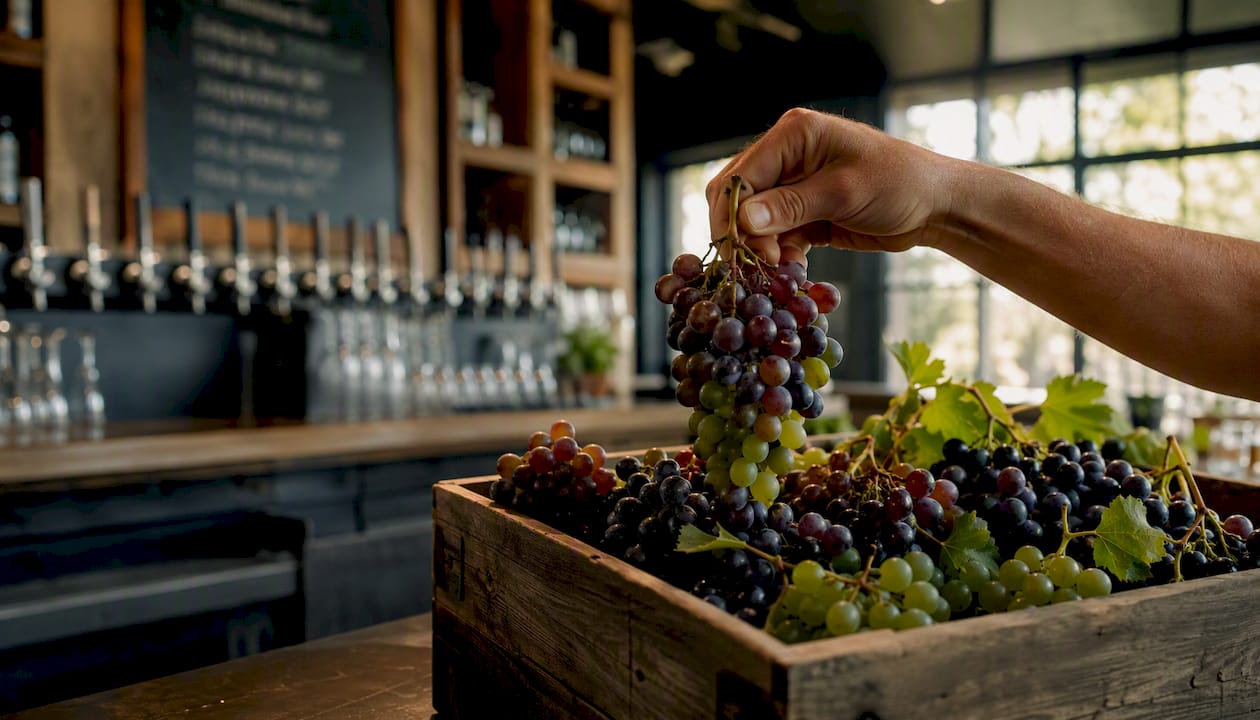
A field blend is a wine made from multiple grape varieties planted, harvested and co-fermented together in the same vineyard block, with the vineyard itself writing the recipe rather than the winemaker in the cellar. For enthusiasts, that distinction matters: field blend wines express a specific patch of ground with a complexity and integration that no amount of post-fermentation blending can fully replicate, and the diversity of varieties in the plot gives the vine a natural buffer against unpredictable seasons.
Key takeaways
Field blend wine is defined by co-planting, co-harvesting and co-fermentation in a single vineyard block, and that process produces chemical interactions no post-fermentation blending can replicate.
| Point | Details |
|---|---|
| Core definition | A field blend is co-planted, co-harvested and co-fermented; the vineyard sets the proportions, not the winemaker. |
| Ask the right questions | Confirm co-planting, co-harvest and co-fermentation with your merchant; vintage variation is a sign of authenticity. |
| Serve it right | Use the 20-minute rule: whites taken from the fridge shortly before pouring, reds chilled briefly before serving. |
| Terroir and resilience | Mixed plantings buffer against seasonal variability and express a specific site more completely than any single variety can. |
| Try at Lost And Found | Lost And Found Taproom in Brighton stocks rotating field-blend bottles for on-site tasting or to take home. |
Table of Contents
- What exactly is a field blend wine?
- How field blends are made, from vineyard to bottle
- Where do field blends come from?
- Why are winemakers and drinkers reviving field blends?
- What do field blends taste like, and how should you serve them?
- How to find and buy field-blend wines in the UK
- Recommended field-blend bottles and producers to try
- Why field blends matter at Lost And Found Taproom
- Taste field blends at Lost And Found Taproom in Brighton
- Sources
What exactly is a field blend wine?
The term “field blend” describes a practice that predates modern varietal winemaking by centuries. Several grape varieties share the same rows, ripen side by side, go into the picking bins together, and ferment as a single undivided lot. The vineyard decides the proportions; the winemaker works with whatever that season delivers.
This is fundamentally different from a modern blended wine, where a winemaker vinifies Grenache, Syrah and Mourvèdre separately, then tastes and assembles them to a formula. In a field blend, those decisions never happen. The varieties are inseparable from the moment of harvest, which means the wine’s character is locked in long before it reaches the cellar.
Typical features that distinguish a genuine field blend:
- Vintage variability: proportions shift year to year as different varieties respond differently to each season’s weather.
- Site-driven composition: the grower planted what suited the soil and microclimate, not what the market wanted.
- Old-vine intensity: many surviving field-blend plots are old, sometimes very old, which concentrates flavour and deepens root systems.
- No post-fermentation recipe: there is no blending sheet; the wine is what it is.
The contrast with post-fermentation blending is worth spelling out plainly. When a winemaker blends finished wines, they can adjust ratios, correct deficiencies and target a house style. Co-fermentation changes the chemistry itself: tannins bind with proteins from other varieties, colour compounds fix differently, and esters develop in ways that cannot be reproduced by mixing the same wines after the fact. The result is a texture and aromatic integration that feels grown rather than assembled.
How field blends are made, from vineyard to bottle
Vineyard choices
Growers interplant varieties for reasons that are practical as much as philosophical. Historically, spreading ripening windows across a single plot reduced the risk of losing an entire harvest to one bad week of weather. A variety that ripens early acts as insurance against an autumn storm; a late-ripening one catches the last warm days. Soil variation within a block often suits different varieties differently, so a mixed planting uses the land more efficiently than a monoculture.
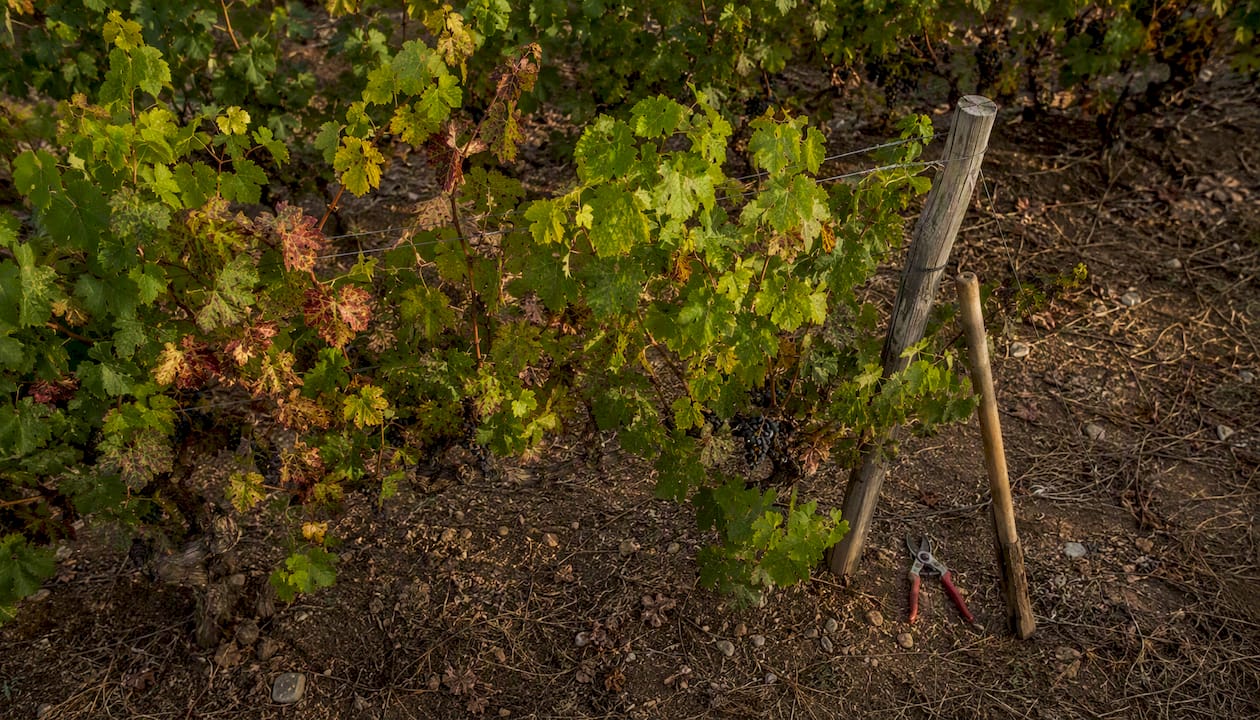
The challenge is that those mismatched ripening windows become a headache at harvest. A Viognier planted among Grenache may be ready two weeks before its neighbours.
Harvest decisions
Producers rely on repeated sampling of Brix (sugar level), pH and titratable acidity across the block, combined with tasting, to identify an average harvest date that works for the majority of varieties. Some accept that early-ripening varieties will be slightly overripe and late ones slightly underripe, treating that tension as part of the wine’s character.
A more interventionist approach: freeze the must from early-picked varieties, then add it to the fermentation tank when the later varieties come in. This keeps everything co-fermenting without sacrificing the freshness of the early fruit.
Key winemaking considerations once the fruit is in:
- Whole-block co-crush: all varieties go through the press together, so sorting by variety is impossible.
- Yeast dynamics: wild or selected yeasts work across a more complex substrate than a single-variety ferment, which can produce unexpected aromatic results.
- Tannin and colour interactions: darker-skinned varieties contribute pigment and tannin that bind with proteins from lighter varieties, softening structure and deepening colour simultaneously.
- Post-fermentation limits: once co-fermented, you cannot un-blend. Adjustments are limited to ageing vessel choice, fining and filtration.
Pro Tip: If you are experimenting with field blending at home or on a small plot, keep detailed harvest notes on each variety’s Brix and pH across at least three sampling dates. That data tells you whether your average harvest date is genuinely average or whether you are consistently sacrificing one variety for another — and gives you the evidence to adjust your planting ratios over time.
Where do field blends come from?
Field blending was the norm before varietal labelling became a commercial tool in the mid-20th century. Most vineyards in Europe were mixed plantings; the idea of a single-variety wine was the exception, not the rule. As markets demanded recognisable grape names on labels, producers pulled out mixed plots and replanted with single varieties. What survived tended to survive by accident: old plots too remote or too valuable to replant, or regions where tradition carried enough weight to resist the trend.
The regional traditions that kept field blending alive are now its strongest selling points.
| Region | Tradition and style | Notable producer |
|---|---|---|
| Vienna, Austria | Wiener Gemischter Satz DAC: minimum three varieties; fresh, mineral, aromatic whites | Mayer am Pfarrplatz, Wieninger |
| Alsace, France | Complantation and Edelzwicker: historic mixed plantings; lighter, everyday blended whites | Marcel Deiss |
| Douro, Portugal | Dozens of permitted varieties co-planted in old “field blend” parcels; structured, complex reds and whites | Quinta do Portal, Casa de Mouraz, Niepoort |
| Châteauneuf-du-Pape, France | Permitted varieties; traditional estates still co-plant and co-harvest | Château Rayas |
| California, USA | Heritage “mixed blacks” vineyards dating to the late 19th and early 20th centuries; Zinfandel-led with Petite Sirah, Carignan and others | Ridge Vineyards |
Wiener Gemischter Satz DAC is the most formally codified field-blend appellation in the world. The result is a style of white wine that is simultaneously aromatic, mineral and food-friendly, and it has become a benchmark for what a regulated field-blend tradition can achieve.
Marcel Deiss in Alsace takes the philosophy further than almost anyone. Jean-Michel Deiss has spent decades replanting his vineyards with mixed varieties, arguing that Alsace’s true identity lies in its soils rather than its grape names. His wines are labelled by lieu-dit rather than variety, a deliberate statement about terroir over cultivar.
In the Douro, old-vine parcels at estates like Quinta do Portal, Casa de Mouraz and Niepoort contain dozens of indigenous varieties growing together, some of which have never been formally identified. Niepoort’s Redoma range draws on these mixed plots, producing wines of unusual depth and complexity. Casa de Mouraz in the Dão works with similarly ancient mixed plantings, though its focus is on the Dão rather than the Douro.
Ridge Vineyards in California’s Santa Cruz Mountains and Sonoma is the most prominent American custodian of heritage field-blend vineyards. Its Geyserville bottling, for example, draws on a vineyard planted in the 1880s with Zinfandel, Carignan, Petite Sirah and Mataro growing together. Ridge has never replanted these blocks to single varieties, treating their mixed character as the point rather than the problem.
Why are winemakers and drinkers reviving field blends?
Producers are returning to field blends for a reason that is simultaneously practical and philosophical: a mixed planting expresses a place more completely than any single variety can, and it does so with a resilience that monoculture vineyards cannot match.
The contemporary revival frames field blends not as a retro curiosity but as a premium, terroir-led category that also happens to be well-suited to the climate pressures producers now face. A vineyard with ten varieties ripening across a six-week window is far less exposed to a single catastrophic weather event than a block of one variety with a two-week harvest window. That biodiversity argument is gaining traction in regions where drought, heat spikes and erratic rainfall are becoming routine.
The chemistry argument is equally compelling. Co-fermentation produces tannin-protein binding, colour fixation and ester development that differ from anything achievable by blending finished wines. Winemakers who have worked with both approaches consistently report that the integration in a co-fermented wine feels different: softer, more seamless, less obviously constructed.
The Guardian’s coverage of the growing consumer interest in field blends frames the appeal in similar terms: these wines show the vineyard rather than the grape, which resonates with a generation of drinkers who are more interested in provenance than in varietal recognition. Specialist wine lists and independent merchants in the UK have noticed the shift, with field-blend bottles appearing more frequently alongside natural and low-intervention wines.
What do field blends taste like, and how should you serve them?
Field blends rarely taste like any single variety you can point to. The aromatics are layered, the structure tends to be integrated rather than angular, and the finish often carries a complexity that shifts as the wine opens. Decanter describes this as a “kaleidoscope” effect: individual components are present but not separable.
Broad style profiles by region:
- Viennese Gemischter Satz whites: fresh, mineral, with floral and citrus notes; medium body; lively acidity. Think Grüner Veltliner crossed with something more aromatic and less predictable.
- Douro red field blends: structured, with dark fruit, dried herbs and a savoury earthiness; tannins are firm but integrated; long finish.
- California heritage blends: Zinfandel-forward warmth and spice, with Petite Sirah adding depth and Carignan contributing brightness; full-bodied, generous, occasionally rustic.
Serving temperatures
| Style | Recommended temperature |
|---|---|
| Viennese Gemischter Satz (white) | 10–12°C |
| Douro white field blend | 10–12°C |
| Douro red field blend | 16–18°C |
| California heritage red blend | 16–18°C |
| Alsace Edelzwicker / Complantation | 10–12°C |
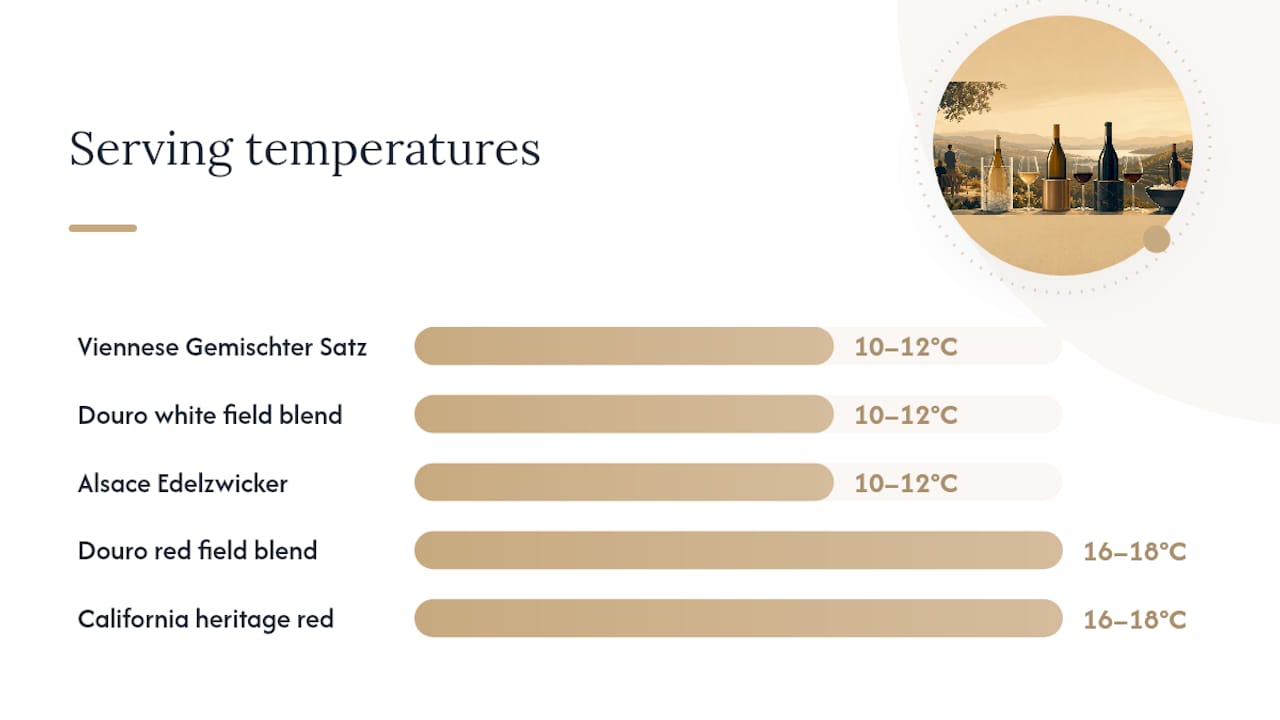
The 20-minute rule is the simplest practical tool for getting these temperatures right at home. VinePair’s explanation is straightforward: take a white field blend out of the fridge 20 minutes before you pour it, so it warms slightly from fridge temperature (around 4–5°C) to a more expressive 10–12°C. For a red, put it in the fridge for 20 minutes before serving to bring it down from room temperature to the 16–18°C range where its aromatics open properly. Most UK homes run warmer than ideal for red wine, so the brief chill is not optional — it genuinely changes what you taste. For more on serving temperatures by style, the Lost And Found guide to beer serving temperatures applies the same logic across different drink categories.
Food pairings for field-blend wines:
- Viennese whites with roast chicken, grilled sea bass, or a simple cheese board.
- Douro reds with lamb shoulder, slow-cooked pork, or aged hard cheeses.
- California heritage reds with barbecued meats, spiced sausages, or a rich tomato-based pasta.
- Alsace whites with charcuterie, tarte flambée, or mild curries.
How to find and buy field-blend wines in the UK
Field blends are not always labelled as such. Some producers use the term proudly on the front label; others bury it in the back-label text or leave it out entirely. Knowing what to ask and what to look for saves you from buying a conventionally blended wine under the impression it is something more interesting.
- Ask whether the vineyard is co-planted. A genuine field blend starts in the ground. If the producer vinifies varieties separately and then assembles them, it is a blend, not a field blend.
- Confirm co-harvest. All varieties should come off the vine in the same pick, not in separate harvests weeks apart.
- Check for co-fermentation. This is the defining step. If the winery ferments varieties separately and blends the finished wines, the result may be excellent but it is not a field blend.
- Ask about vintage variation. A genuine field blend changes year to year as the proportions shift with the season. A producer who claims the wine is consistent across every vintage is either blending after fermentation or managing the vineyard in a way that removes the natural variability.
- Look for appellation signals. Wiener Gemischter Satz DAC on the label is a legal guarantee of co-planting and co-fermentation. Douro DOC wines from old-vine parcels are strong candidates. Alsace wines labelled by lieu-dit rather than variety (particularly from Marcel Deiss) are almost certainly field blends.
For online searching, terms like “co-planted,” “old vines,” “mixed planting,” “Gemischter Satz,” and “field blend” in the product description are reliable signals. UK importers who specialise in natural and low-intervention wines, such as those stocking terroir-driven selections, tend to carry field-blend bottles and can usually tell you the vineyard story in detail.
Be cautious when a label uses “blend” as a marketing term without specifying the vineyard origin or the vinification method. The word “blend” alone means nothing about co-fermentation or co-planting. Seasonal availability is also a factor: field-blend wines from small producers often arrive in the UK in limited quantities and sell through quickly, so it is worth asking your merchant to alert you when new stock lands.
Recommended field-blend bottles and producers to try
These producers are the ones most consistently cited by specialists, and most are findable through UK importers or specialist online merchants.
-
Marcel Deiss, Alsace (mid to premium): The Bergheim or Altenberg de Bergheim bottlings are the clearest expression of his complantation philosophy. Expect layered aromatics, textural richness and a finish that evolves in the glass. Widely available through UK natural wine importers.
-
Quinta do Portal, Douro (entry to mid): The estate’s field-blend reds from old mixed parcels offer structured dark fruit with a savoury, earthy character. Good entry point for drinkers coming from conventional Douro reds. Available through Portuguese wine specialists in the UK.
-
Casa de Mouraz, Dão (entry to mid): Organic, old-vine field blends from the Dão, a region that has preserved mixed plantings more consistently than almost anywhere else in Portugal. Lighter in body than Douro reds, with more red fruit and floral lift. Worth seeking out for a tasting flight alongside a Douro example.
-
Niepoort, Douro (mid to premium): Dirk Niepoort’s Redoma range draws on old mixed-variety parcels and produces wines of unusual complexity. The Redoma Tinto is a reliable benchmark for what a serious Douro field blend can achieve. Available through specialist UK importers.
-
Ridge Vineyards, California (mid to premium): The Geyserville bottling is the most accessible introduction to California’s heritage field-blend tradition. Zinfandel-led, with warmth and spice balanced by the other varieties in the old mixed planting. Available through US wine specialists and some larger UK independents.
For a tasting flight, start with an entry-level Douro or Dão example alongside a Viennese Gemischter Satz, then move to a Ridge or Marcel Deiss for contrast. The difference in how each wine expresses its place, despite the shared production philosophy, is the clearest demonstration of what field blending actually means. You might also find it useful to read about orange wine as another terroir-forward style that often attracts the same producers and drinkers.
Why field blends matter at Lost And Found Taproom
At Lost And Found Taproom in Brighton’s Fiveways, the wine selection follows the same logic as the beer list: rotating, producer-led, and chosen because it tells a story about where it comes from. Field-blend wines fit that approach naturally. They are wines that resist easy categorisation, reward curiosity, and change from vintage to vintage in ways that keep the conversation going.
When a field-blend bottle lands on the shelf here, it tends to come with a producer story worth telling: an old Douro parcel with varieties nobody has formally identified, or a Viennese hillside vineyard where the grower has been making the same wine for generations. That provenance is exactly what the Lost And Found curation is built around. The food and beer menus are available online if you want to plan a visit around what is currently pouring.
Taste field blends at Lost And Found Taproom in Brighton

Lost And Found Taproom is the place in Brighton to try terroir-driven wines you will not find in a supermarket. The rotating wine selection includes field-blend bottles sourced from independent producers, available to drink on-site or take home. Check the current menu to see what is pouring this week.
If you are planning a tasting event or a private gathering, the venue hire options at Lost And Found include a minimum bar spend arrangement that works well for a small comparative tasting flight. Bring a group, pick three field-blend bottles from different regions, and let the differences speak for themselves. The staff know the wines and can talk you through the producers.
Sources
- What is a field blend? | Decanter
- Field blends get radical image change | The Drinks Business
- A quick guide to field blends | Wine Enthusiast
- Field blends — Multiple varieties co‑planted, co‑harvested, co‑fermented | WineWiki
- Looking to field blends as the ultimate expression of terroir | SevenFifty Daily