Drinks tokens for events: a UK organiser’s buying and setup guide
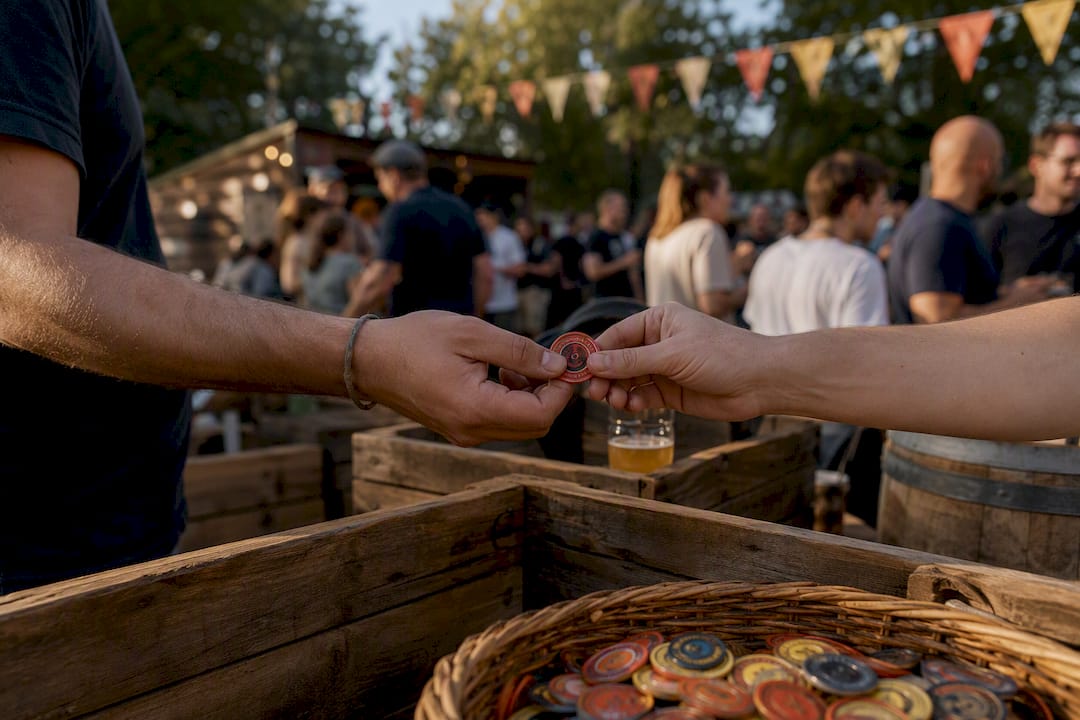
Use drinks tokens for events where you need controlled, faster bar service. The simplest setup for most UK weddings, private parties and small festivals is a drink-equivalent token: one token buys one standard drink, no change required. For any outdoor or public-facing event, check whether your local council enforces a Public Spaces Protection Order before you plan free-pour or open-bar drinking.
- Tokens suit capped allowances, ticketed events, and any bar expecting a rush.
- Drink-equivalent tokens (1 token = 1 drink) are faster to run than monetary tokens.
- Check for a PSPO covering your venue before serving alcohol outdoors.
Key Takeaways
Drink-equivalent tokens paired with a short bar menu give UK organisers the fastest, least error-prone way to control alcohol service at private events.
| Point | Details |
|---|---|
| Choose drink-equivalent tokens | One token per standard drink removes change calculations and speeds up bar service. |
| Order with a buffer | Add 10 to 15% extra tokens on top of your guest and duration calculation for spillage and miscounts. |
| Match token type to event size | Paper rolls for small low-risk events, printed card for weddings, wristbands for 300+ guests. |
| Check PSPO status early | Confirm whether your venue falls under a local Public Spaces Protection Order before serving outdoors. |
| Consider managed bar hire | Lost And Found Taproom runs private hires with a managed bar and minimum spend instead of a self-run token system. |
Table of Contents
- Types of drink tokens and when to choose each
- How much should each token cost and how many should you order?
- Setting up the token booth and running the bar smoothly
- Where to buy drink tokens in the UK
- How Lost And Found runs tokens for private hires in Brighton
- What most token guides get wrong
- Venue hire and event support at Lost And Found Taproom
- Frequently asked questions
- Sources
Types of drink tokens and when to choose each
Your choice of token material depends almost entirely on event size, budget, and how worried you are about people photocopying your tickets.
Paper roll tickets are the cheapest route and work fine for a garden party or a small fundraiser where trust runs high and stakes are low. You tear them off a roll, hand them over, done. They’re disposable, they’re not pretty, and that’s the point.
Printed card or plastic tokens step things up. You can brand them with a couple’s names, a company logo, or an event date, and they hold up better in sweaty hands over a long evening. This is the sweet spot for weddings and mid-sized private hires, and printable tickets are commonly recommended for exactly this reason: they speed up the bar and double as a keepsake.
Acrylic or metal chips cost more per unit but survive being kept as souvenirs, which some hosts like for milestone birthdays or anniversary parties. Custom printers note that plastic and acrylic tokens also carry stronger anti-counterfeit properties than plain paper, which matters once your guest list runs into the hundreds.
Wristbands or detachable tabs earn their keep at large festivals and multi-day events, where you need to verify who’s paid and who’s over 18 at a glance, without stopping to inspect a token.
- Under 50 guests, low risk: paper rolls.
- Wedding or milestone party: printed card tokens.
- 300+ guests or a ticketed festival: wristbands with tear-off tabs.
Pro Tip: If you’re worried about counterfeiting, print tokens in a colour or pattern you change for every event. Reusing the same design year after year is how people turn up with last year’s leftovers.
How much should each token cost and how many should you order?
Two systems exist: drink-equivalent tokens, where one token buys one standard drink regardless of price, and monetary tokens, denominated in pounds that guests spend against a menu. Drink-equivalent tokens win for speed. Bartenders don’t have to calculate change or convert between denominations, which keeps a queue moving during a rush. Monetary tokens suit events with a wide price spread between drinks, such as a cocktail bar sitting next to a beer taps, where a flat one-token-one-drink rule would undercharge on spirits.
Work out quantities like this:
- Estimate drinks per guest per hour. A wedding reception with a four hour bar window typically sees a modest number of drinks per guest in that time.
- Multiply guests by expected drinks, then add a buffer.
- Round up to your supplier’s print batch size, since most printers work in blocks of 100 or 250.
For 50 guests over four hours, plan tokens accordingly. Larger events over longer periods require more tokens, adjusted for expected consumption per guest.
Add a buffer on top for spillage, miscounts, and the guest who loses their wristband tab. Pre-selling token bundles through your ticketing platform locks in revenue before the event starts and thins the queue at the exchange desk on the night, so decide early whether tokens go on sale in advance or only on the door.
Setting up the token booth and running the bar smoothly
Put your token booth close to the entrance but away from the bar queue itself, so people buying tokens don’t tangle with people collecting drinks. For anything over 150 guests, staff the booth with at least two people: one taking payment, one handing over tokens and answering questions.
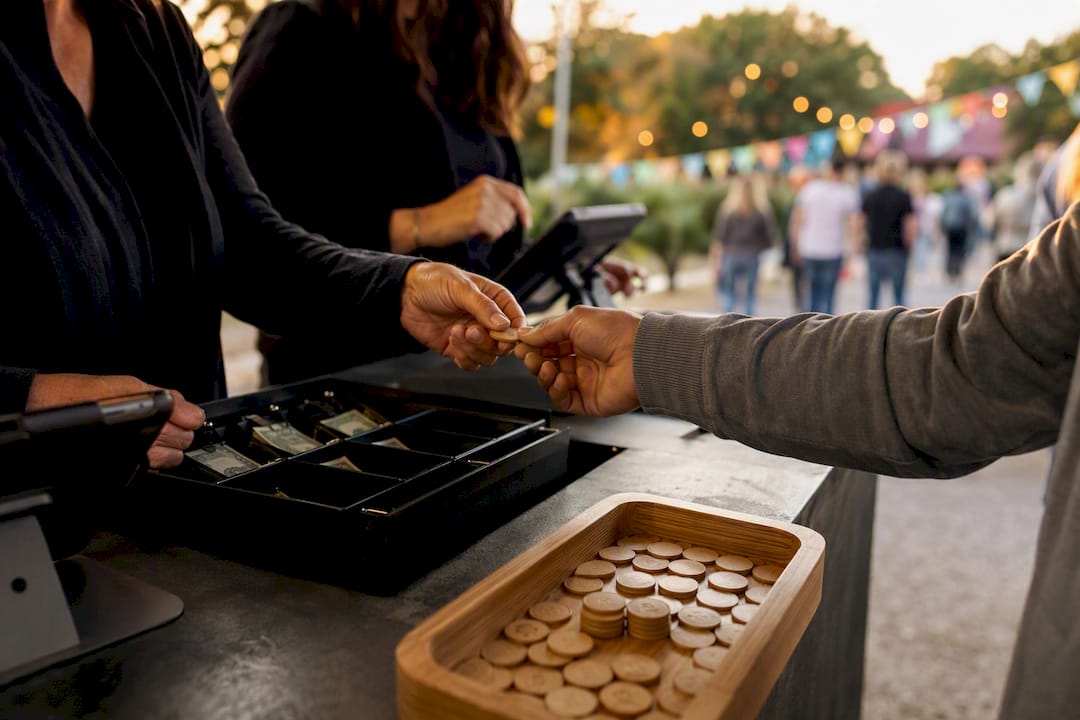
The workflow should run in one direction only. Guests buy or collect tokens at the booth, walk to the bar, hand tokens to bar staff in exchange for a drink, and bar staff drop used tokens into a sealed box rather than a loose till drawer. That last step matters more than it sounds. Limiting the bar to five to seven fast-pouring drinks speeds every single one of those exchanges, and it’s worth pairing with a token system rather than relying on either alone.
At the end of each shift, count unredeemed tokens against tokens issued and cash taken. The gap tells you your redemption rate and flags theft or miscounting early, while it’s still fixable.
Bar staff still need to check ID and refuse service to anyone visibly over the limit, token or no token. A token isn’t a legal shortcut around Challenge 25 or your venue’s licensing conditions.
- Keep a spare float of 50 to 100 tokens behind the bar in case the booth runs dry mid-service.
- If a card machine or booth system fails, switch to a manual paper log with a named staff member signing off cash received.
Pro Tip: Give bar staff a torch or UV light if you’re using security-marked tokens. It takes two seconds to check and stops the same fake ticket doing the rounds all night.
Where to buy drink tokens in the UK
For a party next weekend, Amazon.co.uk and Etsy UK both stock ready-printed and customisable drink ticket packs with next-day delivery on many listings, which suits smaller private events with no branding requirements.
For anything branded, UK specialist printers such as Secprint and TokensFor offer roll tickets, printed card tokens and acrylic options, with turnaround typically running from a few days for simple roll tickets to one to two weeks for custom acrylic designs with proofing.
- Retail marketplaces: fastest, cheapest, no branding, ideal under 200 guests.
- UK custom printers: branded, better anti-counterfeit features, ideal for weddings and repeat events.
- Specialist acrylic and metal suppliers: premium keepsake tokens, longest lead time, best for milestone events with a smaller guest count.
Always request a physical sample and approve a proof before committing to a full print run, and ask suppliers directly what anti-counterfeit options they offer if your event is ticketed for public sale.
How Lost And Found runs tokens for private hires in Brighton
At Lost And Found Taproom, private hires rarely need a full token system at all. A short, rotating draught line means guests order directly at the bar, and the taproom team tracks consumption against an agreed minimum bar spend rather than counting tickets. That keeps the bar quick without an extra layer of admin for smaller parties.
For larger bookings where a host wants a capped allowance, staff work with organisers beforehand to agree a simple drink-equivalent system, drawing on the same private party planning checklist used for every hire.
- Short, fast-pouring beer and wine list keeps queues down without tokens for most bookings.
- Staff handle ID checks and pacing exactly as they would on a normal trading night.
- Planners can review the taproom’s beer menu in advance to decide whether a token cap is even necessary.
What most token guides get wrong
Most advice on this topic treats tokens as a pricing tool first and a service tool second. That’s backwards for the majority of UK events. The real value of a token system is queue speed and consumption control, not squeezing extra margin out of guests, and organisers who over-engineer denominations or introduce multiple token tiers usually end up slowing their own bar down.
The conventional wisdom also underplays the legal side. Plenty of guides mention PSPOs in passing and move on, but for any event with an outdoor or semi-public element, that check should happen before you order a single token, not after.
If there’s one thing to prioritise, it’s this: pick drink-equivalent over monetary tokens unless your drinks menu has a genuinely wide price spread. Simplicity at the bar beats precision on paper almost every time, and a short menu paired with a single token type is the fastest system you can run without hiring extra staff.
Venue hire and event support at Lost And Found Taproom
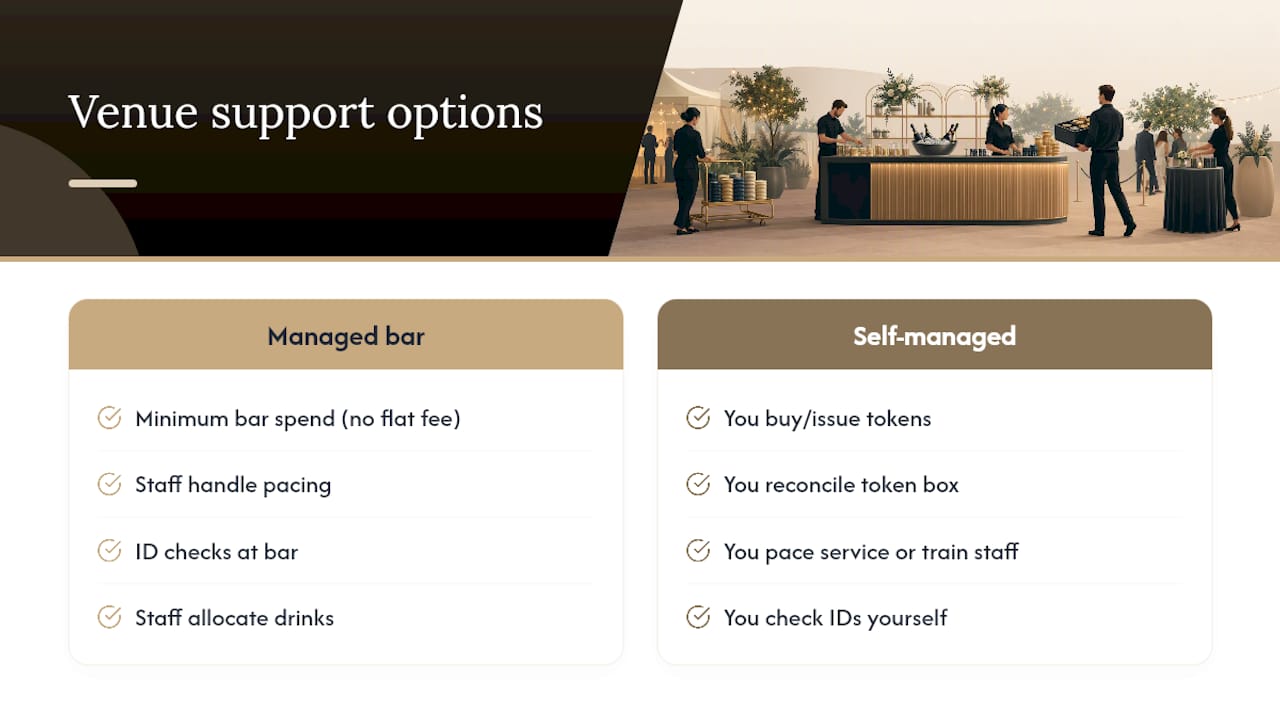
If you’re weighing up whether to manage tokens yourself or hand the bar over to people who already run one, Lost And Found Taproom offers venue hire in Brighton’s Fiveways with a managed bar built in, so you’re not the one reconciling a token box at midnight.
Private hires come with a minimum bar spend rather than a flat hire fee, and the taproom team handles pacing, ID checks and drink allocation directly at the bar, drawing on a rotating beer menu built for fast service rather than a token exchange. For hosts who still want a capped allowance for guests, staff can agree a simple drink-equivalent system in advance using the same venue hire and event support process used for every private booking. If you’re also thinking about waste and single-use materials for your event, it’s worth a look at sustainability practices for event catering before you commit to disposable tokens at all.
Check availability for your date and get a bar spend quote through the venue hire page.
Frequently asked questions
Are drinks tokens for events legal to use at outdoor parties in the UK? Yes, but check whether your venue sits within a PSPO first. These orders let authorised persons restrict public drinking and demand alcohol be surrendered, regardless of your token system.
How many drink tokens should I order per guest? A rough rule is two to three drinks per guest for a four hour reception, rising to four for a longer six hour event, plus a 10 to 15% buffer for spillage and miscounts.
Should I use monetary tokens or drink-equivalent tokens? Drink-equivalent tokens, where one token buys one standard drink, are simpler and faster for most events unless your menu has a very wide price spread between drinks.
Where can I buy custom drink tokens quickly in the UK? Amazon.co.uk and Etsy UK suit last-minute, unbranded needs. Specialist UK printers such as Secprint or TokensFor handle branded runs with longer lead times.
Sources
- Elite Event Group — How to handle high-volume serving at festival bars
- Secprint — Drink tokens for events