200 Drinks for 50 Guests in the UK: shopping list & glassware

For a typical four-hour party with 50 guests, plan on roughly 200 drinks total, split as 90 beers or ciders, 60 glasses of wine or fizz, 25 spirit measures, and the rest soft drinks and water. Exact numbers shift with your guests’ habits, the drinks’ strength, and how generous your pours are, so use the calculator and worked examples below to fine tune your shopping list into bottles, cans, and litres.
TL;DR:
- For a four-hour party with 50 guests, expect approximately 200 drinks, mainly split between beer, wine, spirits, and soft drinks, with adjustments based on guest habits.
- Converting total drinks into UK alcohol units reveals that a large wine glass may contain more alcohol than a shot of spirits, affecting pour sizes and quantities needed.
- Proper planning of glassware, ice, and service timing is crucial, with roughly 75 wine glasses and 10 ice bags recommended for 50 guests to ensure smooth flow.
- A balanced drinks list should account for guest preferences, cultural considerations, and allergy needs, including non-alcoholic mocktails and allergen-free options.
- Over-ordering sealed bottles and carefully managing leftovers reduce waste, while pacing and staffing are more important for a successful event than exact bottle counts.
Table of Contents
- Quick calculator and rules of thumb for scaling your order
- Converting your totals into bottles, cans and litres
- Shopping list, glassware and ice you’ll actually need
- Serving plan, staffing and pacing on the day
- Thinking about who’s actually in the room
- Covering allergies and dietary needs in your drinks order
- Non-alcoholic options that go beyond squash and cola
- Keeping drinks fresh from delivery to serving
- Working out a sensible budget per guest
- Managing leftovers and cutting down on waste
- What actually matters when you’re planning drinks for a crowd
- Let Lost And Found handle the drinks side of your event
- Where these figures and rules come from
- Sources
- FAQ
Quick calculator and rules of thumb for scaling your order
The most reliable starting point is a per-hour rule: guests drink faster in the first hour and settle into a steadier pace afterwards. Most party planning guides converge on 2 drinks per person in the first hour, then 1 drink per person for every hour after that. For 50 guests over four hours, the sum works out simply.
- Hour one: 50 guests × 2 drinks = 100 drinks.
- Hours two, three and four: 50 guests × 1 drink × 3 hours = 150 drinks.
- Total for a four-hour party: 250 drinks.
That figure sits above the 200 total mentioned in the opening because it assumes full attendance and steady drinking throughout.
The same maths scales to other event lengths:
- A 3 hour party: 100 (hour one) + 100 (two more hours) = 200 drinks, trimmed to around 160 to 180 in practice.
- A 5 hour party: 100 + 200 (four more hours) = 300 drinks, trimmed to around 240 to 260.
- A 7-hour party (an all-day event): 100 + 400 = 500 drinks, though pacing usually flattens further as the day goes on, so 350 to 400 is a more workable planning figure.
Adjust the baseline for who’s actually coming.
One thing trips up almost every host: counting “drinks” as if every glass is equal. A large glass of wine, a strong craft beer, and a single spirit and mixer are not interchangeable in terms of alcohol content, so the smarter approach is converting your total into UK alcohol units rather than just glasses, which the next section covers.
Converting your totals into bottles, cans and litres
Once you have a target number of drinks, the next step is turning that into an actual shopping list, and that means understanding UK alcohol units. According to Drinkaware, one UK unit is defined as 10ml, or 8g, of pure alcohol. The formula behind it is straightforward: units equal the drink’s ABV percentage multiplied by its volume in millilitres, divided by 1,000.
That single formula explains why a large glass of strong wine can contain more alcohol than a shot of spirits, and why “one drink” is a slippery unit to plan around.

Take the 200 drink baseline for a four hour, 50 guest event and split it across the four main categories from the opening: beer and cider, wine and fizz, spirits, and soft drinks and water.
Beer and cider (90 drinks):
- 330ml cans: 90 cans covers the beer and cider portion directly, though ordering in cases of 24 means rounding up to 96.
- 500ml cans or pints: the same 90 servings need roughly 60 litres of beer, which is about 105 x 330ml cans if you’re buying smaller format, or four to five mini kegs depending on size.
Wine and fizz (60 drinks):
- Standard 175ml pours from a 750ml bottle give roughly 4 glasses per bottle, so 60 servings need about 15 bottles.
- If a third of that is fizz for toasts, that’s 20 glasses from 75cl Prosecco, working out to roughly 5 bottles at 4 flutes per bottle.
Spirits (25 drinks):
- A 700ml spirits bottle holds 28 measures at 25ml, so a single bottle comfortably covers the spirits portion, with two bottles giving a sensible buffer for different spirit types.
- Move to 35ml measures, the size some venues use for a “generous” pour, and the same 700ml bottle only yields 20 measures, meaning you’d need at least two bottles to hit the same 25 drink target. Drinkaware’s figures on spirit measures show a 35ml measure carries about 1.4 units against 1 unit for 25ml, so pour size changes both your bottle count and your guests’ unit intake.
Soft drinks and water (25+ servings, plus continuous water access):
- Budget at least 2 litres of soft drinks or water per guest across a four hour event, which for 50 guests means around 100 litres, split between mixers, juices, and still water.
Scaling this to other durations follows the same logic. A 3 hour event at roughly 170 total drinks might split as 75 beers, 50 wines, 20 spirits, and the rest softs. A 6-hour event at around 320 drinks could mean 145 beers, 95 wines, 35 spirits, and a larger soft drinks allocation, since thirst and pacing both increase over a longer day. Whatever the duration, the Drinkaware unit calculator lets you plug in exact ABV and volume figures if you already know which specific drinks you’re serving, which is worth doing once your shopping list firms up.
Shopping list, glassware and ice you’ll actually need
Turning the maths into an order sheet is the part hosts most often underestimate, particularly glassware and ice, which run out faster than drinks themselves.
For a four hour, 50 guest event built on the baseline above, a workable shopping list looks like this:
- 90 to 100 cans or bottles of beer and cider, mixing lagers, a pale ale, and at least one cider.
- 15 bottles of still wine, split roughly two thirds white or rosé to one third red for a mixed crowd.
- 5 bottles of Prosecco or another sparkling wine for toasts.
- 2 bottles of spirits, covering a gin and a vodka or whisky at minimum.
- 4 to 6 large bottles of mixers (tonic, cola, soda) per spirit bottle.
- 100 litres of water and soft drinks combined, roughly half in still water.
- 2 large bags of ice per 10 guests, so 10 bags for 50 guests, more in warm weather.
Glassware needs scale differently from drinks. Plan for roughly one and a half glasses per guest per drink type in use, since glasses get misplaced or refilled less often than you’d expect. That means around 75 wine glasses, 65 flutes if fizz is served separately, and 75 hi-balls or tumblers for spirits and soft drinks. Renting glassware is usually cheaper than buying for a one-off event, and most hire companies will take back unused, unwashed stock at no extra charge, which removes the washing-up problem entirely.
Ice deserves more thought than most hosts give it. A rough rule is 0.5kg to 1kg of ice per guest across a warm-weather event, covering both drinks and any cooling of bottles in tubs. Set up at least two ice stations for 50 guests so the queue doesn’t bottleneck at a single cooler.
Sealed beer, wine, and spirits keep well past the event and can go back to the shop or straight into the fridge for next time, so slight over-ordering costs far less than running dry.*
Serving plan, staffing and pacing on the day
Supplies only work if the service around them runs smoothly, and that comes down to timing, staffing, and pour control rather than just having enough bottles on hand.
- Open the bar around 20 to 30 minutes after guests start arriving, giving early arrivals a drink without creating a rush the moment doors open.
- Offer table wine or a welcome drink for the first half hour, then move to a full bar once most guests have arrived and settled.
- Staff at a rate of roughly one experienced bartender per 50 to 60 guests for a straightforward beer, wine, and spirits bar, and add a second server if you’re running cocktails, since mixed drinks take longer to prepare.
- Use jiggers or pre-measured pours for spirits rather than free pouring, which keeps costs predictable and keeps unit intake closer to the standard 25ml measure rather than drifting upward.
- Batch-mix simple cocktails in advance where possible, since a pitcher poured to order is faster than building drinks one at a time and reduces queuing at busy points in the evening.
Crowd flow matters as much as the pour itself. Position the bar somewhere with space to queue without blocking walkways, and keep water and soft drinks visibly available at the same station as alcohol rather than tucked away separately, so choosing a non-alcoholic option never feels like a special request.
Thinking about who’s actually in the room
A drinks list built for a stag weekend will look wrong at a retirement party, and the difference isn’t just quantity, it’s the mix. Younger, mixed-gender crowds tend to drink a wider spread of styles: lagers, ciders, spritzes, and cocktails alongside wine. Older or more traditional guest lists often lean harder into wine and spirits, with beer playing a smaller role.
Cultural and religious factors matter too. If your guest list includes people who don’t drink alcohol for religious or personal reasons, a strong non-alcoholic range isn’t a token gesture, it’s a core part of the drinks plan, not an afterthought bolted onto the soft drinks table. Ask ahead where possible, even informally, rather than guessing from the guest list alone.
Gender skews can shift ratios slightly too, though it’s a soft rule rather than a hard one: mixed research and hospitality experience both suggest wine and spirits with mixers tend to move faster where a guest list leans female, while beer and cider often move faster where it leans male. Treat this as a light adjustment to your split, not a reason to under-stock either category, since most parties are mixed enough that a broad, balanced list still serves everyone best.
Covering allergies and dietary needs in your drinks order
Drinks cause allergy problems more often than hosts expect, mostly through hidden ingredients rather than the alcohol itself. Wine and beer can contain sulphites, and some ciders and flavoured drinks use ingredients that clash with common allergies such as gluten or nuts in flavoured syrups and garnishes.
A few practical steps cover most situations. Offer at least one gluten-free beer or cider alongside your standard selection, since gluten intolerance is common enough to warrant a dedicated option rather than a single can hidden at the back of a cooler. Label mixers and garnishes clearly if they contain nuts, dairy, or common allergens, particularly for cocktails using flavoured syrups or cream liqueurs. Keep a small, clearly marked selection of drinks free from major allergens, and make sure whoever’s serving knows which drinks fall into that category, since guests will ask.
Vegan guests are worth a specific mention too: some wines and ciders are clarified using animal products such as gelatine or isinglass, so a small note on which bottles are vegan-friendly saves an awkward conversation at the bar.
Non-alcoholic options that go beyond squash and cola
A jug of orange juice and a few bottles of cola cover the basics, but they don’t give non-drinking guests much to look forward to, and that gap shows up more at longer events. Mocktails close that gap without much extra effort.
A simple bar can offer two or three mocktails that mirror the flavour profiles of your alcoholic drinks: a virgin mojito using mint, lime, and soda alongside a rum-based one, or a sparkling elderflower and cucumber spritz that sits next to the Prosecco rather than apart from it, as suggested in these jeux d’ambiance pour adultes for lively party entertainment. Matching presentation matters as much as flavour, serving a mocktail in the same glassware as its alcoholic counterpart, with the same garnish, removes the sense that non-drinkers are getting the leftover option.

Batch-prepared mocktails work the same way as batch cocktails: mix a large jug in advance, garnish to order, and you avoid the bottleneck of building drinks individually at a busy bar. Include at least one hot option if the event runs into cooler hours, since a spiced, non-alcoholic warm drink gets more use at an evening event than most hosts expect.
Keeping drinks fresh from delivery to serving
Drink quality depends heavily on how bottles and cans are stored between delivery and the party itself, and a few basic habits prevent the most common problems.
Keep wine and Prosecco somewhere cool and dark until an hour or two before serving, then chill whites and fizz properly beforehand rather than relying on an ice bucket to catch up quickly. Beer and cider are more forgiving but shouldn’t sit in direct sun or a hot car boot, since heat speeds up flavour changes even in cans. Spirits store fine at room temperature and don’t need refrigeration, which makes them the easiest category to prep in advance.
Transport matters too, particularly for a venue that isn’t your own home. Pack bottles upright where possible to reduce the risk of cork taint or leaks, and use proper cool boxes rather than loose ice in the boot of a car if you’re transporting chilled drinks any real distance. Leave enough time before the event to let anything transported warm slightly to come back to serving temperature, since over-chilled wine and beer both lose flavour clarity.
Working out a sensible budget per guest
Costs vary hugely by drink choice, but a rough per-guest budget helps you set expectations before you start shopping. A simple beer, wine, and spirits bar for 50 guests over four hours typically costs less per head than a full cocktail bar, since batch spirits and mixers go further than made-to-order drinks with fresh garnishes and multiple ingredients.
Splitting spend across categories in rough proportion to the drinks split from earlier keeps the budget balanced rather than overspending in one area. Wine and fizz tend to take the largest single share of a drinks budget for a mixed adult crowd, simply because bottle prices vary more widely than beer or soft drinks. Spirits and mixers cost less overall since a single bottle stretches across many servings, even though the bottle price per unit looks higher.
Building in a small buffer, around 10%, covers the inevitable extra can or bottle a helpful guest opens outside your planned split, and it’s cheaper to have a little left over than to run short mid-event.
Managing leftovers and cutting down on waste
Unopened bottles and sealed cans are the easy part: they keep, and most shops will accept returns on unopened stock bought specifically for an event, so it’s worth checking that policy before you order. The harder problem is partially opened bottles, particularly wine and fizz, which lose quality within a day or two once opened.
A few habits reduce waste without much extra effort. Don’t open a new bottle of wine until the previous one is close to empty, rather than having three bottles open at once toward the end of the night. Decant unused fizz into a smaller sealed bottle if it needs to keep overnight, since exposure to air is what flattens it fastest. Keep a rough tally of what’s been opened as the event goes on, so you’re not guessing at the end of the night how much genuinely got used.
Leftover ice is the one thing with no second life, so it’s worth ordering to the lower end of your estimate and topping up from a local shop if you genuinely run short, rather than over-ordering a perishable you can’t return.
What actually matters when you’re planning drinks for a crowd
The maths in this piece matters, but it’s not where most parties go wrong. Hosts obsess over exact bottle counts and then under-plan the two things that actually determine whether the night runs smoothly: pacing and visible non-alcoholic choice. A slightly wrong total drinks figure is forgiving, you can always send someone to a shop mid-event. A bar that opens too early, runs with one overwhelmed server, or hides the soft drinks at the back is much harder to fix once guests have arrived.
The conventional advice leans hard on rigid formulas, 2 drinks in hour one, 1 per hour after, as if every guest list behaves identically. It’s a decent starting point, not a rule. The bigger lever is knowing your specific guests: their age spread, their drinking habits, whether anyone needs allergen-aware or alcohol-free options considered from the start rather than bolted on. Get that right first, then let the unit maths fill in the shopping list.
— Author
Let Lost And Found handle the drinks side of your event
Running the numbers above is useful, but hiring a space that already has the drinks sorted removes most of that work entirely. Lost And Found offers Midweek Hire and Weekend Hire of a taproom in the Fiveways area, giving exclusive use of the space without a hire fee, so your budget goes toward drinks and food rather than venue costs.
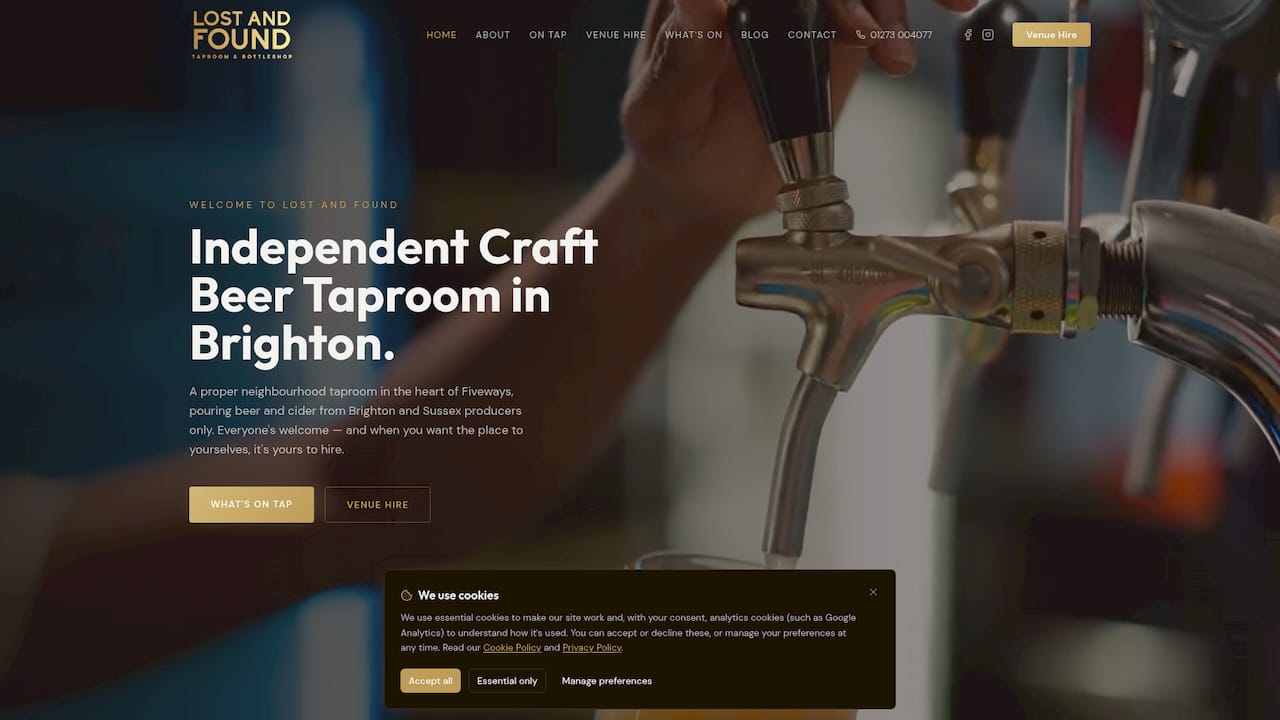
- Choose from a rotating selection of Sussex beer and cider, sourced from independent breweries close to Brighton.
- Order from bottleshop and wines and spirits selections for guests who prefer options beyond beer.
- Add hot dogs or street food van options to keep guests fed alongside the bar.
Instead of converting units into bottle counts yourself, you get a curated on-tap list and a space built for exactly this kind of gathering. Our food and beer menus are available online if you want to see what’s currently on offer before booking. Check availability and enquire about venue hire for your next 50 guest event.
Where these figures and rules come from
The unit maths and licensing points above draw on two primary sources worth bookmarking if you’re planning your own order.
- Drinkaware’s unit and calorie calculator lets you enter exact drinks and ABV figures to tally a precise unit total for your event.
- Gov covers when a TEN is required, attendee limits, and notice timing for events in England and Wales.
Use the calculator once your drinks list is close to final, and check TEN requirements early if your venue doesn’t already hold a licence covering your event.
Sources
FAQ
How many drinks do I need for 50 guests?
For a typical four hour event, plan on roughly 200 drinks for 50 guests, adjusting depending on drinking habits and attendance rates, using a baseline of 2 drinks per person in the first hour and 1 per person for each hour after.
What are some good drinks for a 50th birthday party?
A mixed bar covering craft beer and cider, a couple of easy-drinking wines, one or two classic spirits, and at least one well-made mocktail tends to suit the wide age range typical of a 50th. Milestone birthdays often skew toward a slightly higher wine and spirits share than a younger crowd, so weight your order accordingly.
What are some good drinks to serve guests at a party?
A balanced mix of beer or cider, wine or fizz, one or two spirits with simple mixers, and clearly visible non-alcoholic options covers most guest lists without overcomplicating the bar. Craft beer with a range of styles, such as a lager, a pale ale, and a stout or dark beer, gives guests real variety without needing a huge spirits selection.
What is the 3:2:1 drinking rule?
There’s no single, widely recognised industry standard called the “3:2:1 drinking rule” for party planning, and definitions of it vary. If you’ve seen it referenced, it’s most likely a rough shorthand some hosts use for splitting a drinks budget across beer, wine, and spirits, rather than a formal or universally agreed formula.