Avoid Being Turned Away in UK Pubs: Dog Rules, Rights and Where to Go
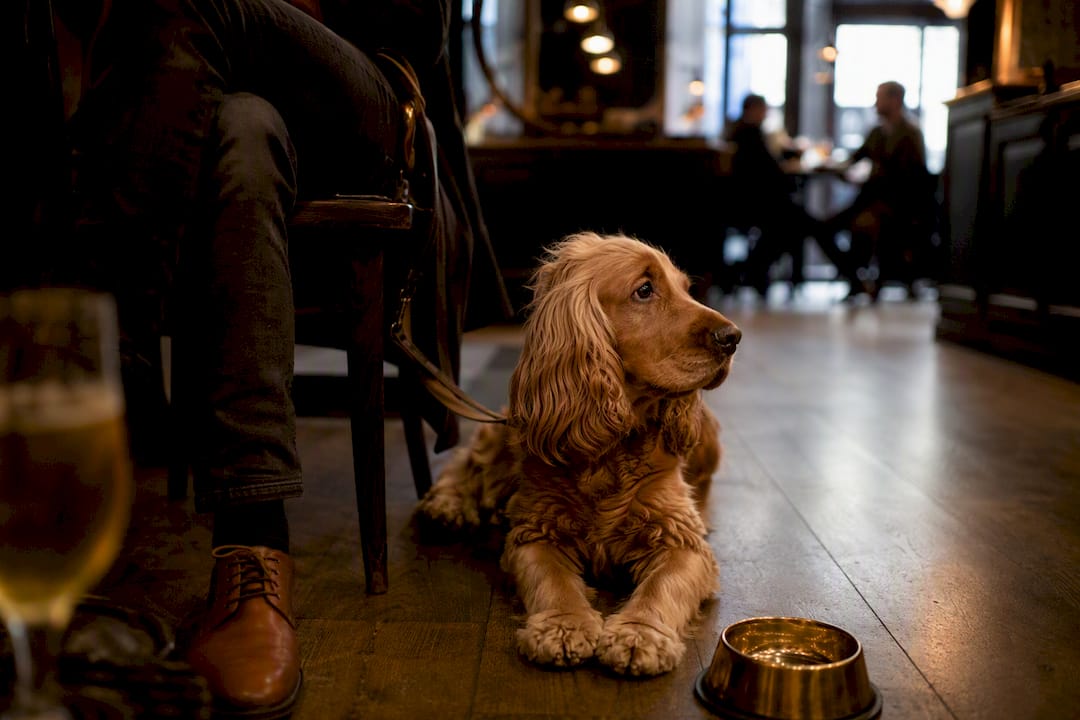
There is no UK law banning dogs from pubs. Landlords decide their own policy under the Licensing Act 2003, assistance dogs must be admitted under the Equality Act 2010, and every venue must keep dogs out of kitchens and food-storage areas under hygiene law. Everything else, from breed nerves to muddy paws on a Sunday roast, comes down to the individual pub.
TL;DR:
- Most UK pubs rely on individual licensees’ discretion for pet policies, with no legal requirement to admit regular dogs but assistance dogs must be accepted.
- Dogs are prohibited from kitchens and food storage areas by hygiene law, but they can be present in bar and dining spaces if managed properly.
- Assistance dogs are protected under the Equality Act and must be allowed entry, while emotional support animals do not have the same legal rights.
- Practical advice includes calling ahead to confirm pet-friendly areas, bringing essential supplies, and avoiding busy peak times to ensure a smooth visit.
- Many reputable pubs, such as Lost And Found Taproom and The Duncombe Arms, are known for their genuine dog tolerance and well-managed policies.
Table of Contents
- Are dogs allowed in UK pubs? What the law and official guidance say
- How pubs decide their dog policy in practice
- What to do before and during your pub visit with a dog
- Where to take your dog: a short list of UK pubs that get it right
- Our take: what most guides get wrong about dogs in pubs
- Bring your dog to Lost And Found Taproom
- Where we sourced the law and guidance
- Sources
- FAQ
Are dogs allowed in UK pubs? What the law and official guidance say
A pub is private property. Under the Licensing Act 2003, the licensee sets the rules for who and what comes through the door, and that includes a blanket “no dogs” sign if they want one. There’s no statute that forces a pub to admit pets, which is why policies vary so wildly between a city-centre gastropub and a village local.
Hygiene law is where things get specific. The Food Safety and Hygiene (England) Regulations 2013 require food businesses to prevent contamination, and that means dogs are excluded from kitchens and food-preparation or storage areas, full stop. Bars and dining rooms are a different matter entirely, and official food-safety guidance for dog-friendly venues confirms pubs can welcome dogs in these spaces provided they manage the practical risks.
Assistance dogs sit outside all of this. Under the Equality Act 2010, refusing entry to a trained assistance dog can amount to disability discrimination, and claims have led to compensation claims reported around £9,000. Emotional support animals don’t carry the same legal protection, which trips up a lot of owners who assume the two are treated identically.
Local authorities enforce the hygiene side through food safety officers, who can issue improvement notices if a venue’s practices risk contamination. That’s the mechanism behind the “no dogs past the bar” signs you’ll sometimes see near open kitchens.
- Licensees choose their own pet policy; there’s no national ban or right of entry for ordinary pets.
- Dogs must stay out of kitchens and food-prep or storage areas by law.
- Assistance dogs are a legal exception and must be accommodated.
- Local food authorities can act on hygiene breaches, not on pet-friendliness itself.
How pubs decide their dog policy in practice
Landlords aren’t making these calls arbitrarily. Insurance is a real factor. So is layout: a narrow Victorian pub with a busy Friday-night bar has genuinely different trip-hazard risks than a spacious country inn with room between tables. Timing matters too. A publican happy to have dogs in for a quiet Tuesday lunch might draw the line at a heaving Saturday evening service when trays of hot food are moving fast between tight tables.
Breed has become part of the conversation more recently. Industry commentary notes that heightened public attention on XL Bully-type dogs has pushed some publicans towards more cautious, risk-assessed policies rather than an open-door approach for every dog regardless of temperament. This isn’t about banning breeds outright, it’s about pubs being more deliberate with their licensing objectives and customer mix.
When a pub does enforce a rule, it’s rarely dramatic. Expect one of these responses:
- A polite request to move to a different table or the bar area instead of the dining room.
- A request to leave if a dog is barking, lunging, or causing genuine disruption.
- An offer of outdoor seating as a compromise rather than an outright refusal.
If you’re asked to leave with an ordinary pet, staying calm gets you further than arguing. Legal specialists at DogLaw explain that refusal is usually lawful for ordinary pets, and a venue should offer a reasonable alternative rather than a flat “get out.” The exception is a genuine assistance dog. If that’s refused, you have real legal grounds, and it’s worth noting the incident and following up formally rather than escalating in the moment.
Pro Tip: If staff hesitate, ask specifically what the concern is (space, timing, another table’s allergy) rather than just “why can’t my dog come in?” You’ll usually get a workable answer faster.
What to do before and during your pub visit with a dog
A five-minute phone call solves most problems before they start. Ring ahead and ask something specific rather than a vague “are you dog friendly?” Consumer advice suggests phrasing it plainly, for example: “Do you have a table in the bar area for two adults and a calm dog at 1pm on Saturday?” Specific questions get specific, useful answers.
- Call ahead and confirm the dog-friendly area, whether it’s the bar only or the whole pub, and how busy that slot tends to get.
- Pack a short lead, a collapsible water bowl, poo bags, a small mat or towel for your dog to settle on, and a couple of treats.
- Choose an off-peak time if your dog is nervous around crowds. Sunday lunch service is rarely the moment for a first visit.
- Keep your dog off furniture, on a short lead near doorways, and clear up immediately if there’s any mess.
- Stay aware of staff carrying hot plates and drinks. A dog stretched across a walkway is the single biggest source of friction in busy pubs.
| Situation | What to do |
|---|---|
| Booking ahead | Ask about the dog-friendly area and peak times specifically |
| Arriving | Head straight to the confirmed area, lead short |
| Settling in | Use a mat or towel, keep the dog under the table |
| Mess or accidents | Clean up immediately, alert staff if needed |
| Busy service | Keep the dog close, stay clear of walkways and the bar |
Where to take your dog: a short list of UK pubs that get it right
Lost And Found Taproom in Brighton’s Fiveways sits right at the relaxed end of the spectrum. Dogs are welcome in the taproom space, and staff are happy to assist owners with requests such as water bowls. The layout keeps dogs away from food-preparation areas. Calling ahead is still the smart move if you’re bringing a group, especially around events, since the space also hosts venue hire bookings.
A handful of other UK venues consistently show up in dog-owner recommendations for good reason:
- The Duncombe Arms in Staffordshire pairs a serious food reputation with genuine dog tolerance in its bar areas, making it a solid pick if you want a proper meal without leaving the dog in the car.
- The Thomas Cubitt in Belgravia is proof that dog-friendly and upmarket aren’t mutually exclusive, welcoming well-behaved dogs into its ground-floor pub space.
- The Goshawk in Cheshire leans into its walkers’ crowd, with muddy-paw tolerance and outdoor seating built for exactly that clientele.
- St Petroc’s Bistro in Cornwall and The Unruly Pig in Suffolk both combine strong food menus with genuinely welcoming dog policies rather than treating pets as an afterthought.
- Hall & Woodhouse pubs, The Creagan Inn in Scotland, The Salthouse Dun Cow in Norfolk, Gaerwen Arms in Anglesey, and The Durham Ox in North Yorkshire round out a list of venues that regularly get named by walkers and dog owners across the country.
| Venue | Best for | Dog facilities | Assistance dog note |
|---|---|---|---|
| Lost And Found Taproom | Relaxed bar visits, small groups | Water available, staff happy to advise on quieter spots | Welcomed as standard under Equality Act |
| The Duncombe Arms | Food-led visits | Dog-friendly bar areas | Welcomed as standard |
| The Goshawk | Post-walk pints | Outdoor seating, muddy-paw tolerant | Welcomed as standard |
| The Durham Ox | Countryside dining | Bar and garden access | Welcomed as standard |
Assistance dogs must be admitted at any licensed premises regardless of a venue’s general pet policy, so none of the above should ever be a question for a working dog and its handler.
Our take: what most guides get wrong about dogs in pubs
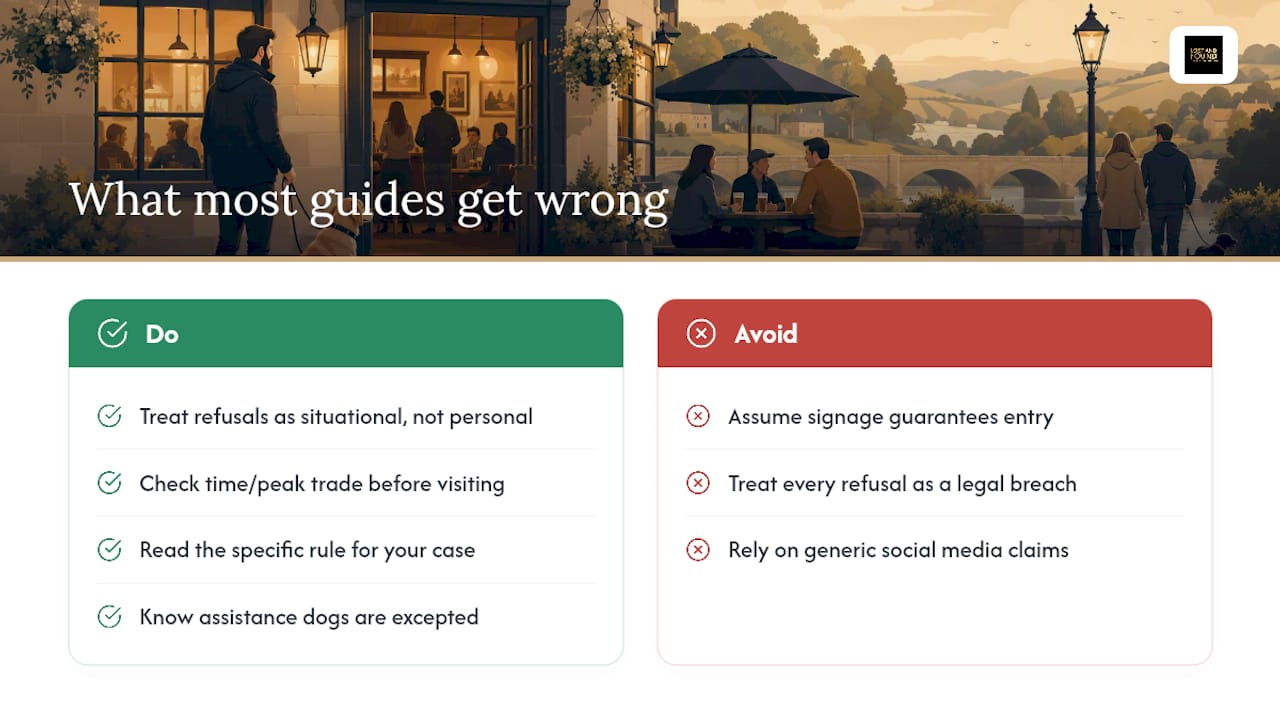
Most articles on this topic treat “dog friendly” as a fixed label, like a pub either has it or doesn’t. That’s not how it works in practice. A pub can be brilliant with dogs at 3pm on a Wednesday and genuinely unable to accommodate one at 8pm on a Saturday when every table is turning over food orders. Owners who understand that distinction have a far better time than those who treat every refusal as a personal insult or a legal breach.
The bigger misconception, and legal commentary backs this up, is that “dog friendly” signage creates some kind of binding right of entry. It doesn’t. It’s an invitation a venue can reasonably withdraw if a dog is disruptive, just as they could ask a disruptive person to leave. Where owners actually have firm legal ground is the assistance dog exception, and that distinction gets lost in a lot of the online chatter about “know your rights.” Read the specific rule that applies to your situation rather than the generic version doing the rounds on social media.
— Author
Bring your dog to Lost And Found Taproom
Lost And Found Taproom is the alternative to booking a formal restaurant table when you want a relaxed pint with your dog underfoot and no pressure to order a three-course meal. You get a rotating line-up of local and UK craft beer, a laid-back Fiveways atmosphere, and staff who won’t blink if your dog settles under the table with a water bowl.
Our full beer and food menu is online, so you can check what’s pouring before you set off. If you’re planning a group visit or a private gathering with dogs in tow, our venue hire options are worth a look, particularly for smaller parties that want a dedicated space rather than squeezing into the main bar. Ring ahead during busy weekend slots to confirm space, then come and grab a table.
Where we sourced the law and guidance
- Official hygiene rules for dog-friendly food businesses
- The full text of the 2013 hygiene regulations
- Assistance dog rights under the Equality Act
- Legal commentary on refusal rights and emotional support animal distinctions
Sources
- Food safety guidance for dog friendly food businesses
- The Food Safety and Hygiene (England) Regulations 2013
- Assistance dogs and the Equality Act 2010
- Can a restaurant refuse entry to my dog? (DogLaw)
- Can a pub refuse your dog at the door? Here’s what UK law really says (Netmums)
FAQ
Are dogs allowed in UK pubs?
Yes, at the licensee’s discretion. There’s no national ban, though dogs must stay out of kitchens and food-storage areas, and assistance dogs must be admitted regardless of a pub’s general policy.
What are the new dog laws for 2026?
There’s no new nationwide law specifically banning or mandating dogs in pubs for 2026. The existing framework still applies: licensee discretion under the Licensing Act 2003, hygiene exclusions under the 2013 regulations, and Equality Act protection for assistance dogs.
Is Wetherspoons dog-friendly in England?
Policy varies by individual Wetherspoons pub rather than a single company-wide rule, so it’s worth calling the specific branch to confirm before you visit.
Can I take my dog into Tesco?
Most Tesco stores don’t allow pet dogs inside, though assistance dogs are permitted under the Equality Act 2010, the same protection that applies in pubs and other public-facing businesses.
Which pubs are best for dogs in the UK?
Venues like Lost And Found Taproom in Brighton, The Duncombe Arms, and The Goshawk are regularly recommended for combining genuine dog tolerance with decent food or drink, though calling ahead to confirm the current policy is always worth doing.