Choose Craft Beer by Flavour: One Sentence Brief, Quick Tasting Method

The fastest way to choose a craft beer is to pick a flavour direction rather than a brand: refreshing points to lager or pilsner, citrus and hops point to pale ale or session IPA, roast points to porter or stout, and fruity or peppery notes point to wheat beer or saison. Tart drinkers should try a fruited sour. Once you know the direction, give staff a one-sentence brief covering strength, flavour and cask or keg, and let them do the rest.
TL;DR:
- Most beers in a taproom are typically between 3.8% and 5.5% ABV, making them suitable for everyday drinking unless you prefer stronger options.
- For beginners, sticking to styles that match your preferred flavors—such as pilsners for crispness or porters for roast and chocolate—streamlines choice and enhances enjoyment.
- The texture of a beer depends on whether it’s served from cask or keg, with cask offering softer, room-temperature experiences, and keg providing colder, fizzy styles like lagers and modern pale ales.
- Serving temperature and glassware significantly influence flavor perception, with warmer temps and wider glasses improving aroma and complexity.
- Rotating tap lists lead to better recommendations, as staff are more familiar with current beers, boosting the likelihood of discovering a drink you genuinely enjoy.
Table of Contents
- The flavour-first cheat sheet: your first six picks
- How do you choose a craft beer from a long tap list?
- What are the main craft beer styles beginners should know?
- How do you actually taste a craft beer properly?
- Quick practical tips: strength, glassware and pairing
- How a taproom curator helps beginners choose well
- Make tasting a habit, not a test
- Visit Lost And Found Taproom to find beers you’ll actually love
- Sources
- FAQ
The flavour-first cheat sheet: your first six picks
Forget the brewery name on the pump clip for a moment. What matters far more when you’re starting out is matching a taste you already know you like to a style built around it. CAMRA’s own style chart recommends exactly this: start from flavours you enjoy in beer, cider, wine or even coffee, not from a checklist of styles you’re supposed to know.
Here’s a shortlist worth screenshotting before your next visit to a taproom:
- Want something crisp and refreshing? Try a pilsner or Helles lager, typically within a moderate strength range typical for lagers. Look for “clean”, “biscuit” or “crisp” on the menu.
- Like citrus or tropical fruit flavours? Go for a pale ale or session IPA, usually 3.8–5.5% ABV. Menu words to spot: citrus, grapefruit, tropical, pine.
- Prefer coffee or chocolate notes? A porter or stout, generally 4–6% ABV, delivers roast and dark malt character without heavy sweetness.
- Fancy something fruity or spiced? Wheat beers, wits and saisons sit around 4–6% ABV, with banana, clove or peppery notes depending on the yeast used.
- Enjoy tart, zingy drinks? A fruited sour, often 3.5–6% ABV, gives you sharpness closer to a dry cider or sparkling wine than a traditional ale.
One quick serve note worth knowing before you order: cask versions of a beer tend to arrive softer and closer to room temperature, while the same beer on keg is usually colder and fizzier. Neither is automatically better; it depends on the beer and your mood that evening, a point CAMRA’s dispense guidance makes clear when it stresses that container and conditioning genuinely change how a beer feels in the glass.
How do you choose a craft beer from a long tap list?
A wall of twenty taps with invented brewery names tells you almost nothing useful. Cut through it by asking yourself four questions, in order, before you even approach the bar.
- How strong should it be? If you want something you can drink two or three of across an evening, stick under 5% ABV. The UK’s sales-weighted average for beer and lager sits at around 4.6% ABV, so most beers you’ll meet in a taproom are already in session territory. Ask for something stronger only if you want a slower, more deliberate drink.
- What flavour direction do you want? Crisp, malty, hoppy or roasted. Pick one word and hold onto it.
- Cask or keg? This isn’t a quality ranking, it’s a texture choice. Cask suits mellower ales; keg suits colder, fizzier styles like lager and most modern pale ales.
- What are you eating, if anything? A roast dinner wants malt and roast in return; a burger wants hops and carbonation to cut through the fat; fish and light salads want something crisp and dry.
Condense your four answers into one sentence and hand it straight to the bar staff. Something like: “Session strength, hoppy and citrusy, keg if you’ve got it.” That single line gives a knowledgeable server everything they need, and it works far better than the vague request for “a beginner beer”, which tells them nothing about what you’ll actually enjoy.
Pro Tip: Keep your brief the same across venues for a month. You’ll start noticing which staff recommendations land well and which don’t, and that’s exactly how your own palate develops.
What are the main craft beer styles beginners should know?
Two big families dominate British taprooms: ales, fermented warm with top-working yeast, and lagers, fermented cold and slower. A third, smaller group, wild and mixed-fermentation beers, uses bacteria and wild yeast to produce sour, funky flavours that behave nothing like either of the other two.

Pale ales and IPAs sit at the hoppy, often citrusy end of the ale family. Bitterness ranges from gentle to sharp depending on the hop variety, and ABV typically runs 3.8% up to 7% for a full-strength IPA. CAMRA’s style guide groups British and New World IPAs separately, since American-style hops tend to push tropical fruit and pine notes harder than the more restrained British versions. If you’re new to hops, start with a session IPA under 5% before working up to anything punchier.
Lagers and pilsners are the cleanest, crispest entry point for most drinkers. Good examples taste of biscuit, light florals and a dry finish, with almost none of the fruitiness ales carry. ABV usually sits between 3.5% and 5%, though some craft lagers push higher for extra body. If a beer tastes “clean” rather than complex, it’s probably doing its job well.
Stouts and porters bring roasted malt to the front, tasting of coffee, dark chocolate, toast or even liquorice depending on how dark the malt goes. Session stouts sit around 4% to 4.5% and are genuinely easy to drink despite their colour; imperial stouts can climb past 8% and taste closer to a dessert wine or spirit. Don’t assume dark automatically means heavy or bitter, plenty of stouts are smoother than a pale ale.
Wheat beers and saisons carry distinctive yeast-driven flavours: banana and clove in a German-style wheat beer, black pepper and dried fruit in a Belgian saison. Both tend to sit around 4.5% to 6% ABV and work well as an easy summer switch from lager once you’ve got bored of “clean and crisp”.
Sours and mixed-fermentation beers are the most divisive category for newcomers. Expect anything from a gentle, lemony tartness to something closer to a sharp cider.
If you like a pale ale, the natural next step is a stronger IPA or a New World version with bigger tropical hops. Enjoyed a session stout? Try a milk stout for extra sweetness, or step up to an imperial stout for something richer. Fond of a wheat beer? A saison offers similar yeast character with more spice and dryness.
How do you actually taste a craft beer properly?
You don’t need a trained palate to get useful information out of a glass, you need a method and about ninety seconds. Beer & Brewing’s sensory evaluation guidance breaks tasting down into four stages, and running through them in order gives you far more useful information than just necking it.
- Look. Colour, clarity and head all hint at style before you’ve smelled or tasted anything. A hazy gold suggests a wheat beer or unfiltered pale ale; jet black almost always means stout or porter.
- Smell. Get your nose right into the glass before you sip. This is where most of a beer’s character actually lives, and it’s far easier to detect aroma before your palate gets tired.
- First sip. Note the initial flavour hit, not the whole mouthful. Is it sweet, bitter, sour or roasty first?
- Body and mouthfeel. Thin and fizzy, or full and creamy? This tells you as much about style as flavour does.
- Finish. Does the flavour vanish quickly (dry finish) or linger (sweet or bitter finish)?
Reach for single-word anchors rather than trying to sound clever: lemon, grapefruit, biscuit, coffee, banana, tart. Precise one-word notes are genuinely more useful for future choices than vague terms like “nice” or “interesting”, because they give you something concrete to compare next time. Research on tasting skill backs this up, noting that recognition and vocabulary improve through repetition, not natural talent.
A simple practice routine: buy two beers in the same style, say two pale ales from different breweries, and write three words for each. Within a few sessions you’ll notice patterns in what you actually gravitate towards, which is far more useful than memorising a style chart. For a longer walk-through of this exact process, our step-by-step tasting guide goes into more detail on glassware and pouring technique.
Quick practical tips: strength, glassware and pairing
A few small details change how a beer tastes far more than most people expect. Serve temperature is the biggest one: lagers and pale ales taste best cold, but stouts and strong ales open up more flavour served slightly warmer, closer to cellar temperature than fridge temperature. If your pint tastes thin and flavourless, it may simply be too cold.

Glassware matters more than it should. A wider glass lets aroma escape and reach your nose, which is a huge part of flavour perception; a straight pint glass works fine for session beers but does a stronger, more aromatic beer no favours. Our guide on cask versus keg covers how dispense method interacts with all of this.
On strength, remember that the UK’s sales-weighted average sits around 4.6% ABV, so “session” generally means anything under 5%, not some heavily diluted watery option.
Three fast pairing prompts: with a burger, reach for a hoppy pale ale to cut through the fat (our beer and burger pairing guide has specific matches); with fish, go crisp and dry with a lager or pilsner; with hard cheese, a malty brown ale or porter usually beats anything overly hoppy. Chefs increasingly think about these contrasts the same way they think about wine, as explored in broader food and drink pairing trends.
How a taproom curator helps beginners choose well
Rotating tap lists solve a problem static shelves can’t: they force staff to actually know what’s pouring that week, rather than reciting a printed list. At a curated taproom, a novice’s one-sentence brief, strength, flavour, cask or keg, gets matched against whatever local beer is currently on, not whatever’s been sitting there for months.
That’s the practical benefit of choosing somewhere with a genuinely rotating, locally-focused selection: you get a tailored recommendation instead of a guess, plus the option to try a small taster before committing to a full pint, or take a bottle home once you’ve found something you like. Check the current lineup on our beer menu before you visit.
Make tasting a habit, not a test
Preference is personal, and there’s no correct answer to memorise. Try three beers across three visits, write one word for each, and you’ll build a working vocabulary faster than any style chart could teach you.
Nobody expects you to identify a beer blind on your first attempt, or your tenth. What actually works is comparison: put two similar beers side by side and notice what pulls you toward one over the other. Use the cheat sheet and the tasting method above on your next visit, and treat every pint as one more data point rather than a test you might fail.
— Author
Visit Lost And Found Taproom to find beers you’ll actually love
Reading about flavour directions only gets you so far. Lost And Found Taproom is the shortcut past the guesswork of a printed menu: our tap list rotates constantly with beers from independent Sussex breweries, so the staff behind the bar can give you a genuinely current recommendation rather than reading off a laminated sheet.
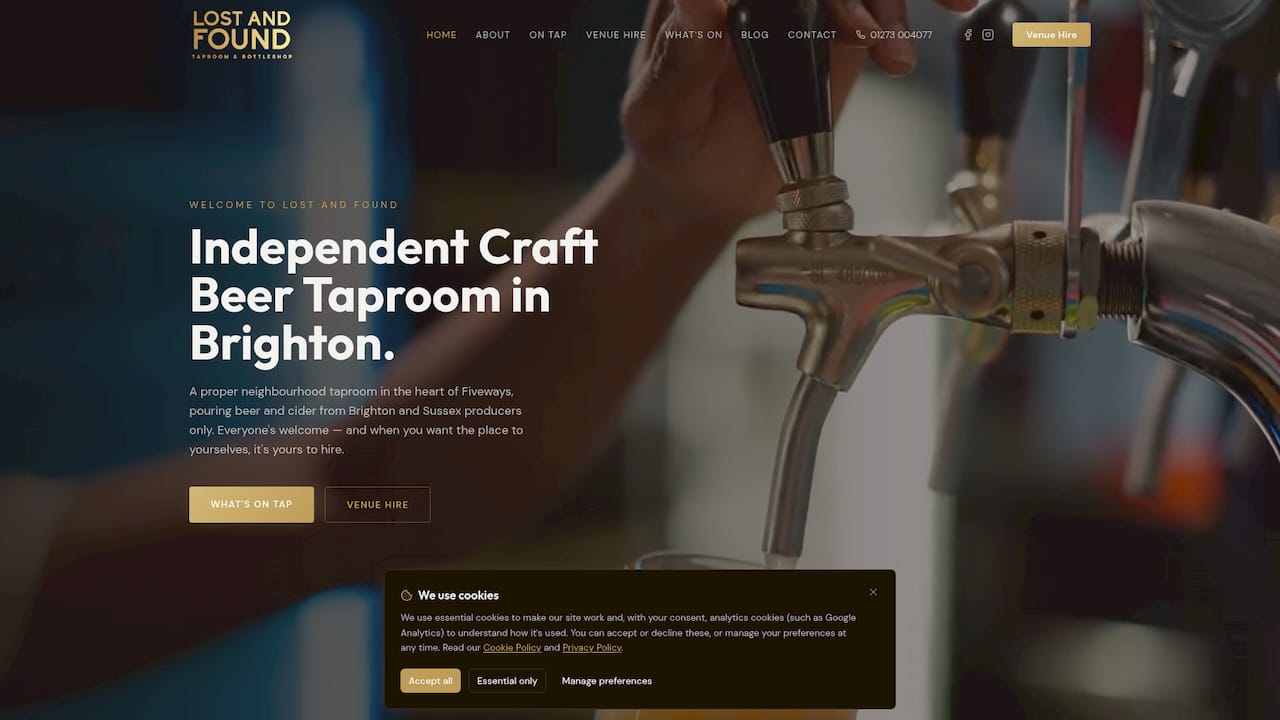
Turn up, give the team your one-sentence brief, strength, flavour, cask or keg, and let them steer you towards something on our current on-tap selection that matches. Found something you love? Take a bottle home from our bottleshop rather than just remembering the name for next time. If you’d rather learn in a group setting, our venue hire covers both Midweek Hire and Weekend Hire for private tastings with friends, with exclusive use of the space and no hire fee, so you can build your own flight of local beers without competing with a full public bar. Check our beer menu online, then come and put the cheat sheet to the test in person.
Sources
For further reading beyond this guide, CAMRA’s style chart and beer styles guide cover flavour categories in more depth, while its dispense containers course explains cask versus keg properly. Beer & Brewing’s tasting resource covers sensory evaluation, and the GOV.UK ABV review gives the strength data referenced throughout.
- Beer styles chart - Learn & Discover
- Review of typical ABV levels in beer, cider and wine purchased for the in home market
FAQ
What are the best craft beers for a beginner to try?
There’s no single best beer, but a good starting flight covers a session pale ale for citrus and hops, a porter for roast and chocolate, and a wheat beer or saison for fruit and spice. Matching styles to flavours you already enjoy, as CAMRA’s style chart recommends, works better than chasing “best of” lists.
What are the best craft beers available in the UK right now?
The honest answer is that it changes weekly, since most taprooms rotate stock from independent breweries rather than stocking a fixed range. Checking a venue’s current tap list, such as Lost And Found Taproom’s on-tap selection, gives you a far more accurate answer than any static list online.
What is Rule 47 in beer?
This isn’t a recognised industry standard or CAMRA rule; it doesn’t appear in official style guidance or dispense documentation. If you’ve seen it referenced somewhere, treat it as informal shorthand rather than an established beer rule.
Can you give me a simple list of craft beer styles to start with?
Yes: lager or pilsner for something crisp, pale ale or session IPA for citrus and hops, porter or stout for roast and chocolate, wheat beer or saison for fruit and spice, and fruited sour for tartness. Each sits at a typical strength under 6% ABV, comfortably within the UK’s sales-weighted average of around 4.6%.
How do I pick a craft beer if I usually drink lager?
Stick with clean, crisp flavours first and try a craft pilsner or Helles before jumping to hoppy pale ales, which taste far more bitter by comparison. Once you’re comfortable with that step, a session IPA is the natural next move, since it keeps some of that crispness while adding citrus character.