Brighton Beer History: From Black Lion Street to Sussex Craft
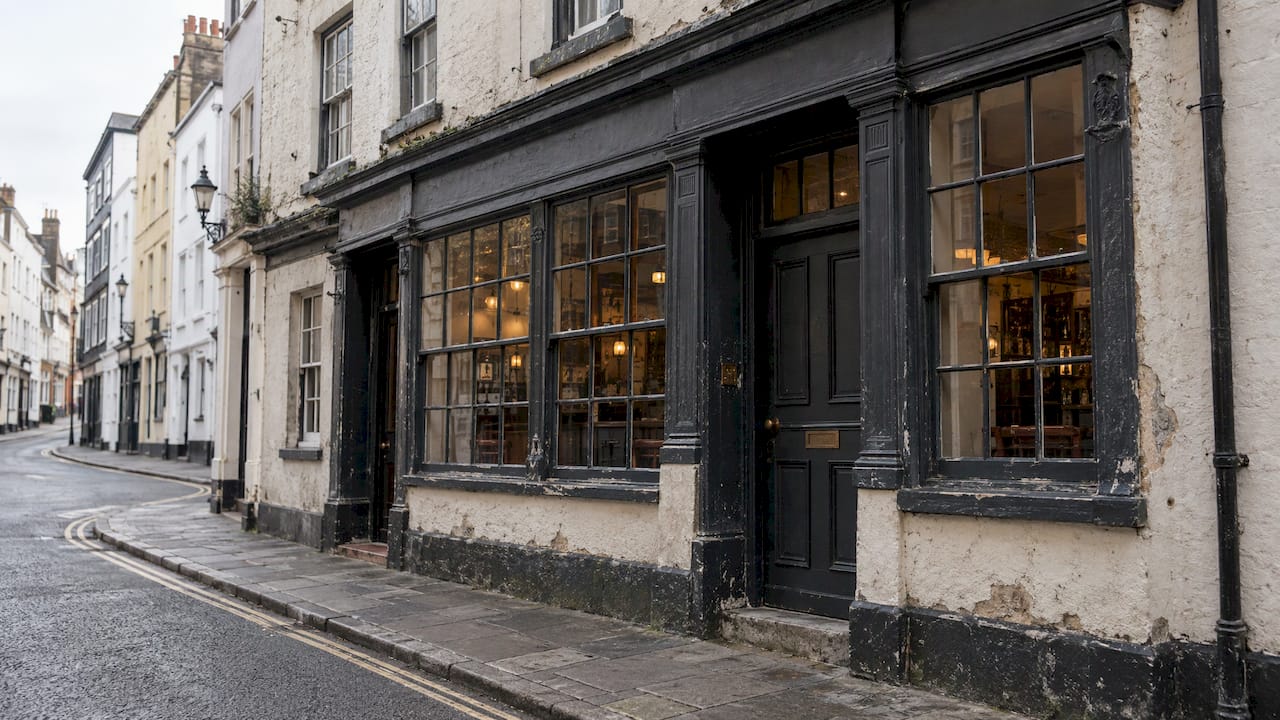
Brighton’s beer story runs from sixteenth-century inns, through a Victorian boom that put a pub on almost every corner, to a Sussex craft scene that now numbers dozens of small breweries. The best way to understand it is to follow the beer itself: who brewed it, where it was drunk and why most of the big names vanished. At Lost And Found Taproom in Fiveways, every beer and cider we pour is made by an independent Sussex brewery, so the last chapter of this history is on our taps.
TL;DR
- Brighton grew from 7,339 people in 1801 to 40,634 in 1831, and its inns and breweries multiplied with it.
- The famous claim that the Black Lion Brewery dates from 1545 is not supported by the records; it was built after 1744.
- Tamplin’s Phoenix Brewery dominated the town until its last brew on 28 November 1973.
- The modern craft revival began in 1994 with home-brewing in a Brighton pub cellar and grew into a Sussex-wide scene.
- You can taste the current chapter at our Fiveways taproom, where all draught beer and cider is independent and from Sussex.
Table of Contents
- Before the boom: inns and small brewers
- The Black Lion myth
- Boom town: the Regency and Victorian years
- Tamplin’s and the Phoenix Brewery
- Pubs everywhere, and what replaced them
- The craft revival
- Traces you can still find
- Where the story ends up: a Fiveways taproom
- Perspective: why history favours the independents
- Celebrate it with us
- FAQ
- Sources
Before the boom: inns and small brewers
Brighton was a fishing town before it was a resort, and its early beer was brewed in small quantities by innkeepers and a handful of dedicated brewers. Before steam, breweries were small man- or horse-powered concerns limited to brews of about ten barrels, which kept beer local by necessity.
Some of the buildings from this era are still serving. The Cricketers in Black Lion Street is the oldest inn in continuous use in the city, dating from 1547, although its current bar has been in place only since 1904. East Street Tap also says it is Brighton’s oldest boozer, dating back to at least 1568. Pubs of this age tend to claim their dates generously, so treat “oldest” as a friendly rivalry rather than a settled fact.
The Black Lion myth
The most repeated story in Brighton beer lore says the Black Lion Brewery was founded in 1545 by Deryk Carver, a Flemish brewer. It is a good story, and local articles have repeated it for years. Sussex Industrial History, the journal of the county’s industrial archaeology society, says the attribution to Carver is incorrect: the brewery was built after 1744, when William Hicks acquired property in Black Lion Street, and brewing there ended in 1901.
The lesson is useful when you go pub-hunting. A name carved over a door, or a date painted on a sign, is a starting point. The trade directories and rate books are what really date a brewery, and that is exactly the archive local historians have used to reconstruct the trade.
Boom town: the Regency and Victorian years
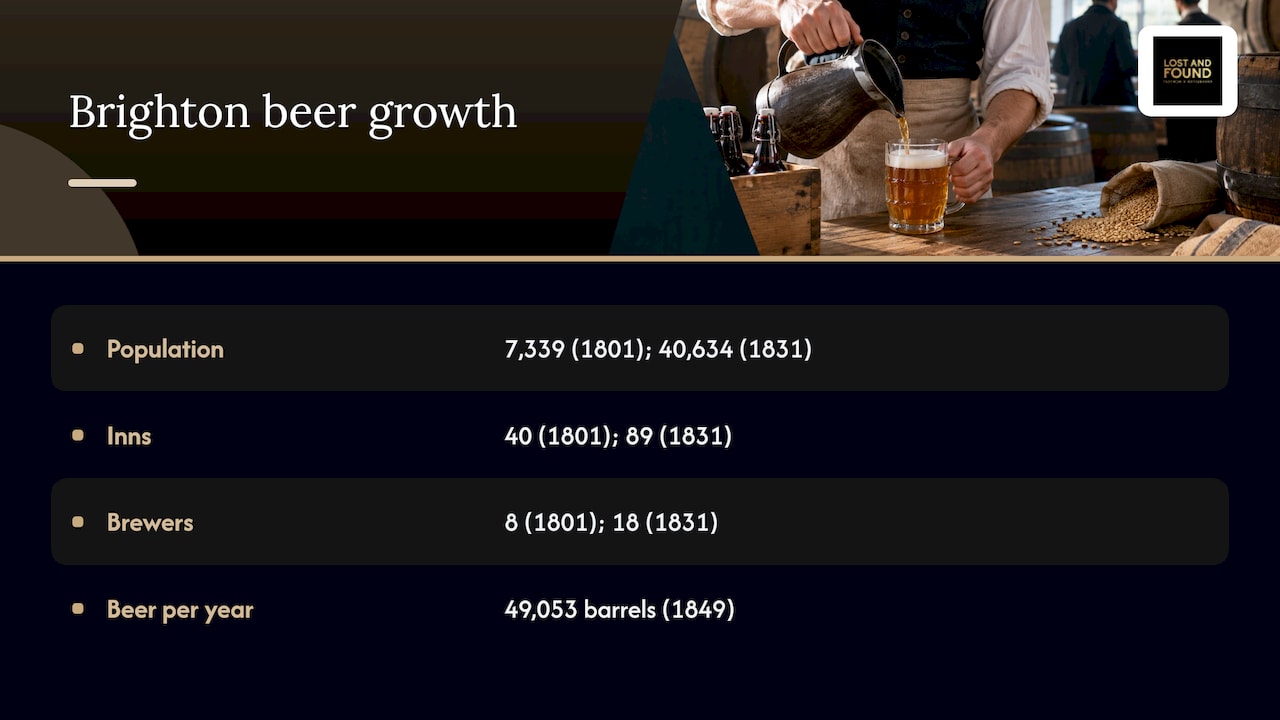
The growth of Brighton as a fashionable resort is the engine of its beer history. Between 1801 and 1831 the population rose from 7,339 to 40,634, while inns grew from 40 to 89 and brewers from 8 to 18. An 1849 health enquiry estimated that Brighton drank 49,053 barrels of beer a year.
Technology followed the thirst. The West Street Brewery, established in 1767 by Isaac Grover at 8 West Street, was the first in Brighton to use steam power, and its later owner John Vallance patented a wort-cooling apparatus in 1814 and a hop-packing method in 1820. Wort is the sweet liquid that becomes beer once yeast is added, so cooling it faster was a real advance for quality and for scale. Steam and the railways also allowed beer to travel further, which created the “common” brewer who sold to other outlets rather than only to his own pub.
The peak and the slide
Brewing numbers peaked in 1870, when 24 brewers were listed, using 57 different sites over the century. After the beer duty was reintroduced in 1880 the number fell to ten by the end of the 1800s, and by 1930 only two were left. Consolidation, not lack of demand, was the driver: the bigger brewers were buying the smaller ones along with their pubs.
Tamplin’s and the Phoenix Brewery
No name looms larger. Richard Tamplin’s brewery at Southwick burned down in September 1820, and he rebuilt in Brighton: the Phoenix Brewery of 1821, named for obvious reasons. By 1902 it covered 100,000 square feet and employed 150 men, making it the largest brewery in the county.
Tamplin’s grew by buying rivals. It acquired the Albion Brewery in 1892 for £41,178 and the West Street Brewery’s houses in 1899 for £386,009. The Brewery History Society’s account says the company ended up owning two-thirds of all licensed premises in the Brighton area, more than 200 pubs plus a further 400 elsewhere. The Phoenix’s last brew was on 28 November 1973.
Other breweries tell a similar story in miniature. The Rock Brewery at 61 St James’s Street was described as “newly erected” in an 1809 sale notice, changed hands several times, stopped brewing in 1928 and was demolished in 1978.
Pubs everywhere, and what replaced them
When so much beer was being brewed, it needed somewhere to go. Pubs and beer-shops were a defining feature of the town, and the pattern of streets such as those in North Laine still reflects the period when small beerhouses opened after the 1830s licensing reforms. That is why a short walk from the station can take you past a pub every few doors.
The twentieth century thinned them out. Small pubs closed, brewers merged and the big firms standardised their beer. By the time the last of the large local brewers had gone, drinkers in Brighton were mostly choosing between a few national brands. That gap is what made the next chapter possible.
The craft revival
The modern story starts in 1994, when a pub in Surrey Street began home-brewing 50 to 60 gallons a week in its cellar. That operation became Dark Star. Its co-founder Paul Reed told Great British Life in 2017 that there were about three other brewers in Sussex in the mid-1990s and something like 60 by 2017. He credits the county’s long real-ale tradition, and the knowledge and support of local drinkers, for making Sussex such a strong place for brewers.
Brighton also still has a brewery inside a pub. The Hand in Hand in Upper St James’s Street, Kemp Town, has been a pub since 1850. In 1989 its then owner removed the original roof to fit a hidden tower brewery spanning four floors, which makes it the city’s oldest working brewery.
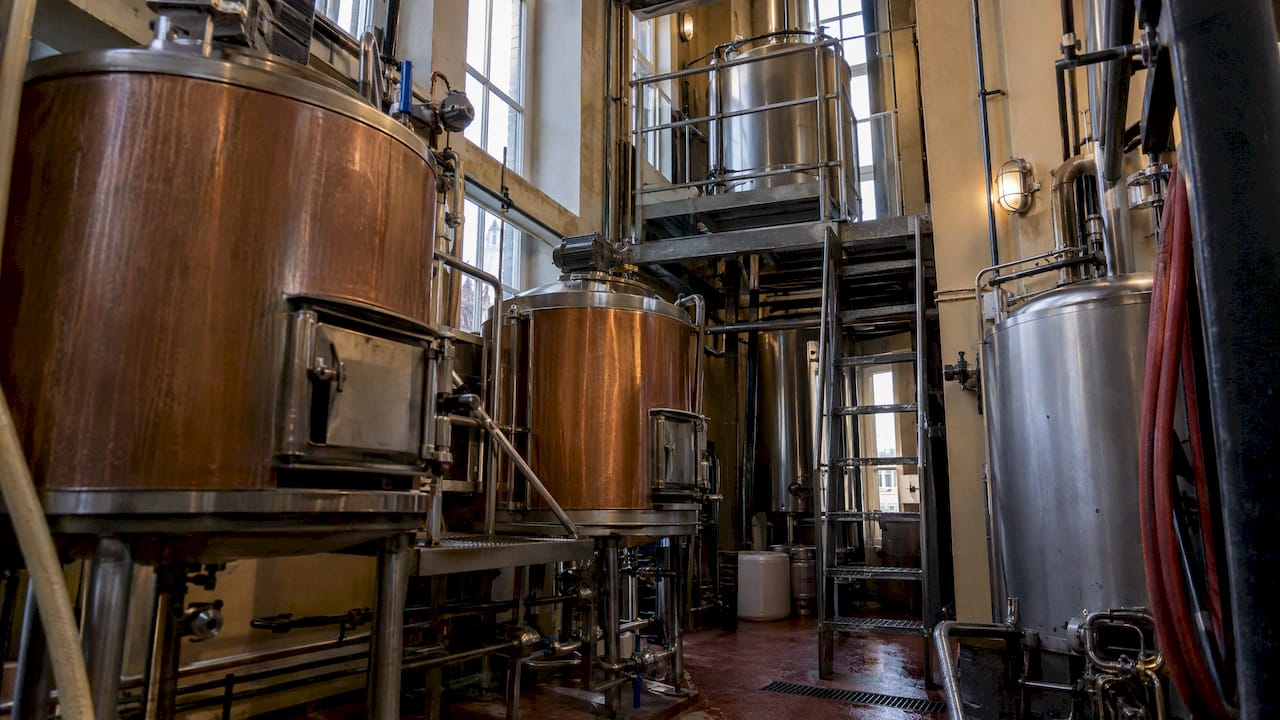
What changed between the Victorian era and now is the scale. Instead of one giant brewer owning most of the pubs, there are many small independents, each with its own style: pale ales, stouts, lagers and sours, often made in a railway arch or an industrial unit. If you want a guided way in, our 20 local brews to get you started is a good place to begin, and we have written about why independent Sussex breweries matter to Brighton’s beer scene.
Traces you can still find
You do not need a museum to see the trade’s history. A few ways to read the city:
- Look at the pubs. Many date from the beerhouse boom, with tiled frontages and the names of long-gone brewers.
- Look for malthouses. Old malting buildings are recognisable by their rows of small ventilation windows.
- Look at street names. Black Lion Street, Phoenix, West Street and Albion Hill all point to a brewing past.
- Read the archive. Mike Kent’s 2008 Sussex Industrial History article lists the brewers known to have worked in Brighton and Hove up to the Second World War, drawn from trade directories and rate books, with map references for surviving remains.
A self-guided walk through the Lanes, North Laine and Kemp Town covers most of it in an afternoon, and it ends naturally with a pint.
Where the story ends up: a Fiveways taproom
The thread through all of this is local beer for local people. Before the railways, that was all anyone could get. In the Tamplin’s era, it was one company’s beer in two-thirds of the pubs. Today it is a choice among many small makers, and that choice is what we built Lost And Found around.
Every beer and cider served at our taproom is produced in Sussex by independent breweries, with a strict local sourcing focus. The selection rotates, so a return visit usually brings something new. Our food and beer menus are available online, so you can see what is pouring, along with the bottleshop, the wines and the street food vans, before you set off. If you want to understand the brewers behind the taps, read the independent breweries behind our pours.
Local beer, at home or on a day out
Part of Brighton’s beer history is that the county’s breweries sit in beautiful places. If you fancy going beyond the city, our guide to East Sussex breweries and day trips covers taprooms, tours and events.
Perspective: why history favours the independents
Brighton’s brewing history is a story of consolidation and, eventually, of escape from it. When one firm owned two-thirds of the pubs, drinkers had little say in what was poured. The independent Sussex breweries of today brought that say back.
That is why we pour only independent beer and cider from Sussex. A taproom should work like the best of the old inns: a place where the beer comes from down the road, the staff know the brewers, and people gather around it. We rotate what is on tap so there is always something new from a Sussex brewer to try, and we keep our space open for the gatherings that pubs have always hosted.
Venue hire at Lost And Found gives you exclusive use of the taproom with no hire fee, with the flexibility to choose your own decorations, music and drinks. It is the same tradition that Brighton publicans began in the 1850s, when they laid on entertainment for their regulars, carried on in a modern taproom.
The Lost And Found team
Celebrate it with us
If this history has made you thirsty, the simplest next step is a visit to the taproom in Fiveways. You can drink in, take bottles home, or bring a group. Our Midweek and Weekend hire gives your party exclusive use of the space with no hire fee, which suits birthdays, stag dos and community get-togethers where you want to bring your own decorations and music.
For a first visit, start with the Sussex beer and cider list, then read our beginner’s guide to craft beer in Brighton.
FAQ
What is the oldest pub in Brighton?
The Cricketers in Black Lion Street is recorded as the oldest inn in continuous use in the city, dating from 1547. East Street Tap says it goes back to at least 1568. Both claims are part of local pub tradition, so it is worth visiting each.
Was Brighton’s oldest brewery founded in 1545?
That date is often attached to the Black Lion Brewery and the Flemish brewer Deryk Carver. Sussex Industrial History says the attribution is incorrect and that the brewery was built after 1744. Brewing there ceased in 1901.
What happened to Tamplin’s brewery?
Tamplin’s Phoenix Brewery was the largest in the county by 1902 and owned most of the pubs in the area. Its last brew was on 28 November 1973, ending the era of one dominant Brighton brewer.
Where can I try Brighton and Sussex beer today?
We pour independent Sussex beer and cider at our Fiveways taproom, and the menu is online. The beer changes regularly, so there is usually something new. You can also take bottles home from the bottleshop.
Sources
- Mike Kent, Sussex Industrial History (1992)
- Mike Kent, Sussex Industrial History (2008)
- Tamplins, Brewers of Brighton, Brewery History Society (2019)
- Looking back at Brighton and Hove’s pubs through the years, The Argus
- Unique, bonkers and magical: the Hand in Hand pub celebrates 30 years, The Argus
- Sussex at the peak of the craft beer explosion, Great British Life
Recommended
- Brighton Beers: 20 Local Brews to Get You Started
- Are Brighton’s Independent Breweries Really Dying? The Truth About Our Local Beer Scene After Brighton Bier’s Closure
- Craft Beer Brighton: A Beginner’s Guide to Mastering Local Brews in 2025
- Hand Brew Co in Brighton: Why Their Beers (Like ‘Toad Licker’) Are a Must-Try at Lost and Found Taproom