Bitter vs pale ale: how to spot the difference
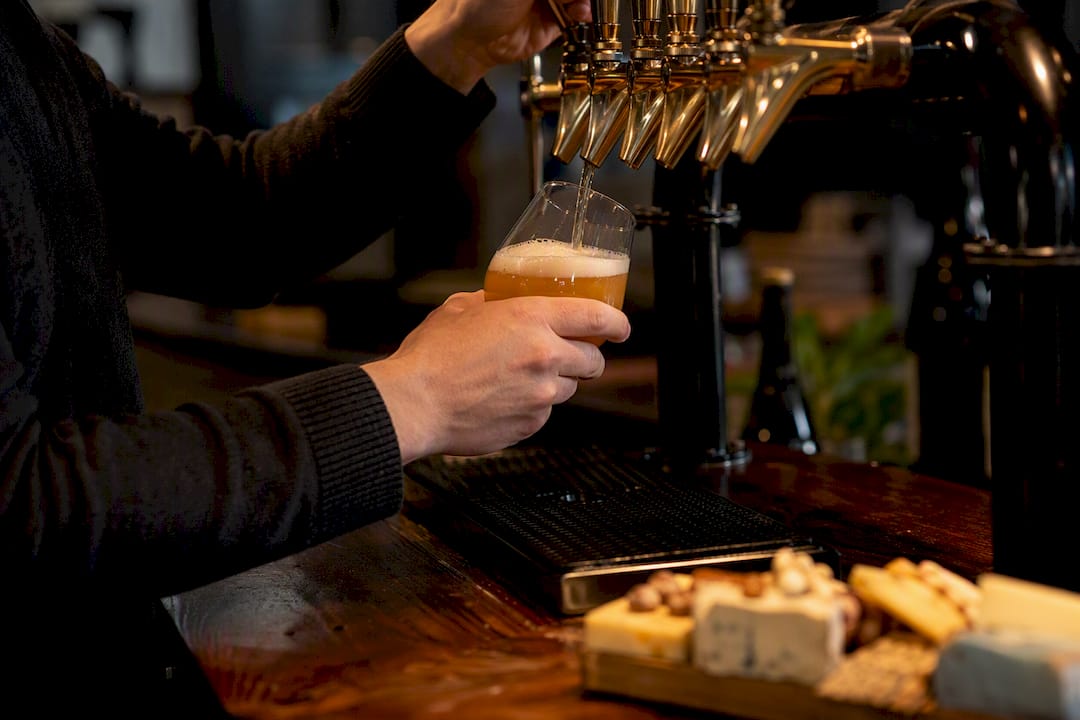
Bitter and pale ale come from the same family of English beer: historically the terms meant the same thing. In practice today, “bitter” usually means a cask-conditioned draught served at cellar temperature, while “pale ale” more often labels a bottled or kegged version with different carbonation and balance. Bitter is defined as an English style of pale ale) ranging from gold to dark amber, typically 3% to 5.5% ABV, with an average around 4.2% in SIBA’s 2020 survey. At Lost And Found Taproom, you can taste that distinction side by side rather than take our word for it.
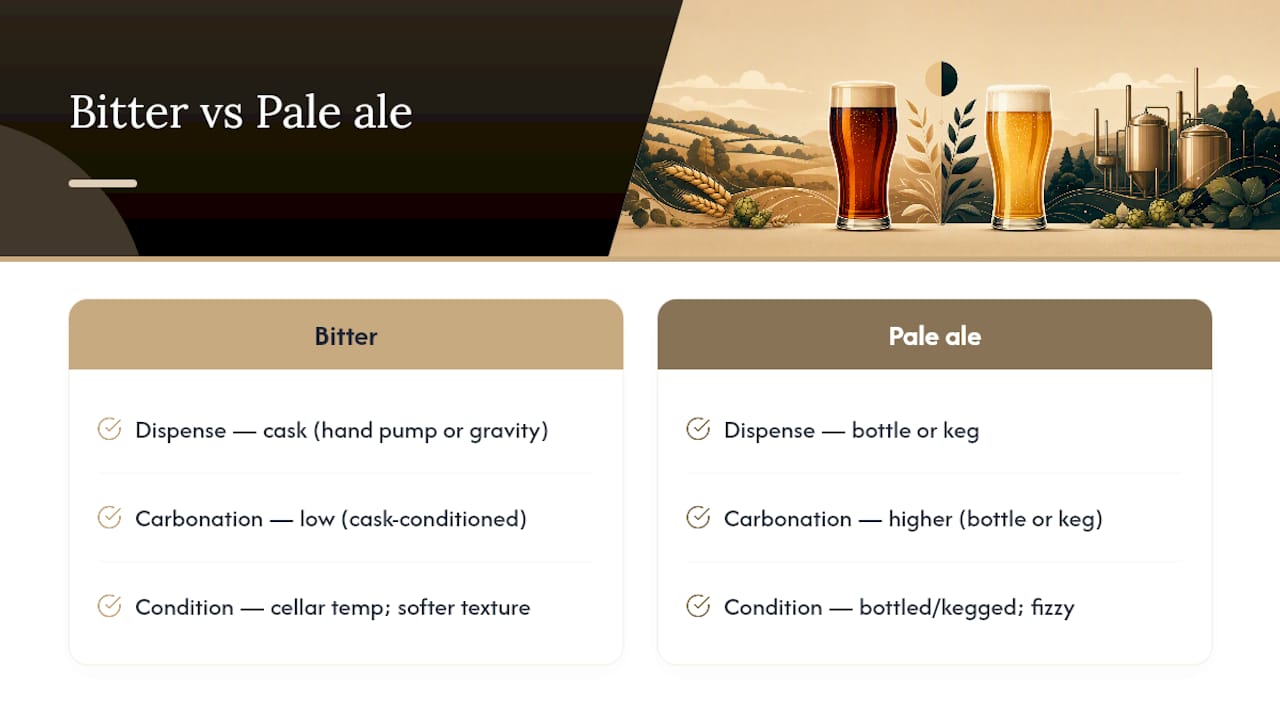
- Same beer family, different practical signals: dispense method, carbonation, and label wording.
- Cask “bitter” tends to be lower carbonation, served near cellar temperature.
- “Pale ale” on a bottle or keg font usually means higher fizz and a formulation built for export or shelf life.
Key Takeaways
Bitter and pale ale share one historical origin, but dispense method, carbonation, and cellar temperature now do more to define the drinking experience than the name on the label.
| Point | Details |
|---|---|
| Same family, different service | Historically synonymous terms now mainly signal cask versus bottled or kegged dispense. |
| ABV bands guide expectations | Session bitters run below 4%, best bitters in a moderate range, and strong bitters above that range. |
| Carbonation changes flavour perception | Low-carbonation cask beer brings out dryness and hop aroma; higher fizz in bottles accentuates sweetness. |
| Labels are inconsistent | Terms like ESB or “best” are rough guides only; check ABV and dispense method for the real picture. |
| Taste both to understand the gap | Comparing a cask bitter against a bottled pale ale from the same brewery reveals the difference fastest. |
Table of Contents
- Bitter vs pale ale: where the names actually came from
- Strength categories: session, best, and strong bitter
- Why cask and bottle taste like different beers
- What bitter and pale ale actually taste like
- How to identify bitter and pale ale on the spot
- Real-world examples and why the labels can mislead you
- Tasting both styles side by side at Lost And Found Taproom
- Choosing by dispense, not just by name
- Frequently asked questions
- Sources
Bitter vs pale ale: where the names actually came from
The word “pale ale” was the brewers’ term long before “bitter” caught on with drinkers. By the early 19th century, brewers labelled their beer pale ale, but customers had started calling it “bitter” to mark it out from darker, sweeter milds and porters. The two expressions were effectively synonymous by around 1830, and that overlap never fully went away.
Before pump clips existed to tell drinkers what was in the cask, the name “bitter” was a customer invention: a way to ask for the paler, hoppier beer without needing brewery jargon.
Two world wars and shrinking gravities pushed English brewing towards lower-strength, more “quaffable” session bitters, while cask ale held onto pub taps through the 20th century even as bottled pale ale became the format for export markets. That split, cask at home, bottle abroad, is largely why the naming still feels inconsistent now.
Strength categories: session, best, and strong bitter
Brewers rarely agree on strict definitions, but three informal bands turn up again and again on pump clips and shelf labels.
- Session or ordinary bitter: roughly 3% to 3.9% ABV, light and built for drinking more than one pint.
- Best or special bitter: typically 3.9% to 4.6% ABV, slightly fuller malt character.
- Premium or strong bitter (often labelled ESB): usually 4.6% to 5.5% ABV or higher, with more body and hop presence.
SIBA’s survey data puts the average bitter at 4.2% ABV, which sits squarely in “best bitter” territory, and BJCP’s guidelines treat all three bands as one continuous family rather than rigid separate styles. Colour runs from pale gold through amber, driven mainly by how much crystal malt goes into the grist. Bottled pale ales drawing on the same recipes often use a similar malt bill but lean harder on finishing hops for aroma, since they are not relying on cask conditioning to develop character over days in the cellar. The catch is that none of this is policed. One brewery’s “best bitter” might sit at 3.8%, another’s at 4.5%, and competition judges see the same inconsistency BJCP itself flags in its notes.
Why cask and bottle taste like different beers
This is the part that actually changes what is in your glass. Cask-conditioned bitter finishes fermenting in the container it is served from, developing soft, low carbonation naturally in a cool cellar. BJCP notes its guidelines describe the real-ale, cask version specifically because bottled and kegged versions of the same beer are frequently reformulated for export, with higher carbonation and sometimes higher alcohol to survive longer supply chains.
- Cask bitter: gentle carbonation, softer texture, hop aroma that reads as earthy or floral rather than fizzy.
- Bottled or kegged pale ale: sharper carbonation, brighter lift on the tongue, and a sweetness that can mask some of the bitterness.
- Higher fizz genuinely changes perception: it accentuates sweetness while cask conditioning brings out dryness and aroma.
Pro Tip: Check the pump clip or font before you order. If it says “cask” or “real ale,” expect a softer, cooler pour. If it says “keg” or you’re buying a bottle, expect more fizz and a slightly different flavour balance even if the name on the label is identical.
Our guide to cask versus keg breaks down the mechanics in more depth if you want the full picture.
What bitter and pale ale actually taste like
Bitterness in this family sits in the moderate range, nowhere near an IPA’s hop punch, and finishing hops tend to be classic British varieties like Fuggles or Goldings rather than anything tropical or resinous. Malt character reads as biscuity or lightly toasty, with crystal malt adding a touch of caramel in darker examples.
- Colour: pale gold in session bitters, moving to copper and dark amber in stronger or crystal-heavy versions.
- Aroma: gentle, earthy hop notes over a bready malt base, more pronounced in fresh cask beer.
- Body: light to medium, rarely heavy, built for drinking a full pint rather than sipping slowly.
- Carbonation and serving temperature shift all of this. Warmer, softer cask beer opens up aroma; cold, fizzy bottled versions mute it and push sweetness forward.
Our beer serving temperature guide covers exactly where cellar temperature sits for this style if you want to replicate it at home.
How to identify bitter and pale ale on the spot
You do not need a cicerone qualification to work this out at the bar. Look at four things in order: how it is dispensed, what the label says, the ABV, and how it is poured.
- Hand pump or gravity dispense with minimal fizzy head: almost always cask bitter or real ale.
- Keg font or bottle with a tight, persistent head: kegged or bottled pale ale, higher carbonation.
- Words like “ESB,” “special,” or “best” on the clip: a rough guide to strength, not a strict rulebook.
- ABV printed on the pump clip or label: your most reliable single data point.
Pro Tip: When the pump clip gives you nothing useful, just ask. Bar staff will usually tell you how a beer is conditioned and at what temperature it is being served, and that answer tells you more than the name ever will.
Real-world examples and why the labels can mislead you
Walk along any bar and you will see categories rather than fixed rules: ordinary or session bitters, best or special bitters, strong bitters often marketed as ESB, and a separate shelf of bottled pale ales and golden ales. None of these categories are strictly policed by anyone.
ESB began life as a specific Fuller’s brand name. It has since drifted into general use as shorthand for “strong bitter,” which is exactly the kind of label drift that makes pump clips unreliable on their own.
Regional habits play a part too. Northern English bitters often run paler and drier than their southern counterparts, and a brewery selling into export markets will frequently reformulate a cask favourite as a bottled pale ale with more carbonation and sometimes a different hop schedule entirely. Treat any style name as a starting point, not a guarantee. The ABV and the dispense method tell you far more than the word on the label, and that gap between marketing language and brewing reality is worth remembering every time you order.
Our piece on beer freshness and storage goes further into how packaging choices affect what actually reaches your glass.
Tasting both styles side by side at Lost And Found Taproom
The clearest way to understand this distinction is to taste it, not read about it. At Lost And Found Taproom in Brighton’s Fiveways, hand-pumped cask ales sit alongside bottled and kegged options from independent breweries across the UK, poured cellar-fresh at the temperature each style needs.
Pro Tip: Check our beer menu online before visiting so you know which cask bitters and bottled pale ales are pouring that week, then ask staff to line up a cask and bottled version from the same style for a direct comparison.
Choosing by dispense, not just by name
History explains why bitter and pale ale share a family tree, but it will not tell you what is actually in your glass tonight. Choose by dispense method and occasion rather than the word printed on the label. A few degrees of temperature and a difference in carbonation change the drinking experience more than any name on a pump clip does.
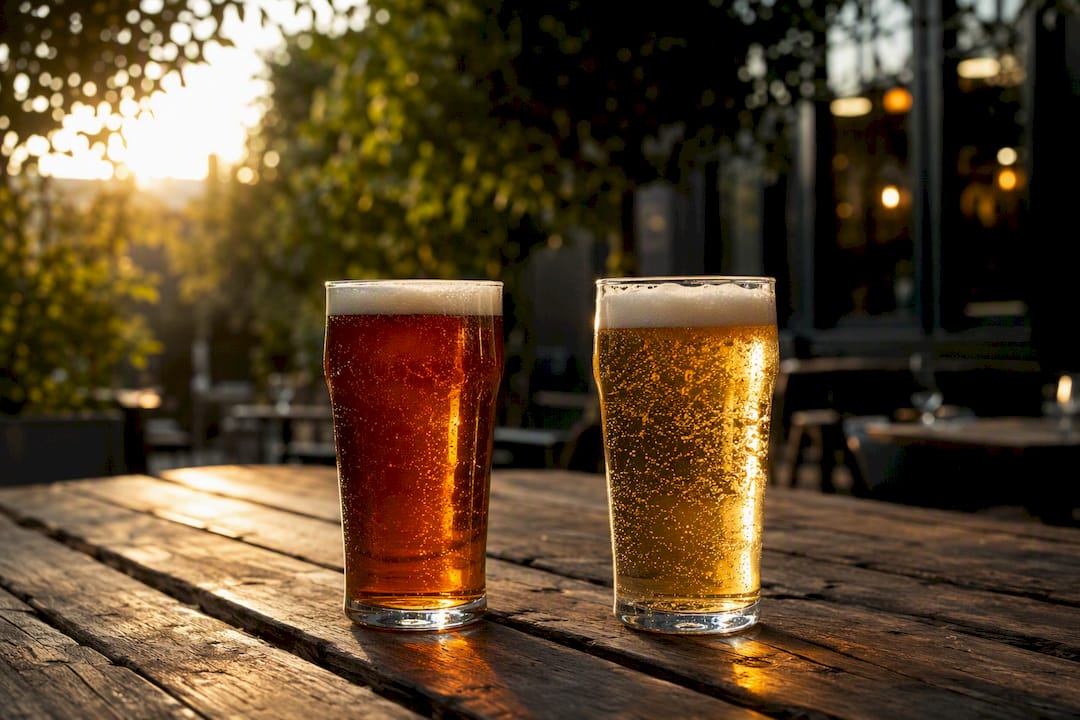
Frequently asked questions
Is bitter just another name for pale ale? Historically, yes. By the early 19th century the two terms were used for the same beer. Today, “bitter” more often signals cask dispense while “pale ale” tends to mean bottled or kegged.
What ABV counts as a session bitter? Roughly 3% to 3.9% ABV, sitting below best bitter (3.9% to 4.6%) and strong or ESB-labelled bitters (4.6% to 5.5% or above).
Why does bottled pale ale taste different from cask bitter of the same name? Higher carbonation in bottles and kegs sharpens the fizz and can mask bitterness with perceived sweetness, while cask conditioning at cellar temperature softens texture and lifts aroma.
How can I tell which one I’m being served? Check the dispense method first. Hand pump or gravity usually means cask bitter; a keg font or bottle usually means pale ale with more carbonation. The ABV on the label is your most reliable clue when the wording is ambiguous.