Four step beer plan for sushi: style matches and Brighton picks
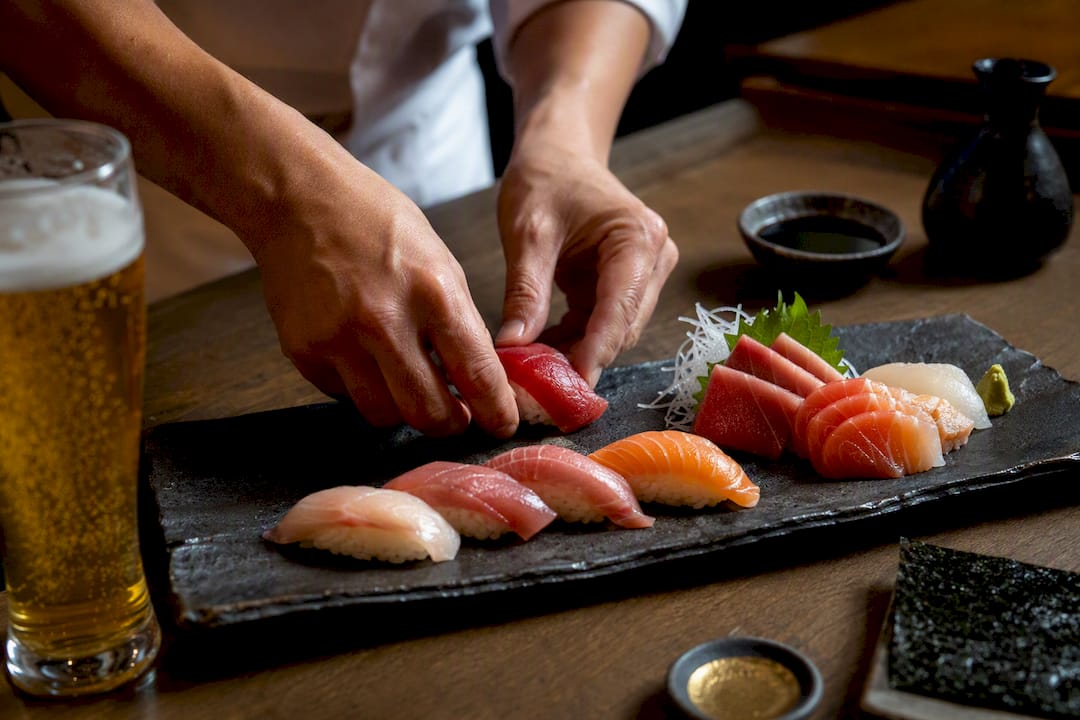
Light, dry, and heavily carbonated beers are the best match for sushi: Japanese rice lagers, pilsners, kölsch, witbier and dry saisons. Their clean finish and fizz cut through vinegared rice and fatty fish without burying the flavour. Two easy examples to start with: Asahi Super Dry or a crisp kölsch. Everything else on the beer list is a compromise.
TL;DR:
- High carbonation and dry finishes are essential, with sparkling pilsners and Japanese rice lagers providing the most balanced pairing for delicate sushi.
- Light, fruity blond ales like kölsch or gentle wheat beers such as witbier and hefeweizen enhance fattier fish, especially salmon and toro, without overpowering flavors.
- Spicy, fried, or nori-heavy rolls benefit from citrus-forward, low-bitter beers like dry saisons or peppery pale ales, avoiding hop-forward IPAs.
- Progress a sushi meal by starting with light beers and moving toward more textured options like saisons or low-bitterness pale ales as the dishes become richer.
- Low-malt, crisp beers outperform heavier or sweeter styles in every pairing context, emphasizing the importance of dryness and freshness over brand names.
Table of Contents
- Why beer and sushi pairing actually works
- Simple rules for pairing beer with sushi
- Style-by-style sushi and beer suggestions
- How to progress your beer through a sushi meal
- Tricky pairings: spice, tempura and nori-heavy plates
- How Lost And Found Taproom applies this in Brighton
- What most pairing advice gets wrong
- Sources
- FAQ
Why beer and sushi pairing actually works
Carbonation does the heavy lifting. Every bite of sushi carries rice vinegar, a slick of oil from the fish, and often soy sauce, and the bubbles in a well-carbonated beer scrub that residue off the tongue so the next piece tastes fresh rather than muddy. That’s the whole logic behind a good beer and sushi pairing: reset, don’t compete.
A light hop presence can lift the salty-sweet edge of good umami rather than fight it, but push the hops too far and you lose the fish entirely. This is why the strongest consensus among food writers and chefs points the same direction: light, dry, effervescent beers are considered the gold standard for sushi, precisely because they clean the palate instead of dominating it. The goal isn’t to mask umami. It’s to let it stay exactly as delicate as the chef intended.
Simple rules for pairing beer with sushi
Before you even look at styles, a few habits will save you from a bad match every time.
- Choose high carbonation, a light body, and a dry finish over anything sweet or heavy.
- Avoid roasted, heavily malted, or aggressively bitter beers. They flatten delicate fish and clash with vinegared rice, a point Serious Eats makes clearly when steering drinkers away from stouts and intense amber ales.
- Serve cold, close to fridge temperature, in a simple pilsner glass rather than a wide tulip that lets carbonation die.
- A small squeeze of yuzu or a citrus garnish in a witbier can echo the acidity already on the plate.
Pro Tip: If you’re unsure which beer on the list will work, ask for the driest, most carbonated option on tap rather than the “biggest flavour” one. Big flavour is exactly what you don’t want next to raw fish.
Lower serving temperature also helps: colder pours with high carbonation clean the palate more effectively, which matters more with sushi than with almost any other food pairing.
Style-by-style sushi and beer suggestions
This is where beer and sushi pairing gets specific. Different cuts of fish and different preparations call for genuinely different beers, not just “something light.”
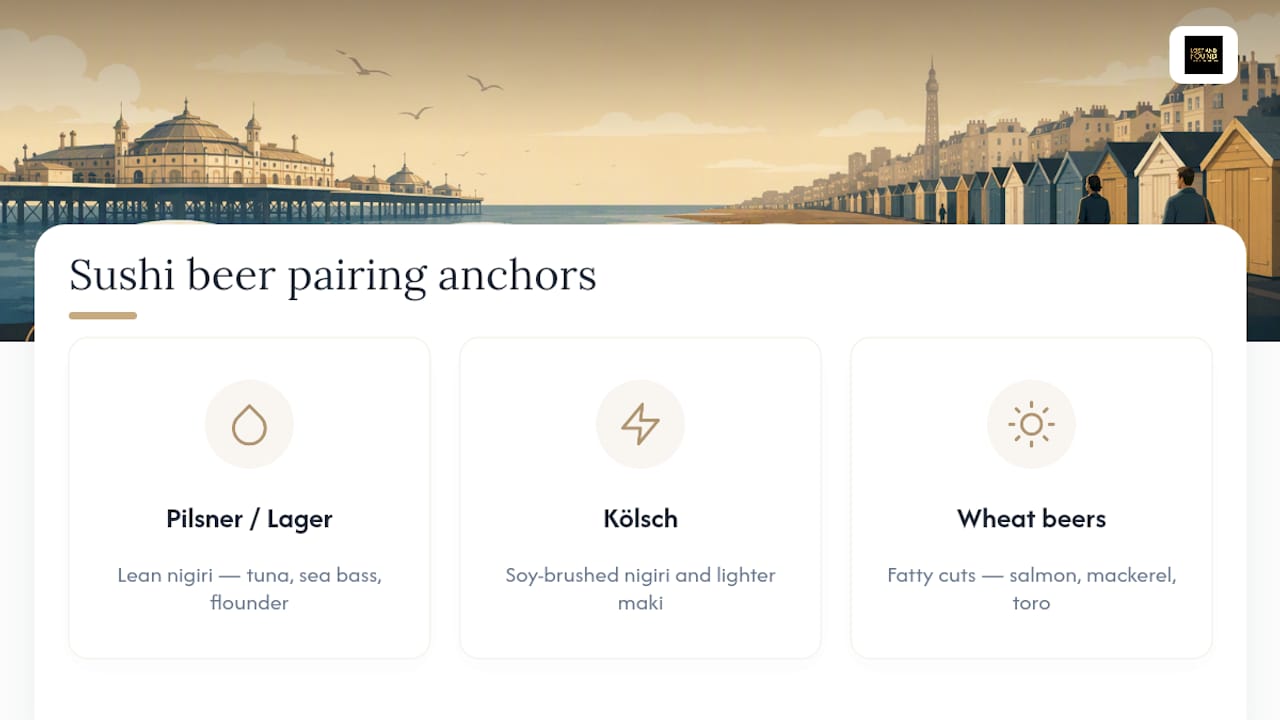
Pilsner and Japanese rice lager are the safest starting point for lean nigiri and sashimi, tuna, sea bass, flounder. The clean, crackery finish doesn’t compete with delicate white fish. Asahi Super Dry and Sapporo Premium Beer are the two most recognisable examples, and there’s a reason they’ve become the default order at sushi counters worldwide: dry, sharply carbonated, almost no lingering sweetness.
Kölsch and other gentle blond ales sit a notch up in character. A touch of fruity yeast and restrained bitterness softens the edges on soy-brushed nigiri or lighter maki rolls, where a straight lager can feel almost too neutral.
Witbier and hefeweizen earn their place with fattier cuts, salmon, mackerel, toro. The yeast-driven citrus and clove notes complement oily textures rather than getting lost underneath them, which is why fattier fish benefits from the richness and acidity that witbiers and hefeweizens bring. Allagash White and Hitachino Nest White Ale are the two examples worth knowing here. Both bring a citrus lift that plays well against oily fish, and Allagash’s own pairing notes single out how wheat beers work with rice vinegar and nori, the two components almost every roll shares.
Dry saisons and peppery pale ales are the move for spicier or fried rolls. The citrus and pepper character gives a lift without adding sweetness, though if wasabi is heavy on the plate, stick to the lower-bitterness end of that spectrum.
There’s also room to bend the rules. A restrained dark beer or a light sour can work with tempura or smoked eel, where the dish itself has enough char or smoke to stand up to a bit more body. The trick is restraint: a hint of roast, not a full stout, or the sour stays crisp rather than sharp.
Across nearly every credible source on the subject, the same finding repeats: dry, highly carbonated beers with a clean finish outperform anything heavier placed next to raw fish. If you remember one rule from this entire guide, remember that one.
Craft brewing has widened the field too. Dry-hopped pilsners, saisons, and gose-style sours now give drinkers far more precision than the old choice between a macro lager and nothing at all. If you want to sample several of these side by side before committing to a bottle, a tasting flight is the easiest way to work out what you actually prefer.
How to progress your beer through a sushi meal
Sushi meals build in richness, and your drink should move with them rather than stay static from first bite to last. At omakase counters, it’s standard practice to start with beer or something sparkling to refresh the palate before the chef sends out the richer cuts.
- Open light. Start with a pilsner or rice lager alongside the first white fish and sashimi courses.
- Move up gradually. Switch to kölsch, hefeweizen, or a softer pilsner as the menu introduces medium-bodied pieces and richer maki.
- Bring in acidity. Reach for a dry saison or a low-bitterness pale ale once spicier or mayonnaise-heavy rolls arrive.
- Wind down or switch. For the richest cuts, toro or unagi, either stay with the same acidic beer or move to sake or tea to close the meal.
This mirrors how context shapes the whole decision: casual sushi calls for one crisp default, while an omakase progression rewards moving from light to more textured drinks as the courses get heavier.
Tricky pairings: spice, tempura and nori-heavy plates
Spicy rolls are where most people get it wrong. Hop bitterness amplifies chilli heat rather than cooling it, so a Cicerone-trained pairing approach favours high carbonation and citrus-forward beers like dry saisons and witbiers over hop-forward IPAs specifically for spicy sushi.
- For spicy tuna or chilli-mayo rolls, choose a citrusy saison over anything heavily hopped.
- For tempura or other fried items, a peppery saison or a crisp pilsner cuts through the oil far better than a heavier ale.
- For roe-forward or nori-heavy plates, a saline or lightly tart beer, gose or Berliner weisse, can work in small pours, though these styles are easy to overdo.
Pro Tip: Order a small pour before committing to a full pint, especially with sour or saline styles. What sounds interesting on paper can clash badly with roe once you actually taste it side by side.
How Lost And Found Taproom applies this in Brighton
Our rotating selection of local and UK beers leans naturally towards the light, effervescent styles that suit delicate food pairings, which is exactly the territory sushi sits in. Tasting flights and occasional pairing events are offered where staff can discuss matching a specific roll or sashimi cut to available beers. Our food and beer menus are available online if you want to check current options before you visit.
What most pairing advice gets wrong
Most pairing guides treat “light beer” as a single category, as if a mass-market lager and a proper Japanese rice lager do the same job. They don’t. The difference between a thin, watery lager and a genuinely dry, well-carbonated pilsner is the difference between a beer that just doesn’t clash and one that actively improves the meal. Chase the second kind.
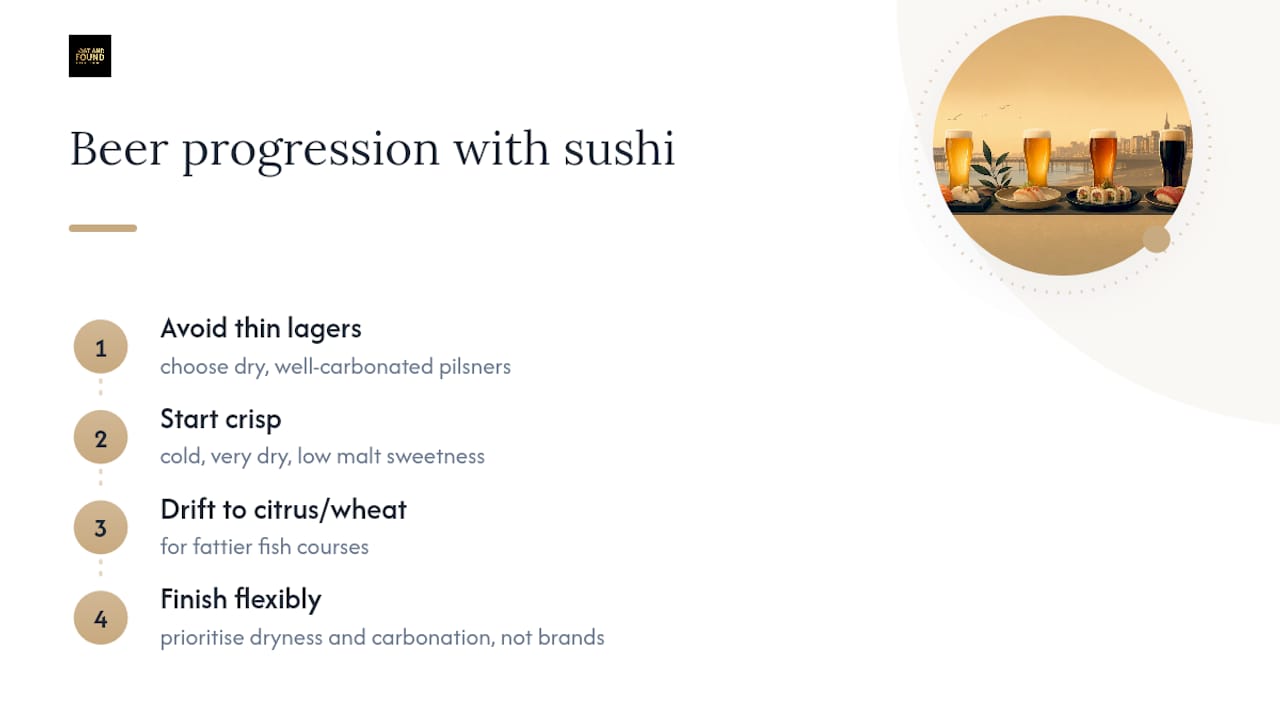
The bigger gap in conventional advice is meal progression. Plenty of guides list good styles and stop there, as if you’re drinking one beer for an entire sitting. Sushi menus move from delicate to rich, and your glass should move with them: start crisp, drift toward citrus and wheat as the fish gets fattier, and don’t be afraid to finish somewhere entirely different if the last course calls for it.
If you take one thing from this guide, prioritise dryness and carbonation over everything else, including brand names. A beer that’s crisp, cold, and low in malt sweetness will outperform a “famous” pairing beer that’s slightly too heavy, every single time.
— Author
Sources
- Why Light Beer Is The Best To Pair With Sushi, According To An Expert
- Beer pairings: what to drink with sushi
- How to pair sushi and beer
- Beyond sake: pairing sushi with champagne, beer and tea
FAQ
What beer pairs well with sushi?
Light, dry, highly carbonated beers work best: pilsners, Japanese rice lagers, kölsch, witbier, and dry saisons. Asahi Super Dry, Sapporo Premium Beer, Allagash White, and Hitachino Nest White Ale are commonly cited examples that suit different sushi types, from lean sashimi to fattier salmon and toro.
Can you drink beer and eat sushi?
Yes, and it’s one of the more common pairings at both casual and high-end sushi counters. The key is choosing a beer with high carbonation and a dry, clean finish so it clears the palate rather than clashing with the vinegared rice and delicate fish.
Does sushi pair well with alcohol?
Sushi pairs well with several drinks, but the ones that succeed share carbonation, dryness, and restraint, whether that’s beer, sake, or dry sparkling wine. Heavy, sweet, or intensely bitter drinks tend to overpower the subtle flavours sushi is built around.
What drink is best paired with sushi?
There’s no single best drink, but light and effervescent styles consistently outperform heavier options. For beer specifically, a crisp pilsner or Japanese rice lager is the safest all-round choice, while witbier and hefeweizen suit fattier cuts like salmon and toro better.
Fancy trying a few of these side by side before your next sushi night? Book a private tasting through venue hire, no hire fee, exclusive use of the space, and full control over the drink selection, or drop into Lost And Found Taproom in Brighton’s Fiveways to see what’s currently on tap and in the bottleshop. For a wider look at how pairing principles apply beyond sushi, the gastronomy trends chefs are watching are worth a read too.